
Sativa
Mango Haze Strain
Sativa · mango and pineapple over black pepper · productive and clear
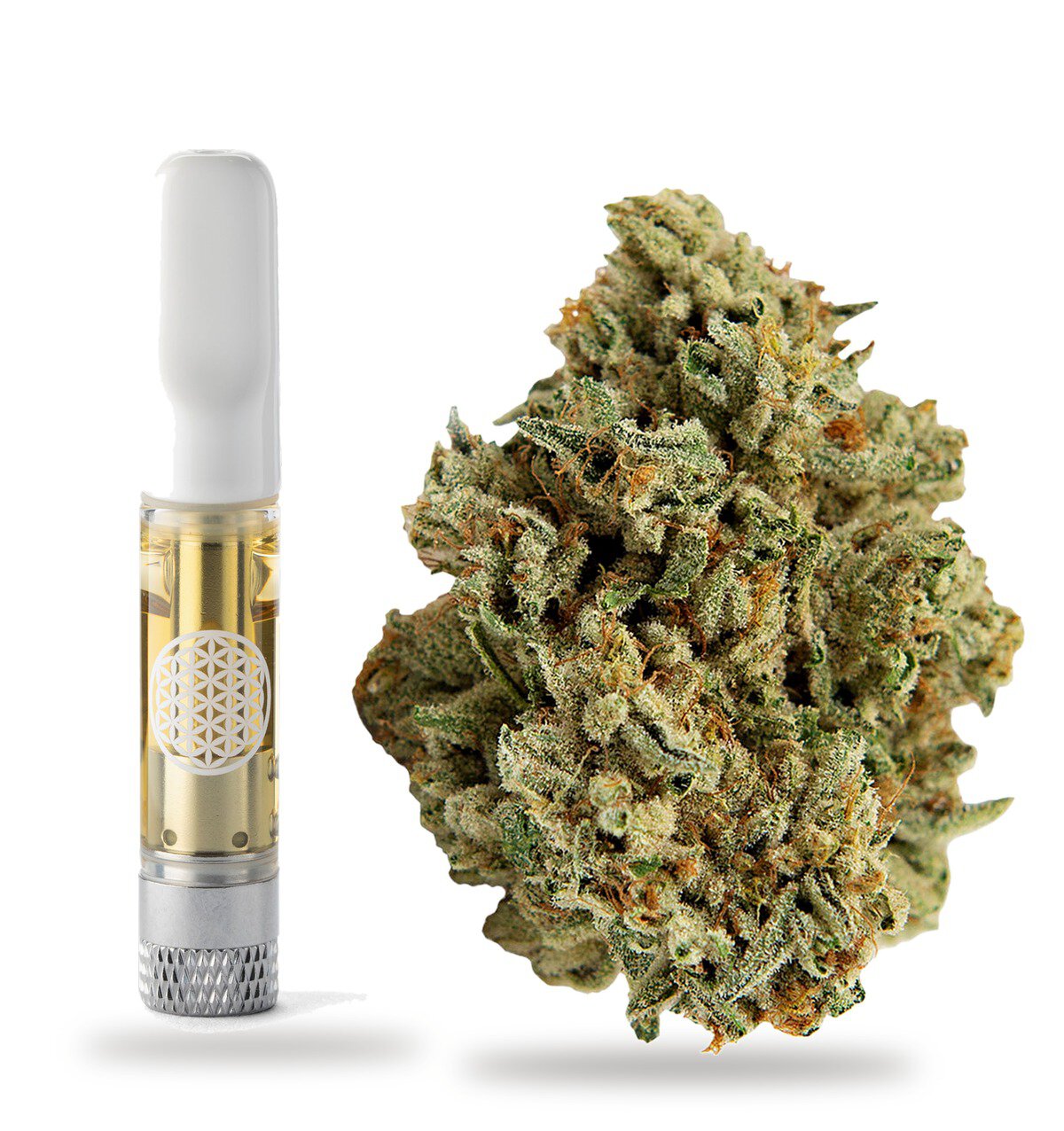

| Flavor profile | Mango, Tropical, Pepper |
|---|---|
| Reported feel | Energetic, Focused, Uplifted |
| Strain type | Sativa |
The short answer
Mango Haze is a sativa, and it’s a daytime strain in the plainest sense: uplifting, clear-headed, and easy to be productive on. The flavor is tropical and a little spicy, ripe fruit with a dry peppery finish under it. It suits a morning or an afternoon when you want your mood lifted without losing the thread of what you’re doing. It’s the only strain we make in all three cannabinoid settings: CBD cartridge, Delta 8 THC cartridge and disposable, and a 1:1 CBD to THC cartridge and disposable if you want the middle ground.
CBD and Delta 8 THC are different cannabinoids, and the 1:1 option just means an even split between them.
Sativa (Daytime)
Mango, Tropical
Energetic, Focused
🧪 Third Party Lab Tested 👩💼 Woman Owned Since 2017 🏆 Est. 2017
Shop Mango Haze
Mango Haze CBD cart
One gram of CBD distillate with CBG concentrated into it, threaded 510. No detectable Delta 9 THC on this batch.
Starting at $60
Mango Haze Delta 8 cart
The same terpene profile over Delta 8 THC. Intoxicating, and milder than Delta 9 for most people.
Starting at $60
Mango Haze Delta 8 disposable
The Delta 8 formulation sealed into a single-use pen. One gram, nothing to charge.
Starting at $60
Mango Haze 1:1 cart
CBD and Delta 8 THC in near-parity. The middle setting.
Starting at $60
Mango Haze 1:1 pen
Same balanced ratio, sealed in a disposable pen.
Starting at $60
Mango Haze at a glance
| Strain type | Sativa |
| Best time | Morning and afternoon |
| Tastes like | Mango and pineapple over a black pepper base |
| Feels like | Uplifting and clear-headed, easy to stay productive on |
| Top terpenes | Beta-caryophyllene, d-Limonene, beta-myrcene |
Is Mango Haze indica or sativa?
Mango Haze is a sativa, and a properly old-fashioned one. The lift is bright and clear, never heavy, and it stays that way for hours.
Half this plant is Haze, which is the family most modern sativas are descended from and few of them still resemble. That inheritance is why Mango Haze feels lighter and more upright than the fruit-forward strains it sits next to on a menu.
Nothing here weighs on your body. You stay mobile, you stay talkative, and you skip the settling that most hybrids do about an hour in.
Morning and afternoon is the slot. Mango Haze is easy to stay productive on and a poor idea once you actually want to slow down.
Mango Haze strain effects
Mango Haze feels uplifting and clear-headed, and it holds that shape longer than most.
The mood goes first. Things get brighter and easier, conversation flows, and the lift is cheerful, never sharp, which is the difference between this and a harder sativa.
Your head stays clear underneath the lift. Thinking speeds up slightly without scattering, so this works for anything you actually need to finish. That’s what earns it a spot in our daytime focus picks, particularly for longer work sessions where the lift needs to hold.
You barely feel this one in your body, and that’s deliberate. If you’re looking for something to help you stop, Mango Haze is close to the wrong end of our menu.
A vape gets there in a few minutes. What’s different is how long Mango Haze runs, which is a real advantage on a strain people use during a working day.
The taper is gentle and there’s no crash at the end, so you come back to normal without dropping.
Good for: mornings, creative work, long conversations, being outside, and anyone who finds modern sativas too intense. Bad for: evenings, winding down, and any night where sleep is the plan.
What Mango Haze tastes and smells like
Mango Haze tastes like mango and pineapple over a black pepper base, and the mango isn’t a marketing decision.
Overripe mango comes first and comes loudly. Tropical fruit sits behind it, and the whole top of the flavor is sweeter and rounder than the Haze family usually manages.
The pepper is the Haze half showing through at the end. It arrives late, it’s dry, not hot, and it’s the note that stops this tasting like a flavored cartridge.
Very few strains named after a fruit actually taste like it. Mango Haze is one of the ones that does, which is most of why the name has lasted as long as it’s got.
If you like tropical and sweet, this is one of the friendliest profiles we carry. If you want gas, diesel or anything skunky, the fruit here will be far too bright for you.
Mango Haze terpenes
Mango Haze puts beta-caryophyllene in first place, with d-Limonene second and beta-myrcene last.
Beta-caryophyllene
Caryophyllene leads, which isn’t what a mango flavor would have you guess. Caryophyllene is the peppery one, it’s the source of that dry finish, and it’s the one terpene here that acts directly on your body’s cannabinoid receptors.
d-Limonene
Limonene sits second and does most of the mood work. Limonene is the citrus terpene, the one most linked to brightness and lift, and it explains why the effect here arrives cheerful when merely alert is what you would expect.
Beta-myrcene
Myrcene comes third, and finding it in last place is the cleanest explanation for why Mango Haze stays upright. Myrcene is what people point to for a settled body, and there’s only enough of it here to round the edges.
That’s the profile in our Mango Haze oil, and published terpene rankings for this strain disagree with each other more than they do on most, so no single list deserves much weight. A ranking is a guide to how something smells, a rough guide to how it feels, and no guide at all to how strong it is.
How strong is Mango Haze?
Mango Haze THC flower tests between 18 and 25%. That’s the plant, and it isn’t what we sell, so the number is context, not a spec.
Our CBD Mango Haze doesn’t contain THC. The batch certificate shows no detectable Delta 9 THC, and that’s the version to pick if you want the flavor and none of the intoxication.
The other two versions do contain THC, and it is Delta 8 THC, not the conventional kind. Delta 8 THC is intoxicating and milder than Delta 9 for most people, and the 1:1 puts CBD alongside it in near-parity.
So there are three settings on this strain, and picking between them is simple. CBD for none, Delta 8 THC for a real lift, the 1:1 for something in between.
Everything we make here runs 70 to 95% total cannabinoids, a measure of concentration in the oil, and no guide to how hard it lands. On the CBD version especially, concentration and strength are unrelated.
One draw, two minutes, then decide. Whichever of the three you pick, Mango Haze is one of the more forgiving things on our menu, and that’s a large part of the appeal.
What is Mango Haze crossed with?
Mango Haze is half Haze, a quarter Skunk and a quarter Northern Lights, which isn’t the same as the equal three-way split most sources describe.
The difference matters. Almost everything written about this strain calls it a three-way cross of Northern Lights, Skunk and Haze, which implies even thirds. The more detailed accounts describe two Haze-heavy crosses bred together, and that puts Haze at half the plant.
That one correction explains the strain better than the equal-thirds version does. The long lift, the clarity, the height and the peppery finish are all Haze traits, and they’re much easier to understand when Haze is half of the cross instead of a third.
Skunk contributes the body and the yield, and Northern Lights contributes the structure and the sweetness that carries the mango.
If Haze strains have always suited you but the modern ones feel like a different plant, Mango Haze is closer to the original idea than most things on any menu.
CBD, Delta 8 THC, or the 1:1 Mango Haze
Mango Haze is the only strain we make in all three settings: CBD, Delta 8 THC, and a 1:1 of the two.
The CBD version has no intoxication to speak of and carries CBG alongside. This is the one for a working day where you want the flavor and the clarity and nothing else.
The Delta 8 THC version is the intoxicating one, milder than conventional THC for most people, and it’s what people usually mean when they ask for Mango Haze.
The 1:1 sits between them in near-parity, which is the setting most people underrate. You get a real lift with the CBD holding the edges down, and on a strain this bright that combination is genuinely good.
Our honest recommendation: start on the 1:1 if you’re unsure. The terpene profile is identical across all three, so you’re choosing how much you want to feel, since the taste barely moves.
Mango Haze compared to Lemon Haze and Durban Poison
Mango Haze, Lemon Haze and Durban Poison are three daytime sativas, and they separate on how sharp each one is.
Lemon Haze is the closest relative and the sharper of the two. Lemon and zest where this one is tropical fruit, faster on the way up, and a little more pointed. Take Lemon Haze when you want the citrus version of the same idea.
Durban Poison is the purest sativa we carry and the most upright. Sweet pine and licorice instead of fruit, with no body weight at all, and we sell it as flower and pre-rolls as well as vapes. Take Durban Poison when you want the strongest morning strain on the menu.
Mango Haze to feel good for hours, Lemon Haze for something brighter and quicker, Durban Poison when you need to be properly switched on.
What is Mango Haze good for?
Mango Haze is for a long stretch of daytime you want to enjoy, not get through.
The distinguishing feature is duration. Most daytime strains give you an hour and taper, and Mango Haze holds its shape across an afternoon, which changes what you can plan around it.
Creative work suits this one, and so does anything social in daylight. The lift is outward and cheerful, so conversation is easier and you stay articulate the whole way through.
Mango Haze is also a sensible pick for anyone who has found modern sativas too intense. The Haze character is bright without being sharp, and the CBD and 1:1 versions take that even further.
Where Mango Haze is the wrong pick: evenings, winding down, and anyone who wants to feel a strain in their body. There’s very little of that here by design.
What we sell, and where to buy Mango Haze
We sell Mango Haze in five options, all from $60, and this is the only strain we make in three different cannabinoid settings.
CBD cart. A full gram of CBD with CBG concentrated into it, threaded 510, and no detectable Delta 9 THC on this batch.
Delta 8 THC cart. The same terpene profile over Delta 8 THC, which is intoxicating and milder than conventional THC for most people.
Delta 8 THC disposable. That same formulation sealed into a single-use pen, with nothing to charge.
1:1 cart. CBD and Delta 8 THC in near-parity, which is the middle setting and the one we’d suggest first.
1:1 pen. The same balanced ratio in a disposable.
Because the terpene profile is identical across all five, the choice here is about intensity, since the flavor holds steady. We ship direct to most states, every batch certificate goes up on the product page before you can order, and the store locator has the shops closest to you.
If you like Mango Haze, try
Sativas that lead with fruit, never fuel, plus the two closest relatives we carry. Northern Lights sits in this strain’s pedigree, and that argument is on our Northern Lights strain page.
Hawaiian Dream (sativa)
Lemon Haze (sativa)
Maui Wowie (sativa)
Green Crack (sativa)
Durban Poison (sativa)
Browse all strains →
Mango Haze FAQ
Mango Haze is a sativa. The lift is productive and clear, never dreamy, which is what the Haze side brings, and it holds for a good while without turning sharp. Morning and working hours.
Mango Haze is a sativa from the Haze family with tropical fruit layered over the classic Haze clarity. It tastes like mango and pineapple with a peppery edge underneath, and it behaves like a Haze: energetic, focused, and better before the day than after it.
Mango Haze tastes like ripe mango and pineapple with black pepper underneath. The fruit is bright and juicy, never candied, and the pepper underneath is what marks it as a Haze and not a generic tropical strain. That contrast is the whole character.
Beta-caryophyllene holds first place in Mango Haze, d-Limonene holds second, beta-myrcene holds third. Caryophyllene leads and it’s the source of that black-pepper note under the fruit. Limonene brings the citrus brightness on top and myrcene keeps the body from getting wiry. That’s the profile in our Mango Haze products.
Mango Haze flower usually tests somewhere between 16 and 22% THC, which is moderate. Our vapes run 70 to 95% total cannabinoids and come in several strengths: a 1:1 CBD-to-THC version that takes the edge off considerably, a Delta 8 THC version, and a CBD-only cart. One draw, two minutes.
Mango Haze is for Working. It suits a morning that needs momentum, creative work, and long tasks where you want to stay clear and would rather not lose the thread. Not an evening strain and not a relaxing one.
No, Mango Haze and Mango Kush are different strains and worth keeping apart. Mango Kush is an indica-leaning strain with a heavier, sweeter character; Mango Haze is a sativa built on Haze genetics and reads much brighter and more energetic. Both taste of mango and that’s where the similarity ends.
TribeTokes sells Mango Haze in five formats, all $60: a 1:1 CBD-to-THC pen and cart, a Delta 8 THC cart and disposable, and a CBG-boosted CBD cart. That’s the widest range of strengths we offer on a sativa, so you can pick how much lift you actually want with the mango.
Strain descriptions reflect commonly reported characteristics and user experiences, not guaranteed effects. TribeTokes products are hemp-derived and Farm Bill compliant (0.3% or less Delta 9 THC). These statements have not been evaluated by the FDA and are not intended to diagnose, treat, cure, or prevent any disease. Must be 21 or older.