
You need more than vibes and testimonials when dealing with real anxiety. Here’s what the clinical science actually says — the data that’s compelling, the data that’s still missing, and what it means for how you use CBD.
316
Participants in 2024 meta-analysis
40–50%
Average anxiety reduction across trials
79.2%
Reported anxiety improvement at 30 days
1. The TL;DR: What Does the Research Show?
Let’s start with the bottom line before we dive into the weeds:
🔬 Key Finding — 2024 Meta-Analysis
A comprehensive analysis of 8 randomized controlled trials with 316 participants found CBD produced a substantial significant effect on anxiety (Hedges’ g = -0.92). Translation: this isn’t placebo noise. There is a real, measurable signal.
But here’s the honest truth: the research is promising, not yet definitive. We have strong mechanistic evidence, multiple positive clinical trials, and a genuinely impressive 2024 meta-analysis — but we don’t yet have the large-scale, FDA-style randomized controlled trials that would constitute a clinically proven treatment. The 22 active or recruiting trials as of 2026 mean substantially more data is coming.
What we can say confidently: CBD deserves serious consideration as part of an anxiety management approach, with the science to back it up.
2. How CBD Works on Anxiety: The 5-HT1A Connection
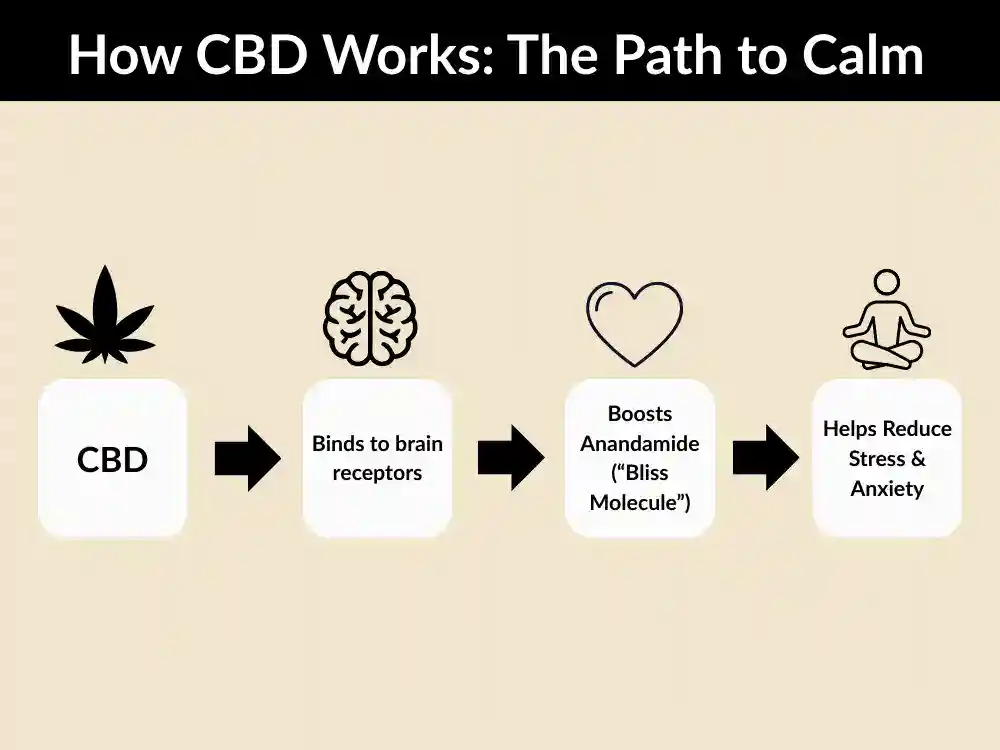
Before we look at the studies, it helps to understand the “why.” How does a hemp-derived compound actually reduce anxiety in the brain? The short answer: CBD works through at least four overlapping pathways — which may be exactly why it works for people when single-target medications haven’t.
The Serotonin Pathway (The Big One)
CBD acts as a partial agonist at 5-HT1A serotonin receptors — the same receptor subtype targeted by buspirone (a common anti-anxiety medication) and related to the receptors targeted by SSRIs like Prozac and Zoloft. When CBD activates 5-HT1A receptors, it modulates serotonin signaling in the prefrontal cortex, hippocampus, and amygdala — regions directly involved in fear processing and anxiety regulation.
“The anxiolytic effects of cannabidiol appear to be mediated primarily through serotonergic facilitation — specifically via agonism at 5-HT1A receptors — which provides a compelling mechanistic basis for its use in anxiety-related conditions.”
— Dr. Esther Blessing, Department of Psychiatry, NYU School of Medicine, Neurotherapeutics (2015)
The Endocannabinoid System
CBD inhibits FAAH, the enzyme that breaks down anandamide — your body’s endogenous “bliss molecule.” More anandamide circulating = a calmer, less reactive nervous system. This is distinct from how THC works (THC directly binds CB1 receptors; CBD works more indirectly by protecting your natural endocannabinoids).
GABA Enhancement
CBD also enhances GABA signaling — the brain’s primary inhibitory neurotransmitter. GABA puts the brakes on overactive neural circuits. This is the same system targeted by benzodiazepines like Xanax, though CBD’s mechanism is distinct and doesn’t carry the same dependence risks.
Cortisol Reduction
Multiple studies have documented CBD’s ability to reduce cortisol levels. A landmark 2019 study published in Neuropsychopharmacology confirmed CBD significantly reduced cortisol release during stress tasks — explaining why users report feeling calmer without feeling sedated. It’s not blunting your emotions; it’s dialing down the stress response.
💡 Bottom Line on Mechanism
CBD doesn’t rely on one anxiety-fighting mechanism — it engages at least four overlapping pathways simultaneously. This multi-target action is one reason researchers believe it may help when single-target medications fall short.
3. Clinical Trial Evidence: Study by Study
Let’s walk through the most significant research. This is a representative picture of the evidence — not cherry-picked positives, but the actual landscape.
The 2024 Meta-Analysis (The Most Important Recent Study)
Published in the Journal of Psychiatric Research, this analysis pooled data from 8 randomized controlled trials with 316 participants. Key findings:
- CBD produced a substantial significant effect on anxiety (Hedges’ g = -0.92)
- Effects were consistent across GAD, SAD, and PTSD subtypes
- Higher doses (300–600mg) produced stronger effects than lower doses
- Full-spectrum preparations outperformed CBD isolate
The Simulated Public Speaking Test (SPST) Series
A series of double-blind, placebo-controlled studies from the University of São Paulo used the validated SPST — a reliable laboratory model of social anxiety — to test CBD. Participants received a single oral dose before a public speaking task. Key findings:
- 300mg CBD significantly reduced anxiety, cognitive impairment, and discomfort during the speech
- Dose-response was an inverted U: 150mg showed minimal effect; 600mg was less effective than 300mg
- Participants showed reduced heart rate, lower salivary cortisol, and lower self-reported anxiety compared to placebo
The 2019 Neuropsychiatric Disease and Treatment Study
This naturalistic study followed 79 adult outpatients given CBD (25–75mg/day) for anxiety and sleep complaints. At 30 days:
- 79.2% reported decreased anxiety scores on the Hamilton Anxiety Rating Scale
- 66.7% reported improved sleep in the first month
- Results held at the 3-month follow-up
- CBD was well-tolerated — only 3 of 79 patients reported mild side effects
Social Anxiety Disorder (SAD) Brain Imaging Study
A double-blind study gave CBD (400mg) or placebo to participants with diagnosed SAD, then conducted functional neuroimaging during a stress challenge. CBD not only reduced subjective anxiety — it produced measurable changes in cerebral blood flow in anxiety-related regions, specifically the left parahippocampal gyrus and hippocampus.
This mattered because it ruled out pure placebo effect. CBD was producing observable neurological changes, not just altered self-perception.
| Study | N | CBD Dose | Design | Key Outcome |
| 2024 Meta-Analysis | 316 | Various | 8 RCTs pooled | Hedges’ g = -0.92 (substantial effect) |
| SPST Series (Brazil) | 57 | 300mg single dose | Double-blind, placebo-controlled | Significant reduction in anxiety, cortisol, HR |
| Neuropsychiatric Study (2019) | 79 | 25–75mg/day | Naturalistic, 30-day follow-up | 79.2% anxiety improvement |
| SAD Brain Imaging Study | 24 | 400mg single dose | Double-blind, fMRI | Reduced anxiety + measurable brain blood flow changes |
| PTSD Case Series (2019) | 11 | 25–175mg/day | Retrospective case series | 91% reduction in PTSD symptom severity at 8 weeks |
4. The 300mg Sweet Spot: Understanding Optimal Dosing
Here’s something genuinely fascinating about CBD and anxiety: more is not always better. The dose-response curve is an inverted U — and getting this right matters a lot.
- 150mg: Minimal to no effect in most controlled studies
- 300mg: The most consistently effective dose across multiple trials
- 600mg: Often less effective than 300mg, and can increase anxiety in some individuals
Why the inverted U? At very high doses, CBD begins activating receptor subtypes that can have mildly anxiogenic effects, partially offsetting its benefits. The therapeutic window is real.
⚠️ Important Context on Trial Doses
These doses (150–600mg) come from pharmaceutical-grade CBD in acute clinical trials. Most commercial CBD vape sessions deliver 5–50mg — a fraction of trial doses. The 300mg “sweet spot” refers to a single oral pharmaceutical dose, not what you’d typically vape. Start low (5–10mg per session) and titrate slowly.
Practical Dosing for CBD Vaping
| Experience Level | Starting Dose | Method | Notes |
| Beginner | 5–10mg per session | 1–2 small puffs | Wait 15 min before redosing. Effects are fast with vaping. |
| Intermediate | 15–25mg per session | 3–4 puffs | Know your product’s CBD content per puff. |
| Experienced | 25–50mg per session | Per comfort | Monitor effects. More isn’t always better — that inverted U is real. |
5. CBD for Different Anxiety Disorders
Not all anxiety is the same — and the evidence varies across subtypes.
Generalized Anxiety Disorder (GAD)
Good evidence. Multiple studies show consistent improvement in generalized anxiety with daily CBD use. The 2019 naturalistic study showed 79.2% of participants with anxiety complaints improved over 30 days of CBD supplementation.
Social Anxiety Disorder (SAD)
Strong evidence. This is the most studied CBD-anxiety application. The SPST series was specifically designed to model social anxiety, and the brain imaging data focused on SAD patients. CBD consistently reduces performance anxiety and fear of social evaluation.
PTSD-Related Anxiety
Emerging evidence. A 2019 case series reported CBD reduced PTSD symptom severity in 91% of patients over 8 weeks. Larger RCTs are underway. Particularly interesting is CBD’s apparent ability to reduce trauma-associated nightmares — a notoriously difficult symptom to treat.
Panic Disorder
Limited but positive evidence. Animal studies strongly support CBD for panic responses, and there are positive human case reports — but the large-scale controlled trials haven’t been run yet.
Situational / Acute Anxiety
Strong evidence. This is where CBD shines most clearly. Acute single doses consistently reduce anticipatory anxiety before stressful events. If you reach for CBD before a flight, a presentation, or a difficult conversation — this is exactly what the literature supports.
6. Full-Spectrum vs. CBD Isolate: What the Research Shows
Product choice matters here — and the research has a clear lean.
The Entourage Effect: Real Science, Not Marketing
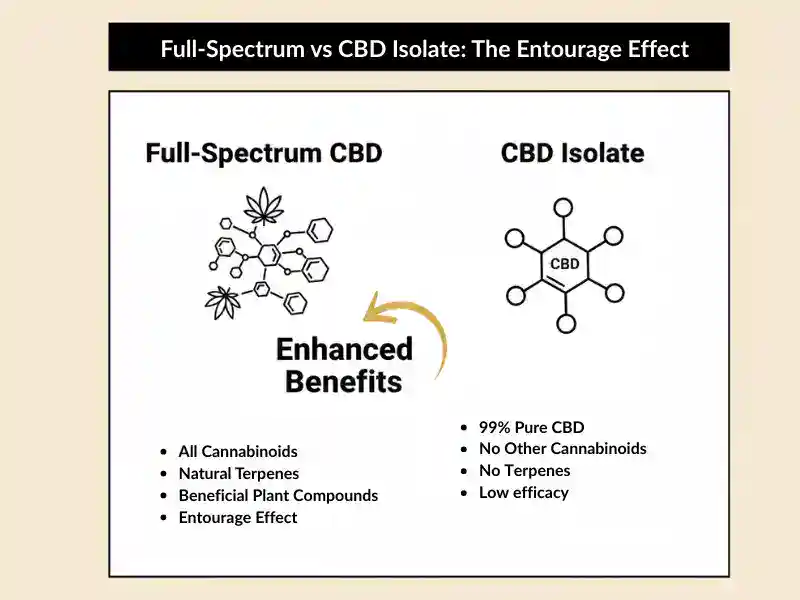
The entourage effect hypothesis proposes that cannabinoids are more effective together than in isolation. CBD combined with minor cannabinoids (CBG, CBN, CBC), terpenes (linalool, myrcene, beta-caryophyllene), and flavonoids may produce enhanced therapeutic effects.
What the evidence shows:
- A 2020 study in the Journal of Cannabis Research found full-spectrum CBD extract was more effective than CBD isolate at equivalent doses for anxiety outcomes
- The 2024 meta-analysis found full-spectrum preparations produced stronger effect sizes than isolate preparations
- Terpenes like linalool (the compound that gives lavender its calming scent) have independent anxiolytic effects via GABA modulation
- Beta-caryophyllene — a terpene found in cannabis and black pepper — directly activates CB2 receptors, adding another anti-anxiety pathway
🌿 TribeTokes Perspective
This is why full-spectrum and live resin formulations matter. When you see “full-spectrum” or “live resin” on a TribeTokes product, the entourage effect is exactly what you’re getting — the complete plant profile, not just isolated CBD. The science backs it up.
7. Safety, Side Effects & Drug Interactions
Good science means presenting the full picture. Here’s everything you need to know about CBD’s safety profile.
The Good News: CBD’s Safety Profile Is Strong
The World Health Organization reviewed CBD’s safety comprehensively in 2018 and concluded CBD is generally well tolerated with a good safety profile and exhibits no effects indicative of abuse or dependence potential. This is a meaningful regulatory endorsement.
Common side effects (typically mild, dose-dependent):
- Dry mouth
- Mild drowsiness at higher doses
- Reduced appetite
- Mild GI upset (more common with oral CBD than inhaled)
“CBD has a better side effect profile than many of the medications currently used for anxiety disorders. The absence of dependence potential is particularly significant given the over-reliance on benzodiazepines in clinical practice.”
— Dr. Yasmin Hurd, Director, Addiction Institute, Icahn School of Medicine at Mount Sinai, speaking on CBD research applications
Drug Interactions: Don’t Skip This Section
CBD inhibits cytochrome P450 enzymes — specifically CYP3A4 and CYP2C19 — which metabolize a large number of common medications. This can increase blood levels of:
- Blood thinners (warfarin — this one is particularly important)
- Certain anti-seizure medications (clobazam)
- Some antidepressants and benzodiazepines
- Certain statins and blood pressure medications
There’s a flip side to this interaction worth understanding. The same enzyme inhibition that raises a flag can, under a prescriber’s supervision, work in a patient’s favor. Some clinicians report that patients who add CBD alongside an SSRI or SNRI reach the same symptom relief at a lower antidepressant dose, and lower doses often mean fewer of the side effects that make people want to quit these medications in the first place. This is a clinical observation, not a settled finding, and it cuts both ways. The interaction that might allow a lower dose is the same one that can push drug levels too high if nobody’s managing it. That’s exactly why this belongs in a conversation with your prescriber, not a solo experiment. Never adjust a prescribed dose on your own.
🩺 Medical Disclaimer
This article is for educational purposes only and does not constitute medical advice. If you take prescription medications, consult your healthcare provider before adding CBD to your routine. This is especially important for blood thinners, antidepressants, and anti-seizure medications.
What About Vaping Specifically?
Vaping any substance introduces respiratory considerations. For CBD specifically: always verify products have third-party Certificates of Analysis (COAs) confirming the absence of harmful additives. Avoid products with additives like vitamin E acetate — this was the culprit in the 2019 EVALI outbreak. That outbreak was tied to illicit THC products, not hemp CBD, but the lesson is universal: know exactly what’s in your vape.
8. Vaping vs. Oral CBD: How Delivery Method Affects Anxiety Relief
Not all CBD delivery methods are equal — particularly for anxiety where timing matters enormously.
| Method | Onset Time | Bioavailability | Duration | Best For |
| Vaping / Inhalation | 1–3 minutes | 34–56% | 1–3 hours | Acute, situational anxiety |
| Sublingual (tincture) | 15–45 minutes | 20–35% | 4–6 hours | Daily anxiety maintenance |
| Edibles / Gummies | 45–90 minutes | 6–20% | 6–8 hours | Sustained background relief |
| Capsules | 30–60 minutes | 6–15% | 6–8 hours | Consistent daily dosing |
For situational or acute anxiety, vaping wins decisively. The 1–3 minute onset and 34–56% bioavailability mean more CBD reaches your bloodstream faster than any other delivery method. If you need relief before a stressful situation, the clinical pharmacology strongly supports inhalation.
For chronic background anxiety, many people find the best results from combining methods: vaping for acute episodes + a daily tincture or gummies for sustained baseline support.
9. What We Don’t Know Yet (Honest Science Corner)
Any credible review of CBD research has to acknowledge the gaps. Here’s what remains unanswered:
- No head-to-head trials vs. standard medications. We don’t have large-scale RCTs directly comparing CBD to SSRIs or benzodiazepines — the studies most prescribers would need to see.
- Long-term dosing data is thin. Most studies run 4–12 weeks. We have limited data on what 1–2+ years of daily CBD use looks like.
- Individual response predictors are unknown. Why do some people respond strongly and others barely at all? Age, genetics, gut microbiome, and existing medications likely matter — but we can’t predict it yet.
- Optimal entourage combinations aren’t mapped. We know the entourage effect exists; we don’t yet know which specific cannabinoid-terpene combinations work best for anxiety.
- Commercial vs. trial dose translation. The 300mg pharmaceutical dose doesn’t map cleanly onto commercial vape products. The dose equivalencies need more research.
- CBD as an add-on to antidepressants is understudied. The clinical reports of patients lowering their SSRI or SNRI dose after adding CBD are promising, but they’re observations, not controlled trials. We don’t yet have the research to say who benefits, at what dose, or how to time it safely.
None of these gaps mean CBD “doesn’t work.” They mean the science is still catching up to what a lot of people are already experiencing. The 22 active clinical trials suggest we’ll have much better answers by 2027–2028.
10. Practical Takeaways: Using CBD for Anxiety
Here’s how to translate the research into real-world decisions:
- Choose full-spectrum or broad-spectrum over isolate. The entourage effect is real and consistently supported in the research.
- Start low and go slow. 5–10mg per vaping session is a responsible starting point. Give it 15 minutes before taking more.
- Match your delivery method to your need. Acute anxiety? Vape. Chronic background anxiety? Layer in a daily tincture or gummies for sustained support.
- Check your COA. Every reputable brand publishes third-party lab results. Look for confirmed CBD potency and a clean additive profile.
- Be patient. The 2019 naturalistic study showed the best results at 30+ days of consistent use. Don’t judge CBD by your first session.
- Talk to your doctor if you take medications. The CYP450 interaction is real and worth a two-minute conversation with your provider.
- Track your results. Keep a simple log of dose, time of day, and anxiety level before/after. You’ll find your personal sweet spot faster than you think.
Ready to Try Lab-Tested CBD?
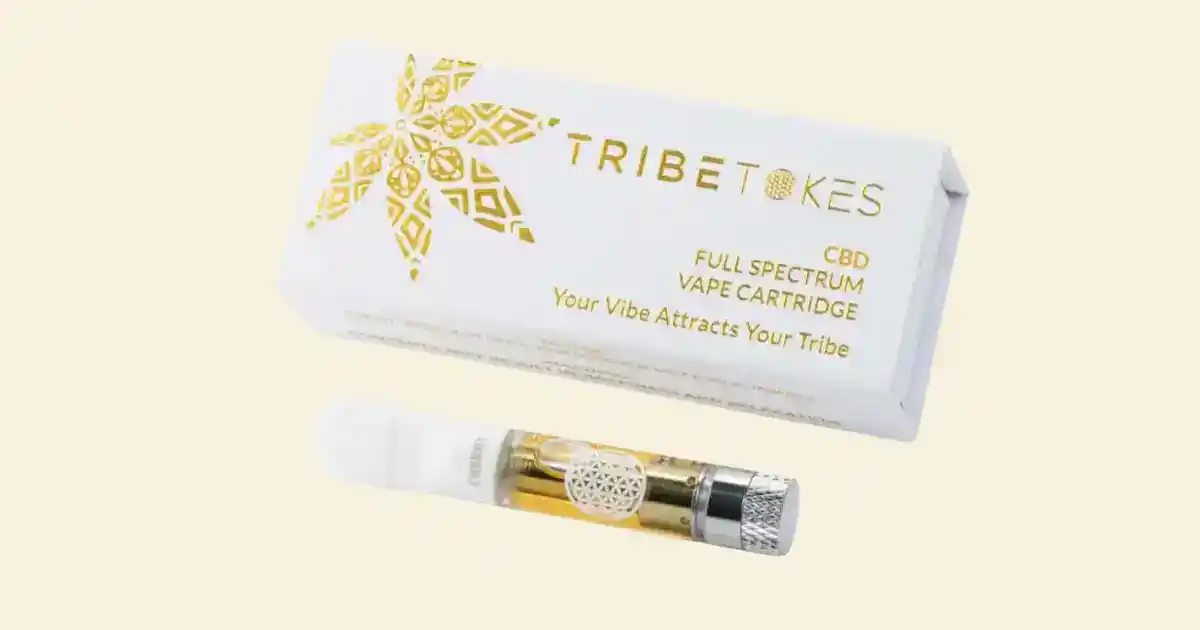
TribeTokes CBD vapes are third-party tested, full-spectrum, and made without additives. Every batch has a COA — because you should know exactly what you’re vaping.
Scientific Citations
- Blessing EM, et al. (2015). Cannabidiol as a Potential Treatment for Anxiety Disorders. Neurotherapeutics, 12(4), 825–836. PubMed Central
- Crippa JA, et al. (2011). Neural basis of anxiolytic effects of cannabidiol (CBD) in generalized social anxiety disorder. Journal of Psychopharmacology, 25(1), 121–130. PubMed
- Linares IM, et al. (2019). No Acute Effects of Cannabidiol on the Sleep-Wake Cycle of Healthy Subjects. Frontiers in Pharmacology. PubMed Central
- Shannon S, et al. (2019). Cannabidiol in Anxiety and Sleep: A Large Case Series. The Permanente Journal, 23:18–041. PubMed Central
- World Health Organization. (2018). Cannabidiol (CBD) Critical Review Report. WHO Report
- Leweke FM, et al. (2012). Cannabidiol enhances anandamide signaling and alleviates psychotic symptoms of schizophrenia. Translational Psychiatry. PubMed
- Russo EB. (2011). Taming THC: potential cannabis synergy and phytocannabinoid-terpenoid entourage effects. British Journal of Pharmacology, 163(7), 1344–1364. PubMed Central
Frequently Asked Questions
Yes. A 2024 meta-analysis pooling 8 clinical trials (316 participants) found CBD produced a substantial significant effect on anxiety with a Hedges’ g of -0.92. Multiple trials report 40–50% reductions in anxiety scores, with effects appearing within 20–60 minutes depending on delivery method.
CBD activates 5-HT1A serotonin receptors — the same target as the prescription anti-anxiety drug buspirone. It also inhibits FAAH to raise anandamide levels, enhances GABA inhibitory signaling, and reduces cortisol release. This multi-pathway action distinguishes CBD from single-target medications.
Clinical trials consistently point to 300mg as the most effective single acute dose, with an inverted U-shaped curve (150mg = minimal effect; 600mg = often less effective than 300mg). For vaping, start at 5–10mg per session and titrate up slowly — commercial vape doses don’t map directly to pharmaceutical trial doses.
Inhaled CBD reaches peak plasma concentration in 3–10 minutes. Most users report noticeable relief within 1–5 minutes. Bioavailability via inhalation is 34–56% — the highest of any delivery method — making vaping the best option for acute or situational anxiety.
The research leans yes. A 2020 Journal of Cannabis Research study found full-spectrum CBD more effective than isolate at equivalent doses. The 2024 meta-analysis confirmed full-spectrum preparations produced stronger effect sizes, likely due to the entourage effect — synergy between CBD, minor cannabinoids, and terpenes like linalool and beta-caryophyllene.
The WHO classified CBD as generally well tolerated in 2018. For vaping, always verify third-party COAs and avoid products with additives like vitamin E acetate. If you have respiratory conditions, are pregnant, or take prescription medications, consult a healthcare provider first.
Yes, and it’s a two-sided story. CBD inhibits CYP3A4 and CYP2C19 liver enzymes, which raises blood levels of certain antidepressants, benzodiazepines, blood thinners (especially warfarin), and statins. Left unmanaged, that can mean more side effects or drug levels running higher than intended. Managed well, the same interaction can work in your favor: some prescribers find that patients who add CBD to an SSRI or SNRI reach the same relief at a lower antidepressant dose, which can mean fewer side effects. The difference between those two outcomes is medical supervision. Talk to your prescriber before combining CBD with any medication, and never adjust a prescribed dose on your own.
For acute situational anxiety, effects appear within minutes (vaping) or 30–60 minutes (oral). For chronic anxiety, the 2019 naturalistic study found the most significant improvements after 30+ days of consistent daily use. Many users report gradual improvement over 2–4 weeks as the endocannabinoid system adapts.
CBD is non-intoxicating and consistently anxiolytic across doses. THC is biphasic — low doses can reduce anxiety, but higher doses frequently increase anxiety or trigger panic, particularly in sensitive individuals. For reliable anxiety relief, CBD is the better-researched choice. Some people find that low-dose full-spectrum products (with trace THC) work best, suggesting synergy.
Look for: (1) Full-spectrum or broad-spectrum formulation for entourage effect benefits. (2) Third-party COA confirming potency and absence of harmful additives, pesticides, and heavy metals. (3) Known CBD content per serving for accurate dosing. (4) No additives beyond natural terpenes if vaping. (5) A brand transparent about sourcing and manufacturing.