
Small confession: “strain” is doing a lot of work in this question that it can’t actually deliver on. The CBD molecule itself is identical across every strain (Northern Lights, Remedy, Juicy Fruit — doesn’t matter). What’s different between them is the terpene profile: the aromatic compounds that travel alongside CBD in the flower and carry their own pharmacological activity. Some terpenes engage serotonin receptors. One binds CB2 directly as a dietary cannabinoid. Several modulate GABA. So the real question isn’t which strain; it’s which terpene profile matches your anxiety pattern.
🧪 Lab Tested | 👩💼 Woman-Owned | 🏆 Est. 2017
Why Terpenes Matter More Than Strain Names
Strain names in the cannabis and hemp world are marketing as much as they are botany. Two products both labeled “Northern Lights” can have completely different terpene profiles depending on the cultivar, the grow conditions, and how the flower was handled post-harvest. What your COA actually tells you is the terpene content in milligrams per gram. That’s the data worth reading.
Terpenes are not just flavoring. They’re pharmacologically active compounds that interact with the same receptor systems as cannabinoids. A 2011 review by Russo (PMID 21749363) laid out the mechanistic case for what he called the “entourage effect”: terpenes and cannabinoids work synergistically, with terpenes modifying how cannabinoids behave at the receptor level. For anxiety specifically, certain terpenes do independent work through serotonin receptors, GABA pathways, and CB2 well before CBD enters the equation.
The practical consequence: two CBD products with the same milligram count but different terpene profiles can produce noticeably different subjective effects. A myrcene-dominant flower tends toward sedation; a limonene-forward one tends toward lift. Neither is “better” in the abstract. They’re tools for different hours and different anxiety types.
The Four Terpenes to Look For
Linalool
Floral, lavender
The most directly anxiolytic terpene in hemp. Linalool activates 5-HT1A serotonin receptors (the same target as CBD and buspirone) and modulates GABA-A, the brain’s primary inhibitory neurotransmitter. Research in humans found that inhaling linalool reduced anxiety without sedating subjects cognitively. Common in indica-dominant CBD strains and anything described as “floral.” Northern Lights carries notable linalool.
Beta-caryophyllene
Spicy, peppery, clove
Uniquely among terpenes, beta-caryophyllene is also a dietary cannabinoid: it binds CB2 receptors directly. CB2 activation reduces neuroinflammation and modulates the immune-related anxiety pathways that conventional anxiolytics don’t reach. Research in animal models found that beta-caryophyllene produced measurable reductions in anxiety-related behavior through this CB2 mechanism. Present in most hemp strains; particularly high in the Remedy cultivar.
Myrcene
Earthy, musky, mango
The most abundant terpene in most cannabis and hemp flower. Myrcene is sedating; it increases sleep time in animal models and potentiates the effects of other cannabinoids by increasing blood-brain barrier permeability. For anxiety with a sleep disruption component, or racing-mind-at-night patterns, a myrcene-dominant profile offers sedation alongside the anxiolytic action of CBD. Indica-dominant strains reliably carry higher myrcene.
Limonene
Citrus, lemon, orange
Limonene is found in higher concentrations in sativa and hybrid cultivars. It activates 5-HT1A and dopamine receptors and produces anxiolytic effects with an uplifting quality rather than sedation. For daytime anxiety or social anxiety where you need to stay alert and functional, a limonene-forward profile may offer calm without the heaviness of myrcene-dominant options. Juicy Fruit carries notable limonene alongside beta-caryophyllene.
What the Research Shows
Entourage effect framework
Russo 2011 (PMID 21749363) reviewed the mechanistic case for cannabinoid-terpene synergy across clinical conditions including anxiety. The review found that terpenes modify cannabinoid pharmacokinetics at the receptor level, shift CBD’s effects on serotonin and GABA systems, and carry independent therapeutic activity. The author concluded that whole-plant preparations with preserved terpene profiles likely outperform isolated CBD for anxiety and mood applications.
Linalool and human anxiety
Harada et al. 2018 (PMID 30541898) tested linalool odorant inhalation in healthy humans using validated anxiety measures. Subjects showed reduced anxiety scores without impairment of motor or cognitive function, and the effect was blocked by an olfactory nerve-cutting procedure, confirming the pathway runs through olfactory-limbic projections rather than just systemic absorption. The study supports linalool as an anxiolytic terpene through a mechanism separate from CBD’s serotonin pathway.
Beta-caryophyllene and CB2-mediated calm
Bahi et al. 2014 (PMID 24930304) showed that beta-caryophyllene produced significant reductions in anxiety-related behavior in animal models, with the effect blocked by a CB2 receptor antagonist. This confirmed the anxiolytic action operates through CB2, not CB1. CB2 agonism carries no psychoactive risk and no dose-dependent anxiety inversion, placing beta-caryophyllene in a separate mechanistic category from both CBD (primarily 5-HT1A) and THC (primarily CB1).
Matching Terpene Profile to Anxiety Type
| Anxiety Pattern | Terpene Profile to Look For | Why |
| Racing mind at night, sleep anxiety | Linalool + myrcene (indica-dominant) | Linalool hits 5-HT1A and GABA-A; myrcene adds sedation to quiet the loop |
| Social anxiety, daytime functional anxiety | Limonene + beta-caryophyllene (hybrid) | Limonene lifts without sedating; beta-caryophyllene adds CB2-mediated calm |
| Generalized anxiety, need all-day coverage | Beta-caryophyllene + moderate linalool | CB2 pathway is non-sedating; linalool supports without heavy drowsiness |
| Panic, need rapid onset | Any calming profile; prioritize format (vape) over strain | Onset speed (2 to 5 min via vape) matters more than terpene for acute panic |
| Anxiety without sedation during work hours | Limonene-forward, low myrcene (sativa or hybrid) | Myrcene sedates; limonene calms without cognitive heaviness |
TribeTokes CBD Strains by Terpene Profile
TribeTokes CBD vapes use live resin extraction, which preserves the native terpene content of the strain rather than stripping it out and adding it back from an external source. The terpene percentages visible on each COA at tribetokes.com/certificates-of-analysis reflect what’s actually in the product.
Evening Calm: Linalool + Myrcene Dominant
Northern Lights CBD Disposable Vape
★★★★★ 5.00 from 8 reviews
Indica
Full Spectrum CBD
CBG-Boosted
Live Resin
Northern Lights is one of the most reliably linalool-forward hemp strains available. The indica dominance means myrcene runs high alongside linalool, producing a profile suited to evening anxiety: the 5-HT1A serotonin activity quiets the alarm system while the sedating terpene layer softens the physical restlessness that often accompanies anxious states. Full-spectrum trace D9: low but real drug test risk; review COA for your batch. “you can’t go wrong with the REMEDY or NORTHERN LIGHTS,” Kate D. “I got the Northern Lights strain, and it makes me sleep so much better,” Christopher H.
Daytime Calm: Beta-Caryophyllene + Terpinolene
Remedy CBD Disposable Vape
★★★★★ 5.00 from 8 reviews
Indica-Hybrid
Full Spectrum CBD
CBG-Boosted
Live Resin
Remedy was specifically bred as a high-CBD, low-THC cultivar, and its terpene profile reflects that intent: beta-caryophyllene and terpinolene dominate, with lower myrcene than Northern Lights. Beta-caryophyllene’s CB2-mediated calming is non-sedating by nature, so Remedy supports anxiety management without the heaviness that makes Northern Lights better suited to evenings. A practical daytime option for users who need calm without cognitive impairment. Full-spectrum trace D9: low but real drug test risk. “Life is so much better with the REMEDY,” Katelyn D.
Social Calm: Limonene + Beta-Caryophyllene
Juicy Fruit CBD Disposable Vape
★★★★★ 4.82 from 11 reviews
Hybrid
Full Spectrum CBD
CBG-Boosted
Live Resin
Juicy Fruit’s hybrid lineage produces a limonene-forward terpene profile with supporting beta-caryophyllene. Limonene activates 5-HT1A and dopamine receptors with an uplifting quality, which suits social anxiety and daytime stress better than sedating indica profiles do. Non-psychoactive (CBD, no THC). Full-spectrum trace D9: low but real drug test risk. “CBD Juicy Fruit is a lifesaver for me, especially when I leave home without anxiety meds. If I feel panic coming on a couple pulls and I’m ok,” Jodi H.
-
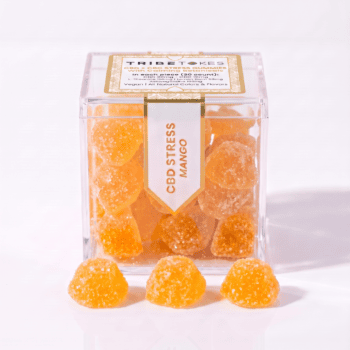
 CBD Gummies for Stress: 30mg CBD + ...Starting from: $45.00 SHOP NOW This product has multiple variants. The options may be chosen on the product page
Frequently Asked Questions
No single strain is best for all anxiety. The answer depends on your anxiety pattern and time of day. For sleep anxiety and racing thoughts at night, an indica-dominant strain with linalool and myrcene (Northern Lights) may suit better. For daytime or social anxiety where you need to stay functional, a hybrid with limonene and beta-caryophyllene (Juicy Fruit, Remedy) carries less sedating weight. The most important variable isn’t the strain name; it’s the terpene profile on the COA, since strain names are inconsistent across growers.
Research supports several terpenes as pharmacologically active for anxiety through mechanisms independent of CBD. Linalool activates 5-HT1A serotonin receptors and modulates GABA-A. A 2018 study in humans confirmed anxiolytic effects from linalool inhalation specifically. Beta-caryophyllene binds CB2 receptors directly and produced anxiety-relevant behavioral changes in animal models that were blocked by a CB2 antagonist. Myrcene modulates sleep-related pathways. These are not aromatherapy effects; they’re measurable receptor-level interactions.
Indica-dominant strains typically carry higher myrcene and linalool, with a more sedating, body-forward effect suited to evening anxiety and sleep disruption. Sativa-dominant strains tend toward limonene and terpinolene, with a more cerebral, uplifting quality that can support daytime anxiety but may feel activating for some users. Hybrid strains split the difference. For CBD specifically (no THC), neither category carries psychoactive risk, so the choice is purely about terpene-driven subjective experience rather than intoxication management.
Northern Lights for evening and sleep anxiety: linalool plus myrcene produces a calming, sedating effect suited to winding down. Remedy for daytime anxiety: beta-caryophyllene and terpinolene carry non-sedating calming properties appropriate for hours when cognitive clarity matters. Juicy Fruit for social or uplifted anxiety relief: limonene adds a mood-brightening quality alongside beta-caryophyllene’s CB2-mediated calm. If you’re unsure, Remedy is the most versatile across times of day.
TribeTokes CBD disposable vapes are full-spectrum formulations, which means they contain trace amounts of Delta-9 THC alongside CBD and the preserved terpene profile. Full-spectrum CBD carries low but real drug test risk with regular use, since trace Delta-9 THC accumulates in fatty tissue. CBD-isolate products carry essentially no drug test risk. Review the COA for your specific strain at tribetokes.com/certificates-of-analysis to see the Delta-9 THC content before choosing.
Inhalation delivers cannabinoids and terpenes to the bloodstream through the lungs. Onset is 2 to 5 minutes, with peak effect at 15 to 30 minutes. For acute anxiety or panic, vape is the fastest-acting format available in non-psychoactive CBD. Duration is 1 to 3 hours. Take one or two draws, wait 5 to 10 minutes before a second round to assess effect. “This vape is fast-acting and helps a lot,” Nicole D. (CBD Disposable Vape Pen).
Discuss with your prescriber before combining CBD products with any prescription anxiety medication. CBD inhibits CYP3A4 and CYP2D6 liver enzymes, which metabolize many psychiatric medications. For vapes, the inhalation route means CBD enters circulation without liver first-pass metabolism, but systemic CYP interactions can still occur with regular use. Do not discontinue prescription anxiety treatment in favor of CBD without medical guidance. If your primary concern is drug interactions, topical CBD carries the lowest interaction risk since it stays local.
The entourage effect describes the synergistic interaction between cannabinoids and terpenes. A 2011 review by Russo found that terpenes modify how CBD and other cannabinoids behave at the receptor level; they shift potency, receptor selectivity, and subjective effects. For anxiety, this means a full-spectrum CBD product with a preserved terpene profile likely produces different effects than the same milligram dose of CBD isolate. Choosing a strain with a relevant terpene profile (linalool for serotonin and GABA, beta-caryophyllene for CB2, limonene for uplift) adds pharmacological layers that isolate products don’t deliver.
Match the Terpene Profile to Your Anxiety Pattern.
Northern Lights for evening. Remedy for daytime. Juicy Fruit for social. COA on every batch.