

CBD itself does not show up on a standard drug test. Standard immunoassay screens target THC-COOH: a metabolite produced when the body breaks down Delta-9 THC. CBD metabolizes through a completely different pathway and does not produce THC-COOH.
The complication: full-spectrum CBD products contain trace amounts of THC that do produce THC-COOH. Whether that matters depends on the product type, how much you’re using, and how often.
The answer almost everyone gets wrong: “CBD is legal, so it’s fine for drug tests.” That’s not how tests work. Tests don’t care about legality: they detect metabolites. CBD’s metabolites aren’t what tests look for. But the trace THC in some CBD products produces metabolites that tests very much do look for.
🧪 Lab Tested | 👩💼 Woman-Owned | 🏆 Est. 2017
How Drug Tests Work
Most workplace and legal drug screens are urine-based immunoassay tests, specifically EMIT (enzyme multiplied immunoassay technique) or similar antibody-based panels. They work by exposing urine to antibodies calibrated to bind to specific target molecules. When the antibody binds to enough of the target compound, the test registers positive.
For cannabis, the target is THC-COOH (11-nor-9-carboxy-THC), the primary urinary metabolite produced when the body processes Delta-9 THC. The standard SAMHSA-certified cutoff for a presumptive positive on immunoassay is 50 nanograms per milliliter (ng/mL). If the concentration of THC-COOH in urine exceeds that threshold, the initial screen is positive.
When an initial screen returns positive, many programs run a confirmatory test using gas chromatography-mass spectrometry (GC-MS). GC-MS identifies the exact compound and its precise concentration. The confirmatory cutoff is typically 15 ng/mL, lower than the screening threshold. A sample can fail the immunoassay and still pass GC-MS if the concentration falls between 15 and 50 ng/mL.
Standard urine immunoassay tests do not screen for CBD, CBN, CBG, or any other non-THC cannabinoid. The antibodies are calibrated for THC-COOH specifically. A test cannot register positive because of CBD consumption alone.
Reference: Substance Abuse and Mental Health Services Administration (SAMHSA). Mandatory Guidelines for Federal Workplace Drug Testing Programs. 2017. samhsa.gov.
What CBD Actually Metabolizes Into
CBD is metabolized primarily in the liver by cytochrome P450 enzymes (specifically CYP3A4 and CYP2C19). The primary metabolites are 7-hydroxy-CBD (7-OH-CBD) and 7-carboxy-CBD (7-COOH-CBD), neither of which resembles THC-COOH structurally or produces a cross-reactive signal on THC immunoassay tests.
CBD metabolism does not produce THC or THC-COOH at any meaningful stage. The CBD molecule has the same chemical formula as THC but a different molecular arrangement: the double bond that THC’s psychoactive activity depends on (and that the liver’s enzymatic breakdown eventually converts to THC-COOH) is absent in CBD’s structure. The metabolic pathway simply doesn’t produce the target compound.
Early concerns that CBD could convert to THC in the acidic environment of the stomach (via a process called acid-catalyzed cyclization) were explored in a 2020 study by Merrick et al. in the journal Cannabis and Cannabinoid Research. The in vitro (simulated gastric acid) findings suggested conversion was possible. However, a subsequent human pharmacokinetic study found no evidence of meaningful THC conversion or psychoactive effects in participants who consumed CBD orally, suggesting the in vitro conditions don’t replicate the actual stomach environment closely enough to be clinically relevant at typical doses.
CBD will not produce a positive drug test result. Its metabolites don’t resemble THC-COOH structurally and do not cross-react with THC immunoassay antibodies at meaningful concentrations.
Sources: Spindle, T.R. et al. (2020). “Urinary pharmacokinetic profile of cannabinoids following administration of vaporized and oral cannabidiol.” Journal of Analytical Toxicology, 44(2), 109-125. PubMed: 31722388. | Merrick, J. et al. (2016). “Identification of psychoactive degradants of cannabidiol in simulated gastric and physiological fluid.” Cannabis and Cannabinoid Research, 1(1), 102-112.
Risk by Product Type
Very Low Risk
CBD Isolate
Pure CBD with all other cannabinoids removed. No THC present. With a COA confirming non-detectable THC, drug test risk is very low.
Very Low Risk
Broad-Spectrum CBD
Full plant terpene and minor cannabinoid profile with THC removed post-extraction. COA must confirm non-detectable Delta-9 THC.
Low but Non-Zero
Full-Spectrum CBD
Contains trace THC at or below 0.3%. Unlikely to trigger a positive from occasional use, but documented positives have occurred with regular daily use.
A product labeled “broad-spectrum” or “isolate” that hasn’t been third-party tested with a batch-specific COA confirming non-detectable THC is an unknown. Labels are not enough. Only a published, batch-specific lab report tells you what’s actually in the product you’re holding.
TribeTokes THC-free CBD gummies are made with CBD isolate, and the THC-free tinctures are isolate-based with no THC in the formula, with batch COAs confirming non-detectable Delta-9 THC, published at tribetokes.com/certificates-of-analysis before products ship. The full-spectrum CBD vape carts contain trace THC within the legal 0.3% limit: the same trade-off that applies to all full-spectrum products (see our guide to vaping full-spectrum CBD oil).
The Full-Spectrum Risk in Detail
The common (and wrong) framing on full-spectrum CBD: “0.3% THC is so little it can’t possibly matter.” The correct framing: it depends on how much product you’re using and how often.
What the Research Shows
A 2020 study by Spindle et al. in the Journal of Analytical Toxicology examined urinary cannabinoid profiles after participants consumed various CBD products. The researchers documented confirmed positive THC urine screens in participants who used full-spectrum CBD products at typical commercial doses. Even at 0.3% or below, regular daily consumption of full-spectrum CBD delivers a cumulative THC load that, for some users, metabolizes into enough THC-COOH to exceed the 50 ng/mL immunoassay threshold.
The risk is not from a single use. An occasional user taking a full-spectrum CBD gummy once is extremely unlikely to generate enough THC-COOH to flag a test. The problem emerges with regular daily use, which describes most people’s therapeutic CBD routine. THC-COOH is lipophilic (fat-soluble). It accumulates in fat cells and releases gradually, which is why detection windows for cannabis are measured in days to weeks rather than hours.
Vaping vs. Oral Full-Spectrum
The practical drug test risk from vaping full-spectrum CBD is genuinely low. An entire 1g full-spectrum CBD cart at the legal 0.3% THC limit contains roughly 3mg of THC total. Even daily vaping delivers a cumulative THC dose that is a fraction of what extended daily oral use (a full-serving tincture or gummies every day for weeks) can build up. The Spindle 2020 study documenting positive results was primarily driven by oral full-spectrum CBD consumption patterns, not vaping. For most people using full-spectrum CBD vape carts, the real-world risk of triggering a positive drug test is very low.
The higher concern within full-spectrum products is extended daily oral use. A full-spectrum CBD tincture dosed at a standard serving daily can deliver more cumulative THC over time than a cart that takes weeks to finish. If you’re under active testing requirements, the safest path is still THC-free regardless of format. But the risk differential between vaping and oral full-spectrum is meaningful.
Individual Variation
THC-COOH accumulation and clearance vary significantly between individuals based on body fat percentage (higher body fat = longer storage and slower release), frequency of use, dose per session, hydration, and individual enzyme activity. Two people using identical products on an identical schedule can produce meaningfully different urine concentrations. There is no safe consumption pattern that guarantees a negative result when using full-spectrum products regularly.
Source: Spindle, T.R. et al. (2020). “Urinary pharmacokinetic profile of cannabinoids following administration of vaporized and oral cannabidiol and vaporized CBD-dominant cannabis.” Journal of Analytical Toxicology, 44(2), 109-125. PubMed: 31722388.
Detection Windows
CBD metabolites (7-OH-CBD, 7-COOH-CBD) are not typically included in standard drug screening panels. Detection window estimates below are for THC-COOH from trace THC in full-spectrum products.
| Usage pattern | Urine (immunoassay) | Hair (90-day window) | Blood |
| Single use / very occasional | 3–4 days | Not typically detectable from trace THC | Hours to 1–2 days |
| Moderate use (a few times per week) | 5–7 days | Possible at 90-day window | 1–3 days |
| Daily use of full-spectrum products | 14–30+ days | Potentially detectable | 3–7 days |
These are estimates, not guarantees. The SAMHSA 50 ng/mL threshold was set with illicit cannabis use in mind. Someone consuming trace amounts through legal full-spectrum CBD products is starting from a much lower THC baseline. But “much lower baseline” does not mean zero, and individual variation means these windows are not reliable for predicting a specific person’s result.
Hair follicle testing has a 90-day detection window and detects THCCOOH-glucuronide (a different metabolite than what urine screens target). The scientific literature on whether trace THC from full-spectrum CBD can produce a detectable hair test result is limited. If you’re subject to hair testing and cannot risk a positive, THC-free products are the only defensible choice.
How to Use CBD and Protect Your Test
Step 1: Choose the right product type. CBD isolate or broad-spectrum CBD with COA-confirmed non-detectable THC. Not full-spectrum if testing is a concern. The label alone is not sufficient; you need a published, batch-specific COA from an accredited third-party lab.
Step 2: Verify the COA yourself. Look for the specific batch number on the product packaging, find the corresponding COA on the brand’s website, and confirm that Delta-9 THC reads as non-detectable (ND) or below the lab’s limit of quantification (LOQ). A COA that was published for a previous batch doesn’t tell you anything about the batch in your hands.
Step 3: Know your test type and timeline. Urine immunoassay (most common): if you’re using THC-free CBD, risk is very low. Hair follicle test: the evidence is limited, but the same principle applies. THC-free is the conservative choice. A test with less than 30 days’ notice and daily full-spectrum use: the math is not in your favor even with favorable individual metabolism.
Step 4: Don’t rely on “passing” stories. Anecdotal accounts of people using full-spectrum CBD and passing drug tests are not evidence that it’s safe: they’re evidence that some people get lucky some of the time. Individual variation is high enough that one person’s passing test is not a reliable predictor for someone else’s body composition, dose, or frequency.
Step 5: When in doubt, ask your testing authority. In contexts where disclosure is an option (a medical review officer, an employer with a transparent drug testing policy, a sports governing body), asking directly about CBD and the specific test being used is the only way to get a definitive answer for your specific situation.
TribeTokes THC-Free CBD Options
TribeTokes makes CBD across every format: vape carts, disposable pens, gummies, tinctures, pain creams, and skincare. For customers who need THC-free options, the relevant products are the CBD isolate gummies and the isolate-based tinctures (no THC in the formula), with batch COAs confirming non-detectable Delta-9 THC before any batch ships.
The full-spectrum CBD vape lineup (CBG-boosted) contains trace THC within the legal 0.3% limit. These are excellent products with 4.79/5 from 909 verified CBD reviews, but they are full-spectrum: the trace THC caveat applies to anyone under active drug testing requirements.
TribeTokes’ THC-free CBD gummies and CBD tinctures are the right format for users who want the relaxation and wellness effects of CBD without any THC exposure. Browse all CBD products, verify COAs at tribetokes.com/certificates-of-analysis. Woman-owned since 2017. Curious about topical CBD? See our skincare guide
-
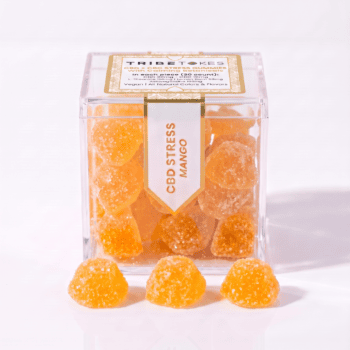
 CBD Gummies for Stress: 30mg CBD + ...Starting from: $45.00 SHOP NOW This product has multiple variants. The options may be chosen on the product page
Frequently Asked Questions
CBD itself does not show up on a standard drug test. Standard urine immunoassay screens target THC-COOH, a metabolite produced when the body breaks down Delta-9 THC. CBD metabolizes through a different pathway and does not produce THC-COOH. However, full-spectrum CBD products contain trace THC that does produce THC-COOH, and regular daily use of full-spectrum products has produced confirmed positive results in research participants.
Standard urine immunoassay drug tests screen for THC-COOH (11-nor-9-carboxy-THC), the primary metabolite produced when Delta-9 THC breaks down in the body. The SAMHSA screening cutoff is 50 ng/mL. Confirmatory GC-MS tests use a lower cutoff of 15 ng/mL. Tests do not screen for CBD, CBG, CBN, or any other non-THC cannabinoid.
Yes. Full-spectrum CBD contains trace Delta-9 THC at or below 0.3% by dry weight. With regular daily use, the cumulative THC load can produce THC-COOH concentrations that exceed the 50 ng/mL screening threshold. A 2020 study in the Journal of Analytical Toxicology documented confirmed positive THC urine screens in participants using full-spectrum CBD at typical commercial doses. The risk is not from a single use; it accumulates with regular consumption over time.
Broad-spectrum CBD with COA-confirmed non-detectable Delta-9 THC carries very low drug test risk. Because THC has been removed, there is no THC to metabolize into THC-COOH. “Very low risk” is not the same as “guaranteed safe”; verify the batch-specific COA before using any product you’re relying on for testing purposes, and make sure it shows non-detectable THC, not just “under 0.3%.”
For occasional use of full-spectrum CBD: THC-COOH typically clears in 3–4 days. For regular daily use: 14–30+ days, depending on body fat percentage, frequency, and individual metabolism. THC-COOH is fat-soluble and accumulates in fat cells. Detection windows extend significantly for regular users. These are estimates, not guarantees; individual variation is substantial.
It depends on the product, and the practical risk from full-spectrum CBD vapes is lower than many people assume. A full-spectrum CBD vape cart at the legal 0.3% THC limit contains roughly 3mg of THC in the entire 1g cart. Even daily vaping delivers a very small cumulative THC dose: much less than daily oral full-spectrum use from tinctures or gummies at a full serving. For most users vaping full-spectrum CBD, the real-world risk of triggering a positive test is genuinely low. Broad-spectrum CBD vape products with COA-confirmed non-detectable THC remove the variable entirely.
CBD isolate or broad-spectrum CBD with a batch-specific COA confirming non-detectable Delta-9 THC. The label alone is not sufficient; you need the COA for the actual batch in your hands. Full-spectrum products are not the safe choice for anyone subject to testing, regardless of how small the THC percentage is.
In many cases, a positive drug test is a positive drug test regardless of stated source. Employer policies vary significantly: some have medical review officer programs that may consider an explanation; others do not. This is not guaranteed and varies by industry, jurisdiction, and policy. If disclosure is relevant to your situation, consult an employment attorney or HR professional before testing, not after.
No. Human pharmacokinetic research has not found meaningful THC conversion or psychoactive effects from oral CBD consumption at standard doses. Early in vitro studies suggested that CBD could undergo acid-catalyzed cyclization to produce THC in simulated gastric acid, but those conditions don’t accurately reflect human stomach chemistry. The current scientific consensus is that CBD does not convert to THC in the body at clinically relevant concentrations from typical use.
Hair follicle tests do not screen for CBD specifically. They screen for THCCOOH-glucuronide, a THC-related metabolite that deposits in the hair shaft. The 90-day detection window and detection of trace THC from full-spectrum CBD use in hair tests is less well-characterized than urine testing. The conservative approach for anyone facing hair testing: THC-free CBD products only, and verify with a batch COA.
Shop TribeTokes THC-Free CBD
Broad-spectrum gummies and tinctures with batch COAs confirming non-detectable THC. 4.79/5 from 909 CBD reviews. Woman-owned since 2017.
Sources
- Substance Abuse and Mental Health Services Administration (SAMHSA). Mandatory Guidelines for Federal Workplace Drug Testing Programs. 2017. samhsa.gov.
- Spindle, T.R. et al. (2020). “Urinary pharmacokinetic profile of cannabinoids following administration of vaporized and oral cannabidiol and vaporized CBD-dominant cannabis.” Journal of Analytical Toxicology, 44(2), 109-125. PubMed: 31722388.
- Merrick, J. et al. (2016). “Identification of psychoactive degradants of cannabidiol in simulated gastric and physiological fluid.” Cannabis and Cannabinoid Research, 1(1), 102-112. PubMed: 28861484.