CBD is the non-psychoactive cannabinoid from the hemp plant that’s attracted more research interest in the last decade than almost any other plant compound. It won’t get you high. It works through a different mechanism than THC. The science behind it is more substantive than most wellness marketing suggests. And more honest than the skeptics give it credit for. This guide covers what CBD actually is, how it works in the body, what the research says, and how to choose the right format and dose if you’re starting out.
🧪 Lab Tested | 👩💼 Woman-Owned | 🏆 Est. 2017
CBD at a Glance
| Full name | Cannabidiol (CBD) |
| Source | Cannabis sativa plant (hemp variety) |
| Psychoactive? | No; does not produce the “high” associated with THC |
| Primary mechanism | Modulates the endocannabinoid system indirectly; also acts on serotonin, vanilloid, and other receptor systems |
| Federal legal status | Legal when hemp-derived and containing 0.3% or less Delta-9 THC under federal hemp law |
| FDA-approved use | Epidiolex (pharmaceutical CBD) approved for two rare seizure disorders |
| Common formats | Vape carts, tinctures, gummies, topicals, capsules |
| Drug test risk | Low for CBD-only products; confirm COA shows non-detectable THC before using if tested (see our CBD gummies with no THC list) |
| TribeTokes CBD rating | 4.81/5 from 871 CBD reviews |
What Is CBD?
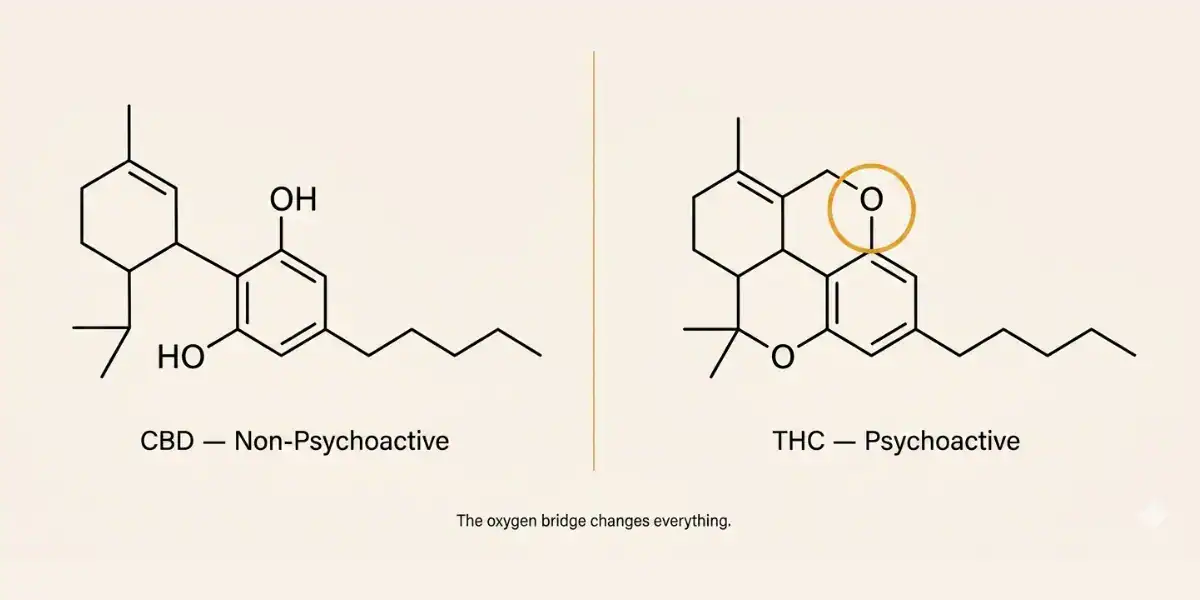
CBD, short for cannabidiol, is one of more than 100 cannabinoids produced by the cannabis plant. It’s found in both hemp and marijuana varieties of cannabis, though hemp-derived CBD products use plants selectively bred to contain high CBD concentrations and minimal Delta-9 THC, the compound responsible for psychoactive effects.
CBD is not a new discovery. Researchers first isolated the compound in 1940. Its full chemical structure was mapped in 1963 by Raphael Mechoulam, the Israeli chemist who would later isolate THC and spend his career documenting the endocannabinoid system. What’s new is the scale of research interest: in the decade following federal hemp law, which made hemp-derived CBD hemp-derived in the US, the compound became one of the most studied plant molecules in pharmaceutical and nutrition research.
Structurally, CBD and THC share the same molecular formula (C21H30O2) but arrange their atoms differently. That structural difference is why CBD doesn’t produce intoxication: it doesn’t bind to CB1 receptors in the brain the way THC does. The same plant, two very different molecules, two completely different experiences.
Source: Mechoulam, R. and Shvo, Y. (1963). “Hashish — I: The structure of cannabidiol.” Tetrahedron, 19(12), 2073-2078. doi:10.1016/0040-4020(63)85022-X.
How CBD Works in the Body
The Endocannabinoid System
The endocannabinoid system (ECS) is a regulatory network present in all mammals that helps maintain physiological balance across multiple body systems. The ECS consists of endocannabinoids (molecules the body produces naturally), the receptors they bind to (CB1 and CB2), and the enzymes that break them down. CB1 receptors are concentrated in the brain and central nervous system. CB2 receptors are more prevalent in immune tissues and peripheral organs.
The ECS plays a documented role in regulating mood, pain perception, sleep, appetite, immune response, and inflammation. This broad reach is why cannabinoids attract research interest across such a wide range of conditions: the ECS touches almost every major physiological function.
How CBD Interacts with the ECS
Unlike THC, which binds directly and strongly to CB1 receptors, CBD has very low binding affinity for both CB1 and CB2 receptors. It doesn’t work by activating them the way THC does. Instead, CBD is what pharmacologists call a negative allosteric modulator of CB1: it changes the shape of the receptor in a way that makes THC and other cannabinoids bind less strongly. This is one of the reasons CBD can soften an intense THC experience.
Beyond the ECS, CBD interacts with several other receptor systems. It acts as an agonist at 5-HT1A serotonin receptors, which are heavily involved in anxiety and mood regulation. It activates TRPV1 receptors, which play a role in pain and inflammation signaling. And it inhibits the reuptake of anandamide, one of the body’s own endocannabinoids, which keeps it active in the system longer. Acting simultaneously on this many receptor systems is why individual responses to CBD vary as much as they do.
Source: Ibeas Bih, C. et al. (2015). “Molecular Targets of Cannabidiol in Neurological Disorders.” Neurotherapeutics, 12(4), 699-730. PubMed: 26264914.
The endocannabinoid system is why CBD touches so many different areas of experience. It’s not that CBD does everything; it’s that the ECS it interacts with regulates a lot. Mood, sleep, pain response, inflammation: these aren’t marketing claims. They’re documented functions of the system CBD acts on. What’s more contested is exactly how much CBD moves the needle on any of them in a given person.
What CBD Feels Like
CBD is non-psychoactive, meaning it won’t produce intoxication, altered perception, or cognitive changes. What it does produce is subtler; individual response varies considerably, and most users describe the experience as a shift in baseline state rather than a distinct effect. Across format types and dose levels, four things come up consistently:
- A sense of calm without sedation. The most consistent report across format types. Not sleepy, not impaired. Just a quieting of background noise.
- Reduced physical tension. Particularly with higher doses or topical application. Users with muscle soreness or joint discomfort often notice this first.
- Clearer mental state. Some users describe this specifically as relief from anxious mental patterns rather than a mood boost. Robert C., a TribeTokes CBD vape customer, calls it his “go-to for when I want an uplift but remain clear headed.”
- Sleep onset support. More commonly reported with indica-strain CBD vapes, CBN-boosted gummies, or tinctures taken 30-60 minutes before bed.
“This stuff is so pure and clean. It’s the relaxation without the buzz, which is just what my mind and body were looking for,” wrote Hannah S. after trying TribeTokes CBD vape carts. That framing captures the appeal for a lot of CBD users: the cannabis plant’s calming effects without any of the intoxication. Antonio G. described it from the opposite direction: “it’s great for my mental state without the intoxication, it’s kinda crazy haha.” He’s a Delta 8 user who switched to CBD for off days and noticed immediately how different the experience is.
What CBD does not feel like: sedation, impairment, euphoria, altered time perception, or anything that would affect your ability to drive, work, or operate normally. It doesn’t feel like being stoned. Many users take it during the workday without issue.
What the Research Actually Says
CBD research falls into three tiers: what’s established, what’s promising but inconclusive, and what’s marketing overreach. Being honest about which is which is more useful than the usual brand approach of treating all three as equally proven.
Established
The only FDA-approved use of CBD is Epidiolex, a pharmaceutical-grade cannabidiol approved in 2018 for treating Dravet syndrome and Lennox-Gastaut syndrome, two severe, treatment-resistant forms of epilepsy. This is the hardest clinical evidence available: randomized controlled trials showing significant seizure reduction in a population that hadn’t responded to other treatments. The FDA approval doesn’t extend to other uses, but the mechanism of action (CBD’s effects on neuronal excitability) has relevance for other neurological conditions currently under investigation.
Promising
Anxiety is the area with the most accumulating research outside of epilepsy. A 2019 study in The Permanente Journal (Shannon et al.) found that 79% of participants reported reduced anxiety scores within the first month of CBD use. A 2015 systematic review in Neurotherapeutics (Blessing et al.) examined preclinical and clinical evidence and concluded CBD demonstrated efficacy for multiple anxiety disorders in controlled settings. Both note that larger randomized controlled trials are still needed. The signal is real; the dose-response relationship and long-term picture remain under investigation.
Sleep follows the same trajectory: promising data, not yet definitive. The Shannon et al. 2019 study found that 66% of participants reported improved sleep scores within the first month, though sleep scores fluctuated more than anxiety scores over the study period. Separately, preclinical research suggests CBD may extend total sleep time and reduce REM sleep disruption at higher doses.
For pain and inflammation, most of the strong evidence remains in animal models. Human studies on CBD for pain conditions are ongoing, and several systematic reviews conclude the evidence is promising but not yet sufficient for definitive clinical recommendations. Topical CBD specifically has attracted interest for localized inflammation. The skin has its own ECS with CB1 and CB2 receptors, and some small human trials show positive results for conditions like eczema and joint discomfort.
Overstated
Most CBD marketing claims outrun the evidence. “Cures inflammation,” “eliminates anxiety,” “heals chronic pain”: these are not positions the research supports at the population level. Individual responses vary enormously, and the studies that show strong effects are often small, uncontrolled, or in animal models. CBD is worth investigating. It’s not a guaranteed outcome.
Sources: Shannon, S. et al. (2019). “Cannabidiol in Anxiety and Sleep.” The Permanente Journal, 23. PubMed: 30624194. | Blessing, E.M. et al. (2015). “Cannabidiol as a Potential Treatment for Anxiety Disorders.” Neurotherapeutics, 12(4). PubMed: 26341731. | U.S. Food and Drug Administration. “FDA Approves First Drug Comprised of an Active Ingredient Derived from Marijuana to Treat Rare, Severe Forms of Epilepsy.” June 25, 2018. PR Newswire.
Full Spectrum vs. Broad Spectrum vs. Isolate
Three types of CBD extract are used across products, and the distinction matters more than most brands acknowledge.
| Type | What it contains | THC present? | Best for |
| Full Spectrum | CBD plus all other naturally occurring cannabinoids and terpenes from the plant, including trace Delta-9 THC (0.3% or less) | Yes, trace amounts | Users who want the full entourage effect; strongest overall profile |
| Broad Spectrum | CBD plus other cannabinoids and terpenes, with THC removed in processing | Non-detectable | Users who want multi-cannabinoid benefit without THC; drug-test-cautious users |
| Isolate | Pure CBD only; all other plant compounds removed | No | Users who specifically want CBD and nothing else; most predictable dosing |
The entourage effect is the theory, supported by a growing body of preclinical research, that cannabinoids and terpenes work better together than in isolation. CBD alongside CBG, CBC, and specific terpenes may produce more pronounced effects than isolated CBD at the same dose. This is why TribeTokes CBD products are full spectrum or broad spectrum rather than isolate-based, and why the CBG-boosted formulas in particular attract repeat buyers. “The CBG really does help,” wrote James O., who uses live resin CBD gummies for back issues and herniated discs. “This is a solid product.”
Source: Russo, E.B. (2011). “Taming THC: Potential cannabis synergies and phytocannabinoid-terpenoid entourage effects.” British Journal of Pharmacology, 163(7), 1344-1364. PubMed: 21749363.
CBD Formats Compared
| Format | Onset | Duration | Best for | TribeTokes options |
| Vape carts / disposables | 5-10 min | 1-3 hrs | Fast relief; on-demand use; daytime; anxiety in the moment | CBD Vape Carts | CBD Disposables |
| Tinctures (sublingual) | 15-45 min | 4-6 hrs | Daily use; consistent dosing; sleep support; longer window than vaping | CBD Tincture |
| Gummies / edibles | 45-90 min | 4-8 hrs | Longest duration; precise mg dosing; no inhaling; evening use | CBD Wellness Gummies | CBD Gummies Without Melatonin |
| Topicals (cream/lotion) | 15-30 min | 2-4 hrs | Localized application; muscle and joint discomfort; no systemic effects | CBD Pain Relief Cream |
| Skincare (serum/toner) | Ongoing with regular use | Topical only | Skin-level CBD; anti-inflammatory support for skin; no systemic uptake | CBD Skincare |
| Pet tinctures | 30-60 min | 4-6 hrs | Dogs and cats; anxiety; joint discomfort in senior pets | CBD for Pets |
Format choice comes down to two questions: how fast do you need it to work, and how long do you want it to last? Vaping gives you the fastest onset and shortest duration: useful for situational relief. Gummies and tinctures give you longer coverage and more consistent dosing over hours. Topicals don’t enter the bloodstream at all; they work locally at the application site, which makes them the right tool for targeted discomfort but not for systemic effects. June L. described the vape experience well: “I find these products really grant me some ease and mental clarity when daytime anxiety is present.”
How to Dose CBD
CBD dosing has no universal standard. Unlike pharmaceuticals with established dose ranges, optimal CBD intake varies significantly by individual body weight, metabolism, endocannabinoid system sensitivity, and the specific condition being addressed. The FDA has not established a recommended daily intake. What exists is a body of research suggesting effective dose ranges, clinical experience from Epidiolex trials (typically 5-20mg/kg/day for epilepsy, far higher than typical wellness doses), and a reliable consensus among practitioners: start low, go slow.
| Starting point | Typical range | Notes |
| New to CBD | 10-25mg per day | Start at the lower end. Give it at least a week of consistent use before adjusting; CBD builds up in the system and effects may intensify over the first few days of regular use. |
| Occasional or situational use | 15-30mg per session | Vaping or sublingual delivery for faster onset. Dose as needed rather than on a schedule. |
| Regular daily use | 25-75mg per day | Many consistent users land in this range. Split dosing (morning and evening) often works better than a single daily dose for sustained effect. |
| Higher-need use | 75-150mg+ per day | Some users report needing higher doses for meaningful effect, particularly with chronic conditions. At this range, consulting a healthcare provider is worth doing, especially if you take other medications. |
Format affects how much CBD actually reaches your bloodstream. Gummies pass through the digestive system, so bioavailability is lower than inhaled or sublingual delivery. A 25mg CBD gummy delivers less CBD to your bloodstream than 25mg delivered sublingually. This is why gummy mg counts tend to run higher than tincture doses for equivalent effect. The reverse applies to vaping: inhaled CBD has higher bioavailability, so you need less to get the same systemic effect as an edible.
CBD does not produce the ceiling-effect anxiety that high-dose THC can cause. Doses up to 1,500mg/day have been studied in human trials without serious adverse effects. That said, higher doses increase the likelihood of minor side effects (drowsiness, dry mouth, changes in appetite) and drug interactions via the CYP450 enzyme system. If you take prescription medications, review CBD use with your prescriber before significantly increasing your dose.
CBD and Drug Testing
CBD itself is not what standard drug tests detect. Immunoassay urine screens test for THC-COOH, a metabolite of THC, not CBD. In theory, pure CBD products should not produce a positive result. In practice, the picture is slightly more complicated.
Full-spectrum CBD products contain trace amounts of Delta-9 THC (legally required to be 0.3% or less). At typical CBD doses, this trace amount is unlikely to accumulate to detectable levels of THC-COOH. But “unlikely” is not “impossible.” Heavy full-spectrum CBD use, particularly from high-potency products, has produced positive drug test results in some documented cases. A 2019 review in the Journal of Analytical Toxicology confirmed this risk exists for full-spectrum products even at legal THC concentrations.
Broad-spectrum and isolate CBD products, where THC has been removed to non-detectable levels on a verified COA, carry significantly lower risk. If you’re subject to regular drug testing, choose a broad-spectrum or isolate product and confirm the batch-specific COA shows non-detectable Delta-9 THC. Don’t rely on product labels alone; verify against the actual lab report.
Source: Citti, C. et al. (2018). “A novel phytocannabinoid isolated from Cannabis sativa L. with an in vivo cannabimimetic activity.” Journal of Analytical Toxicology, 44(2), 190-197. PubMed: 29982555.
Legal Status
Hemp-derived CBD is within the federal hemp definition when extracted from hemp plants containing 0.3% or less Delta-9 THC by dry weight. This covers the vast majority of CBD products sold by licensed hemp companies, including TribeTokes. federal hemp law legalized hemp cultivation, processing, and interstate commerce, meaning CBD products can be legally produced, sold online, and shipped across state lines.
State law varies. Most states align with federal law on hemp-derived CBD. A smaller number have enacted additional restrictions. TribeTokes’ product pages reflect current shipping status by state. For the most current state-by-state picture, norml.org/laws maintains a regularly updated reference.
One important clarification: the FDA has not approved CBD as a dietary supplement or food additive, which creates a technical regulatory gap for ingestible CBD products. In practice, hemp-derived CBD tinctures, gummies, and capsules are widely sold without enforcement action, but they operate in an area of ongoing regulatory development. The legality of hemp-derived CBD for topical use is less contested.
What to Look for When Buying CBD
The CBD market has more product quality variation than almost any other supplement category. These are the signals that matter:
A batch-specific COA from an ISO 17025-accredited lab. Not a generic certificate: a report tied to the specific batch of product you’re buying. It should show the actual CBD and THC content, a terpene panel if relevant, pesticide results, heavy metal results, and microbial testing. If a brand can’t produce this, move on.
Clear extract type disclosure. Full spectrum, broad spectrum, or isolate should be stated on the label. Products that say “hemp extract” without specifying are often hiding that they’re using isolate; the cheapest form of CBD with the lowest entourage effect potential.
Realistic mg counts. CBD gummies sold at 5mg per piece are effectively homeopathic. Research-backed dose ranges start at 15-25mg for general wellness use. A product marketed at 300mg total with 60 pieces contains 5mg per piece; less than most users will find effective. Do the math before buying.
CBG boosting. CBG (cannabigerol) is a minor cannabinoid with documented anti-inflammatory and neuroprotective properties in preclinical research, and early evidence suggests it may enhance CBD’s effects at lower combined doses. TribeTokes CBD products are CBG-boosted, which is part of why repeat purchase rates are strong. Users notice the difference from standard CBD products.
Diana B., a TribeTokes customer, described it this way: “TribeTokes really is a step above the rest… nothing but respect for these amazing ladies who make high quality products and provide complete transparency in their testing.” That transparency (COAs by batch, full ingredient disclosure, CBG-boosted formulas) is the actual differentiator in a crowded market.
Why TribeTokes CBD
TribeTokes has been producing CBD products since 2017, before most of the brands currently flooding the market existed. The full-spectrum and broad-spectrum extracts are CBG-boosted and third-party tested at ISO 17025-accredited labs, with COAs available by batch at tribetokes.com/certificates-of-analysis. Every product in the lineup uses verified hemp inputs, not commodity isolate.
The CBD range covers every format: vape carts in indica, sativa and hybrid strains for on-demand relief, a full-spectrum tincture for consistent daily dosing, CBD wellness gummies and CBD sleep gummies for edible options, pain relief cream for topical application, a full CBD skincare line, and pet CBD tinctures for dogs and cats. 4.81/5 from 871 reviews. Woman-owned since 2017.
Frequently Asked Questions About CBD
CBD (cannabidiol) is a non-psychoactive cannabinoid produced by the cannabis plant. It’s one of more than 100 cannabinoids identified in cannabis, and it’s found in both hemp and marijuana varieties. Hemp-derived CBD products use plants selectively cultivated for high CBD content and minimal Delta-9 THC (the psychoactive compound). CBD was first isolated in 1940 and has been the subject of growing scientific research since the 1990s, particularly following the discovery of the endocannabinoid system that CBD interacts with.
No. CBD is non-psychoactive and does not produce the intoxication, euphoria, or altered perception associated with THC. The two cannabinoids share a similar molecular structure but interact with the body’s receptors in fundamentally different ways: THC binds directly and strongly to CB1 receptors in the brain, while CBD has very low CB1 binding affinity. Many users describe a sense of calm or reduced tension after taking CBD, but this is distinct from being high. You can take CBD and drive, work, or function normally.
CBD and THC are both cannabinoids from the cannabis plant but produce very different effects. THC binds strongly to CB1 receptors in the brain. The effects include euphoria, altered perception, cognitive changes, and at higher doses, anxiety. CBD doesn’t bind strongly to CB1 receptors and produces no intoxication. THC is federally controlled and only available through licensed dispensaries in states where it’s legal; hemp-derived CBD is within the federal hemp definition. Both interact with the endocannabinoid system, but through different mechanisms and with very different experiential outcomes.
Onset depends on the delivery method. Vaping CBD produces effects within 5-10 minutes. Sublingual tinctures placed under the tongue absorb into the bloodstream in 15-45 minutes. Edibles and gummies take 45-90 minutes as they pass through the digestive system first. Topicals applied to skin take effect locally within 15-30 minutes at the application site but don’t enter the bloodstream. For consistent daily users, effects may build over several days as CBD accumulates in the system. Many people report noticeable differences after a week of regular use rather than after a single dose.
Full-spectrum CBD contains the complete range of cannabinoids, terpenes, and other plant compounds from the hemp plant, including trace Delta-9 THC at or below 0.3%. Broad-spectrum CBD is similar but with THC removed to non-detectable levels through additional processing. CBD isolate is pure cannabidiol with all other plant compounds removed. Full-spectrum products are favored by many users for the entourage effect: the idea that cannabinoids and terpenes work better together than in isolation. Broad-spectrum is the choice for users who want multi-cannabinoid benefit without any THC. Isolate is the most predictable but may be less effective per milligram than the other types.
Standard drug tests don’t look for CBD; they detect THC-COOH, a metabolite of THC. Pure broad-spectrum or isolate CBD products are unlikely to trigger a positive result because they contain non-detectable levels of THC. Full-spectrum CBD products contain trace THC (legally up to 0.3%), and heavy use of high-potency full-spectrum products has produced positive test results in documented cases. If you’re subject to drug testing, choose a broad-spectrum or isolate product and verify the batch COA shows non-detectable Delta-9 THC before using. Don’t rely on the label alone.
For most beginners, 10-25mg per day is a reasonable starting range. Give it at least a week of consistent daily use before adjusting; CBD effects can build over the first few days of regular use, and a single dose often won’t tell you much. If you feel nothing after a week at your starting dose, increase by 10-15mg and hold there for another week before evaluating again. CBD doesn’t produce acute intoxication or overdose risk at typical doses, so the process of finding your dose is lower-stakes than with psychoactive cannabinoids. If you take prescription medications, check with your prescriber before using higher doses; CBD interacts with the CYP450 enzyme system that processes many common drugs.
Hemp-derived CBD is within the federal hemp definition in the US under federal hemp law when the hemp plant contains 0.3% or less Delta-9 THC at harvest. This covers CBD tinctures, gummies, vapes, topicals, and other hemp-derived CBD products from licensed companies. Most states align with federal law on hemp-derived CBD, though a small number have imposed additional restrictions. The FDA has not approved CBD as a food additive or dietary supplement, which creates some regulatory ambiguity for ingestible products, though enforcement against hemp-derived CBD products from licensed producers is rare.
For most people at low wellness doses, yes, with one caveat worth knowing. CBD is metabolized by the CYP450 enzyme system in the liver, the same system that processes many common medications including blood thinners, some antidepressants, and anti-seizure drugs. CBD can inhibit CYP450 enzymes, potentially slowing the metabolism of other medications and increasing their blood concentrations. This is the same interaction mechanism as grapefruit juice, which many drug labels warn against. At low wellness doses (10-25mg/day), this interaction is unlikely to be clinically significant for most medications. At higher doses, it’s worth a conversation with your healthcare provider before adding CBD to your routine.
CBG (cannabigerol) is a minor cannabinoid found in the hemp plant that’s sometimes called the “mother cannabinoid” because many other cannabinoids (including CBD and THC) are biosynthetically derived from CBG in the plant. In its own right, CBG is associated with anti-inflammatory effects, neuroprotective properties, and potential mood support in preclinical research. TribeTokes adds CBG to its CBD products because the combination appears to produce more noticeable effects per milligram than CBD alone, consistent with the entourage effect principle that cannabinoids work better together. Customers who switch from standard CBD products to CBG-boosted versions frequently notice the difference.
Shop TribeTokes CBD
Full-spectrum, CBG-boosted, third-party tested. 4.81/5 from 871 reviews. Vapes, tinctures, gummies, topicals, and skincare.
Sources
- Mechoulam, R. and Shvo, Y. (1963). “Hashish — I: The structure of cannabidiol.” Tetrahedron, 19(12), 2073-2078. doi:10.1016/0040-4020(63)85022-X.
- Ibeas Bih, C. et al. (2015). “Molecular Targets of Cannabidiol in Neurological Disorders.” Neurotherapeutics, 12(4), 699-730. PubMed: 26264914.
- Shannon, S. et al. (2019). “Cannabidiol in Anxiety and Sleep.” The Permanente Journal, 23. PubMed: 30624194.
- Blessing, E.M. et al. (2015). “Cannabidiol as a Potential Treatment for Anxiety Disorders.” Neurotherapeutics, 12(4). PubMed: 26341731.
- Russo, E.B. (2011). “Taming THC: Potential cannabis synergies and phytocannabinoid-terpenoid entourage effects.” British Journal of Pharmacology, 163(7), 1344-1364. PubMed: 21749363.
- U.S. Food and Drug Administration. “FDA Approves First Drug Comprised of an Active Ingredient Derived from Marijuana to Treat Rare, Severe Forms of Epilepsy.” June 25, 2018. FDA.gov.
- Citti, C. et al. (2018). “Analysis of cannabinoids in commercial hemp seed oil.” Journal of Analytical Toxicology, 44(2), 190-197. PubMed: 29982555.