
CBC (cannabichromene) is the third most abundant cannabinoid in cannabis. It is non-psychoactive. It interacts with completely different receptors than THC or CBD. It may promote the growth of new brain cells in adults. And almost nobody knows it exists. That obscurity is mostly a marketing accident; CBC rarely headlines its own product while CBD and THC get the credit, even when it’s doing real work in the formulation. The research on it, though early, is genuinely interesting enough to warrant a closer look.
🧪 Lab Tested | 👩💼 Woman-Owned | 🏆 Est. 2017
What CBC Is (Chemically)
Cannabichromene was first isolated in 1966 by Israeli chemist Raphael Mechoulam (the same researcher who identified THC’s structure and later described the endocannabinoid system). Despite that early discovery, CBC spent decades in THC’s shadow, partly because it’s non-psychoactive and partly because the research tools to study minor cannabinoids in detail weren’t available until relatively recently.
CBC forms from the same precursor as THC and CBD: cannabigerolic acid (CBGA), the “mother cannabinoid” of the plant. From CBGA, the plant produces cannabichromenic acid (CBCA), which converts to CBC when exposed to heat or light. Like CBG, CBC is present in higher concentrations in young plants and in strains bred to emphasize minor cannabinoid content. Most commercial cannabis contains between 0.3% and 1% CBC, though some hemp cultivars reach considerably higher levels.
Structurally, CBC shares the dibenzopyran ring system with THC and CBD but has a unique side chain configuration that produces its distinct receptor profile. That profile is what makes it interesting, and what separates it from every other major cannabinoid.
What Is CBC in Weed?
In weed, CBC (cannabichromene) is a minor cannabinoid, found alongside THC, CBD and CBG in both hemp and cannabis plants. It is not the CBC blood test, which stands for complete blood count. CBC shows up in full-spectrum products as part of the plant’s wider cannabinoid mix.
How CBC Works: The TRP Channel Story
Most cannabinoids are discussed in terms of CB1 and CB2 receptor activity. CBC barely interacts with either. Instead, its primary targets are TRPV1 and TRPA1 channels: transient receptor potential ion channels found throughout the nervous system, gut, and skin. These channels are involved in pain signaling, temperature sensation, and inflammation response.
By activating TRPV1 and TRPA1, CBC increases levels of the body’s own endocannabinoid, anandamide (the “bliss molecule”). Rather than binding directly to CB1 receptors and producing psychoactive effects, CBC blocks the enzyme that degrades anandamide, letting it accumulate and exert its own effects. This is a fundamentally different mechanism from THC’s direct CB1 activation, which is why CBC produces no intoxication despite being part of the same plant family.
The anandamide pathway also explains why CBC shows up frequently in entourage effect research. Cannabinoids that raise anandamide levels contribute to the overall system-wide effect without producing the high.
What the Research Shows
CBC research is pre-clinical (mostly cell and animal studies), but the range of mechanisms under investigation is unusually broad for a cannabinoid most people have never heard of.
Neurogenesis
Brain cell growth
A 2013 study in the Journal of Neurochemistry found that CBC promoted the viability of adult neural stem progenitor cells (the cells responsible for generating new neurons). Among cannabinoids tested, CBC produced the most pronounced effect on neural stem cell survival and differentiation.
Inflammation
Non-COX anti-inflammatory
CBC shows anti-inflammatory activity through a pathway that does not involve COX enzymes (the same enzymes targeted by ibuprofen). This suggests CBC may contribute anti-inflammatory effects via a distinct mechanism from both NSAIDs and CBD.
Mood
Antidepressant activity
A 2010 animal study found that CBC, alongside THC and CBD, produced antidepressant-like effects in the forced-swim model, a standard preclinical screen for antidepressant activity. CBC’s contribution was independent of its THC co-administration, suggesting a distinct mood-relevant mechanism.
Antimicrobial
Skin and acne research
CBC demonstrated potent activity against Propionibacterium acnes, the primary bacteria associated with acne, in a 2016 study. The same study found CBC reduced lipid production in sebaceous glands, a dual action that makes it a compound of interest in topical skin research.
Shinjyo, N., & Di Marzo, V. (2013). “The effect of cannabichromene on adult neural stem/progenitor cells.” Neurochemistry International, 63(5), 432-437. PubMed: 23232764.
CBC and the Entourage Effect
The entourage effect describes the observation that cannabinoids and terpenes work better together than any single compound does alone. CBC is one of the cannabinoids most frequently cited as a contributor to this effect, partly because of its anandamide pathway (which supports rather than competes with THC’s CB1 effects) and partly because its anti-inflammatory and mood-relevant mechanisms fill gaps that THC and CBD don’t directly address.
Why full-spectrum products contain CBC
Full-spectrum hemp extracts preserve the complete cannabinoid profile of the plant, including CBC, CBG, CBN, and dozens of minor cannabinoids alongside CBD. The presence of CBC in a full-spectrum product isn’t incidental; it’s part of what separates full-spectrum from CBD isolate in terms of effect breadth and depth.
Ethan Russo’s influential 2011 review in the British Journal of Pharmacology identified CBC as one of the key cannabinoids in cannabis synergy, noting its pain-modulating and anti-inflammatory contributions alongside CBD and THC in full-spectrum preparations.
Russo, E.B. (2011). “Taming THC: potential cannabis synergies and phytocannabinoid-terpenoid entourage effects.” British Journal of Pharmacology, 163(7), 1344-1364. PubMed: 21749363.
CBC vs CBD: Key Differences
| Factor | CBC | CBD |
| Primary receptor targets | TRPV1, TRPA1 (TRP channels) | 5-HT1A (serotonin); indirect CB1/CB2 |
| Psychoactive | No | No |
| Anandamide effect | Inhibits FAAH; raises anandamide | Also inhibits FAAH; raises anandamide |
| Anti-inflammatory pathway | Non-COX enzyme pathway | Multiple; includes adenosine |
| Neurogenesis research | Yes (neural stem cell viability) | Limited at this mechanism |
| Naturally abundant | Third most abundant in cannabis | Often most abundant (in hemp) |
| Dedicated retail products | Named or active in Libido Lift, Stress Relief, and Kitchen Sink gummies; present in all full-spectrum | Widely available as isolate and full-spectrum |
| Drug test risk | Very low; not screened by standard tests | Very low (THC-free formulations) |
Drug Test Considerations
Standard immunoassay drug screens test for THC-COOH, the primary metabolite of Delta-9 THC. CBC does not produce THC-COOH when metabolized and is not a scheduled substance under federal law. Standard urine drug tests do not screen for CBC.
CBC itself carries very low drug test risk. If you’re using a full-spectrum product, the drug test risk comes from any THC content in that formulation, not from the CBC. All TribeTokes COAs are available at tribetokes.com/certificates-of-analysis so you can verify cannabinoid content before purchase.
CBC at TribeTokes
THC Libido Lift Gummies
CBC is a named active ingredient in the THC Libido Lift Gummies (alongside Delta-9 THC, Maca, Muira Puama, Catuaba, and Mucuna). The formulation leans on CBC’s anandamide-elevating and mood-relevant properties as part of a broader combination designed for intimacy. Vegan, pectin-based. 4.23/5 from 13 verified reviews. Contains Delta-9 THC; will produce a positive result on a standard drug test. “This gummie is the answer to it all! I especially enjoyed the euphoric effects of the product,” Curtis E. Browse our THC libido gummies with 20mg of CBC.
CBD Libido Lift Gummies
At 20mg of CBC per gummy, the CBD Libido Lift Gummies carry the highest CBC dose in the TribeTokes lineup. Each pairs that CBC with 10mg of CBD and a four-herb botanical blend (maca, catuaba, muira puama, and mucuna) long used in traditional aphrodisiac formulas. CBC’s anandamide-elevating, mood-relevant activity supports the relaxed, receptive headspace the formula is built around, while the adaptogens develop over weeks of consistent use. No THC, no high, and nothing that registers on a standard THC drug test. Cherry flavored, vegan, pectin-based. This is the THC-free sibling to the THC Libido Lift Gummies above, and the one to reach for if you want CBC without any psychoactivity. Browse at CBD libido gummies with 20mg of CBC.
THC Stress Relief Gummies
Each THC Stress Relief gummy carries 10mg of CBC alongside 10mg of Delta-9 THC and 30mg of CBD, then stacks a botanical trio of ashwagandha, L-theanine, and lemon balm. CBC contributes to the entourage effect here, rounding out the cannabinoid profile so THC and CBD are not carrying the calming load alone. Built for stress that shows up uninvited, with effects arriving in roughly 60 to 90 minutes. Raspberry lime flavored, vegan, all-natural colors and flavors. Contains Delta-9 THC and will produce a positive result on a standard drug test. Browse at tribetokes.com/thc-stress-gummies.
Everything But The Kitchen Sink Gummies
This is the widest cannabinoid spread TribeTokes makes, and CBC is one of six cannabinoids working together: 5mg of CBC with Delta-9 THC (10mg), CBD (30mg), CBG (10mg), CBN (5mg), and THCV (5mg). It is the clearest expression on the page of the entourage effect described above, where CBC’s role is not a headline dose but one piece of a fuller, more balanced experience than any single cannabinoid delivers alone. Built for long evenings rather than quick daytime dosing, so half a gummy is a sensible starting point. Watermelon flavored, vegan, pectin-based, third-party lab tested. Contains Delta-9 THC and will produce a positive result on a standard drug test. Browse at tribetokes.com/kitchen-sink-gummies.
Full-Spectrum Tinctures
CBC is also naturally present in all TribeTokes full-spectrum products as part of the plant’s complete cannabinoid profile. The CBG Tincture (full-spectrum, 1,800mg, lemon mint, organic MCT oil base) preserves CBC alongside CBG, CBD, and trace minor cannabinoids. 4.85/5 from 13 verified reviews. Our THC-free CBD oil tincture is built differently: purified CBD and CBG, not a full-spectrum extract. 5.00/5 from 12 verified reviews.
-
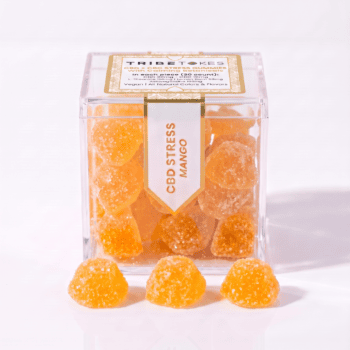 CBD Gummies for Stress: 30mg CBD + ...Starting from: $45.00 SHOP NOW This product has multiple variants. The options may be chosen on the product page
-
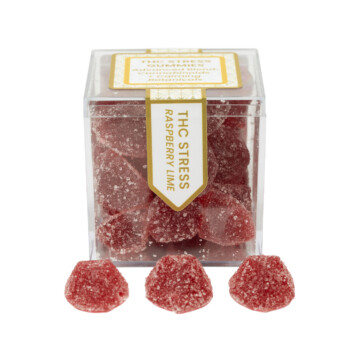 THC Stress Gummies | THC, CBD, CBC ...Starting from: $45.00 SHOP NOW This product has multiple variants. The options may be chosen on the product page
Frequently Asked Questions
CBC (cannabichromene) is the third most abundant cannabinoid in cannabis plants. Unlike THC, it is non-psychoactive and doesn’t produce a high. CBC works primarily through TRPV1 and TRPA1 receptor channels rather than the CB1/CB2 receptors targeted by THC and CBD. Its primary documented effects include anti-inflammatory activity (via a non-COX pathway), neurogenesis support in animal studies, mood-relevant effects in preclinical research, and antimicrobial activity. Most people encounter CBC without knowing it, as it’s naturally present in full-spectrum cannabis and hemp extracts.
No. CBC does not produce intoxication. It does not bind significantly to CB1 receptors, which are the receptors responsible for THC’s psychoactive effects. CBC’s activity through TRP channels and its indirect elevation of anandamide produces effects without the high. This makes it similar to CBD in terms of psychoactivity: useful for people who want the potential benefits of cannabinoids without impairment.
Standard immunoassay drug screens test for THC-COOH, the metabolite of Delta-9 THC. CBC does not produce this metabolite and is not screened by standard urine drug tests. CBC itself carries very low drug test risk. If you’re using a full-spectrum product containing CBC, check the product’s COA to verify the Delta-9 THC content; that’s the variable that determines drug test risk, not the CBC content.
Based on current research, CBC is studied primarily for its anti-inflammatory effects (through a non-COX enzyme pathway distinct from CBD’s mechanisms), neurogenesis support (a 2013 study found CBC promoted neural stem cell viability in adult subjects), mood-relevant activity in animal models, and antimicrobial properties against acne-causing bacteria. All of this research is pre-clinical or early-stage. CBC is not an FDA-approved treatment for any condition. Most current use of CBC is indirect, through full-spectrum cannabis and hemp products where it contributes alongside other cannabinoids.
Both are non-psychoactive cannabinoids from the same plant, but they work through different mechanisms. CBD’s primary sleep and anxiety effects come through 5-HT1A serotonin receptor modulation; CBC’s effects come through TRPV1 and TRPA1 TRP channels. Both inhibit FAAH (raising anandamide levels), but CBC has a more pronounced documented effect on neural stem cell viability, an area where CBD research is less developed. CBC also shows anti-inflammatory activity via a non-COX pathway distinct from CBD’s adenosine-related mechanisms.
A 2013 peer-reviewed study published in Neurochemistry International found that CBC promoted the viability and differentiation of adult neural stem progenitor cells (the cells that generate new neurons) and produced the most pronounced effect among cannabinoids tested. This is a cell study, not a human clinical trial. Whether these effects translate to meaningful neurogenic benefits in humans at realistic doses is not yet established. The finding is legitimate and published, but should not be interpreted as a confirmed human health benefit.
At TribeTokes, CBC is a named active ingredient in the THC Libido Lift Gummies. CBC is also naturally present in all full-spectrum TribeTokes products as part of the plant’s complete cannabinoid profile, including the CBG Tincture and CBD Tincture. Dedicated CBC isolate products are rare in the broader market due to extraction cost, but full-panel COAs confirm CBC’s presence in full-spectrum formulations; most standard lab reports include CBC in the cannabinoid breakdown.
CBC derived from hemp plants containing less than 0.3% Delta-9 THC is within the federal hemp definition. It is not a scheduled substance. CBC derived from marijuana plants falls under state cannabis regulations. As with all hemp-derived cannabinoids, some state-level restrictions may apply. Check your state’s current hemp regulations at norml.org/laws before ordering.
Products Featuring CBC
CBC is a named or active ingredient across several TribeTokes gummies, from the Libido Lift line to Stress Relief and Everything But The Kitchen Sink, and it’s present in all full-spectrum tinctures. Third-party tested. COA on every batch.