
CBG in South Carolina
CBG, or cannabigerol, is the non-intoxicating cannabinoid a hemp plant builds first and then spends almost all of on making CBD and THC. That much is settled chemistry. The question South Carolina readers usually ask next, whether it actually does anything, sits on far shakier ground: most published work on CBG is preclinical, run in cells and rodents, and the human record is thin. This page keeps the two apart. Chemistry and pharmacology first, then a plain account of what nobody has shown yet.
The CBG Lineup for South Carolina
-
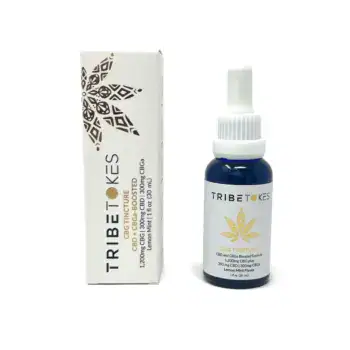
 CBG Tincture 1,800mg | CBG Oil with CBD + CBGaStarting from: $50.00 SHOP NOW This product has multiple variants. The options may be chosen on the product page
-
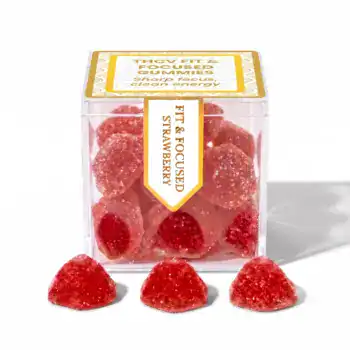
Fit & Focused Gummies | THCV + CBG Focus Gummies, Zero THCStarting from: $45.00 SHOP NOW This product has multiple variants. The options may be chosen on the product page
-
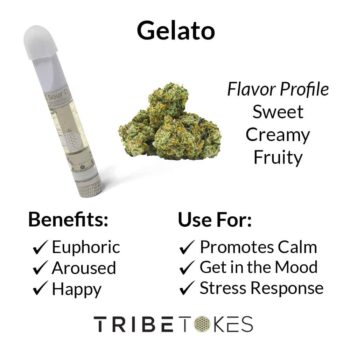
Gelato (Hybrid) | CBD Vape Carts | CBG-BoostedStarting from: $60.00 SHOP NOW This product has multiple variants. The options may be chosen on the product page
What CBG Is and Where It Comes From
Cannabigerol begins as cannabigerolic acid, CBGA, which the plant produces early in flowering. Three enzymes then pull CBGA in three directions, toward THCA, CBDA and CBCA, and heat later strips the acid group to leave the neutral forms people recognize. Whatever CBGA the enzymes never claimed is what remains, and in most hemp bred for CBD that leftover is small. None of this is disputed. It explains both why CBG is scarce and why serious study of it started late.
CBG for Focus and Calm
The focus language attached to CBG comes mostly from user reports and product marketing, not from a settled body of trials. Human work on cannabigerol is small and recent, and nothing in it has been repeated often enough to call a finding. What the pharmacology literature does describe is where the molecule lands. Reviews put cannabigerol at CB1 and CB2 with modest affinity and at several targets outside the cannabinoid system, among them alpha-2 adrenoceptors and 5-HT1A serotonin receptors, as set out in Pharmacological Aspects and Biological Effects of Cannabigerol and Its Synthetic Derivatives. Receptor binding is where research starts, not a description of how a person will feel.
CBG vs CBD
Put the two molecules side by side and the difference in evidence is wider than any difference people report. CBD has been through registered human trials, dose-ranging work and a long safety literature. CBG has a handful of small human studies and a much larger pile of cell and rodent data. No trial has given one group CBG, another CBD, and measured the same outcome in both. Anyone who tells you which is better for a purpose is extrapolating. The practical comparison between CBD and CBG turns on what a label holds, not on what a study proved.
- Gummies: pre-measured, an easy daytime habit.
- Tinctures: adjustable amounts, faster under the tongue.
- Vapes: inhaled, so onset is quick and the effect is short.
- Paired with CBD: the two together for steady balance.
How Much CBG to Take
There is no established dose for CBG, because establishing one takes dose-ranging studies in people and those have not been run at scale. What exists instead is a serving size chosen by whoever formulated the product and printed on the panel. Read that figure, begin at the smallest serving offered, and leave it alone long enough to judge. Two people on an identical serving can end up with different amounts in circulation, which is the honest reason dosing guidance stays vague.
What Preclinical Work Actually Covers
Most of the CBG literature is preclinical: isolated cells, tissue preparations and rodent models. That work maps mechanism. It shows which receptors a compound touches, what a cell line does at a given concentration, and how an animal behaves after a dose that would be hard to reach in a person.
Mechanism work is how any candidate molecule starts, and it is genuinely useful. It answers a different question from the one a reader is asking. A rodent result is not a claim about you, and a concentration applied in a dish is not a serving size.
What Has Not Been Established About CBG
Several things are simply open. There is no agreed effective dose. There is no long-term human safety record, because no group has been followed on daily cannabigerol for years. Whether isolate behaves like CBG inside a full spectrum extract has not been tested in people. Interactions with common medications have not been mapped.
None of that makes CBG a poor ingredient. It makes it an early one, which is worth knowing if you are weighing it against something carrying decades of data.
How CBG Behaves Once It Is Taken
Route changes a cannabinoid’s timeline more than almost anything else. Swallowed, it crosses the gut and the liver before reaching circulation, which cuts how much survives and stretches onset. Held under the tongue, part of it skips that first pass. Inhaled, it arrives fastest and clears fastest. A fatty meal shifts the numbers again.
Those patterns are documented across the non-intoxicating cannabinoids as a group rather than for cannabigerol alone, a caveat Pharmacokinetics of Non-Psychotropic Phytocannabinoids makes plain. The general rule still holds: the figure on a label describes what went into the product, not what reaches you.
Four Questions to Ask of Any CBG Finding
Was it run in people, or in cells and animals? Was CBG given alone, or inside a blend where no single ingredient can be credited? Was there a control group? And has anyone repeated it?
Most of what circulates about cannabigerol fails at least two of those. That is not a scandal, it is the normal state of an early literature. Asking keeps the confidence of a claim matched to the evidence behind it. CBG gummies and tinctures are all built on the same young science. Other South Carolina guides worth a look: hemp products in South Carolina, Delta 8 THC in South Carolina, THCa flower in South Carolina, THCa vapes in South Carolina and CBN in South Carolina.
Frequently Asked Questions
CBG is non-intoxicating. It does not produce the intoxication THC does, which is the clearest and best supported statement anyone can make about how it behaves. Beyond that, subjective descriptions come from users rather than from controlled measurement. More on whether CBG gets you high.
Standard panels are built to find THC metabolites, not cannabigerol. The risk sits with the rest of the extract: a full spectrum product can carry trace THC. Anyone subject to testing should read the batch report and pick a broad spectrum or isolate format. Detail here.
An independent laboratory runs each batch for cannabinoid content and contaminants, and the certificate is posted with the product. Potency testing tells you what is in the bottle. It does not tell you what the compound does, which is a separate question the research has not closed.
No. A dose becomes established when trials test several amounts against an outcome and others repeat the result, and that work has not been done for cannabigerol. Product servings reflect formulation choices, so the label figure is the only number with any grounding.
It means the study was run in cells, tissue or animals rather than people. Preclinical work maps mechanism and dosing ranges before human testing begins. It is a legitimate first step and a poor basis for a personal conclusion, because a concentration in a dish is not a serving and a rodent is not a reader in SC.
A small number of human studies exist, and they are recent and modest in size. That is a different situation from an ingredient with repeated trials behind it. The honest summary is that human evidence on cannabigerol is early rather than absent.
Because its acid form, CBGA, is the molecule the others are built from. Enzymes convert CBGA into the precursors of THC, CBD and CBC, so the nickname describes a position in the plant’s chemistry rather than any property of the finished compound.
That has not been mapped for cannabigerol specifically. Cannabinoids are processed by liver enzymes that also handle many prescriptions, which is enough reason to raise it with a pharmacist or physician if you take anything daily.
Chemically the molecule is identical. Whether it behaves the same inside a mixture is an open question that has not been settled by human work, so treat claims either way with the same skepticism.
Check that the batch number on the report matches the product, that cannabinoid content is broken out line by line rather than reported as one total, and that the panel includes contaminant screening. How CBG is described by people who use it is a separate question from what the report can confirm.
Keep reading: TribeTokes in South Carolina, the South Carolina CBD page, the South Carolina THC gummies lineup, or the longer explainer on what CBG is. For the whole catalog, see the CBG products catalog.
These statements have not been evaluated by the FDA. TribeTokes products are not intended to diagnose, treat, cure, or prevent any disease. Not for use by anyone under 21, or by those who are pregnant or nursing. All products contain less than 0.3% hemp-derived Delta-9 THC by dry weight.