
CBG in North Carolina
The short version for anyone in NC comparing the two: CBD and CBG are different molecules that share an origin, and neither of them acts on the receptor responsible for a cannabis high. That is the reason both are described as non-intoxicating, and it is a more useful starting point than any list of adjectives. Where they genuinely differ is in structure, in how much of each the plant leaves behind, and in how a formulator can use them. TribeTokes publishes an independent laboratory report against every lot, CBG products included.
The CBG Lineup for North Carolina
-
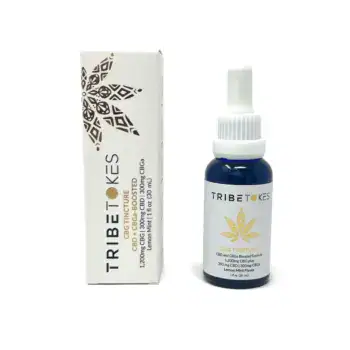
 CBG Tincture 1,800mg | CBG Oil with CBD + CBGaStarting from: $50.00 SHOP NOW This product has multiple variants. The options may be chosen on the product page
-
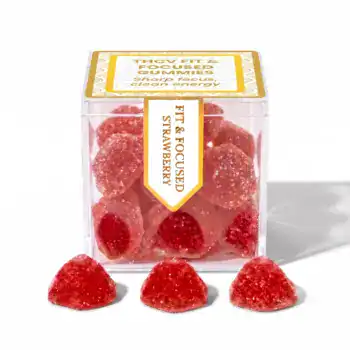
Fit & Focused Gummies | THCV + CBG Focus Gummies, Zero THCStarting from: $45.00 SHOP NOW This product has multiple variants. The options may be chosen on the product page
-
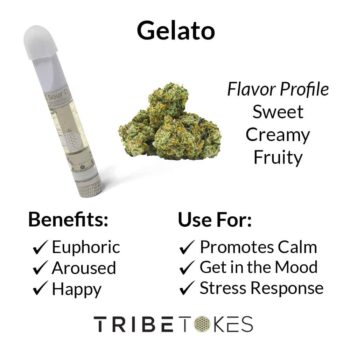
Gelato (Hybrid) | CBD Vape Carts | CBG-BoostedStarting from: $60.00 SHOP NOW This product has multiple variants. The options may be chosen on the product page
What CBG Is and Where It Comes From
CBG is cannabigerol, the neutral form of the precursor every other cannabinoid in the plant is built from. North Carolina treats hemp and its cannabinoids separately from marijuana, and CBG is non-intoxicating regardless. The more interesting question is why a compound sitting at the top of the plant’s chemistry ends up as the rarest thing on the potency table, and the answer is that the plant converts nearly all of it into something else before harvest.
CBG for Focus and Calm
People slot CBG into the daytime and CBN into the evening, which is a habit of categorisation rather than a pharmacological rule. What can be said plainly is that CBG does not intoxicate, so it does not carry the head change that makes THC a poor fit for a working afternoon. Anything beyond that belongs to the individual and to a clinician who knows them, not to a product page.
CBG vs CBD
Structurally the two are further apart than the shared origin suggests. CBGA carries an open chain that has not been folded; the plant’s enzymes are what fold it, and CBDA is one of the results. So CBD is a cyclised descendant and CBG is the un-cyclised parent. On a receptor level neither behaves like THC, which is the practical similarity that matters most, and on a supply level one is abundant and the other is not.
- Gummies: pre-measured, an easy daytime habit.
- Tinctures: adjustable amounts, faster under the tongue.
- Vapes: inhaled, so onset is quick and the effect is short.
- Paired with CBD: the two together for steady balance.
How Much CBG to Take
Read the two figures side by side on the potency table rather than treating them as one number. A blend listing both will usually show a much larger CBD figure and a smaller CBG one, which follows from how little CBG the plant leaves rather than from any judgement about the two. Start at a single serving, hold it there for several days, and change one thing at a time.
The Receptor THC Uses, and Why These Two Skip It
The reason cannabis intoxicates has a specific address. THC binds CB1 receptors, which are dense in the central nervous system, and that binding is what produces the change in perception people describe. Take away the CB1 activity and you take away the high.
CBD and CBG are both described as non-intoxicating because neither engages CB1 the way THC does. That is the shared property, and it is the one doing the work in nearly every comparison written about them. It is also the reason a person can take either through a working afternoon in North Carolina without the experience THC produces.
The receptor also explains why the two compounds keep getting compared in the first place. Once you remove the property that makes THC distinctive, what is left is a field of molecules that all fail to do the one thing everybody knows cannabis for, and they end up grouped together by that absence rather than by anything they share positively.
Where the shorthand breaks down is in treating non-intoxicating as a synonym for identical. Two molecules can both leave CB1 alone and still have very little else in common, which is exactly the situation here.
Two Molecules, One Precursor
Both trace back to cannabigerolic acid. The plant builds that first, then enzymes convert most of it into the acid forms of CBD, THC and CBC. CBG is what is left of the precursor once that conversion has run its course.
The structural consequence is easy to picture. CBGA carries a chain that has not been folded into a ring; the conversion enzymes are what perform the folding, and CBDA is one of the folded outcomes. CBD is therefore a descendant and CBG is the un-folded parent, which is a real difference in shape rather than a difference in branding.
That folding step is also where the plant makes its commitment. Once CBGA has been converted, it can no longer become anything else, which is why a plant cannot be persuaded to yield both a heavy CBD crop and a heavy CBG one from the same flowers. The two numbers on a potency table are, in a real sense, competing for the same starting material, and a grower who wants more of one is accepting less of the other.
Shape is what determines how a molecule fits anything it interacts with, so the fact that these two look different is not a footnote. It is the reason they are studied as separate compounds instead of as variations on one.
What the Reviews Actually Cover
Pharmacological Aspects and Biological Effects of Cannabigerol and Its Synthetic Derivatives is the kind of source worth reading before forming an opinion about CBG. It treats the compound as its own subject, alongside the synthetic analogues chemists have built from its structure, rather than as an accessory to CBD.
A second question the literature has taken seriously is whether a mixture of plant compounds behaves differently from a single purified one. Decoding the Postulated Entourage Effect of Medicinal Cannabis: What It Is and What It Isn’t goes through what that idea does and does not establish, which is directly relevant to any product listing CBD and CBG together on the same table.
Neither review is a statement about what these compounds do for any individual, and nothing on this page is either. TribeTokes makes no health claims about its products, and the FDA disclaimer below is the operative text.
The Practical Difference on a Potency Table
Open a batch report for a blend and the difference stops being abstract. The CBD row carries a large figure. The CBG row carries a small one. That gap is the plant’s conversion chemistry showing up as arithmetic, and it is the single most reliable way to understand why these two compounds occupy such different positions in a product line.
It also shapes what a formulator can do. A large CBD figure is straightforward to hit; a large CBG figure requires either an unusual cultivar or a great deal more starting material, which is why CBG is more often listed beside CBD than presented on its own.
The ratio between the rows is the part worth watching over time. A brand that lists a CBG figure on one lot and drops it on the next has told you something about its supply, and a formula whose CBG row barely clears the reporting threshold is a CBD product with a mention rather than a CBG product. None of that is visible from the front of a package.
For anyone reading a label in NC, the useful habit is simple. Find both rows, note both figures, note the lot number they belong to, and treat the front of the package as a headline rather than as the specification. The report is the document that has to agree with itself. Related reading sits at our CBG and CBD explainer and what CBG is.
What Neither of Them Is
Neither is THC. That is worth stating plainly because it is the assumption behind most of the worry attached to both, and a workplace panel tuned to a THC metabolite is not looking for either compound. The variable in that scenario is trace delta-9 in a full spectrum formula, not the CBD or the CBG.
Neither is a medicine, and neither is described as one here. North Carolina readers arriving from a search about symptoms will find no answer on this page, by design, and the right conversation is with a clinician who knows the person asking.
And neither is a legacy of the other. People occasionally describe CBG as what CBD becomes with age, or as a degraded form of something else, and the biosynthesis says the opposite: the precursor came first and the rest was built out of it. Getting the direction right matters, because it is the whole reason CBG is scarce while CBD is not.
And neither is a substitute for the other. They come from the same precursor, they share the property of leaving CB1 alone, and past that point they are two different compounds with two different rows on the report. CBG versus THC covers the comparison people most often get backwards. More from our North Carolina pages: hemp products in North Carolina, CBD in North Carolina, THC gummies in North Carolina, Delta 8 THC in North Carolina, THCa flower in North Carolina, THCa vapes in North Carolina and CBN in North Carolina.
Frequently Asked Questions
No. The intoxicating effect of cannabis comes from THC binding CB1 receptors in the central nervous system, and CBG does not engage that receptor in the same way. Non-intoxicating does not mean inert, and it does not mean interchangeable with CBD either. We answer this one at length here.
They are not simply two versions of one thing. Both are described as non-intoxicating because neither acts at CB1 the way THC does, but their wider pharmacological profiles are studied separately and are not assumed to overlap. The comparison between CBD and CBG goes through what is and is not established.
Open the potency table on the batch report. CBD and CBG appear as separate rows with separate figures, alongside CBC, CBN and delta-9 THC, so a blend’s composition is a matter of record rather than of front-label wording. Every TribeTokes lot is tested by an independent laboratory and the report is published against that lot number.
Stronger is the wrong axis. They are different molecules with different profiles, and the figure beside each on a label reflects how much of it the plant left behind rather than a ranking. A smaller CBG number next to a larger CBD number is a supply fact, not a strength comparison.
Origin, structure and abundance. CBG is the neutral form of the precursor the plant builds first; CBD is one of the compounds enzymes construct out of that precursor. Structurally, CBD is a cyclised molecule and CBG is not. Practically, hemp yields CBD in quantity and CBG in traces, which is why the two figures on a label look so different.
It works the other way round. Both descend from CBGA, the acid precursor, and CBD is what an enzyme made out of it. CBG is the fraction of that precursor that was never converted. Neither compound is produced from the other in a finished product.
They appear together on plenty of potency tables, which is a formulation fact rather than a recommendation. Whether any combination suits a particular person is a question for a clinician who knows them. We cover the question in more detail here.
No. They are separate cannabinoids with separate entries on a laboratory report and separate structures. The confusion comes from both being non-intoxicating and both appearing in the same products, but a potency panel treats them as what they are: two different compounds measured independently.
CBD, by a wide margin. The plant converts most of its precursor into the acid form of CBD as it matures, so what is left as CBG at harvest is small. That imbalance is the single biggest practical difference between the two and it shows up directly in the figures on a label.
Panels are tuned to a THC metabolite, so CBG is not the target. The variable worth checking is whether the formula also carries trace delta-9 THC, which a full spectrum product can. Read the THC row of the batch report, and see our fuller answer on CBG and drug tests.
Keep exploring: back to all TribeTokes in North Carolina, or browse every CBG product in the national catalog.
These statements have not been evaluated by the FDA. TribeTokes products are not intended to diagnose, treat, cure, or prevent any disease. Not for use by anyone under 21, or by those who are pregnant or nursing. All products contain less than 0.3% hemp-derived Delta-9 THC by dry weight.