
CBG in Wisconsin
CBG, CBN and CBC get grouped together as minor cannabinoids, which makes them sound like variations on a theme. They are not. Two of the three are built by enzymes from the same precursor, and the third is what happens to THC when it sits in air and light for long enough. Readers in WI comparing these names on labels are looking at compounds with genuinely different origins, and origin explains most of where each one ends up.
The CBG Lineup for Wisconsin
-
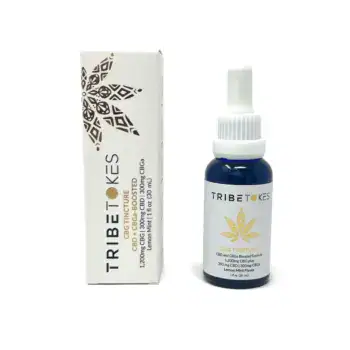
 CBG Tincture 1,800mg | CBG Oil with CBD + CBGaStarting from: $50.00 SHOP NOW This product has multiple variants. The options may be chosen on the product page
-
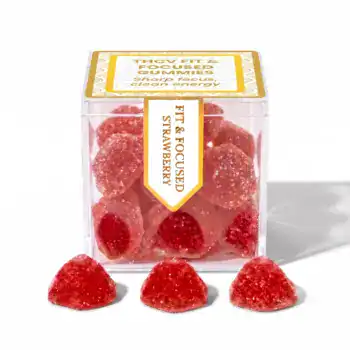
Fit & Focused Gummies | THCV + CBG Focus Gummies, Zero THCStarting from: $45.00 SHOP NOW This product has multiple variants. The options may be chosen on the product page
-
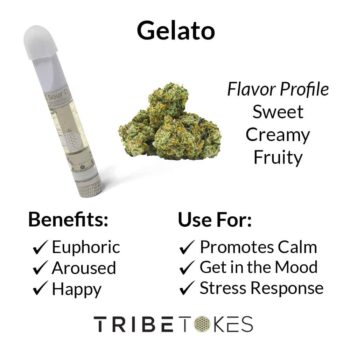
Gelato (Hybrid) | CBD Vape Carts | CBG-BoostedStarting from: $60.00 SHOP NOW This product has multiple variants. The options may be chosen on the product page
What CBG Is and Where It Comes From
The family tree starts with cannabigerolic acid. Three synthase enzymes compete for CBGA and convert it toward THCA, CBDA and CBCA, which become THC, CBD and CBC once heat removes the acid group. Whatever CBGA the enzymes never reached becomes CBG. That single branch point accounts for cannabigerol, cannabidiol, cannabichromene and tetrahydrocannabinol. Cannabinol sits outside it entirely, because CBN is not made by an enzyme at all.
CBG for Focus and Calm
Each of these names has settled into a product category, and the categories are conventions rather than conclusions. Cannabigerol is sold as a daytime ingredient, cannabinol appears in evening formulas, and cannabichromene turns up rarely and usually as a supporting line on a panel. Those placements come from how the industry organized itself, not from a set of trials that assigned each compound a role. The related idea, that the mixture matters more than any single compound in it, is also unfinished: Decoding the Postulated Entourage Effect of Medicinal Cannabis: What It Is and What It Isn’t examines what the entourage effect does and does not describe and treats it as postulated rather than established. Reading the categories as marketing structure keeps expectations honest.
CBG vs CBD
The split that actually matters on a label is major against minor. CBD is present in bred hemp at percentages; the minors are present at fractions of a percent, which is why they are listed in single or double digit milligrams while CBD is listed in the hundreds. That difference in abundance drives a difference in research volume too, since studying an abundant compound has always been easier. It is also why Pharmacokinetics of Non-Psychotropic Phytocannabinoids reports on the non-intoxicating cannabinoids as a group: for several of the minors there is not enough compound-specific human data to report separately. CBD and CBG compared covers that gap in more detail.
- Gummies: pre-measured, an easy daytime habit.
- Tinctures: adjustable amounts, faster under the tongue.
- Vapes: inhaled, so onset is quick and the effect is short.
- Paired with CBD: the two together for steady balance.
How Much CBG to Take
Because the minors sit at small figures, a panel that reports one combined cannabinoid total tells you nothing useful about them. Look for a line per compound. A formula listing 25mg CBD, 5mg CBG and 3mg CBN is describing three different decisions, and a formula listing 33mg of total cannabinoids is describing none of them.
One Precursor, Three Branches
Cannabigerolic acid is where the plant’s cannabinoid chemistry begins. THCA synthase, CBDA synthase and CBCA synthase each take CBGA and convert it toward a different endpoint, and the balance between those enzymes is largely what a breeder is selecting for.
That is the entire explanation for why hemp bred for CBD holds so little of anything else. The enzymes finished the job. Cannabigerol in a finished plant is leftover starting material, not a product of the pathway.
CBN Is Made by Time, Not by an Enzyme
Cannabinol arrives by a different route. THC oxidizes as it is exposed to air, light and warmth, and the product of that reaction is CBN. Age and storage conditions drive it, which is why older material tests higher.
The consequence for a label is that CBN in a product was either allowed to form or deliberately produced. Either way it is downstream of THC rather than of CBGA, which puts it outside the family tree the other minors share.
CBC, the Least Discussed of the Three
Cannabichromene comes from CBCA, the third product of the CBGA branch point. It is non-intoxicating and it appears on far fewer panels than the other two, partly because it is present in small amounts and partly because it has attracted less commercial interest.
Its research base is thinner still. Where CBG has drawn a wave of preclinical work in recent years, CBC has drawn comparatively little, and the human literature is effectively empty.
That is worth stating plainly, because a panel listing four cannabinoids can read as four times the substance. It is not. It is four measurements, three of which rest on very little published work in people.
Names and Abbreviations Across the Family
Every one of these compounds has an acid form, written with an A: CBGA, CBDA, THCA, CBCA, CBNA. The acid is what the living plant carries and what an unheated product may still contain, and it is a different line on a certificate.
Then there are the varins, the shorter-chain versions marked with a V. Between acid forms, neutral forms and varins, a full cannabinoid assay can run to a dozen lines or more, which is a good thing: every extra line is one fewer assumption you have to make about what is in the container.
One habit is worth carrying out of all this. When two products list the same headline milligram figure, the one with the longer assay is telling you more, and the difference between them is usually a difference in what was tested for rather than in what the plant produced. Keep exploring Wisconsin with hemp products in Wisconsin, CBD oil in Wisconsin, THC gummies in Wisconsin, Delta 8 THC in Wisconsin, THCa flower in Wisconsin, THCa vapes in Wisconsin and CBN in Wisconsin.
Frequently Asked Questions
Cannabigerol and cannabichromene are non-intoxicating. Cannabinol is generally described as at most weakly active and is not sold as an intoxicant. THC is the compound that carries intoxication in hemp, and it is the one panels report separately for that reason.
Screens target THC metabolites, so the minors are not what a panel looks for. The relevant question is whether the product is full spectrum, since that is where trace THC comes from regardless of which minor cannabinoid is on the front label.
They should be. A cannabinoid assay reports each compound the laboratory tested for as its own line, typically covering CBD, CBDA, CBG, CBGA, CBN, CBC and the THC forms. A report showing only two or three lines has tested for only two or three.
No, and none of them has an established dose from human trials. Product servings are formulation choices, and they differ by compound and by brand, so comparing milligram figures across two different minors compares two unrelated decisions.
Abundance, not importance. A minor cannabinoid is one present in small amounts in the plant, which makes it harder to obtain and historically harder to study. The word describes supply rather than any property of the molecule.
From THC. Cannabinol forms as THC oxidizes over time, a process pushed along by air, light and heat. No enzyme is involved, which is why CBN is the odd one out in a family otherwise built from cannabigerolic acid.
Directly. Cannabichromenic acid is one of the three products enzymes make from CBGA, so CBC is a sibling of CBD and THC rather than a distant relation. It is the least discussed of the group and the least studied. CBC and CBG compared.
A parallel set with a shorter side chain, written with a V: CBGV, THCV, CBDV and CBCV. They arise from a different precursor acid and appear at very low levels in most hemp, which is why they show up on specialist panels rather than ordinary ones.
None of them approaches CBD. Among the three, cannabigerol has attracted the most recent preclinical attention, cannabinol has an older and thinner human record, and cannabichromene has the least of all. All three sit far behind the majors.
Often, because they come out of the same extract. A full spectrum formula will carry several at whatever ratio the biomass produced, while a blended product sets the ratio deliberately. The panel is what distinguishes the two situations. CBG and CBN compared.
Keep reading: TribeTokes in Wisconsin, the Wisconsin CBD page, or CBN and CBG side by side. Then buy CBG products online.
These statements have not been evaluated by the FDA. TribeTokes products are not intended to diagnose, treat, cure, or prevent any disease. Not for use by anyone under 21, or by those who are pregnant or nursing. All products contain less than 0.3% hemp-derived Delta-9 THC by dry weight.