
CBG in Pennsylvania
Three formats, three different problems solved. A CBG tincture lets you set the amount by the drop, a vape puts the compound on the fastest route the body offers, and a gummy fixes the serving at manufacture so nothing has to be measured. That is the honest comparison, and it matters more than the front label, because the format decides how a serving is metered and how quickly it behaves. PA readers working out where to begin usually want that answered before anything else. TribeTokes publishes an independent lab report against every lot.
The CBG Lineup for Pennsylvania
-
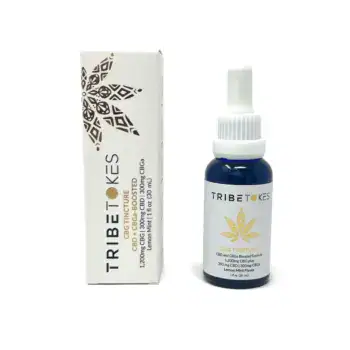 CBG Tincture 1,800mg | CBG Oil with CBD + CBGaStarting from: $50.00 SHOP NOW This product has multiple variants. The options may be chosen on the product page
-
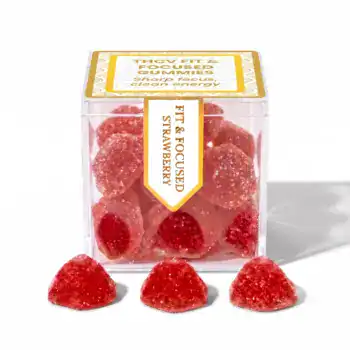 Fit & Focused Gummies | THCV + CBG Focus Gummies, Zero THCStarting from: $45.00 SHOP NOW This product has multiple variants. The options may be chosen on the product page
-
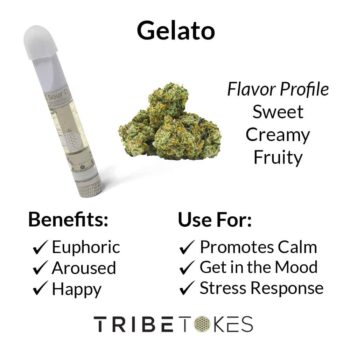 Gelato (Hybrid) | CBD Vape Carts | CBG-BoostedStarting from: $60.00 SHOP NOW This product has multiple variants. The options may be chosen on the product page
What CBG Is and Where It Comes From
CBG is cannabigerol, the neutral form of the precursor a hemp plant builds before the rest of its cannabinoids, which is why so little of it survives to harvest. Pennsylvania’s hemp programme sits with the state Department of Agriculture, and CBG is non-intoxicating in all three formats. Scarcity is the reason the CBG figure on a label is usually smaller than the CBD figure beside it, and it is also why the format you choose changes how precisely you can work with that figure.
CBG for Focus and Calm
Format is what people are really choosing between when they say they are choosing a product. A gummy is a fixed unit, portable and unambiguous. A tincture is a graduated dropper, which means partial servings are possible and a change can be small. A vape is hardware plus a cartridge, with the shortest route between the compound and the bloodstream and the shortest duration to match. None of the three intoxicates, and each suits a different kind of day.
CBG vs CBD
Where CBD and CBG differ on a label is in scale rather than in kind. A blend typically carries a large CBD figure and a smaller CBG one, so a format that meters finely gives you more control over a small number, while a fixed-serving format hands you whatever was decided at manufacture. That is the format question restated: how much say do you want over a figure that is already small?
- Gummies: pre-measured, an easy daytime habit.
- Tinctures: adjustable amounts, faster under the tongue.
- Vapes: inhaled, so onset is quick and the effect is short.
- Paired with CBD: the two together for steady balance.
How Much CBG to Take
Whichever format you pick, the per-serving figure on the potency table is the number to work from. A gummy states it per piece. A tincture states it per millilitre or per full dropper, so a half-dropper is half of that. A cartridge states it for the cartridge, and per-session amounts are inherently less precise. Start at one serving, hold for several days, and change one thing at a time.
Tinctures: the Adjustable Format
A tincture is CBG carried in an oil, dispensed from a graduated glass dropper. What makes it the flexible option is that graduation: the marks let you take a partial serving, which means changes can be incremental rather than doubling or halving whatever a fixed unit contains.
Held under the tongue before swallowing, a tincture takes a shorter path than something that has to pass through digestion first. That is why the instruction to hold it there is not a ritual. Swallow it immediately and you have effectively made yourself a slow-acting edible with an unusual texture.
The carrier matters here in a way it does not for the other two. A tincture is CBG dissolved in an oil, and the oil is what the dropper is actually measuring, so a bottle that has separated or thickened in a cold cupboard needs a moment to come back together before a mark means anything. Give it a shake and let it sit level before filling.
The cost of that flexibility is that a tincture only stays consistent if you keep reading the marks. A dropper filled by eye is a different amount every time, and a routine built on eyeballed servings is not really a routine at all.
Vapes: the Fastest Route and Its Trade-offs
Inhalation is the shortest path between a compound and the bloodstream, which is why a vape behaves differently on the clock from anything swallowed. Onset is quick and duration is correspondingly shorter, and that pairing is a property of the route rather than of the cannabinoid inside it.
The trade is precision. A cartridge lists its total content, not a per-session amount, and a session is not a standardised unit: draw length, hardware and how much is left all shift what is actually taken. For anyone trying to keep a number constant week to week, this is the hardest of the three formats to pin down.
How compounds of this class are absorbed and cleared has been mapped in the literature, and Pharmacokinetics of Non-Psychotropic Phytocannabinoids is a reasonable entry point if you want the underlying picture rather than the shorthand. There is also a hardware dimension worth knowing about, covered at what CBG in a gummy actually means for the contrast.
Gummies: Fixed Servings and the Digestive Route
A gummy solves one problem completely: the amount is decided at manufacture and cannot drift. One piece is one serving, the figure is printed per piece, and there is nothing to measure, pour or eyeball. That is why fixed-serving formats produce the cleanest logs and the cleanest comparisons over time.
The route is the slowest of the three. A swallowed serving passes through digestion before anything reaches the bloodstream, so onset is later and the tail is longer than with either of the other two formats. Neither of those is a drawback in itself; they are simply the shape of that route.
A fixed serving is also easier to talk about with anyone else. A clinician asking what you take can be given a number and a lot rather than a description of a dropper, which is a meaningful practical difference when the conversation matters. Anyone comparing formats will find the CBD-side version of the same question at CBD compared with CBG.
The other consideration is the matrix. A gummy is a food product with sugar, pectin or gelatine and flavour alongside the cannabinoid, so it has a shelf life and a temperature it prefers, and both belong on the storage list rather than the ingredients list.
Storage, Shelf Life and Carrier
Heat and light break cannabinoids down over time. That is true of all three formats and it is the single most useful thing to know about keeping a product honest, because a bottle stored badly stops matching the report that was written for it.
Each format fails differently. A tincture’s carrier oil can go off, and its glass bottle offers no protection from a sunny shelf unless it is tinted. A gummy softens, sticks and sweats in warmth. A cartridge can leak or clog when it gets hot and then cools again. The common answer is a cool, dark, closed cupboard.
The useful habit is to keep the lot number with the product so the report stays findable. Storage advice is only worth anything if you can still check what you started with, and a lot number written on a note beats a memory of a label every time.
Matching the Format to the Situation
Start with the question you are actually trying to answer. If it is whether a routine suits you, take the format with the least measurement error, which is the gummy. If it is finding the right amount, take the one that meters finely, which is the tincture. If it is timing, the vape is the only one of the three whose route is fast.
Then think about where the day happens. A fixed unit travels well and needs no equipment. A dropper needs a level surface and a moment of attention. A cartridge needs charge and somewhere it is reasonable to use it. Practicalities decide more routines than pharmacology does, and pretending otherwise produces plans that last four days.
Most people end up using more than one, and that is fine as long as they are not introduced at the same time. Adding a second format while still learning the first turns two clean readings into one muddy one, and unpicking that afterwards takes longer than waiting would have.
Whichever you land on, the CBG figure is usually the smaller number on a blended label, sitting beside a larger CBD one, and the reason is that the plant leaves very little of the precursor behind. Pharmacological Aspects and Biological Effects of Cannabigerol and Its Synthetic Derivatives is the review to read about the compound itself, and our explainer at what CBG is covers the background. TribeTokes makes no health claims about any of these formats, and the FDA disclaimer below is the operative text. Also in Pennsylvania: hemp products in Pennsylvania, CBD in Pennsylvania, THC gummies in Pennsylvania, Delta 8 THC in Pennsylvania, THCa flower in Pennsylvania, THCa vapes in Pennsylvania and CBN in Pennsylvania.
Frequently Asked Questions
No, and that holds across every format. A vape reaches the bloodstream faster than a gummy, which changes timing rather than outcome, because speed of onset and intoxication are separate properties. CBG is non-intoxicating in a tincture, a cartridge and a gummy alike. We answer this at length here.
It does not. Panels are tuned to a THC metabolite regardless of how a product was taken, so the question is what is in the formula rather than which format carries it. A full spectrum tincture, cartridge or gummy can each carry trace delta-9, so read the THC row on the batch report. More on CBG and drug tests.
On the potency table for that lot, expressed in whatever unit the format uses: per gummy, per millilitre or full dropper, or per cartridge. Every TribeTokes lot is tested by an independent laboratory and published against its lot number, so the figure on the package and the figure on the report should agree exactly.
A gummy, without much argument. The serving is fixed, nothing is measured, and the log entry is a single number that cannot drift. A tincture rewards consistency but requires it, since a dropper filled by eye is a different amount every time. A vape is the hardest of the three to keep constant because a session is not a unit.
Metering and route. A tincture is measured by the user from a graduated dropper and can be held under the tongue, which is a shorter path than digestion. A gummy is measured at manufacture and swallowed, so the serving is fixed and the compound goes through the gut first. One offers control, the other offers consistency.
Fill the dropper to the mark that matches the serving you want, place it under the tongue and hold it there before swallowing. Holding it matters, since the point of a sublingual serving is the shorter route it takes. Reading the millilitre marks rather than filling by eye is what makes a tincture repeatable. We cover the method in more detail here.
Inhalation is the fastest route the body offers and digestion is among the slowest, so yes, the timing differs substantially between the two. Duration usually runs the other way, with the faster route also being the shorter one. That is a property of the route rather than of CBG.
A tincture. The graduated dropper allows partial servings, which means an adjustment can be small and deliberate rather than a jump to the next whole unit. That flexibility is only useful once you know what you are adjusting, which is why fixed-serving formats are often the better place to start.
Cool, dark and closed. Heat and light degrade cannabinoids over time, so a cupboard beats a window sill and a hot car is the worst place of all. Gummies additionally dislike warmth for textural reasons, and a cartridge left in a hot car can leak. Storage does not change what a compound is, but it does change how well the bottle still matches its report.
The format determines how the amount is expressed, and the formulation determines the amount itself. A gummy states its figure per piece, a tincture per millilitre, a cartridge for the whole cartridge. Comparing formats means converting to the same unit first, which is where most label confusion starts.
Keep exploring: back to all TribeTokes in Pennsylvania, or browse TribeTokes CBG products nationwide. Close by, see our Colorado CBG page.
These statements have not been evaluated by the FDA. TribeTokes products are not intended to diagnose, treat, cure, or prevent any disease. Not for use by anyone under 21, or by those who are pregnant or nursing. All products contain less than 0.3% hemp-derived Delta-9 THC by dry weight.