
CBG in New York
CBG is scarce for a chemical reason, not a commercial one. The plant makes its acid form, CBGA, first and then spends almost all of it building the cannabinoids everyone has heard of, so by the time hemp is mature there is very little of the starting material left. That single fact explains most of what New York searchers ask about CBG: why it turns up in small numbers on a label, why it is usually listed beside CBD, and why the batch report is worth opening. TribeTokes makes CBG as tinctures, a vape and gummies, with a third-party report against every lot.
The CBG Lineup for New York
-
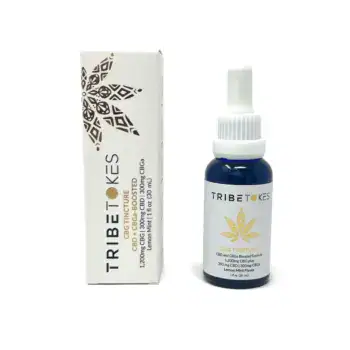
 CBG Tincture 1,800mg | CBG Oil with CBD + CBGaStarting from: $50.00 SHOP NOW This product has multiple variants. The options may be chosen on the product page
-
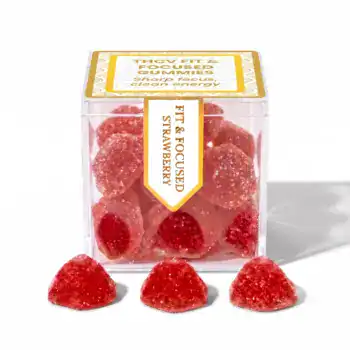
Fit & Focused Gummies | THCV + CBG Focus Gummies, Zero THCStarting from: $45.00 SHOP NOW This product has multiple variants. The options may be chosen on the product page
-
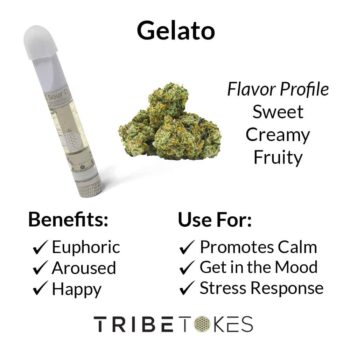
Gelato (Hybrid) | CBD Vape Carts | CBG-BoostedStarting from: $60.00 SHOP NOW This product has multiple variants. The options may be chosen on the product page
What CBG Is and Where It Comes From
CBGA is the compound the plant assembles before any of the others. An enzyme joins olivetolic acid to a terpene building block, the result is cannabigerolic acid, and from there the plant’s chemistry branches. New York’s cannabinoid hemp products sit under the state Office of Cannabis Management, and CBG is non-intoxicating in every one of them. What matters more for anyone reading a label is that CBGA is a starting point rather than an end product, which is exactly why so little survives to harvest.
CBG for Focus and Calm
Think of the plant as spending a budget. Everything it later becomes, CBDA, THCA, CBCA, is paid for out of the same CBGA pool, and whatever is not spent is what remains as CBGA in the finished material. Heat and time then convert those acid forms into the neutral ones people recognise: CBGA becomes CBG, CBDA becomes CBD, and so on. The daytime framing people give CBG is downstream of all this. The chemistry decides how much there is; the formulation decides what you do with it.
CBG vs CBD
CBD and CBG are not rivals so much as different points on the same production line. CBD is what the plant made out of the precursor. CBG is the precursor itself, left over. That is why a hemp field yields CBD in quantity and CBG in traces, and why a product built around CBG has to start from either an unusual cultivar or a much larger volume of biomass. Neither compound intoxicates, and neither is THC, but their positions in the plant’s chemistry are genuinely different.
- Gummies: pre-measured, an easy daytime habit.
- Tinctures: adjustable amounts, faster under the tongue.
- Vapes: inhaled, so onset is quick and the effect is short.
- Paired with CBD: the two together for steady balance.
How Much CBG to Take
Work from the CBG figure printed per serving rather than from the total on the front of the package. Because the raw material is scarce, CBG numbers on a label are usually smaller than the CBD numbers beside them, and that is a reflection of supply rather than a signal about strength. Start at one serving of whatever you have, hold it there for several days, and check the potency table so you know which figure you are actually working from.
CBGA: Where the Whole Branch Starts
Hemp does not make CBD directly. It makes cannabigerolic acid, built when an enzyme joins olivetolic acid to a terpene-derived unit, and CBGA is the molecule everything else is cut from. Nothing about the plant’s cannabinoid chemistry happens before this step, and nothing downstream of it exists without it.
From there the branch splits. Separate enzymes take CBGA and convert it into THCA, CBDA or CBCA, and which of those dominates is a property of the plant’s genetics rather than of the field it grew in. A CBD-type hemp plant is one where the enzyme making CBDA does most of the work.
The neutral forms people recognise appear later, once heat or time strips the acid group away. CBDA becomes CBD, THCA becomes THC, and any CBGA that survived becomes CBG. This is why a raw plant and a finished extract have different potency tables even when nothing was added or removed in between.
The Enzymes That Spend the Budget
The scarcity has a mechanism. Synthase enzymes work on CBGA continuously through the growing cycle, and the longer they operate the less of the precursor remains. What the plant keeps as CBGA is not a reserve it set aside; it is the fraction that never got processed.
That makes CBG unusual among cannabinoids. CBD and THC accumulate as products, so a grower can select for more of them. CBG accumulates as a leftover, so getting more of it means either interrupting the conversion or starting with a plant whose conversion enzymes do less work.
There is a timing dimension to it as well. The pool of precursor is largest early and shrinks as the conversion enzymes keep working, so material taken from a plant at one point in its cycle does not carry the same ratio as material taken later. Anyone who has compared two potency tables from the same cultivar and wondered why the minor cannabinoid rows moved has run into this directly.
It also explains why CBG turns up in small figures on a potency table next to a large CBD number. Those two rows come from opposite ends of the same reaction, and the difference between them is the reaction itself.
Breeding Around a Precursor That Will Not Stay Put
The genetics route is the one that changed CBG from a curiosity into something a formulator could actually work with. Cultivars exist whose conversion enzymes are impaired or absent, so CBGA accumulates instead of being spent, and material from those plants carries far more of it than a standard hemp crop ever would.
That is a plant breeding outcome rather than a processing trick. It also means CBG supply is tied to how much of that particular seed stock is in the ground in a given season, which is a different constraint from the one facing CBD.
It does change the economics, and that is worth saying plainly rather than dressing up. A compound recovered as a leftover from ordinary hemp and a compound grown deliberately are two different supply stories, and the second one is why CBG appears in product lines at all rather than only in papers.
None of this changes the compound itself. A CBG molecule from a high-precursor cultivar is the same molecule as one recovered from ordinary hemp; the cultivar only changes how much of it there is to recover.
What the Pharmacology Literature Covers
CBG has been studied as a compound in its own right rather than only as a precursor, and Pharmacological Aspects and Biological Effects of Cannabigerol and Its Synthetic Derivatives is a review that sets out the pharmacological ground alongside the synthetic analogues chemists have built from it. Reading a review of that kind is a better use of an afternoon than reading product copy, including this page.
Two things are worth taking from it. The first is that CBG is a distinct molecule with its own profile rather than a weaker version of CBD. The second is that the work is ongoing, and a compound with a smaller literature behind it deserves more caution in how it is described, not less.
Nothing here is a statement about what CBG does for anyone. TribeTokes does not make health claims about its products, and the FDA disclaimer at the foot of this page is not decoration.
Why the Report Matters More on a Scarce Cannabinoid
When a compound is hard to obtain, the gap between what a label says and what a bottle contains gets more interesting. That is the practical argument for opening the Certificate of Analysis on any CBG product rather than trusting the front of the package.
Quantifying a minor compound is instrument work rather than judgement. Laboratories separate cannabis constituents chromatographically and identify them by mass spectrometry, the same analytical approach used in Identification of Terpene Compositions in the Leaves and Inflorescences of Hybrid Cannabis Species Using Headspace-Gas Chromatography/Mass Spectrometry, and the number that lands on a potency table is the output of that process. It is also why a report will say ND, meaning not detected above the method’s threshold, rather than claiming an absolute zero.
The potency table lists each cannabinoid separately, so a product claiming CBG will show a CBG row with a number against it, or it will not. The same table shows what else is present, which is how you tell a CBG-plus-CBD formula from something carrying only a trace. Related reading on the neighbouring compounds sits at CBC versus CBG and CBG versus CBN.
Every TribeTokes lot is tested by an independent laboratory and the report is published against that lot number, CBG included. If you also keep the New York CBD page open, you can compare how the two potency tables differ in scale and see the scarcity for yourself. Keep exploring New York with hemp products in New York, THC gummies in New York, THCa flower in New York, THCa vapes in New York and CBN in New York.
Frequently Asked Questions
No. CBG is non-intoxicating, and that is true of both its acid form and the neutral one. The intoxicating effect belongs to THC and to the way THC acts on receptors in the central nervous system, which CBG does not engage in the same manner. The longer answer sits here.
Screens are tuned to a THC metabolite, so CBG itself is not what they look for. A full spectrum formula can still carry trace delta-9 alongside its CBG, which is the actual variable. Check the THC row of the batch report rather than assuming, and see how CBG and THC differ for why they are not interchangeable.
By instrument, not by eye. A potency panel separates the cannabinoids chromatographically and quantifies each one, which is why a report lists CBG, CBD, CBC, CBN and delta-9 THC as separate rows with separate figures. Every TribeTokes lot is tested by an independent laboratory and the report is published against that lot number.
Less than the CBD beside it, in most cases, and that is a consequence of how little the plant leaves behind rather than a formulation choice. Read the per-serving CBG figure on the potency table, start at a single serving and hold it for several days before changing anything.
CBGA is cannabigerolic acid, the first cannabinoid the hemp plant assembles and the raw material for the rest. Enzymes convert most of it into the acid forms of CBD, THC and CBC as the plant matures. What is left over becomes CBG once heat or time removes the acid group.
Because the other cannabinoids are built from it. CBGA sits at the top of the branch and everything downstream, CBDA, THCA and CBCA, is made by enzymes acting on that one molecule. The nickname is a description of the biosynthesis rather than a claim about the compound. Our explainer on what CBG is goes through it step by step.
They are the acid and neutral forms of the same molecule. CBGA carries a carboxyl group that comes off with heat or time, a process called decarboxylation, and what remains is CBG. Raw plant material is mostly acid forms; anything heated, aged or processed shifts toward the neutral ones. A potency table often lists both, which is why a raw-material report and a finished-product report for the same crop rarely look alike.
Because the plant spends it. Synthase enzymes convert CBGA into the acid precursors of CBD, THC and CBC throughout the growing cycle, so the amount remaining at harvest is whatever escaped conversion. Abundance and scarcity here are set by enzyme activity rather than by farming effort.
Not in a bottle. The conversion of CBGA into THCA happens inside a living plant, driven by an enzyme that no longer exists once the material is harvested and processed. A finished CBG product does not become THC on the shelf. The comparison at CBG versus THC covers why they behave differently in the first place.
From the same plant and from the same precursor. CBD is what an enzyme made out of CBGA; CBG is the portion of CBGA that was never converted. That shared origin is why they appear on the same potency table and why a formula containing both is not mixing two unrelated ingredients. See CBD and CBG compared.
Keep exploring: back to all TribeTokes in New York, or browse CBG products online. Shopping for a neighboring state? See CBG in Colorado and CBG for Georgia.
These statements have not been evaluated by the FDA. TribeTokes products are not intended to diagnose, treat, cure, or prevent any disease. Not for use by anyone under 21, or by those who are pregnant or nursing. All products contain less than 0.3% hemp-derived Delta-9 THC by dry weight.