
CBG in Ohio
How much CBG ends up in a batch is decided in a field, weeks before anything is extracted. The plant builds its precursor early and then spends it steadily as it matures, so the date a crop is cut sets the ratio between what remains as CBG and what has already become CBD. Cut early and more of the precursor survives. Wait, and less does. That is the whole mechanism behind a cannabinoid people describe as rare, and it is worth understanding before reading any Ohio label. TribeTokes publishes an independent lab report against every lot.
The CBG Lineup for Ohio
-
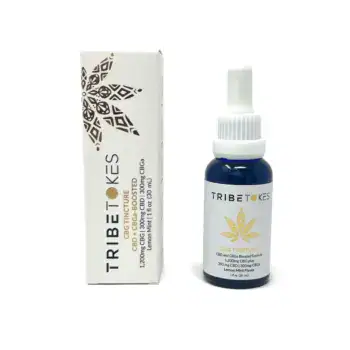
 CBG Tincture 1,800mg | CBG Oil with CBD + CBGaStarting from: $50.00 SHOP NOW This product has multiple variants. The options may be chosen on the product page
-
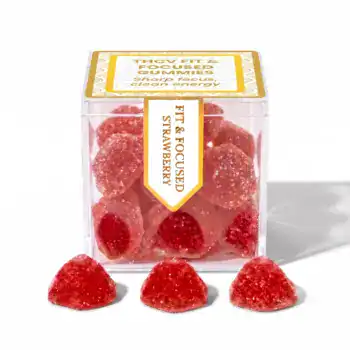
Fit & Focused Gummies | THCV + CBG Focus Gummies, Zero THCStarting from: $45.00 SHOP NOW This product has multiple variants. The options may be chosen on the product page
-
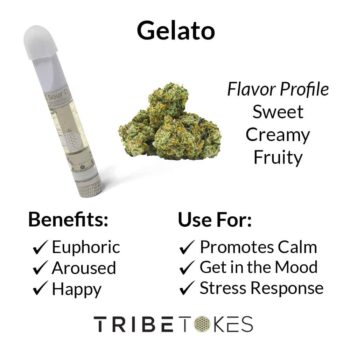
Gelato (Hybrid) | CBD Vape Carts | CBG-BoostedStarting from: $60.00 SHOP NOW This product has multiple variants. The options may be chosen on the product page
What CBG Is and Where It Comes From
CBG is the neutral form of cannabigerolic acid, the first cannabinoid a hemp plant assembles and the raw material for the others. Ohio’s hemp programme sits with the state Department of Agriculture, and CBG is non-intoxicating in any form it takes. What decides how much of it reaches a jar is agronomy rather than processing: enzymes convert the precursor into the acid forms of CBD and THC throughout the growing cycle, and harvest interrupts that conversion at whatever point the grower chooses.
CBG for Focus and Calm
A harvest decision is a trade before it is anything else. Early cutting preserves precursor and gives up biomass, because the plant is still putting on weight and filling out its flowers. Later cutting produces more material and less of what makes a CBG crop worth growing. Every field is somewhere on that curve, and the number printed against CBG on a potency table is the record of where the grower stopped.
CBG vs CBD
Set CBD beside CBG on the same report and you are looking at two ends of one reaction. CBD is the accumulated product; CBG is the unspent starting material. Time pushes the balance one way, which is why a mature CBD crop and a CBG-rich one are usually not the same harvest and often not the same seed. Neither compound intoxicates. What separates them in an Ohio jar is when the flowers came off the stalk.
- Gummies: pre-measured, an easy daytime habit.
- Tinctures: adjustable amounts, faster under the tongue.
- Vapes: inhaled, so onset is quick and the effect is short.
- Paired with CBD: the two together for steady balance.
How Much CBG to Take
Work from the CBG figure on the potency table rather than from an expectation. Because the quantity on hand traces back to a harvest decision made months earlier, CBG numbers move between lots more than CBD numbers do, and the lot-specific report is the only place that variation shows up honestly. Start at one serving, hold it for several days, and note which lot you were on so a later comparison means something.
What Changes Inside the Plant as It Matures
Cannabigerolic acid is not an end product. The plant assembles it early and then feeds it to a set of enzymes that convert it into the acid precursors of CBD, THC and CBC, and that conversion runs for as long as the plant is growing.
So the precursor pool is largest early and shrinks steadily. What a grower harvests is a snapshot of that reaction at one moment, and the snapshot taken in week eight does not look like the one taken in week eleven.
Two enzymes are doing most of the deciding. One converts the precursor toward the acid form of CBD and another toward the acid form of THC, and which of them dominates is written into the plant’s genetics rather than into the weather. A grower does not get to choose which conversion happens; only how long it is allowed to run.
This is why CBG is described as rare without anyone claiming the plant struggles to make it. The plant makes plenty. It simply uses almost all of it before anyone gets there with a cutter, and the fraction that survives is what the whole category is built on.
Cutting Early: What You Gain and What You Give Up
The gain is straightforward. Less conversion means more precursor left standing, so an early cut yields material with a higher proportion of CBG relative to everything else on the panel.
The cost is equally straightforward and it is why nobody does this casually. A plant harvested early has not finished putting on weight, its flowers are less developed, and the total extractable material per acre is lower. A grower choosing an early cut is trading tonnage for composition, and that trade has to be worth making before the season starts rather than as an afterthought in September.
Weather compresses the decision further. A wet week, an early frost or a disease pressure can force a cut that nobody planned, and the potency panel afterwards records whatever the season allowed rather than what the plan called for. This is one of the genuine reasons a minor cannabinoid figure moves between lots in a way a CBD figure usually does not.
There is a middle path that gets used more often than either extreme: select a cultivar whose conversion enzymes do less work, then harvest on a normal schedule. That moves the problem from the calendar to the seed catalogue and lets the crop reach full size.
Why Growers Test Before They Cut
Sampling ahead of harvest is standard practice, and the reason is that the cannabinoid ratio is still moving right up to the day the crop comes down. A potency panel run on standing material tells a grower where the conversion has got to, which is information no amount of walking the rows will provide.
For a CBG-oriented crop that panel is the decision document. It shows the precursor figure falling week over week while the CBD figure climbs, a pair of curves that cross somewhere nobody can predict from the previous season, and somewhere on that pair of curves is the point where the grower’s economics say stop. Two growers looking at the same panel can reasonably pick different weeks, because their contracts and their processing plans are not the same.
It also explains a habit that confuses people reading reports: two lots of the same product, from the same brand, with visibly different minor cannabinoid rows. That is not sloppiness. It is two harvests, honestly reported, separated by a few weeks of enzyme activity nobody could have paused, and the alternative would be a brand printing one number and hoping nobody checked. Related background sits at how CBD, CBG and CBN compare and CBC compared with CBG.
The same analytical work continues downstream. What reaches an extractor is characterised again, and what leaves as finished product is characterised once more, which is why a consumer-facing Certificate of Analysis is the last link in a chain of measurements rather than a one-off gesture.
Plant Part, Drying and the Journey to a Neutral Form
Composition varies inside a single plant, not only between plants. Flowering tops and leaves carry different profiles, which is why processors are selective about what enters a run and why whole-plant material and flower-only material produce different reports. That variation has been examined directly, including in Identification of Terpene Compositions in the Leaves and Inflorescences of Hybrid Cannabis Species Using Headspace-Gas Chromatography/Mass Spectrometry.
Drying and curing then do their own work. The acid forms the plant actually produced give up their carboxyl group with heat and time, so CBGA becomes CBG, CBDA becomes CBD, and the profile shifts without a single new compound being introduced.
Curing also costs part of the aromatic fraction, because terpenes are volatile and time at room temperature is enough to move them. A material that smelled strongly at the barn and mildly at the extractor has not been tampered with; it has simply been sitting.
The practical upshot is that a report describes a material at a moment in its life. A fresh-material figure and a finished-product figure are both true and are not the same number, and knowing which one you are looking at is most of the skill in reading these documents.
From Field Decision to the Number on Your Lot
Everything above ends at one place: the potency table attached to the lot in your hand. The harvest date, the cultivar, the plant material selected and the processing route all resolve into a set of rows with figures against them, and the CBG row is the one carrying the most history.
It is also the row most likely to differ from the last lot you had, which is a feature of the compound rather than an inconsistency in the product. If you want to compare two experiences honestly, note the lot number alongside whatever else you record.
For the compound itself rather than the agronomy, Pharmacological Aspects and Biological Effects of Cannabigerol and Its Synthetic Derivatives is the review worth reading, and our own explainers sit at what CBG is and CBG compared with CBD. Nothing on this page is a health claim, and the FDA disclaimer below is the operative text. Comparing options in Ohio? See hemp products in Ohio, THC gummies in Ohio, Delta 8 THC in Ohio, THCa flower in Ohio and THCa vapes in Ohio.
Frequently Asked Questions
No. CBG is non-intoxicating whatever point in the season it came from, because harvest timing changes how much of a compound is present rather than what that compound does. The intoxicating effect belongs to THC. The full answer is here.
Because they trace back to different harvests. The precursor is consumed continuously as a plant matures, so two crops cut at different points carry different ratios even from the same seed stock. That variation is real and it is why every lot gets its own report rather than inheriting the last one’s numbers.
More than the label can. A potency table that shows a healthy CBG row next to a moderate CBD row points to material that was cut before the conversion had run its course, while a large CBD figure and a trace of CBG points to a fully mature crop. Every TribeTokes lot is tested by an independent laboratory and published against its lot number.
Read the per-serving figure on the potency table for that specific lot. CBG content depends on what the harvest left behind, so it is the cannabinoid where a lot-by-lot check matters most. Start at one serving and hold it there for several days before changing anything.
It is the main lever. Cannabigerolic acid is converted into the acid forms of CBD, THC and CBC continuously as the plant matures, so cutting earlier leaves more of the precursor intact and cutting later leaves less. Two crops from identical seed can produce very different CBG figures purely on the strength of when they came down.
Because the conversion has had less time to run. The plant makes its precursor first and spends it over the season, so an early cut catches the pool before the enzymes have worked through it. The cost is yield: an early crop weighs less and its flowers are less developed, which is the trade a grower is making.
The inflorescences, the flowering tops, rather than the leaves. Composition differs meaningfully between plant parts, which is why processors select what goes into an extraction run instead of taking the whole plant. Processors select for that reason rather than out of habit.
It is the loss of a carboxyl group, driven by heat or simply by time. It converts the acid forms the plant actually makes into the neutral ones people talk about: CBGA becomes CBG, CBDA becomes CBD, THCA becomes THC. Drying, curing and any heated processing step all move material in that direction.
It does, though not by creating anything new. Drying and curing shift acid forms toward neutral ones and cost some of the volatile fraction along the way, which is why a report on fresh material and a report on cured material read differently. The cannabinoids present were decided in the field; what happens afterwards decides what form they are in.
From the same plant and from the same precursor molecule. CBD is what enzymes built out of cannabigerolic acid; CBG is the share of that precursor they never got to. The comparison between the two sets out what that shared origin does and does not mean.
Keep exploring: back to all TribeTokes in Ohio, pair it with CBD oil in Ohio or CBN in Ohio, or browse CBG products in every format.
These statements have not been evaluated by the FDA. TribeTokes products are not intended to diagnose, treat, cure, or prevent any disease. Not for use by anyone under 21, or by those who are pregnant or nursing. All products contain less than 0.3% hemp-derived Delta-9 THC by dry weight.