
CBN in Pennsylvania
CBN reached evening labels through a chain of reasoning, not a clinical result. Old cannabis was reputed to feel more sedating than fresh material; chemists later showed aged plant matter carries more CBN; a lot of people drew the conclusion that CBN was the sedating part. That final step was an inference, and it has never been tested properly. For Pennsylvania readers wondering why every CBN product looks like a nighttime product, the history explains far more than the packaging does.
The CBN Lineup for Pennsylvania
-
 CBN Tincture 1,800mg | CBD-Boosted | Nighttime FormulaStarting from: $50.00 SHOP NOW This product has multiple variants. The options may be chosen on the product page

-
CBD + CBN Sleep Gummies | With L-Tryptophan + Vitamin B6Starting from: $45.00 SHOP NOW This product has multiple variants. The options may be chosen on the product page

-
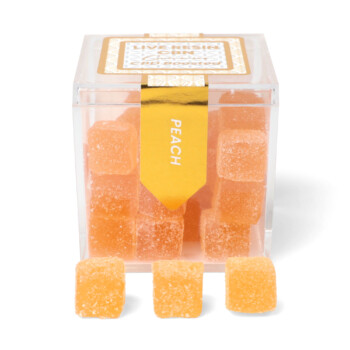
CBN Gummies with Live Resin | CBD-BoostedStarting from: $45.00 SHOP NOW This product has multiple variants. The options may be chosen on the product page
What CBN Is and Where It Comes From
Cannabinol is the compound that accumulates as THC degrades, which puts some amount of it in nearly every aged hemp extract. It is not intoxicating. Rules covering hemp cannabinoids are split across federal and state authority and get revised regularly, so anyone in PA should check the current state position rather than rely on a general statement. The chemistry is easier to pin down than the paperwork: CBN was sitting in the plant long before it was an ingredient anyone thought to name.
CBN for Sleep and Recovery
The claim that CBN is sedating arrived before the evidence that would support it, and that gap is why Cannabinol and Sleep: Separating Fact from Fiction needed writing. The human studies on the question are few, small and decades old, and their results did not line up with each other. None of that makes CBN worthless. It does mean the confident language on packaging is running ahead of anything anyone has shown, and the accurate sentence is that CBN is associated with evening products rather than proven to cause sleep.
CBN vs CBD
CBD went through a version of the same cycle earlier and came out of it with a far larger research base. CBN has not. That asymmetry is worth holding on to when the two appear on one panel, because a single formula can be well supported on one ingredient and speculative on the other. Is CBN good for sleep and what CBN is and what the research now says both address the split directly.
- Gummies: pre-measured, the easy nightly habit.
- Oils: adjustable amounts, faster under the tongue.
- Paired with CBD: the two are commonly formulated together.
- Timing: take it about an hour before bed.
How Much CBN to Take
Serving sizes for CBN settled into a narrow milligram band by convention. No dose-ranging trial produced that band. Formulators picked amounts that suited the format and the cost, and the category copied itself from there. Knowing that changes how a panel reads. A higher figure is not evidence of a stronger result and a lower one is not evidence of a weaker product, because the reference point that would make either statement mean something does not exist yet.
Where the Sleep Reputation Came From
The story starts with observation rather than chemistry. Cannabis that had been stored for a long time was widely reported to feel heavier and less clear-headed than fresh material, and that reputation circulated for generations before anyone could say what caused it. Once analytical chemistry could separate cannabinoids reliably, the difference between old and new samples became measurable, and CBN was the compound that stood out as the marker of age.
From there the argument moved fast. If aged cannabis feels sedating, and aged cannabis contains more CBN, then CBN must be the sedating agent. That is a reasonable hypothesis and a poor conclusion. Aged plant material differs in dozens of ways at once, including terpene loss and lower THC, and any of those changes could account for a different subjective effect. The reputation kept moving anyway.
The Inference That Never Got Tested
What would settle the question is a controlled trial giving isolated CBN against a placebo, at more than one amount, with sleep measured by something other than a person’s own recollection the next morning. That work has not been done at any meaningful scale. The human research people point back to involves small groups, protocols designed decades ago, and in several cases CBN administered together with THC, which leaves the individual contribution unresolved.
Cannabinoids and Sleep: Exploring Biological Mechanisms and Therapeutic Potentials looks at how cannabinoids interact with sleep biology and frames the therapeutic side as still under investigation. That is the accurate register for this topic. There are plausible mechanisms worth studying, and there is not yet a result that would justify the way CBN is described on packaging.
How a Reputation Becomes a Product Category
Once extraction improved enough to isolate CBN in quantity, brands needed a story that explained why a shopper should care about a cannabinoid nobody had heard of. The sedation reputation was already sitting there, requiring no new research and no explanation. It became the standard framing almost immediately, and the vocabulary stabilized: evening, PM, nighttime, wind-down.
Category conventions are self-reinforcing. A brand entering the space finds every competitor positioning CBN for night, so positioning it any other way looks like a mistake. The convention then feeds back into what shoppers expect, which feeds back into how the next formula is built. Pennsylvania readers seeing near-identical language across a dozen brands are looking at that loop rather than at a dozen independent conclusions.
There is a second reinforcing loop worth naming. Search behavior follows the marketing, so the questions people type reflect the claims they were shown, and new writing gets produced to answer those questions in the terms they were asked. A phrase that began as positioning ends up looking like an established topic simply because so much has been written under it. Volume of coverage is not corroboration, though it reads like corroboration to anyone arriving at the subject for the first time.
What Changed Recently, and What Did Not
Two things changed. CBN became straightforward to isolate and add at a measured amount, which is why panels can print a specific figure. And testing became routine, so the figure on the panel can be checked against a batch report rather than taken on faith. Both are genuine improvements in what a person can know about what they are taking.
What did not change is the evidence for the effect. Better manufacturing produces a more precise version of an unproven ingredient. Precision and proof are separate things, and the first one improving does nothing for the second. Anyone reading a modern CBN panel is looking at good chemistry attached to an old assumption.
None of this stops a well-made product from being worth trying. It changes what a person can honestly say about why they are trying it, which is a smaller claim and a considerably more durable one. History explains the label. It neither endorses the label nor rules it out.
Reading an Evening Label With the History in Mind
The practical takeaway is not that CBN should be avoided. It is that the front of the package is carrying an inheritance, and the panel on the back is carrying facts. The milligram figures, the extract type and the batch code are checkable. The implication that the ingredient produces rest is not, at least not yet.
Read the two parts separately and the product becomes easier to evaluate. Ask what is in the serving and whether a lab confirmed it. Treat the nighttime framing as a statement about intended use rather than about outcome. That approach costs nothing, and it survives whatever the research eventually shows, in either direction.
Three Claims That Get Made Interchangeably
Three separate statements get used as though they were one. The first is that CBN accumulates in aged cannabis, which is straightforward chemistry and not in dispute. The second is that CBN is sedating, which is the inherited claim and the one without support. The third is that a finished CBN product improves a particular person’s sleep, which adds a formula, an amount and an individual to an already unsettled question. Each step away from the first statement carries more assumptions, and packaging language routinely jumps from the first to the third inside a single sentence.
Keeping them apart changes what a reader can accept. The chemistry claim can be checked on a batch certificate. The pharmacology claim needs trial evidence that does not exist. The outcome claim needs that trial evidence plus a demonstration that the specific formula delivers it. Any statement that combines all three deserves to be read as three statements with three different levels of support rather than as one confident whole.
This is also why the argument rarely resolves in conversation. One person is defending the chemistry, which is solid, and another is disputing the outcome, which is unsupported. Both can be correct about the part they are describing. Pennsylvania readers comparing brand claims will find the same slippage in most of them, and naming which of the three a given sentence is actually making settles most of the confusion. Other Pennsylvania guides worth a look: hemp products in Pennsylvania, THC gummies in Pennsylvania, Delta 8 THC in Pennsylvania, THCa flower in Pennsylvania, THCa vapes in Pennsylvania and CBG in Pennsylvania.
Frequently Asked Questions
Because of an inherited association rather than a trial result. Aged cannabis was described as more sedating, aged cannabis assays higher in CBN, and the industry treated the two facts as one explanation. That reasoning is plausible and untested, and it hardened into a category convention before anyone examined it closely.
No. The published human work is small, old and inconsistent, which is exactly why a review titled Cannabinol and Sleep: Separating Fact from Fiction was needed. CBN may turn out to do something. Nobody has demonstrated that it does, and any packaging that states otherwise is describing a hope rather than a finding.
Aged plant material does change chemically. THC oxidizes over time and CBN accumulates, so an old sample and a fresh one from the same harvest are not the same product. Whether that chemical shift explains the reported difference in feel is the step nobody verified, because many other compounds change alongside it.
CBN was among the first cannabinoids chemists pulled out of the plant, well before THC was characterized, so the molecule has been known for a very long time. Isolating it as an ingredient in its own right is recent by comparison and depends on extraction methods that only became practical in the last stretch of the industry’s history.
No. CBN does not produce the intoxication associated with THC at the amounts used in consumer formulas. It is chemically related to THC and interacts with the same receptor, but far more weakly. Full-spectrum formulas can still carry trace THC, so the extract type on the label answers that question better than the CBN figure does.
Partly formulation practice and partly economics. CBD is easier to source at scale, and the combination lets a formula lean on the better-studied ingredient while naming the more distinctive one. The entourage idea gets cited as a reason too, though it has not been tested cleanly for this specific pair.
No. A sleep aid is a defined product category and, for approved products, one with a body of trial evidence behind it. CBN is a hemp-derived compound that appears in products positioned for evening use. The positioning is real. The equivalence is not.
Not in any way that anyone can currently quantify. Without dose-ranging research there is no dose-response curve to read a milligram figure against, so a larger number tells you about the formula rather than about the outcome. Comparing two products on that number alone assumes a relationship nobody has mapped.
It is the reason usually given. The entourage idea holds that cannabinoids and terpenes taken together behave differently than the same compounds taken separately, and it has support in some research settings. Applying it to a specific CBN and CBD ratio at consumer amounts goes beyond what has been shown.
No, and most of them are written specifically to avoid being read that way. Words like evening, rest and wind-down describe when a product is meant to be used, not what it has been shown to do. Reading them as clinical statements imports an evidence base that is not there.
Related reading: TribeTokes in Pennsylvania, CBD in Pennsylvania, and CBN in New York. On the sleep question itself, see what the science says about CBN and restful sleep.
These statements have not been evaluated by the FDA. TribeTokes products are not intended to diagnose, treat, cure, or prevent any disease. Not for use by anyone under 21, or by those who are pregnant or nursing. All products contain less than 0.3% hemp-derived Delta-9 THC by dry weight.