
CBG in New Jersey
CBG, or cannabigerol, is the compound a hemp plant builds first and then spends the rest of its life turning into something else. That single fact explains most of what New Jersey searchers run into: why finished flower holds so little CBG, and why CBG oil and CBG vapes make up a smaller category than CBD. CBG is non-intoxicating, and it is the cannabinoid people most often ask about for daytime focus. Research on it is real and growing, though much of the published work so far is preclinical. TribeTokes formulates CBG into tinctures, vapes and gummies, usually with CBD, each with a published batch report.
Shop CBG in New Jersey
-
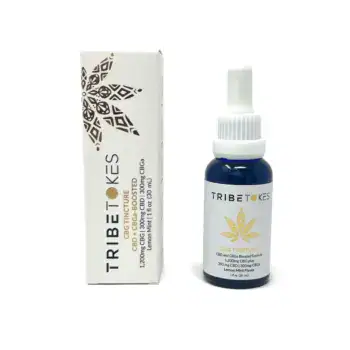
 CBG Tincture 1,800mg | CBG Oil with CBD + CBGaStarting from: $50.00 SHOP NOW This product has multiple variants. The options may be chosen on the product page
-
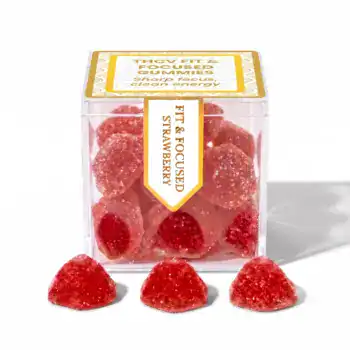
Fit & Focused Gummies | THCV + CBG Focus Gummies, Zero THCStarting from: $45.00 SHOP NOW This product has multiple variants. The options may be chosen on the product page
-
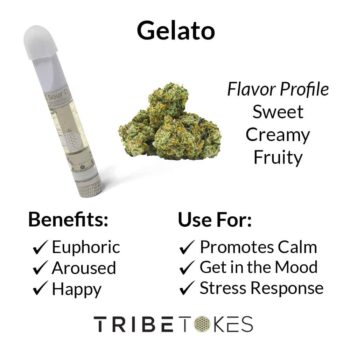
Gelato (Hybrid) | CBD Vape Carts | CBG-BoostedStarting from: $60.00 SHOP NOW This product has multiple variants. The options may be chosen on the product page
Where CBG Comes From in the Cannabis Plant
Every cannabinoid in a cannabis plant starts in the same place. The plant produces cannabigerolic acid, CBGA, and enzymes route it down one of several paths: toward THCA, toward CBDA, toward CBCA. Whatever survives the sorting becomes CBG once heat or time strips the acid group away.
That is why CBG is called the mother cannabinoid, and why so little survives to harvest. A cannabis crop bred for CBD converts nearly all of its CBGA into CBDA, so the CBG content of ordinary mature hemp is small. Growers work around it by harvesting early or by planting cultivars bred to stall the enzymes. Both give up yield somewhere else.
federal hemp law sets the federal definition of hemp at no more than 0.3% delta-9 THC by dry weight, and state rules on hemp cannabinoids differ and change, so check the current New Jersey ones yourself.
The full guide to what CBG is covers the same chemistry in more detail.
What the Research on CBG Has Established So Far
CBG has had a busy decade in the literature and a quiet one in the clinic. That gap is the most useful thing to understand before reading any product page.
The pharmacology has been mapped in some detail. A review published as Pharmacological Aspects and Biological Effects of Cannabigerol and Its Synthetic Derivatives covers how the molecule behaves and which biological effects have been recorded, including work on synthetic versions built on the same scaffold. That is a genuine body of research, not a set of human outcomes.
A second open question is what the body does with CBG once it arrives. Pharmacokinetics of Non-Psychotropic Phytocannabinoids treats absorption, distribution and clearance of the non-intoxicating cannabinoids as a subject in its own right. How much of a CBG serving reaches circulation, and for how long, is still being worked out.
The summary is short, then. CBG is non-intoxicating and has a molecular structure distinct from CBD and from the other cannabinoids around it. Researchers have studied it enough to describe mechanisms in the nervous system, and not nearly enough for anyone to promise an outcome. The focus and energy associations that circulate online rest on self-reports rather than trials, and nothing on this page is a health claim.
CBG, CBD, and CBN Are Not Interchangeable
People file the minor cannabis compounds together because they share a plant and a three-letter name. Chemically they behave as three distinct compounds.
- CBG is the precursor: the plant makes it first and converts nearly all of it away, so finished hemp carries only a small share.
- CBD is the abundant one: most hemp is bred to produce it, and it holds by far the largest research base of the three.
- CBN is the leftover: it builds up as THC degrades in storage, and it is the one attached to sleep, on evidence thinner than the marketing suggests.
- None is intoxicating: none produces the psychoactive effects THC does, and other cannabinoids almost always ride along, because extractors rarely isolate one and stop.
The CBG and CBN comparison is the pair people confuse most: one sits at the beginning of the plant’s chemistry, the other at the end. CBG next to CBD runs the closer pair side by side, and the New Jersey CBN page covers the evening end of the family.
The Formats People Search For
New Jersey searches for CBG cluster around four shapes, and each one behaves differently once it is in you.
- CBG oil and tinctures: held under the tongue, so part of the serving absorbs before digestion reaches it, with the amount adjustable by dropper.
- CBG vapes: inhaled, so onset is quick and duration short. A vape pen is the pick when you want something to arrive rather than accumulate.
- CBG gummies and edibles: a fixed amount per piece, swallowed, so it passes the liver before it circulates. Slower on, longer out.
- CBG with CBD: the most common arrangement of all, usually running CBD as the base with CBG in a smaller share.
Format changes timing and how much of a serving reaches you, not what the compound is. A milligram in a gummy and a milligram in a tincture are the same molecule on two schedules. How people take CBG oil and the CBG vape collection cover the two most searched formats.
Servings, Potency, and Reading a Lab Report
CBG labels commonly list between five and twenty milligrams per serving. That range describes what is on the market rather than a recommended amount, because no established dose exists for CBG in people. The sensible approach fits every cannabinoid: start low, and change one variable at a time.
A potency claim is worth exactly as much as the report behind it. An independent lab tests each batch and issues a Certificate of Analysis; a useful one shows the full cannabinoid profile with CBG content stated per serving, confirms the THC figure, and screens for pesticides, residual solvents and heavy metals. Match the batch code on the report to the code on the package.
Broad spectrum and THC-free products exist for people who want the other cannabinoids without any THC. They still carry a profile of minor compounds; the THC is what has been removed.
CBG and Drug Testing
A standard drug test does not look for CBG. It looks for THC metabolites, a different molecule with a different signature, so the cannabinoid itself is not the risk a panel is built to catch.
The risk, where there is one, comes from the rest of the product. Full-spectrum extracts carry trace THC by design, and repeated servings can put enough into your system to matter on a sensitive panel. Anyone tested at work should choose a broad spectrum or THC-free CBG product and confirm the THC line on the report first. No hemp company can promise a test result. The longer answer on CBG and drug tests covers the same ground. More from our New Jersey pages: hemp products in New Jersey, CBD oil in New Jersey, THC gummies in New Jersey, Delta 8 THC in New Jersey, THCa flower in New Jersey and THCa vapes in New Jersey.
Frequently Asked Questions
Human research has not separated the two cleanly yet. What is clear is chemical: CBG is the precursor the plant builds first, CBD is what most of it becomes, and their molecular structures differ. Most CBG products pair them rather than treating them as alternatives.
No. CBG is non-intoxicating and does not produce the psychoactive effects associated with THC. It will not cloud your thinking the way an intoxicating cannabinoid can.
Because the plant converts nearly all of it before harvest. CBGA is the starting molecule for THCA, CBDA and CBCA, so by the time a CBD-bred crop matures, very little CBG content is left. Producers harvest early or use cultivars bred to slow the conversion.
Drug tests screen for THC metabolites, not for CBG. Full-spectrum products can carry trace THC, so anyone who gets tested should pick a broad spectrum or THC-free option and read the batch report first.
It is not the cannabinoid usually associated with drowsiness; CBN is. People commonly describe CBG as clear-headed and use it when they want focus during the day, though that is a pattern in self-reports rather than a trial finding.
Labels commonly fall between five and twenty milligrams per serving. There is no established dose, so start at the low end of what a product offers and give it time.
They are commonly combined, and most CBG products are blends rather than isolates. What the combination does that either compound does alone has not been settled in research, so treat entourage claims with caution.
CBGA is the acid form the living plant actually produces. CBG is what remains once the acid group comes off, which happens with heat or with time. The plant makes CBGA; the CBG on a label is the decarboxylated version.
Under the tongue, usually. Holding a dropper serving there briefly lets part of it absorb before it is swallowed. Some people add it to food instead, which sends the whole serving through digestion.
A full cannabinoid profile with the CBG content stated, the THC figure confirmed, and screens for pesticides, heavy metals and residual solvents. It should name the independent lab and match the batch code on the package.
Keep exploring: back to all TribeTokes in New Jersey, the full CBG products lineup, or the New Jersey CBN page. Nearby: CBG in New York and CBG in Pennsylvania.
These statements have not been evaluated by the FDA. TribeTokes products are not intended to diagnose, treat, cure, or prevent any disease. Not for use by anyone under 21, or by those who are pregnant or nursing. All products contain less than 0.3% hemp-derived Delta-9 THC by dry weight.