
CBD in North Carolina
The milligram figure on a CBD label is the amount in the product, not the amount that reaches your bloodstream. The gap between those two numbers is bioavailability, and it moves with the route you pick. Swallowed CBD passes through the liver before it circulates, which removes a large share of it. Held under the tongue, part of the dose crosses the tissue directly and skips that first pass. Inhaled CBD reaches circulation fastest of all. Rubbed into skin, most of it stays local by design. North Carolina readers comparing a tincture, a gummy and a cream are comparing four different problems, not four flavours of one. Good news for North Carolina: TribeTokes ships CBD oil, CBD gummies and pain cream right to your door, with standard shipping in 2 to 5 business days.
The CBD Lineup for North Carolina
-
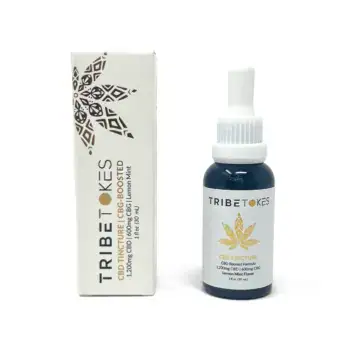
 THC-Free CBD Oil Tincture 1,800mg | CBG-BoostedStarting from: $50.00 SHOP NOW This product has multiple variants. The options may be chosen on the product page
-
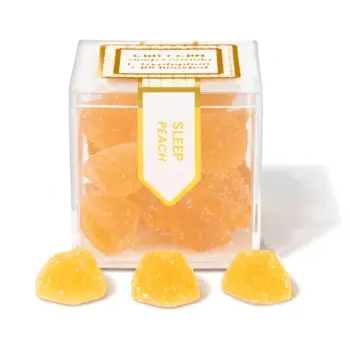
CBD + CBN Sleep Gummies | With L-Tryptophan + Vitamin B6Starting from: $45.00 SHOP NOW This product has multiple variants. The options may be chosen on the product page
-
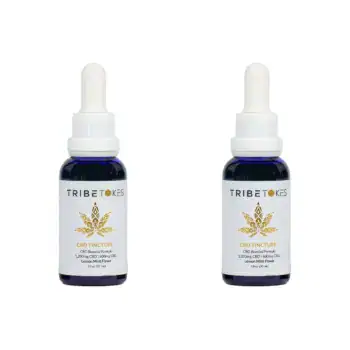
Save $10: You Pick 2 Tinctures | Build Your Own BundleOriginal price was: $100.00.$90.00Current price is: $90.00. SHOP NOW This product has multiple variants. The options may be chosen on the product page
Is CBD Legal in North Carolina?
Yes. Hemp-derived CBD is legal in North Carolina, and non-intoxicating CBD oil, gummies and creams are sold across the state. Even the hemp bill now waiting on the House, HB 328, targets intoxicating products and an age limit rather than everyday CBD. The bigger question is which format to use. Ranked purely on the share of a dose that reaches circulation, inhalation sits at the top, sublingual dosing sits in the middle, and swallowing sits at the bottom. Topical application sits outside the ranking altogether, because it is not trying to reach circulation in the first place. That ranking is not a ranking of usefulness, which is where people go wrong with it. Oral CBD gives up bioavailability in exchange for a long, level curve, and that is exactly why so many people who take it daily still reach for a gummy rather than anything faster.
CBD Across North Carolina
First-pass metabolism is the reason oral CBD loses so much of itself. Anything absorbed through the gut travels to the liver before it enters general circulation, and liver enzymes act on cannabidiol on the way through. What reaches circulation is a fraction of what you swallowed, plus metabolites the body made along the way. Sublingual dosing tries to get ahead of that by absorbing through the mucous membrane under the tongue, which drains into circulation directly. Holding a tincture there for a minute or two rather than swallowing it straight down is the entire technique.
CBD, by Format
Each format maps onto a route, and that mapping is what actually separates them. A gummy or a capsule is oral, so it is slow to start and long to fade. A tincture is sublingual if you hold it and oral if you swallow it, which is why two people working from the same bottle can report different onsets and both be right. A vape is inhaled, with the quickest onset and the shortest tail; Can You Vape CBD Oil? explains why the oil in a tincture is not the liquid a vape takes. A cream is topical and stays broadly where you put it.
- Gummies: pre-measured, easy daily habit.
- Tinctures: adjustable amounts, faster under the tongue.
- Topicals: applied to one area rather than taken internally.
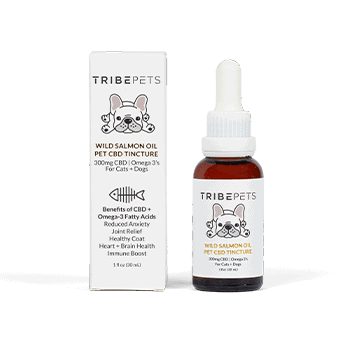
- Pets: oils made for dogs and cats.
How Much CBD to Take
Because routes differ in what they let through, a milligram figure is only comparable inside a route. Twenty milligrams swallowed and twenty milligrams held under the tongue are not the same exposure, and neither is the same as twenty milligrams inhaled. Set your amount inside one route, stay there long enough to judge it properly, and treat a route change as a fresh starting point rather than a conversion you can work out on the back of an envelope. Keeping a short written note of route, amount and timing turns a vague impression into something you can actually read back.
Oral: The Slowest Route and the Longest Curve
Oral dosing covers anything swallowed: gummies, capsules, drinks and a tincture taken without holding it. Absorption happens in the gut, so onset is slow and uneven, and the dose has to survive first-pass metabolism in the liver before any of it circulates. The commonly quoted oral bioavailability figures for cannabidiol are low and vary widely between individuals, which is why sensible sources give ranges rather than a single number. What you lose in efficiency you gain in duration.
That long curve is the actual argument for oral dosing, and it explains why people who take CBD as a daily routine rather than as a response to something usually settle on a gummy. Nothing needs measuring, the timing is repeatable, and the effect is level enough that a missed hour does not matter. North Carolina readers building a daily habit should note that this is also the route where consistency pays most, since the accumulation over several days is doing more work than any single serving. Whether a batch has aged also matters here; Do CBD Gummies Expire? covers that.
Sublingual: Recovering Some of the Loss
Sublingual means absorbed through the mucous membrane under the tongue, which drains into circulation without passing through the liver first. The upside is a faster onset and a larger share of the dose surviving. The downside is that it only happens if you actually hold the liquid there, and most people do not, which is why a tincture and a gummy so often feel identical to someone who has swallowed both immediately.
In practice, only part of a sublingual dose is absorbed that way; the rest is swallowed eventually and behaves orally. That means a tincture produces a mixed curve, an earlier bump followed by the slower oral tail. If you want the sublingual portion to be meaningful, hold it, and keep the timing consistent between doses so the comparison is fair. The clinical literature takes up the same practical questions about route and amount, and the review A Balanced Approach for Cannabidiol Use in Chronic Pain is a reasonable entry point for readers who want the medical framing rather than a product page.
Inhaled: Fast On, Fast Off
Inhalation puts cannabidiol into circulation through the lungs, bypassing both the gut and the liver, and the numbers reported for inhaled bioavailability are the highest of any route by a wide margin. Onset is measured in minutes. The trade is duration: what gets in quickly also clears quickly, so an inhaled dose is a short intervention rather than a background level. Anyone judging CBD on an inhaled dose alone is judging it on the least representative curve there is.
There is a practical constraint too. Inhaled formats are the hardest to dose precisely, because nobody draws a measured fraction of a tank, and the working unit becomes the puff rather than the milligram. That imprecision is manageable if you treat the interval as the thing you control, one draw and then a set wait, rather than the amount. Travel adds its own complications; Can You Bring CBD on a Plane? covers what that looks like in practice.
Topical: The Route That Is Not Trying to Circulate
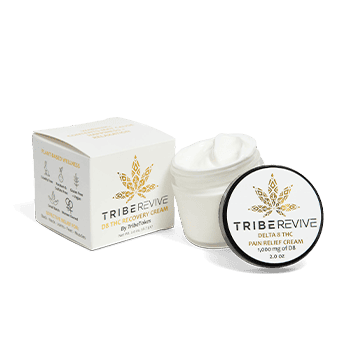
A topical is the odd one out, because it is not competing on bioavailability at all. The formulation is built to move cannabidiol across the outer layer of skin and into the tissue immediately below, then stop. Very little enters general circulation, and a topical therefore cannot substitute for an oral dose when what you want is a whole-body effect. Judged on the ranking above it looks like the worst route of the four. Judged on what it is for, the ranking is simply the wrong measurement.
What does change a topical’s performance is formulation rather than milligram count: base oils, emulsifiers and penetration aids all affect how far a preparation travels through the skin barrier. Two creams with identical cannabidiol totals can behave differently for that reason alone. It is also why Does CBD Cream Absorb Through Skin? is a more useful question to ask of a topical than how many milligrams are in the jar.
Fat, Timing and Why the Numbers Move
Cannabidiol is lipophilic, meaning it dissolves in fat rather than water, and that single property explains most of the variability people run into. Taken with a fatty meal, an oral dose is absorbed differently from the same dose taken on an empty stomach. Formulators work around the same problem with carriers and emulsifiers, which is why two tinctures at the same strength are not necessarily the same preparation. The pharmacokinetics of the non-intoxicating cannabinoids are reviewed in Pharmacokinetics of Non-Psychotropic Phytocannabinoids for readers who want the underlying data.
The takeaway for anyone actually taking it is narrow and useful: hold the conditions steady while you work out your amount. Same route, same time of day, same rough relationship to meals, for at least several days. Change one variable at a time after that. Most of the reports of CBD doing nothing come from people who changed route, amount and timing together and then had no way to read the result. If you are comparing formats while you do it, Are CBD Gummies Safe? covers the oral end of the range. Keep exploring North Carolina with hemp products in North Carolina, THC gummies in North Carolina, Delta 8 THC in North Carolina, THCa flower in North Carolina, THCa vapes in North Carolina, CBN in North Carolina and CBG in North Carolina.
Frequently Asked Questions
A larger share of an inhaled dose reaches circulation, and it gets there faster, so the same milligram figure lands harder and sooner. It also clears sooner. A gummy lets through less of what you swallowed but spreads it over a much longer window, which is why the two are hard to compare on strength alone.
Because part of a tincture dose is absorbed under the tongue rather than through the gut, skipping the trip through the liver that a swallowed dose has to make first. Hold it for a minute or two before swallowing. Swallow it immediately and you have effectively taken an oral dose in a more expensive format.
Oral, in the form of a gummy, because a fixed serving with a slow curve is the easiest thing to judge honestly over several days. Move to sublingual dosing once you want finer control of the amount, and treat any change of route as a new starting point rather than a straight swap.
Yes, hemp-derived CBD is legal in North Carolina. CBD oil, CBD gummies and CBD creams made from hemp are sold openly across the state, and every TribeTokes CBD batch is third-party lab tested, with its Certificate of Analysis posted online.
Long enough for absorption through the mucous membrane to happen, which in practice means a minute or two rather than a few seconds. Swallowing straight away converts a sublingual dose into an oral one, with the slower onset and larger first-pass loss that come with it.
For oral dosing it can. Cannabidiol is fat-soluble, so it partitions into dietary fat rather than dissolving in water, and a meal containing fat changes how much is absorbed and how quickly. Keeping meals consistent while you are still finding your amount removes one variable from the picture.
By route. Inhaled CBD is noticeable within minutes. Sublingual dosing generally sits between fifteen minutes and around an hour. A swallowed gummy or capsule commonly takes anywhere from half an hour to two hours, since it has to clear digestion and the liver first.
Very little of it, which is the point rather than a shortcoming. A topical is formulated to act in the skin and the tissue immediately beneath it, not to circulate. That is also why a cream cannot substitute for an oral dose when what you want is a whole-body effect.
You can buy CBD oil online from TribeTokes and have it shipped to your North Carolina address with standard shipping in 2 to 5 business days. Charlotte, Raleigh, Durham, Greensboro and Asheville orders all ship the same way, and every CBD tincture has its batch lab report posted.
Inhaled effects fade soonest, sublingual sits in between, and oral dosing lasts longest because absorption itself is drawn out. Duration also depends on how much you took and on individual metabolism, which is why two people on the same gummy describe different afternoons.
People do, most often an oral dose for the baseline and something faster on top. The catch is that it makes self-assessment much harder, since you can no longer tell which route produced what. If you are still working out your amount, run one route at a time for a week before layering anything. Our answer on Can CBD Oil Cause Insomnia? covers one reason timing is worth writing down.
Keep exploring: head back to all TribeTokes in North Carolina, shop all CBD, browse the full cannabinoid collections, or view our lab results.
These statements have not been evaluated by the FDA. TribeTokes products are not intended to diagnose, treat, cure, or prevent any disease. Not for use by anyone under 21, or by those who are pregnant or nursing. All products contain less than 0.3% hemp-derived Delta-9 THC by dry weight.