
CBN in North Carolina
CBN has a reputation for sleep that the published evidence does not carry. Cannabinol is real, it is non-intoxicating, and it is in a great many evening formulas, but no body of human research establishes that it produces sleep on its own. The honest version for North Carolina readers is a short one: the human studies are few, small and decades old, several gave CBN together with THC, and the modern products are mixtures nobody can attribute a result to. Here is what exists.
The CBN Lineup for North Carolina
-
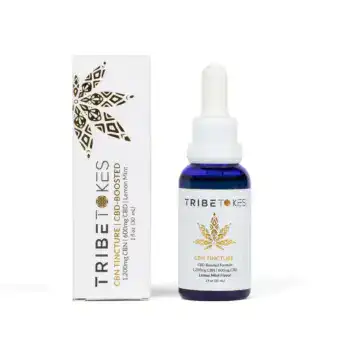
 CBN Tincture 1,800mg | CBD-Boosted | Nighttime FormulaStarting from: $50.00 SHOP NOW This product has multiple variants. The options may be chosen on the product page
-
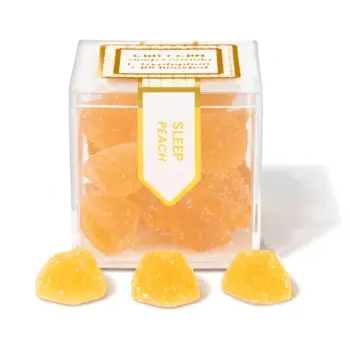
CBD + CBN Sleep Gummies | With L-Tryptophan + Vitamin B6Starting from: $45.00 SHOP NOW This product has multiple variants. The options may be chosen on the product page
-
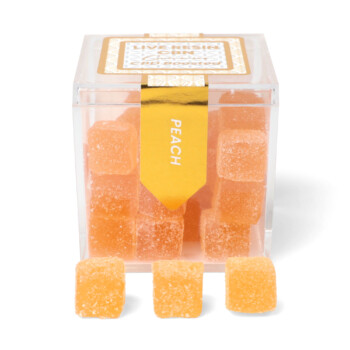
CBN Gummies with Live Resin | CBD-BoostedStarting from: $45.00 SHOP NOW This product has multiple variants. The options may be chosen on the product page
What CBN Is and Where It Comes From
Cannabinol is the compound THC becomes as it oxidizes with age, air and light, which is why it turns up in aged material and in products formulated to include it. That much is settled. Everything after it, what a serving does and whether it does anything reliably, is where the record thins out, and the rest of this page stays on that question rather than on the chemistry.
CBN for Sleep and Recovery
The human literature is small enough to describe in a paragraph. A handful of studies, most of them conducted decades ago with very few participants, looked at cannabinol in people. Some gave it alongside THC rather than by itself, which makes any observed effect impossible to assign to CBN. Cannabinol and Sleep: Separating Fact from Fiction reviews that record directly and separates what has been shown from what has been repeated in marketing copy, and the conclusion is that the sedative reputation runs ahead of the data.
CBN vs CBD
CBD is the fair comparison, and it is a comparison of two limited literatures rather than one strong and one weak. Research into CBD and sleep is larger and more recent, and it is still mixed, with results that vary by dose, population and how sleep was measured. Nothing puts the two compounds head to head in the same trial. The CBN and CBD sleep comparison goes through what each literature contains.
- Gummies: pre-measured, the easy nightly habit.
- Oils: adjustable amounts, faster under the tongue.
- Paired with CBD: the two are commonly formulated together.
- Timing: take it about an hour before bed.
How Much CBN to Take
No dose has been established for cannabinol, and that follows directly from the state of the research. Establishing a dose means testing several amounts against a measured outcome and having others repeat it, which has not happened here. Product servings are formulation decisions. Read the per-serving figure, hold it steady, and treat anything presented as a recommended amount as a convention rather than a finding.
What the Human Studies Measured
The published human work on cannabinol is old and small. Participants were counted in single figures rather than hundreds, outcomes were largely self-reported, and the compound was sometimes given in combination with THC.
Studies of that shape are how research begins. They are not how a conclusion is reached, and nothing in the intervening decades has replaced them with the larger, controlled work that would settle the question.
It is worth being precise about what that means. Absence of evidence is not evidence that cannabinol does nothing. It means the question has not been answered, and a product page that presents it as answered is selling past its data.
The Problem With Combination Products
Almost every CBN product on the market contains something else: CBD, melatonin, terpenes, botanical extracts, occasionally all four. If a mixture produces an effect, nothing in the design says which ingredient produced it.
This matters more than it sounds. It means testimonials about CBN formulas are testimonials about formulas. Attribution requires isolating the variable, and a combination product is built to do the opposite.
The same limitation applies to the research that does exist on multi-ingredient evening products. A trial of a formula can tell you about that formula. It cannot promote any one of its ingredients to the status of an established active, however prominently that ingredient is printed on the box.
Mechanism Work Versus Outcome Work
There is a second literature that is often mistaken for the first. Work on cannabinoids and sleep describes biological pathways: how the endocannabinoid system interacts with the sleep and wake cycle, and which receptors sit in the circuits involved.
Cannabinoids and Sleep: Exploring Biological Mechanisms and Therapeutic Potentials surveys that ground and frames it as potential rather than proof. A plausible pathway is a reason to run a trial. It is not a substitute for one, and the distinction is where most confident claims about CBN quietly collapse.
How to Read a CBN Sleep Claim
Four questions do most of the work. Was the study run in people? Was CBN given alone? Was there a control group? And has anyone repeated the result independently?
Applied to the CBN literature, the answers are mostly no, sometimes, rarely and not yet. That is not a reason to dismiss the compound. It is a reason to treat any confident claim about it, in either direction, as ahead of the evidence.
For a reader in NC weighing an evening formula, that translates into something practical. Read the panel rather than the promise: a stated per-serving cannabinol figure, a THC line, and a batch number that matches a published report. Those are things a document can support. The rest of the category is still waiting on research nobody has run. Comparing options in North Carolina? See hemp products in North Carolina, THC gummies in North Carolina, Delta 8 THC in North Carolina, THCa flower in North Carolina and THCa vapes in North Carolina.
Frequently Asked Questions
Cannabinol is described as at most weakly active and is not formulated as an intoxicant. Its fit at the CB1 receptor is much weaker than THC’s, which is the usual explanation for the difference. That part of the picture is more settled than anything about sleep.
Screens look for THC metabolites, not cannabinol. Where a CBN formula was made from full spectrum material it can carry trace THC, so read the THC line on the batch report and choose broad spectrum or isolate if you are tested.
It confirms how much cannabinol is present and screens for contaminants. That is a statement about contents, not about effects. A certificate cannot tell you whether the ingredient works, and no certificate should be presented as though it could.
Not one derived from trials. The figures on packages come from formulators rather than from dose-ranging research, so they describe a product design. Follow the label, keep it constant, and judge over weeks rather than nights.
That has not been established. The human studies are few, small and old, and some administered CBN with THC rather than alone. Reviews of the evidence do not support calling cannabinol a proven sleep aid. More on CBN and sleep.
There is no human evidence that supports classing it as one. The sedative description attached to cannabinol came from a small early literature and from the assumption that anything derived from THC must be heavy, neither of which is a demonstration.
Mostly subjective ratings in very small groups of participants, sometimes with CBN given alongside THC. Those designs can generate a hypothesis. They cannot establish that a compound produces an outcome, which is why the question is still open.
Because the category settled on it, and because it is a plausible candidate that had never been ruled out. Plausible is not the same as demonstrated, and a widely repeated positioning is not evidence for the ingredient inside it.
Many evening products combine the two, which is exactly the design that makes attribution impossible: whatever a person notices cannot be assigned to either ingredient. Ask a clinician before stacking supplements. More on that combination.
CBN given on its own, in people, against a control, with sleep measured rather than self-reported, at more than one amount, and repeated by an independent group. Each element that goes missing is one more reason to hold a claim loosely.
Keep reading: TribeTokes in North Carolina, the North Carolina CBD page, or CBG in North Carolina.
These statements have not been evaluated by the FDA. TribeTokes products are not intended to diagnose, treat, cure, or prevent any disease. Not for use by anyone under 21, or by those who are pregnant or nursing. All products contain less than 0.3% hemp-derived Delta-9 THC by dry weight.