
CBN in South Carolina
CBN, CBD and THC come from the same plant and behave differently enough that comparing them is the quickest route to understanding any one of them. THC is the intoxicating member. CBD is the most studied and does not intoxicate. CBN sits third: chemically downstream of THC, far weaker at the receptor THC acts on, and carrying the thinnest research file of the three. This page sets the three side by side for South Carolina readers rather than arguing one against the others.
The CBN Lineup for South Carolina
-
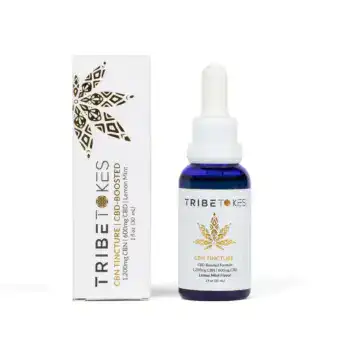
 CBN Tincture 1,800mg | CBD-Boosted | Nighttime FormulaStarting from: $50.00 SHOP NOW This product has multiple variants. The options may be chosen on the product page
-
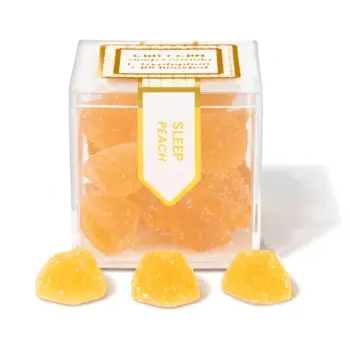
CBD + CBN Sleep Gummies | With L-Tryptophan + Vitamin B6Starting from: $45.00 SHOP NOW This product has multiple variants. The options may be chosen on the product page
-
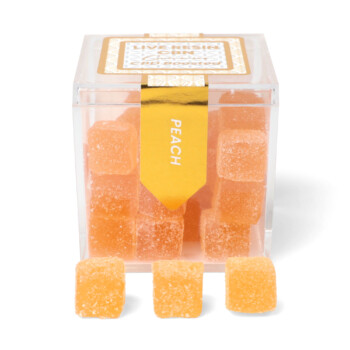
CBN Gummies with Live Resin | CBD-BoostedStarting from: $45.00 SHOP NOW This product has multiple variants. The options may be chosen on the product page
What CBN Is and Where It Comes From
Cannabinol is what THC becomes when it oxidizes, so it appears in extracts as a downstream compound instead of something the plant assembles directly. CBD grows from a separate branch of the same pathway. Hemp cannabinoid rules differ between states and get revised, so SC readers should check current state guidance rather than assume one national answer covers it. The chemistry, unlike the paperwork, is identical everywhere.
CBN for Sleep and Recovery
Grouping the three as though their evidence bases match is the common error. THC has been characterized for decades. CBD carries a large and growing clinical literature. CBN has neither, and Cannabinol and Sleep: Separating Fact from Fiction exists precisely because its reputation outgrew its data. The human studies usually cited for CBN are small, old and inconclusive. So the accurate statement is that CBN is the least understood of the three, not that it is the strongest one after dark.
CBN vs CBD
Side by side, the differences are structural. CBD interacts with the CB1 receptor weakly and does most of its work through other targets. THC binds CB1 with high affinity, which is where the intoxication comes from, and the National Institute on Drug Abuse overview of cannabis identifies THC as the compound responsible for that effect. CBN binds CB1 as well, weakly enough that consumer amounts are not intoxicating. CBN vs THC and CBN vs CBD take each pairing on its own.
- Gummies: pre-measured, the easy nightly habit.
- Oils: adjustable amounts, faster under the tongue.
- Paired with CBD: the two are commonly formulated together.
- Timing: take it about an hour before bed.
How Much CBN to Take
Dose language does not transfer between the three. THC amounts are measured in small increments and tracked closely. CBD servings run far higher and rest on real dosing research. CBN servings sit in a narrow band that came out of formulation practice rather than trials. Reading a CBN figure as though it carries the same meaning as a CBD figure is the mistake worth avoiding, because the two numbers were arrived at by completely different routes.
Three Molecules, One Biosynthetic Family
The plant does not make these three in parallel. It builds an acid precursor, then enzymes route that precursor down separate branches, one leading to the acid form of THC and another to the acid form of CBD. Heat and time convert those acids into the neutral compounds people recognize. CBN never gets its own branch. It appears afterwards, when THC that already exists begins to oxidize.
That single fact explains most of the differences that follow. CBD and THC are products of the plant’s own chemistry, present in predictable amounts determined by cultivar. CBN is a product of exposure, present in amounts determined by how the material was handled. One is a design outcome and the other is a history outcome, which is why CBN levels vary so much between samples that otherwise look identical.
How Each One Meets the CB1 Receptor
CB1 receptors are concentrated in the brain and central nervous system, and how tightly a compound binds them predicts a great deal about what it does. THC binds strongly, which accounts for its psychoactive profile. CBN binds the same receptor considerably more weakly. CBD barely engages CB1 directly at all and instead acts on a scattered set of other targets, which is part of why its effects are described so differently.
Reading that hierarchy backwards causes most of the confusion in this category. A weak CB1 binder is not simply a milder version of a strong one; the difference in affinity changes which effects appear at all, not only how large they are. Applying intuitions from THC to CBN, or from CBD to either, produces predictions that the pharmacology does not support.
CB2 receptors are the other half of the system and sit mostly outside the brain, in immune tissue and the periphery. All three compounds interact with that receptor family to differing degrees, and the research there is less developed than the CB1 work. Anyone comparing the three on CB1 behavior alone is looking at the best-characterized part of the picture rather than the whole of it, which is worth saying before the comparison gets treated as complete.
What Each One Is Actually Known For
THC has the longest and clearest characterization, including its intoxicating effect, its dose sensitivity and its side effect profile. CBD carries an extensive body of clinical and preclinical work covering multiple conditions, with results that vary by application but exist in quantity. CBN has a reputation for evening use and very little published human work supporting it.
That imbalance matters most when a product places all three names on one label. The presence of a well-researched cannabinoid does not lend its evidence to the others in the formula. Each ingredient stands or falls on its own literature, and in a three-cannabinoid product one of them is carrying most of the actual support.
Where the Three Overlap Inside a Product
Most hemp formulas contain more than one of these compounds whether or not the front label says so. A full-spectrum extract holds CBD in quantity, trace THC at the low level hemp extract carries, and whatever CBN accumulated along the way. Adding isolated CBN on top of that base produces a formula with two sources of the same molecule, one measured and one incidental.
The batch certificate is where that stops being guesswork. A proper report lists each cannabinoid separately with its measured concentration, so a South Carolina reader can see how much of each is really present rather than inferring it from the marketing. Comparing certificates across two products is more informative than comparing their front labels, which tend to converge on the same handful of words.
One further wrinkle sits inside full-spectrum formulas. The CBN measured on a certificate may have come from deliberate addition, from oxidation during storage, or from both at once, and the report does not distinguish between those sources. It states what is present rather than how it got there. For a comparison between two full-spectrum products that difference can matter, because one figure was designed and the other accumulated.
Choosing by Question Rather Than by Cannabinoid
A cleaner way to approach the three is to start from the question rather than the molecule. If the question involves intoxication, THC content is the only figure that matters and the answer is on the certificate. If the question involves a well-documented cannabinoid with dosing research behind it, CBD is the one with the file. If the question is about CBN specifically, the honest starting point is that the research is not there yet.
None of that decides what anyone should take. It does decide how much weight a claim can carry. A statement about THC can be checked against decades of work, a statement about CBD against a large literature, and a statement about CBN against a small and dated one. Matching the confidence of the claim to the size of the file behind it is the whole skill.
Concentration Versus Activity: Two Different Rankings
Two different rankings operate inside any hemp extract, and mixing them up produces most of the poor reasoning in this category. The first ranking is abundance, meaning how much of each compound the material actually holds. In hemp, CBD dominates, THC appears only in trace amounts, and CBN sits below that unless it was added deliberately. The second ranking is activity at the receptor, and the order there runs close to the reverse.
THC is the least abundant of the three in hemp and by far the most active per milligram at CB1. CBN is present in small amounts and weakly active. CBD is present in quantity and barely engages CB1 directly at all, doing its work elsewhere. Reading the abundance list as though it described contribution leads people to expect the largest figure on a panel to be the most consequential ingredient, which is not how any of this operates.
The practical version for a South Carolina reader is to read both columns of a certificate rather than one. The concentration figure states what is in the product. Knowing which receptor each compound engages states what that concentration means. A formula heavy in one cannabinoid and light in another can still be defined by the lighter one, and no amount of comparing milligram totals will reveal that. Also in South Carolina: hemp products in South Carolina, Delta 8 THC in South Carolina, THCa flower in South Carolina, THCa vapes in South Carolina and CBG in South Carolina.
Frequently Asked Questions
It is a product of THC rather than a form of it. When THC oxidizes it loses hydrogen and becomes a chemically distinct molecule with different receptor behavior. The family resemblance is real, which is why the two get confused, but CBN does not act like THC and is not intoxicating at consumer amounts.
CBD, by a very wide margin. CBD has been through registered clinical trials, dose-ranging work and formal drug development. CBN has a handful of small human studies, most of them decades old, with results that did not agree. Any comparison between the two has to account for that gap before it compares anything else.
Standard screens look for THC metabolites, not for CBN itself. The practical risk comes from the extract rather than the cannabinoid, since full-spectrum hemp carries trace THC. Anyone who gets tested should check the batch certificate and consider a broad-spectrum or isolate formula.
Strength is the wrong axis for this comparison. The two act on different targets, so a milligram of one is not comparable to a milligram of the other in any meaningful sense. What can be said is that CBD has a documented dose-response relationship in several contexts and CBN does not have one at all.
No. The reaction runs one way. THC oxidizes into CBN under heat, light and air, and a finished product stored normally does not reverse that. This is why CBN content in an aged sample keeps climbing while THC content falls, rather than the two trading places back and forth.
Only partly. CBN interacts directly with the CB1 receptor, though weakly. CBD has low affinity for CB1 and does most of its work elsewhere in the body. That difference is the clearest structural reason to treat findings about one as saying little about the other.
Because the oxidation changes the part of the molecule that matters for receptor binding. CBN still fits the CB1 receptor, but far less tightly than THC does, so the amounts in consumer formulas do not produce the effect THC produces. The origin explains the family resemblance, not the behavior.
CBG sits upstream. The acid form of CBG is the precursor the plant converts into the acids that become THC and CBD, which is why it is sometimes called the parent compound. It is a minor cannabinoid by concentration in most hemp and, like CBN, has a limited human research file.
A full-spectrum extract generally carries CBD in quantity, trace THC at a low level, and small amounts of CBN alongside other minor cannabinoids. The exact profile depends on the cultivar, the harvest and how the extract was handled, which is why a batch certificate reports each compound individually rather than by category.
CBD, followed by THC, with CBN a distant third. THC has been studied for decades in both clinical and observational settings. CBD has a large and active literature. CBN has neither the volume nor the recency, which is the single most useful thing to know before comparing claims made about it.
Related reading: TribeTokes in South Carolina, the THC gummies we ship to South Carolina (Sleep pairs THC with CBN), CBD in South Carolina, CBN in North Carolina, CBG vs CBN, and the lab-tested CBN and CBD comparison.
These statements have not been evaluated by the FDA. TribeTokes products are not intended to diagnose, treat, cure, or prevent any disease. Not for use by anyone under 21, or by those who are pregnant or nursing. All products contain less than 0.3% hemp-derived Delta-9 THC by dry weight.