

Not all delta 8 cartridges are created equal — some are brilliant, some are sketchy, and a startling number are both. Here’s what lab reports and thousands of reviews actually tell us.
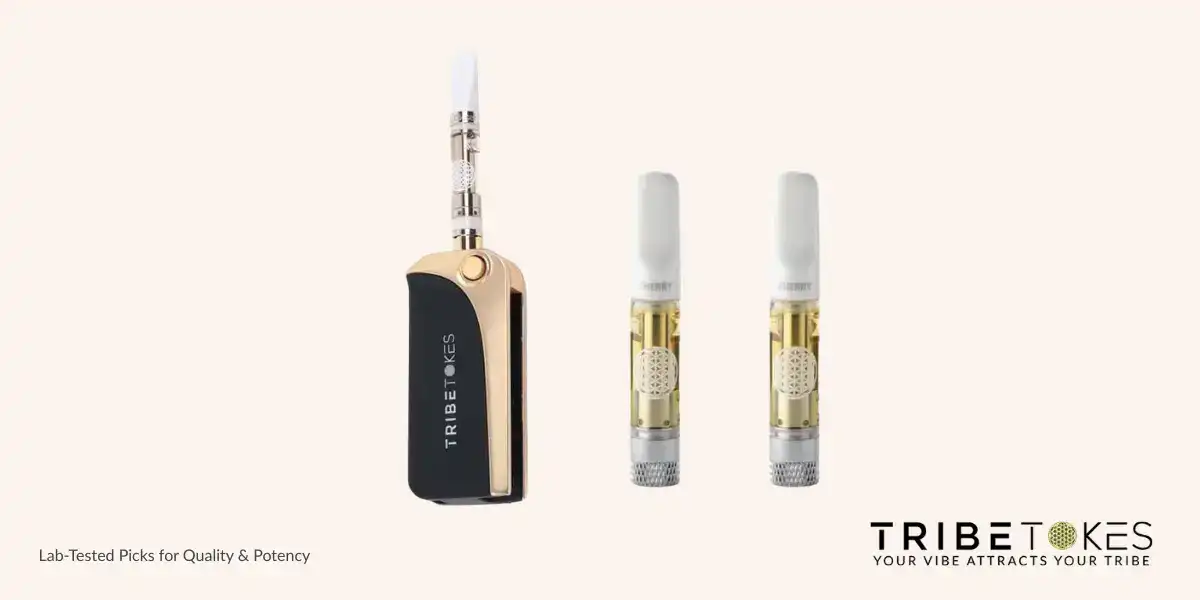
Let’s be real: the delta 8 market in 2026 is a wild west situation. You’ve got brilliant products sitting right next to absolute gas-station garbage on the same shelf. The difference between them? A lab report — and whether the brand bothered to actually get one.
We dug into the science, scrutinized third-party Certificates of Analysis (COAs), and cross-referenced thousands of real customer reviews to bring you this guide. Whether you’re a delta 8 veteran or you’re just curious what all the fuss is about, here’s what you actually need to know.
What Is Delta 8 THC?
Delta-8-tetrahydrocannabinol (delta-8-THC, or D8) is a naturally occurring cannabinoid found in hemp and cannabis plants — but only in tiny concentrations. To make commercially available delta 8 products, manufacturers convert CBD (abundant in hemp) into delta-8 through a chemical isomerization process.
Structurally, delta-8 and delta-9-THC are nearly identical. The only difference is the location of a double bond on the carbon chain — delta-8 has it on the 8th carbon; delta-9 has it on the 9th. That small shift has a big impact on how strongly the molecule binds to your CB1 receptors in the endocannabinoid system.
The science, simplified: Because delta-8 binds to CB1 receptors with lower affinity than delta-9, users typically experience a milder, more functional high — with less anxiety and paranoia. A 2021 survey published in Cannabis and Cannabinoid Research found that 71% of delta-8 users specifically chose it to avoid delta-9’s adverse effects like paranoia and anxiety.
In a cartridge, that D8 oil is loaded into a 510-thread hardware unit with a ceramic coil and glass tank, then attached to a battery. The battery heats the coil, which vaporizes the oil. Simple physics. Whether the experience is great or trash depends entirely on what’s in — and what’s not in — that oil.
How We Evaluate Delta 8 Carts
We don’t pick based on who has the fanciest packaging or the biggest ad budget. Here’s our actual criteria:
- Third-Party Lab Testing (COA)
We require a current COA (within 12 months) from an ISO-accredited lab. It must confirm delta-8 potency, delta-9-THC below 0.3%, and pass screening for heavy metals, pesticides, residual solvents, and microbials. No COA = no consideration. - Ingredients & Hardware Quality
Clean oil means no Vitamin E acetate (linked to EVALI lung injuries), no MCT oil, no artificial cutting agents. Hardware should use ceramic coils and borosilicate glass — not cheap plastic tanks that leach chemicals when heated. - Potency & Terpene Profile
We look for verified cannabinoid concentration, strain-accurate terpene profiles from natural botanical or cannabis-derived sources, and consistent batch-to-batch performance. - Verified Customer Reviews
We cross-reference reviews on brand websites, third-party retailers, and forums. We look for consistency in reported effects, flavor accuracy, and hardware reliability (no clogging, no leaking). - Price-to-Quality Ratio
A $10 gram isn’t always a steal if you’re inhaling mystery chemicals. We evaluate value relative to quality, not just cost.
Best Delta 8 Carts 2026 — Our Top Picks
#1 Best Overall
TribeTokes Delta 8 Cartridge — Live Resin
★★★★★
If you want the cleanest delta 8 cart on the market, this is it. TribeTokes Live Resin Delta 8 carts use strain-specific, cannabis-derived terpenes captured through live resin extraction — meaning the terpene profile reflects the actual plant genetics, not a lab-blended approximation. The result is a more complex, full-spectrum-adjacent experience that feels closer to real cannabis than most D8 products on the shelf.
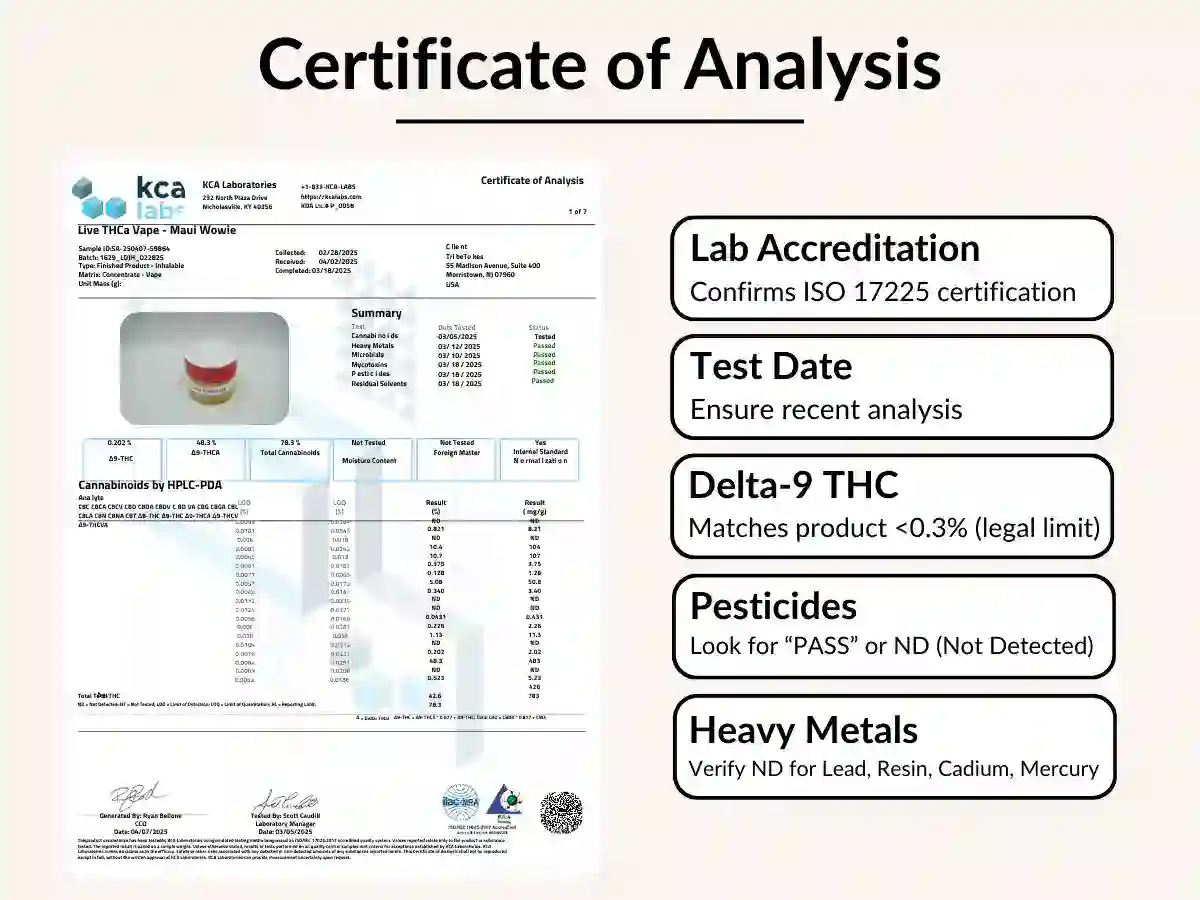
Every batch is tested by a third-party ISO-accredited lab for potency, heavy metals, pesticides, and residual solvents. COAs are publicly available and current. Hardware uses a ceramic coil in a glass tank — no plastic, no mystery materials.
🧪 Third-Party Tested
🌿 Cannabis-Derived Terpenes
⚙️ Ceramic Coil
📦 1g (1000mg)
💨 510-Thread
🚫 No Cutting Agents
✓ Pros
- Live resin terpenes = authentic strain experience
- Full public COA, updated per batch
- Ceramic coil, no plastic hardware
- Zero additives — no Vitamin E, no MCT
- Ships nationwide (where legal)
✗ Cons
- Premium price point
- Not available in all states
#2 Best for Beginners
TribeTokes Delta 8 Cartridge — Distillate
★★★★★
If you’re new to delta 8 or just want a reliable, smooth introduction, the TribeTokes distillate cart delivers a cleaner, more neutral baseline experience. Distillate-based D8 is highly refined — most minor cannabinoids and plant material have been removed — giving you a purer, more predictable effect. The botanical terpenes provide strain-inspired flavors without the full complexity of live resin.
Same lab testing standards. Same ceramic hardware. Lower price point than the live resin version, making it an excellent starting point.
🧪 Third-Party Tested
🌱 Botanical Terpenes
⚙️ Ceramic Coil
📦 1g (1000mg)
💨 510-Thread
✓ Pros
- Live resin terpenes = authentic strain experience
- Full public COA, updated per batch
- Ceramic coil, no plastic hardware
- Zero additives — no Vitamin E, no MCT
- Ships nationwide (where legal)
✗ Cons
- Less complex terpene profile than live resin
- Missing minor cannabinoids present in live resin
Delta 8 Cart Comparison: What Actually Matters
Here’s a breakdown of the key factors to compare when evaluating any delta 8 cart — not just ours.
| Feature | TribeTokes Live Resin D8 | TribeTokes Distillate D8 | Typical Gas Station D8 | Cheap Online D8 |
| Third-Party COA | ✓ Current & Public | ✓ Current & Public | ✗ Often None / Expired | ✗ Varies |
| Hardware | Ceramic coil, glass tank | Ceramic coil, glass tank | Plastic, metal wick | Unknown / Plastic |
| Terpene Source | Cannabis-derived (live resin) | Botanical terpenes | Artificial flavorings | Artificial / unknown |
| Cutting Agents | None | None | Often yes | Varies |
| Heavy Metal Testing | ✓ Pass | ✓ Pass | Unknown | Unknown |
| Pesticide Testing | ✓ Pass | ✓ Pass | Unknown | Unknown |
| Price / gram | $$–$$$ | $$ | $ | $–$$ |
| Verified Reviews | 6,000+ reviews | 6,000+ reviews | Typically none | Varies |
What to Avoid: Red Flags in Delta 8 Carts
This is the stuff your lungs will thank you for knowing.
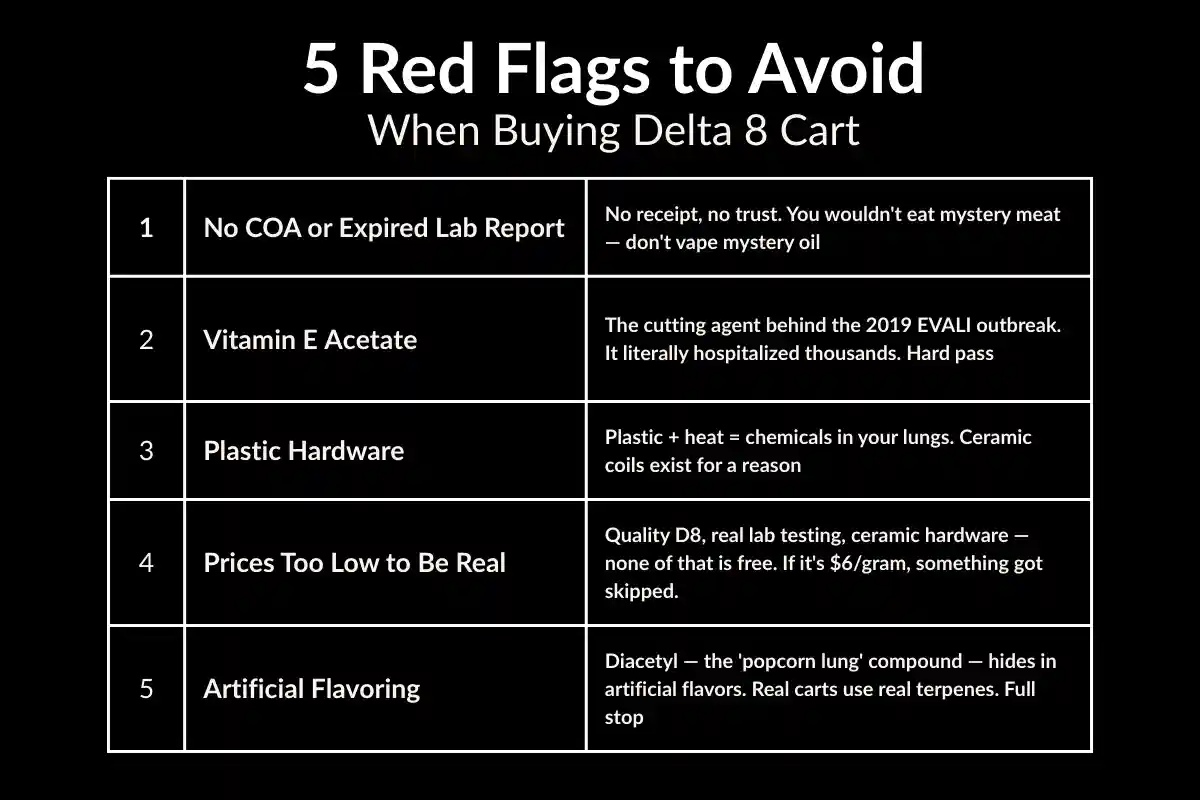
🚩 Red Flag #1: No COA or Expired Lab Reports
If a brand can’t show you a current, third-party Certificate of Analysis — or the COA is more than 12 months old — walk away. A COA from an ISO-accredited lab is the only way to verify what’s actually in the product you’re about to inhale.
🚩 Red Flag #2: Vitamin E Acetate
Vitamin E acetate (tocopheryl acetate) was identified by the CDC as a primary culprit in the 2019 EVALI lung illness outbreak that hospitalized thousands. It was used as a cheap cutting agent in illicit and low-quality vape cartridges. Any quality delta 8 cart should explicitly test negative for it on their COA.
🚩 Red Flag #3: Plastic Hardware
Cheap plastic tanks and metal-wick coils can leach compounds into the oil when heated. Premium carts use borosilicate glass tanks and ceramic heating elements — both are inert at vaping temperatures.
🚩 Red Flag #4: “Too Cheap to Be Real” Pricing
Quality delta 8 distillate, third-party testing, and proper ceramic hardware all cost money. If you’re seeing 1g carts for $5–8, something has been cut — either on ingredients, testing, or both.
🚩 Red Flag #5: Artificial Flavoring Instead of Terpenes
Artificial flavorings like diacetyl (linked to “popcorn lung”) can be present in low-grade products. Real terpenes — whether botanical or cannabis-derived — are the safe, effective alternative. If the product lists “natural and artificial flavors” without specifying terpenes, that’s a flag.
What Does a Delta 8 Cart Feel Like?
Here’s the honest answer: it depends on your tolerance, the strain terpenes, your dose, and your body chemistry. But there are consistent patterns.
Most delta 8 users describe the experience as a “relaxed focus” — psychoactive enough to feel, mild enough to function. The high is smoother, less edge-y than delta-9, with a gentler onset and a more gradual comedown. For people who find traditional THC triggers anxiety or paranoia, delta 8 often lands in a much more comfortable zone.
Effects by Strain Type
| Strain Type | Terpene Profile | Typical Effects | Best Time to Use |
| Sativa-leaning | Limonene, Terpinolene, Pinene | Uplifting, focused, social | Daytime, creative work |
| Indica-leaning | Myrcene, Linalool, Caryophyllene | Body relaxation, calm, sleep | Evening, wind-down |
| Hybrid | Balanced blend | Balanced mind/body, versatile | Afternoon, social settings |
Onset is typically within 1–5 minutes when vaping, with peak effects around 15–30 minutes and a total duration of 2–4 hours. Start with 1–2 puffs at a low voltage (2.4–2.6V) and give it 15 minutes before deciding if you want more. This isn’t the time to be a hero.
Is Delta 8 Legal in 2026?
The federal answer is nuanced. Delta-8-THC derived from hemp (not cannabis) is technically legal under the 2018 Farm Bill, which federally legalized hemp and hemp-derived cannabinoids — as long as the final product contains less than 0.3% delta-9-THC by dry weight.
State laws are a different story. As of early 2026, states including Colorado, New York, Delaware, Rhode Island, Vermont, Michigan, Alaska, Arizona, Arkansas, Iowa, Idaho, Mississippi, Montana, and Utah have enacted restrictions or outright bans on delta-8 products. This list changes frequently. Always verify your state’s current law before purchasing.
The regulatory landscape is also evolving at the federal level. The FDA has raised concerns about delta-8’s safety and its semi-synthetic production process, and additional regulations may be forthcoming. Buying from brands with transparent COAs and clear compliance practices is your best protection.
Delta 8 Carts and Drug Tests
Let’s not sugarcoat this: delta 8 WILL likely cause a positive drug test result.
Standard urine immunoassay drug tests detect THC-COOH (a THC metabolite) and cannot distinguish between delta-8, delta-9, or any other THC variant. Your body metabolizes delta-8 similarly to delta-9, producing the same detectable metabolites.
Detection windows vary based on frequency of use, metabolism, and body fat percentage — typically 3–30 days for urine tests. If you are subject to drug testing for employment, sports, probation, or any other reason, treat delta-8 the same as traditional THC.
Delta 8 Carts vs. THCa Carts: Which Is Right for You?
This is one of the most common questions we get — and the answer depends entirely on what experience you’re looking for.
| Delta 8 Carts | THCa Carts | |
| Psychoactive Effect | Mild–Moderate (D8 effect) | Strong (converts to D9 when vaped) |
| Effect Profile | Relaxed, smooth, low-anxiety | Full-spectrum, potent, traditional cannabis feel |
| Production Process | Semi-synthetic (CBD isomerization) | Natural hemp extraction |
| Best For | THC-sensitive users, beginners, daytime use | Experienced users, maximum potency |
| Legal Status | Federally legal (hemp); restricted in some states | Federally legal (hemp); check state laws |
If you’re new to cannabis or want a milder, more controlled experience: start with delta 8. If you’re looking for the closest thing to traditional high-potency cannabis in a legal, lab-tested format: THCa carts are the move.
Want to dive deeper? Read our full breakdown: What Do Delta 8 Carts Feel Like? Effects, Duration & How They Compare to THC
Frequently Asked Questions About Delta 8 Carts
Delta 8 carts are vape cartridges filled with delta-8-THC oil — a hemp-derived cannabinoid that produces mild psychoactive effects. They’re federally legal under the 2018 Farm Bill when sourced from hemp and containing less than 0.3% delta-9-THC, though some states have banned them.
Look for products with a current Certificate of Analysis (COA) from an ISO-accredited third-party lab. The COA should confirm delta-8 potency, test negative for heavy metals, pesticides, residual solvents, and microbials, and verify that delta-9-THC is below 0.3%.
Most delta 8 carts perform best between 2.4V and 3.0V. Starting at a lower voltage (around 2.4V) preserves terpenes and flavor. Higher voltages (3.0–3.3V) produce bigger clouds but can degrade the oil if pushed too high. Avoid exceeding 3.5V. For a full breakdown, check our Complete Voltage Guide for Carts.
Yes — delta 8 THC is psychoactive. Most users describe the high as milder, clearer, and less anxious than delta-9-THC. Effects typically include relaxation, mild euphoria, and increased appetite, with a lower risk of paranoia.
Delta 8 THC derived from hemp is federally legal under the 2018 Farm Bill. However, as of 2026, over a dozen states have restricted or banned delta-8 products. Always check your state’s current laws before purchasing.
A standard 1g (1000mg) delta 8 cartridge lasts approximately 150–300 puffs depending on draw length and voltage. For light users taking 3–5 puffs per day, a 1g cart may last 1–2 months.
Delta-8 and delta-9-THC differ by the location of a double bond on their carbon chain. Delta-9 is the primary psychoactive compound in traditional cannabis and delivers a stronger effect. Delta-8 binds less aggressively to CB1 receptors, resulting in a milder, smoother experience with less risk of anxiety or paranoia.
Yes. Standard urine drug tests detect THC metabolites and cannot distinguish delta-8 from delta-9. If you are subject to drug testing, assume that delta-8 products will cause a positive result. THC metabolites can remain detectable for 3–30 days.
Prioritize: (1) current COA from an ISO-accredited lab, (2) ceramic or glass hardware — avoid plastic tanks, (3) no added cutting agents like Vitamin E acetate or MCT oil, (4) strain-specific natural terpenes rather than artificial flavoring, and (5) a brand with verified customer reviews.
THCa is the non-psychoactive precursor to delta-9-THC. When vaped, THCa decarboxylates into delta-9-THC, producing a more potent, full-spectrum experience similar to traditional cannabis. Delta-8 provides a milder, more controlled effect. THCa carts are generally considered a stronger, more “natural” option compared to delta-8.
Ready to Try a Lab-Tested Delta 8 Cart?
TribeTokes delta 8 cartridges are third-party tested, made with ceramic hardware, and zero cutting agents. Every batch COA is publicly available so you know exactly what you’re getting.