
THCa Flower in New Jersey
THCa is an acid. The molecule sitting in a cured jar of flower carries a carboxyl group that the living plant builds and keeps, and that single group is the whole difference between THCa and the delta-9 THC people usually mean. Apply heat and the group leaves as carbon dioxide, in the reaction chemists call decarboxylation. Nothing else about the molecule has to change for it to happen. TribeTokes hand-trims whole-flower THCa in small lots across twelve strains, each sold as a full eighth with an independent lab report published against its batch. The chemistry above is why that report prints more than one THC figure.
The THCa Flower Lineup for New Jersey
-
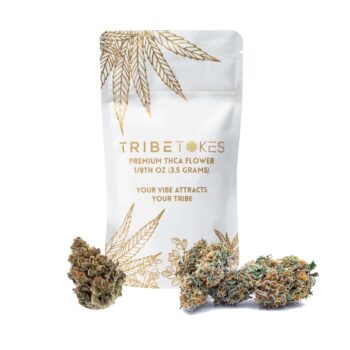
 THCa Flower: 12 Strains | Eighth (3.5g) | 22 to 28% THCaStarting from: $45.00 SHOP NOW This product has multiple variants. The options may be chosen on the product page
-
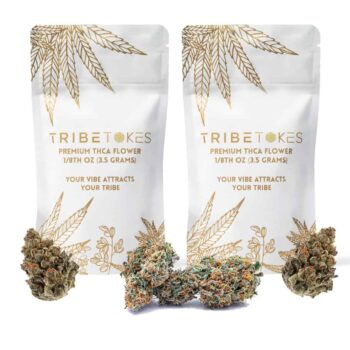
Save $10: THCa Flower You Pick 2 | Eighths (3.5g) | 22 to 28% THCaOriginal price was: $90.00.$80.00Current price is: $80.00. SHOP NOW This product has multiple variants. The options may be chosen on the product page
-
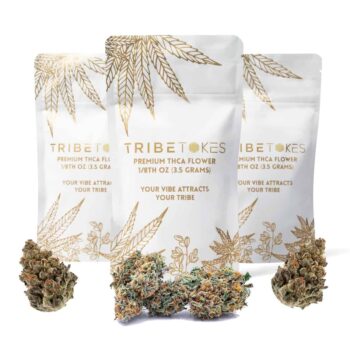
Save $20: THCa Flower You Pick 3 | Eighths (3.5g) | 22 to 28% THCaStarting from: $115.00 SHOP NOW This product has multiple variants. The options may be chosen on the product page
THCa Flower Strain Profiles
Hybrid
Sativa
Indica
Hybrid
Hybrid
Sativa
THCa Flower in New Jersey: What to Look For
Every state handles hemp differently and the details move, so reading the local laws that apply where you live in NJ is the sensible first step. The chemistry does not vary by address. The acid form is what the plant makes, and heat is what converts it, wherever the jar happens to be. THCa vs THC: What’s the Difference? covers the same ground in plainer language.
How We Cure and Pack THCa Flower
Handling matters because the conversion does not need a flame to begin. Heat drives it fastest, but time and light push the same reaction along slowly, which is why flower is cured deliberately rather than rushed and then sealed rather than left open to a room. Each batch is held back until an independent laboratory has read it, and the report published against that run is what the label repeats.
Pick Your Strain
Strain choice and decarboxylation are separate questions. Indica, sativa and hybrid describe the plant and its aroma, while the acid-to-neutral conversion happens the same way in all of them. Each strain page lists aroma, lean and terpene notes so a pick can follow character rather than a name. How Do I Choose a THCa Flower Strain? is the longer version of that decision.
Skip the Grinding: Shop Prerolls
-
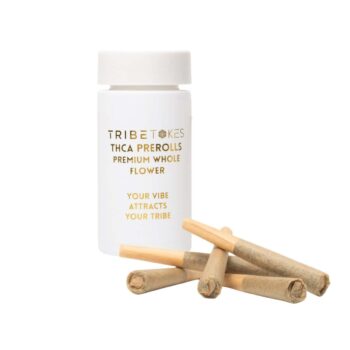
THCa Pre-Rolls : Whole Flower 5-Pack | Mini or Regular | 22 to 28% THCaStarting from: $35.00 SHOP NOW This product has multiple variants. The options may be chosen on the product page
-
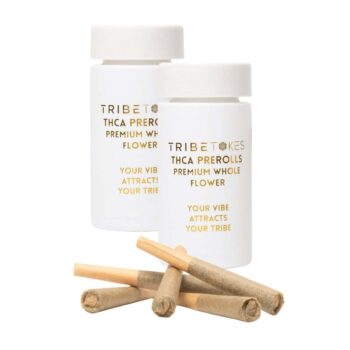
Save $5-$10: THCa Pre-Rolls You Pick 2 | Whole Flower 5-Pack | 22 to 28% THCaStarting from: $65.00 SHOP NOW This product has multiple variants. The options may be chosen on the product page
-
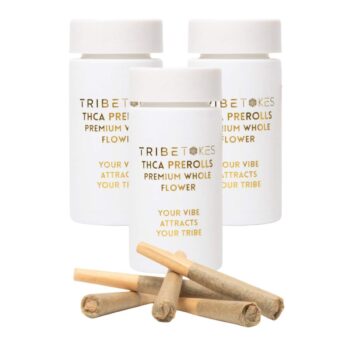
Save $10-$20: THCa Pre-Rolls You Pick 3 | Whole Flower 5-Pack | 22 to 28% THCaStarting from: $95.00 SHOP NOW This product has multiple variants. The options may be chosen on the product page
Flower or Prerolls?
An eighth arrives as loose bud you break down yourself; prerolls arrive as five whole-flower cones. The bud is the same, the testing behind it is the same, and so is the reaction that starts the moment either one meets a flame. Format changes the effort involved, not the chemistry. All THCa Prerolls covers the ready-rolled side.
What the Letter A in THCa Stands For
Acid. THCa is tetrahydrocannabinolic acid, the carboxylated form the living plant produces, and it stays that way through drying and through curing. The neutral molecule, delta-9 THC, is what is left once the carboxyl group has gone. Reviewers have treated the acid form as a compound in its own right in Can You Pass the Acid Test? Critical Review and Novel Therapeutic Perspectives of Δ9-Tetrahydrocannabinolic Acid A.
The practical consequence is straightforward. Two names on one jar are not branding. They are two molecules separated by a single chemical group, and only one of the two is present before any heat is applied. Does THCa Flower Get You High? takes that from the other end.
What Heat Removes, and What It Leaves Behind
The reaction is a loss rather than an addition. The carboxyl group departs as carbon dioxide, and what remains is a lighter molecule than the one you started with. That is why a laboratory reports THCa and delta-9 THC as separate figures instead of folding them into one line, and why the two numbers cannot be swapped for each other.
Chemists have studied the rate at which acidic cannabinoids do this, published as Acidic Cannabinoid Decarboxylation. The short version worth carrying around is that temperature and time both matter, and neither one is under much control at the end of a lit cone.
Why a Flame Is Not a Precise Instrument
A cherry burning at the end of a joint is not a laboratory oven. The temperature swings with every draw, material at the edge sees a different heat than material at the center, and some of whatever converts is carried off in smoke rather than inhaled. Anyone quoting a tidy conversion percentage for combustion is quoting a number that would have to be measured, not assumed.
That is the honest limit of what a page like this can tell you. The chemistry is settled. The arithmetic of any particular session is not, and no product page is in a position to close that gap. Does a THCa Preroll Get You High? works the same question from the practical side.
Raw Flower Is a Different Proposition
Nothing about a bud in a jar has been decarboxylated yet. Eaten as it comes, with no heat step anywhere in the process, the acid form stays the acid form. This is why raw plant material behaves nothing like the same material after a flame or an oven, and it is a chemical fact rather than an opinion about quality.
It is also why edibles are made from heated extract instead of ground flower stirred into a mix. The heat step is the manufacturing step, done deliberately and under control rather than left to a lighter. Is THCa Flower Real Weed? sits on the same question from the naming angle.
All of which makes the acid form a genuinely odd thing to trade by weight. What sits in the jar is one molecule; what anybody eventually encounters is a different one, and the step between them happens outside the building, in whatever conditions the person applying the heat happens to create. No two of those conditions match. That is the reason this page describes a reaction rather than promising an outcome, and it is also why the batch report deals in what was measured before the flame rather than after it. More from our New Jersey pages: hemp products in New Jersey, CBD oil in New Jersey, THC gummies in New Jersey, Delta 8 THC in New Jersey, THCa vapes in New Jersey, CBN in New Jersey and CBG in New Jersey.
Frequently Asked Questions
The loss of a carboxyl group from a molecule. In flower it is the step that turns THCa into delta-9 THC, and the group that leaves does so as carbon dioxide. Heat is the usual trigger for it.
There is no single figure, which is the honest answer. Conversion depends on temperature and time together, so a lower heat held longer and a higher heat held briefly are not the same experiment. Published work on acidic cannabinoid decarboxylation deals with exactly that relationship.
No. The two differ by one chemical group, and that group is why raw flower and heated flower behave so differently. The acid form is not the one associated with intoxication.
Because they are separate molecules. One carries the carboxyl group and one does not, and an instrument reads them as distinct compounds. Folding them into a single line would hide which of the two the laboratory actually found.
Each batch visits an independent third-party laboratory before packing, and its Certificate of Analysis goes up in full. Potency, pesticides and heavy metals all appear on the same document.
Slowly, yes. Time and light nudge the same reaction along without any flame involved, which is one reason flower is sealed after curing rather than left open to the air.
Not meaningfully. Mechanical handling is not a heat step, and the reaction needs energy rather than pressure. What handling does change is how much resin stays on the outside of the bud.
People do, and without a heat step the acid form stays exactly as it is. Raw plant material does not behave like the same material after a flame or an oven, which is the entire significance of the reaction.
The reaction is identical; the conditions are not. A cone burns unevenly, the temperature moves with every draw, and some of what converts leaves in the smoke rather than reaching anyone.
Nine core strains across indica, sativa and hybrid, each sold as a whole-flower eighth. Aroma, lean and terpene notes sit on the individual strain pages.
Keep exploring: head back to all TribeTokes in New Jersey, shop all THCa flower or THCa pre-rolls, learn what THCa is, browse best sellers, see every strain we carry, or view our lab results. Close by, see THCa flower in New Hampshire and THCa flower in Rhode Island. You can also compare Georgia THCa flower.
These statements have not been evaluated by the FDA. TribeTokes products are not intended to diagnose, treat, cure, or prevent any disease. Not for use by anyone under 21, or by those who are pregnant or nursing. All products contain less than 0.3% hemp-derived Delta-9 THC by dry weight.