
THC Gummies in Tennessee
Two people can eat identical chews from the same jar on the same evening and describe two different experiences, and neither of them is wrong. An edible dose is a fixed quantity of material meeting a body that is not fixed at all. Tolerance built over months, what was eaten beforehand, how a person’s liver enzymes happen to work, and where a lipophilic compound settles once it is absorbed all move the outcome. This page is written for readers in TN who want to understand why a THC gummy is a personal variable rather than a universal one.
Once you know your own variables, compare our hemp-derived THC gummies and pick the strength that suits you. Yes, we ship THC gummies to Tennessee: our hemp-derived Delta 9 gummies go out with standard shipping in 2 to 5 business days, in plain, tracked packaging.
The TribeTokes THC Gummy Lineup
-
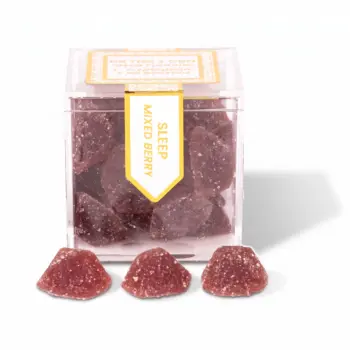
 THC Gummies for Sleep: 10mg THC + 20mg CBN, Melatonin-FreeStarting from: $45.00 SHOP NOW This product has multiple variants. The options may be chosen on the product page
-
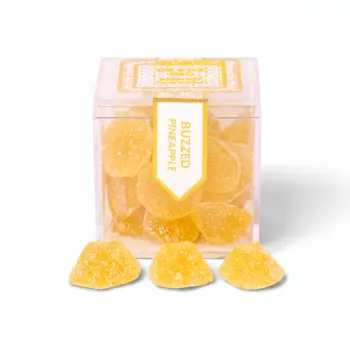
THC Buzzed Gummies | Extra Strength – Delta 8-BoostedStarting from: $45.00 SHOP NOW This product has multiple variants. The options may be chosen on the product page
-
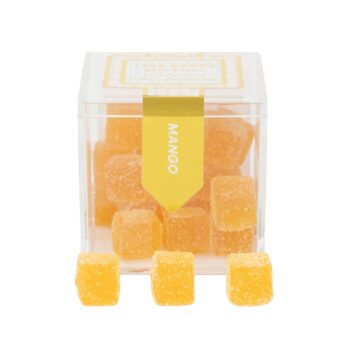
THC Live Resin Gummies | CBD-BoostedStarting from: $45.00 SHOP NOW This product has multiple variants. The options may be chosen on the product page
-
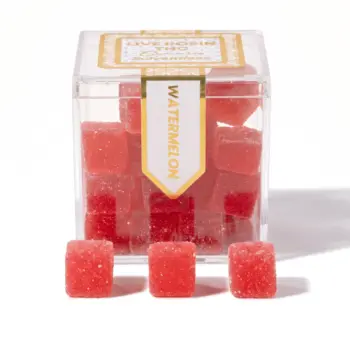
Live Rosin Gummies | Solventless THCStarting from: $45.00 SHOP NOW This product has multiple variants. The options may be chosen on the product page
-
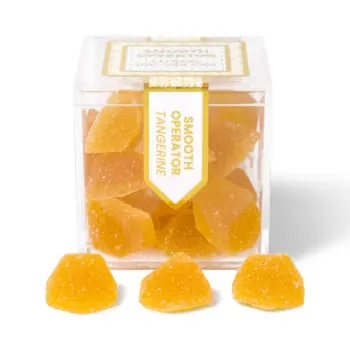
Smooth Operator 1:1:1 Ratio Gummies | THC + CBD + CBGStarting from: $45.00 SHOP NOW This product has multiple variants. The options may be chosen on the product page
-
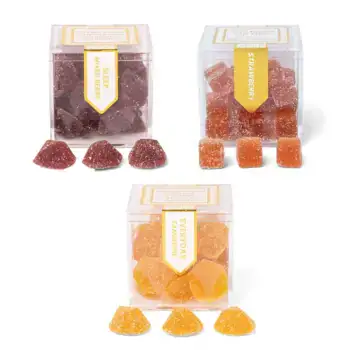
Save $20: You Pick 3 Gummies | Build Your Own BundleOriginal price was: $135.00.$115.00Current price is: $115.00. SHOP NOW This product has multiple variants. The options may be chosen on the product page
Are THC Gummies Legal in Tennessee?
Hemp THC gummies are regulated in Tennessee, not banned outright. Since January 2026 the state Alcoholic Beverage Commission oversees them, with a 21+ age rule and limits per serving and per package, and the rules have shifted more than once, so check current Tennessee guidance before you buy. For a non-intoxicating option, see CBD oil in Tennessee, and for the other THC format, delta 8 in Tennessee. The TribeTokes chews span a low CBN sleep piece, live resin and live rosin for flavor, the extra-strength Buzzed, and a 1:1:1 blend holding THC, CBD, and CBG on a level line. The quantity in each piece is a controlled figure, verified against a lab test. What happens after it is swallowed is not controlled by anyone, which is the whole subject of this page. The label is the one honest constant in the arrangement, and everything interesting happens after it stops applying.
How Our THC Gummies Are Made
Batch testing exists precisely because so much downstream is variable. If the input quantity also drifted, there would be nothing stable in the chain at all and no way for a person to learn anything from one occasion that applies to the next, which would make personal experience worthless. TribeTokes cooks in small runs, doses each against an independent lab result, and publishes the Certificate of Analysis tied to that run. That is the fixed point everything else in this discussion is measured against.
Pick the Right THC Gummy
Selecting between the chews on paper is less useful than most people expect, because the same piece produces different reports from different people. What does transfer is a person’s own record. Someone who knows how a given piece landed for them, on a normal evening, has better information than any description of the range could provide. Product descriptions are written for a population. A personal note from a Tuesday evening is written for exactly one reader.
- Evening formulas: THC paired with CBN.
- Stronger: Buzzed for a higher tolerance.
- Balanced: Smooth Operator 1:1:1 for daytime.
- Live extracts: live resin and live rosin.
How Many Should You Take
Half a piece or one whole piece, then an hour or two before any further decision, is the standard opening, and individual variation is the reason it exists as advice at all. If everyone metabolised an edible identically there would be a single correct quantity and it could simply be printed. There is not, so the opening move is deliberately conservative and the second one waits on evidence rather than on impatience.
Tolerance Is Built, Not Given
The largest single source of difference between two people at the same figure is usually history. Repeated cannabis exposure is associated with a reduced response over time, an adaptation attributed to changes in how cannabinoid receptors signal after sustained stimulation. Somebody using regularly and somebody who has not in years are, functionally, taking two different doses from the same jar.
Tolerance is also not permanent. It fades during a break, and it fades faster than most people expect it to. The result is a recognisable pattern: a person returns after months away, reaches for the figure they remember as ordinary, and finds it is nothing of the sort. Treating a remembered quantity as a fixed personal constant is the mistake underneath that story. Tolerance is a state, not a trait, and it moves in both directions.
Stomach Contents and Fat
A chew on an empty stomach and the same chew after dinner do not take the same path. Gastric emptying rate changes with what is already in the stomach, and cannabinoids are fat-soluble, so the presence of dietary fat can influence how much of a dose crosses the gut wall rather than passing through. That is a genuine mechanism, not folklore.
What makes it hard to give clean advice about is that the direction of the effect is not uniform. Some people find an edible arrives faster and hits harder on an empty stomach. Others find a meal makes it stronger. Both accounts are physiologically plausible depending on which part of the process dominates for that person, which is why the useful version of the advice is to keep the variable consistent rather than to optimise it. Someone who always takes a chew after dinner has removed one unknown from their own experiment, whatever the physiology underneath it happens to be doing.
Body Composition and Where a Fat-Soluble Compound Goes
THC does not dissolve in water. It dissolves in fat, and after absorption it distributes into fatty tissue before being released back into circulation slowly over a long period. That single property explains a great deal: why the effect of an edible has such a long tail, why cannabis metabolites remain detectable long after anything is felt, and why body composition keeps turning up as a variable in the research literature.
The study Pharmacokinetic Investigation of Commercially Available Edible Marijuana Products in Humans: Potential Influence of Body Composition and Influence on Glucose Control examined the pharmacokinetics of edible cannabis products in people, with body composition among the factors considered. The important takeaway for a reader is not a formula. It is the opposite: that scaling an edible dose by bodyweight the way one might scale a medication is not supported by how these compounds actually distribute.
Enzymes, Genetics and the First Pass
Everything swallowed passes through the liver before it reaches the rest of the body, and the enzymes waiting there do not work at the same rate in everyone. Enzyme activity varies for inherited reasons, with age, and with what else a person is taking. Someone whose enzymes work quickly converts more of a dose during that first pass than someone whose enzymes work slowly.
This is not a small effect at the margins. It changes both how much active material reaches circulation and what proportion of it has been converted into a metabolite that behaves differently from the original compound. Two people with the same tolerance, the same meal and the same piece can still land in different places for this reason alone, and there is no way to know in advance which side of it you are on. It is not something a label can adjust for and not something a person can test for casually.
What the Research Can and Cannot Tell You
Studies in this area report averages and ranges, and the ranges are usually wide. The study Cannabinoid Exposure and Subjective Effects of THC and CBD in Edible Cannabis Products looked at cannabinoid exposure alongside the subjective effects people reported from edible cannabis products, which is the pairing that matters here: what circulates and what a person actually notices are related, but they are not the same measurement and they do not track each other neatly.
So the literature is useful for understanding mechanisms and useless as a personal prediction. It can tell a reader why variation exists. It cannot tell any individual reader where they will land, and any source that claims otherwise is overselling what the evidence supports. A range in a paper is a description of a group, and no individual is obliged to sit in the middle of it.
Keeping Your Own Record in TN
For readers in Tennessee comparing THC gummies, the practical conclusion is unglamorous. General guidance can only describe a population, and the only data that applies to one person is the data that person collects. What was taken, at what time, on what stomach, and what happened over the following few hours is a more useful reference than any description of a product range.
Keeping that record turns a set of uncontrollable variables into a personal baseline, which is the closest anyone gets to predictability with this format. It also makes the exceptions legible: the evening it landed differently usually had a different meal, a different gap since the last time, or a different night’s sleep behind it. Related reading covers Can You Microdose THC?, Can Microdosing THC Help With Anxiety?, and Does Microdosing THC Show Up on a Drug Test?, while CBD vs THC: How They Differ and CBN vs THC: How They Differ cover the other cannabinoids in the range. Keep exploring Tennessee with hemp products in Tennessee, Delta 8 THC in Tennessee, THCa flower in Tennessee, THCa vapes in Tennessee, CBN in Tennessee and CBG in Tennessee.
Frequently Asked Questions
Because several independent variables sit between the chew and the effect. How quickly the stomach empties, how much is absorbed across the gut wall, how actively the liver metabolises it, how much tolerance a person has built, and how a fat-soluble compound distributes through the body all differ between individuals. Each one shifts the result, and they stack rather than cancel.
Regular cannabis use is associated with reduced sensitivity over time, an adaptation attributed to changes in cannabinoid receptor signalling in response to repeated exposure. The practical consequence is that a quantity which is significant for an occasional user can be unremarkable for a frequent one. Tolerance also fades with a break, which is why returning after time away is a common way for people to misjudge a familiar figure.
Each run is dosed against an independent third-party lab result, and the Certificate of Analysis published for it is tied to that specific batch. That fixes the one variable in the chain that can be fixed. Everything after swallowing belongs to the person eating it.
Stomach contents influence how quickly a chew is broken down and how much of the dose is absorbed, so a gummy taken on an empty stomach and the same gummy taken after a meal do not follow identical paths. The direction of that difference is not uniform across people, which is part of why food is such a persistent source of confusion in edible guidance.
Weight alone is a poor predictor, and treating an edible like a weight-scaled medication leads people wrong. Body composition has been examined as a factor in how edible cannabis is absorbed and distributed, and the relationship is not a simple proportional one. Two people of similar weight and different composition can report different things from the same piece.
Hemp THC gummies are regulated in Tennessee rather than banned outright. Since January 2026 the state Alcoholic Beverage Commission oversees them, with a 21+ age requirement and limits per serving and per package. The rules have changed several times, so check current Tennessee guidance before you buy.
In practice, yes, and the gap between the two is often larger than either expects. A frequent user has adapted to repeated exposure and a first-timer has not, so the same figure describes two very different events. The awkward case is the returning user, whose tolerance has faded during a break but whose memory of their old quantity has not.
For a first timer in Tennessee, start with one 10mg TribeTokes gummy, or half of one if you’re cautious. Edibles take 30 minutes to 2 hours to kick in, so wait the full two hours before taking more. Blends that pair THC with CBD tend to feel smoother for new users than straight THC.
Routinely, and it is the normal outcome rather than a sign that something went wrong with the product. Identical pieces from a well-mixed batch carry the same quantity. What differs is everything on the receiving end, which is why comparing notes with someone else is useful for flavor and useless for dosing.
Any question about how a cannabis product might interact with a prescription belongs with the prescribing clinician, who knows the medication and the person taking it. That is not a hedge. Liver enzyme pathways handle a great many drugs, and a general article is not in a position to answer a specific question about someone’s own prescriptions.
Keep exploring: head back to all TribeTokes in Tennessee, shop our THC gummies or Delta-9 gummies, browse best sellers, read our gummies guide, or view our lab results. Close by, see THC gummies in Mississippi and THC gummies in Missouri.
These statements have not been evaluated by the FDA. TribeTokes products are not intended to diagnose, treat, cure, or prevent any disease. Not for use by anyone under 21, or by those who are pregnant or nursing. All products contain less than 0.3% hemp-derived Delta-9 THC by dry weight.