
THC Gummies in Ohio
The most useful skill anyone can bring to a THC gummy is reading its label correctly, and the mistake that costs people most is confusing a pack figure with a piece figure. A jar that states a large milligram number is usually stating what the whole container holds. What matters to the person eating one chew is the per piece line, which sits somewhere else on the panel and is often printed smaller. This page is written for readers in OH who want to decode a gummy label properly: what total THC means, where the serving size hides, and how the number on the jar ties back to a lab report.
Once you can read a label, it’s much easier to shop THC gummies without guessing. Order online and our hemp-derived Delta 9 gummies go out with standard shipping in 2 to 5 business days, in plain, tracked packaging.
The TribeTokes THC Gummy Lineup
-
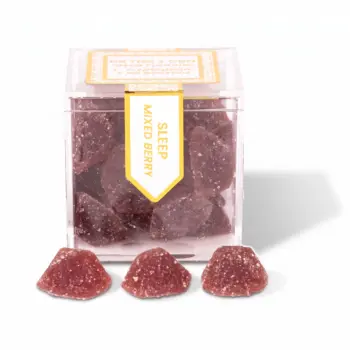
 THC Gummies for Sleep: 10mg THC + 20mg CBN, Melatonin-FreeStarting from: $45.00 SHOP NOW This product has multiple variants. The options may be chosen on the product page
-
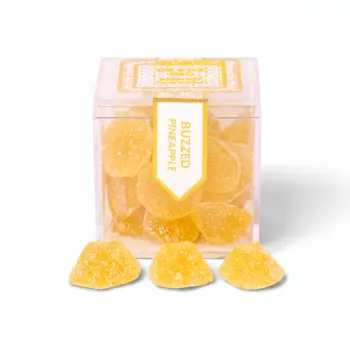
THC Buzzed Gummies | Extra Strength – Delta 8-BoostedStarting from: $45.00 SHOP NOW This product has multiple variants. The options may be chosen on the product page
-
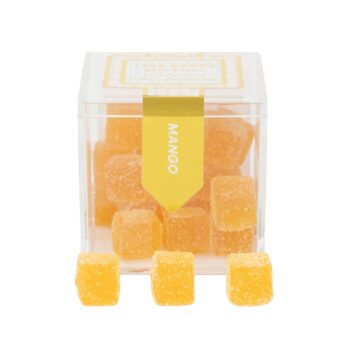
THC Live Resin Gummies | CBD-BoostedStarting from: $45.00 SHOP NOW This product has multiple variants. The options may be chosen on the product page
-
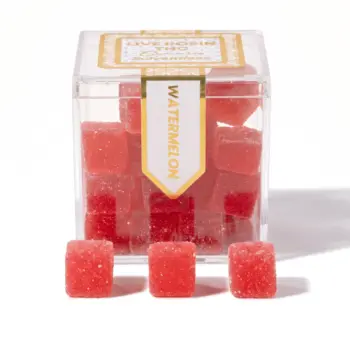
Live Rosin Gummies | Solventless THCStarting from: $45.00 SHOP NOW This product has multiple variants. The options may be chosen on the product page
-
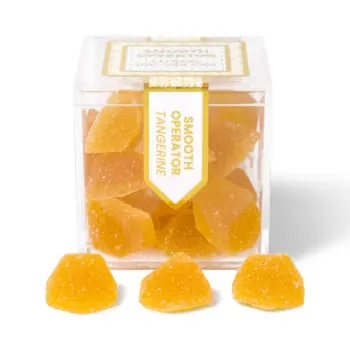
Smooth Operator 1:1:1 Ratio Gummies | THC + CBD + CBGStarting from: $45.00 SHOP NOW This product has multiple variants. The options may be chosen on the product page
-
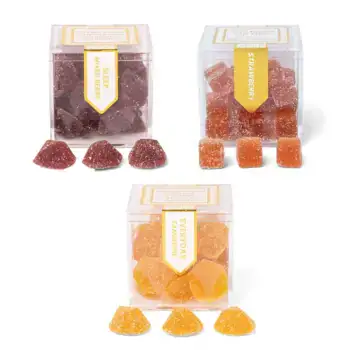
Save $20: You Pick 3 Gummies | Build Your Own BundleOriginal price was: $135.00.$115.00Current price is: $115.00. SHOP NOW This product has multiple variants. The options may be chosen on the product page
THC Gummies in Ohio: What to Look For
The TribeTokes range runs from a low CBN sleep piece through live resin chews to the extra-strength Buzzed and a 1:1:1 blend of THC, CBD, and CBG. Every one of them prints two different quantities on the panel, and the two are not interchangeable. Reading them the wrong way round is how a person ends up several times past where they meant to be, with no product defect involved at all. The panel was accurate the entire time; the reading was not.
How Our THC Gummies Are Made
A label is only as good as the test behind it. TribeTokes cooks in small runs, doses each run against an independent lab result, then labels the jar to that specific report rather than to a general product specification. The Certificate of Analysis published for a batch belongs to that batch, which is what makes the printed figure checkable instead of merely stated.
Pick the Right THC Gummy
Comparing chews across the range starts with normalising the numbers. Two jars can advertise very different totals and still hold the same quantity per piece, because one contains more pieces than the other. Until both figures are converted to the same basis, a side by side comparison of the front of two packages tells a reader almost nothing.
- Evening formulas: THC paired with CBN.
- Stronger: Buzzed for a higher tolerance.
- Balanced: Smooth Operator 1:1:1 for daytime.
- Live extracts: live resin and live rosin.
How Many Should You Take
Half a piece or one whole piece, then an hour or two before any further decision, is the standard opening. Label literacy is what makes that advice actionable. Someone who knows the per piece figure knows exactly what they took. Someone working from the pack total does not, and the gap between those two positions is the entire problem.
Ordering THC Gummies Online in Ohio
Most people searching for THC gummies in Ohio want two things: a dose they can trust and no dispensary line. That’s what ordering from TribeTokes is built around. You pick the gummy, read the per-piece number on its label, check the batch’s Certificate of Analysis, and check out. Orders go out with standard shipping in 2 to 5 business days in plain, tracked packaging, and you’ll need to be 21 or older.
Not sure where to start? The Smooth Operator 1:1:1 gummies are the easy first step, the THC Gummies for Sleep pair 10mg of THC with 20mg of CBN for nights, and the Buzzed gummies are for people who already know their tolerance.
THC Gummies and Ohio’s Hemp Rules, in Plain English
Ohio rewrote its hemp rules in 2026. Senate Bill 56 changed how the state defines hemp and which intoxicating products can be sold, and it took effect in March. It’s also being fought in court: a federal judge has blocked enforcement against the companies that sued, and the case is still moving.
Federal rules are shifting too, with a new hemp definition scheduled for December 11, 2026. What stays the same on our side is the product: hemp-derived Delta 9 gummies, dosed per piece, with a public lab report for every batch. Hemp rules move fast, so think of this as a plain-English summary, not legal advice.
Matching a Jar to Its Certificate of Analysis
A published lab report is only meaningful when it is anchored to a batch. The first check is the identifier: the code printed on the jar should appear on the report. A Certificate of Analysis for a different run is a document about someone else’s product, however impressive its figures look. This is the step people skip, and it is the step that makes the rest of the exercise worth doing. It takes about four seconds and it is the difference between a verified figure and a marketing one.
After that, the report reads in a fixed sequence. The potency table lists each cannabinoid detected with units and a limit of quantitation. The contaminant panel follows, screening for residual solvents, pesticides, heavy metals and microbial contamination against defined thresholds. The review Tasty THC: Promises and Challenges of Cannabis Edibles singles out labeling accuracy and dose consistency among the central challenges of the edible category, which is the reason a batch-level report carries more weight than a general claim on a website.
Why the Per Piece Figure Is the One That Matters
Nobody eats a container. The unit of decision for an edible is a single chew, or half of one, so the per piece figure is the only quantity that maps onto what a person actually does. Working from a pack total introduces an error whose size depends on how many pieces the jar holds, which means the mistake gets larger as the container gets bigger. A ten piece jar and a forty piece jar can print the same headline total and describe two entirely different chews.
The study Cannabinoid Exposure and Subjective Effects of THC and CBD in Edible Cannabis Products looked at cannabinoid exposure alongside the subjective effects people reported from edible cannabis products, which is the pairing this whole section serves. What a person notices follows from what they actually consumed, and what they actually consumed follows from which number on the label they read. Related reading covers Can You Microdose THC? for the small end of that scale.
Reading Labels Across a Range
Once the per piece figure is in hand, comparing chews becomes straightforward rather than guesswork. A CBN-led sleep piece, an extra-strength Delta-9 chew like Buzzed, a live resin piece and a 1:1:1 blend of THC, CBD, and CBG are all describing themselves in the same units, so they can be lined up honestly. Front panel language cannot be compared that way, because every brand writes it differently and no two use the same adjectives to mean the same thing.
The blends add one more line to read. A chew carrying more than one cannabinoid will list each of them separately, and the figures are not additive in any meaningful sense: CBD and CBG are not doing what THC is doing. The differences are set out in CBD vs THC: How They Differ, CBG vs THC: Which Gets You High?, and Delta-9 vs THC: Are They the Same?
What a Label Cannot Tell You
A panel describes the chew, not the person eating it. It can state the quantity in a piece with real precision and still say nothing about how that quantity will land, because absorption and metabolism vary between people and between days. Label literacy removes one source of uncertainty completely. It does not remove the others, and reading a label carefully is not the same as predicting an outcome.
That is the honest boundary of this exercise. The figure on the panel is the one variable a manufacturer can control and a reader can verify, which is exactly why it deserves the attention. Everything downstream of swallowing belongs to biology. Everything upstream of it belongs to the lab report, and for readers in Ohio comparing THC gummies, that report is the part worth checking first. A person who can read a panel accurately has removed the only variable in the whole chain that was ever under anyone’s control. Gluten and ingredient questions are handled separately in Are THC Gummies Gluten-Free? More from our Ohio pages: hemp products in Ohio, Delta 8 THC in Ohio, THCa flower in Ohio, THCa vapes in Ohio, CBN in Ohio and CBG in Ohio.
Frequently Asked Questions
It can be either, which is why the panel has to be read rather than glanced at. The large figure on the front of a container is very often the total for everything inside it. The per piece quantity is usually printed with the serving size on the information panel, and dividing the pack total by the piece count confirms it.
Total THC is an analytical figure that accounts for THCA as well as Delta-9 THC. Labs calculate it by adding the measured Delta-9 to the measured THCA multiplied by a conversion factor of roughly 0.877, which reflects the mass lost when THCA converts to Delta-9. It answers a different question from a raw Delta-9 reading, so the two lines are not interchangeable.
Start with the batch identifier and check that it matches the jar in hand, because a report for a different run proves nothing about this one. Then read the potency table, which lists each cannabinoid measured and the units used. After that comes the contaminant panel, where each screen is reported as a pass, a fail, or a measured quantity against a threshold.
Delta-9 THC is the quantity of that specific compound present at the time of the test. Total THC is a calculated figure that also accounts for THCA, the acidic form that converts to Delta-9 under heat. A report can show a modest Delta-9 line and a considerably larger total THC line, and neither number is wrong. They are answering different questions.
You can order TribeTokes THC gummies online and skip the dispensary trip. Our hemp-derived Delta 9 gummies go out with standard shipping in 2 to 5 business days, in plain, tracked packaging, and you’ll need to be 21 or older to order. Every batch is third-party lab tested, with its Certificate of Analysis posted online.
Ohio’s hemp law changed in 2026. SB 56 took effect in March and redrew the line between hemp and marijuana, and a federal court has already paused parts of it for some companies while the lawsuit plays out. Federal hemp rules change on December 11, 2026. TribeTokes gummies are hemp-derived and lab tested batch by batch. This isn’t legal advice, just where things stand.
There are two routes in Ohio: a licensed dispensary, which means a trip and an ID check at the door, or an online brand that delivers. TribeTokes is the second kind. Pick a gummy, check its per-piece dose and the batch’s lab report, and your order goes out in plain, tracked packaging within 2 to 5 business days.
A full report pairs the cannabinoid profile with a contaminant panel. That side of the document typically covers residual solvents, pesticides, heavy metals and microbial screens, each reported against a defined threshold. Potency answers what the chew does. The contaminant panel answers what else came along with it.
Small differences between runs are normal in any manufactured food, and testing each batch is precisely how those differences get caught and printed rather than hidden behind an averaged claim. A label tied to a specific run is more informative than an identical number repeated on every jar regardless of what was made that day.
Start with the Smooth Operator 1:1:1 gummies. Each piece pairs THC with equal parts CBD and CBG, which many people find makes for a gentler, steadier experience than THC on its own. Take half a piece, give it two hours before deciding on more, and save the extra-strength Buzzed gummies for when you know your tolerance.
Keep exploring: head back to all TribeTokes in Ohio, compare Delta-8 in Ohio or CBD gummies in Ohio, shop our THC gummies or Delta-9 gummies, browse best sellers, explore our strain profiles, or view our lab results. Also nearby: THC gummies in Michigan and THC gummies in West Virginia.
These statements have not been evaluated by the FDA. TribeTokes products are not intended to diagnose, treat, cure, or prevent any disease. Not for use by anyone under 21, or by those who are pregnant or nursing. All products contain less than 0.3% hemp-derived Delta-9 THC by dry weight.