
CBN in Ohio
Most CBN in Ohio is not CBN by itself. It normally turns up blended, sitting beside CBD, sometimes melatonin, often a background of other cannabinoids left over from the same extract. That matters, because the question people actually have, whether CBN is doing anything, gets much harder to answer once four ingredients share a serving. This page compares single-cannabinoid CBN against the combination formulas that dominate the category, and it stays honest about the point where the evidence runs out.
The CBN Lineup for Ohio
-
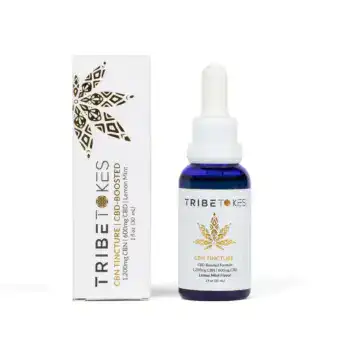
 CBN Tincture 1,800mg | CBD-Boosted | Nighttime FormulaStarting from: $50.00 SHOP NOW This product has multiple variants. The options may be chosen on the product page
-
CBD + CBN Sleep Gummies | With L-Tryptophan + Vitamin B6Starting from: $45.00 SHOP NOW This product has multiple variants. The options may be chosen on the product page

-
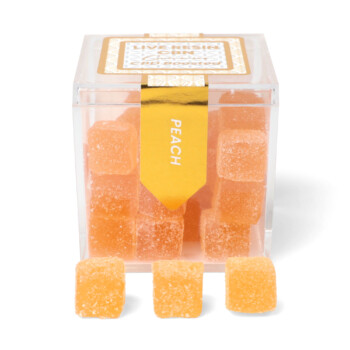
CBN Gummies with Live Resin | CBD-BoostedStarting from: $45.00 SHOP NOW This product has multiple variants. The options may be chosen on the product page
What CBN Is and Where It Comes From
Cannabinol is a cannabinoid that forms when THC breaks down, so it appears in hemp extracts as a secondary compound rather than a primary one. It does not produce the intoxication THC does. Hemp cannabinoid rules sit partly with the federal government and partly with each state, and they get revised, so readers in OH should check current state guidance rather than treat any single answer as permanent. Most of what reaches a formula as CBN was isolated from extract first, then added back at a stated amount.
CBN for Sleep and Recovery
CBN sits on evening labels, and that placement is a category convention more than a settled finding. The review Cannabinol and Sleep: Separating Fact from Fiction exists because the distance between the reputation and the data got wide enough to need sorting out. The human studies people cite are decades old, small, and inconclusive, and several of them gave CBN alongside THC rather than on its own. A blend stacks a second problem on the first. Even if something happens, the formula makes it hard to say which ingredient caused it.
CBN vs CBD
CBD is the better-studied of the two by a wide margin, and it shows up across the whole day rather than only at night. CBN has far less human work behind it. In a combination product the two sit at different scales, a few milligrams of CBN against a much larger CBD figure or the reverse, and the ratio is the part worth reading. Neither compound is intoxicating. If you want the difference laid out on its own, CBN vs CBD covers it, and the longer CBD and CBN comparison goes further.
- Gummies: pre-measured, the easy nightly habit.
- Oils: adjustable amounts, faster under the tongue.
- Paired with CBD: the two are commonly formulated together.
- Timing: take it about an hour before bed.
How Much CBN to Take
Panels list CBN in a fairly narrow milligram band per serving, and blends usually pair that with a larger CBD number. No established dose exists for CBN, because the trials that would set one have not been run. What you can do is read the panel, note both figures, and hold the serving steady long enough to judge it instead of changing two things at once. Ohio readers comparing two evening gummies will often find the CBN nearly identical and everything else different.
What a Combination CBN Formula Actually Contains
Open the supplement panel on an evening gummy and CBN is rarely the only active line. A typical formula carries CBD at a higher milligram count, CBN at a lower one, and then some mix of melatonin, L-theanine, chamomile or a terpene fraction. Full-spectrum versions add trace THC and whatever minor cannabinoids survived extraction. Each of those has its own literature, its own onset, and its own reason for being in the formula. The label prints them as a single block, which flattens the differences and makes the product read as one thing.
The commercial logic behind that is straightforward. CBN has a thin evidence base and a strong reputation, so it works as a headline ingredient. Melatonin has a much larger body of research and a name people recognize. Pairing them produces a formula that reads clearly to a shopper and defends easily to a formulator. None of that is dishonest by itself, but it does mean the CBN figure on the front is telling you about positioning as much as pharmacology. The TribeTokes CBN gummy formulas print the full panel, which is the part worth reading.
Why Isolated CBN Is Hard to Study
Attribution is the whole problem. If a formula contains CBN, CBD and melatonin, and a person sleeps better, the honest conclusion is that the formula did something, not that CBN did. Separating the contributions takes a design where one variable moves and everything else holds still, which is slow and expensive. The older human work on CBN often ran the opposite way, giving it alongside THC, so the same ambiguity that blends create on a label already sits in the source material.
Cannabinoids and Sleep: Exploring Biological Mechanisms and Therapeutic Potentials surveys how cannabinoids interact with sleep biology and treats the therapeutic side as something still being explored rather than established. Read that next to the fact that CBN specifically has almost no modern controlled work, and the shape of the category becomes clear. It is built on plausibility. Plausible is a long way from demonstrated, and a blend does not close that distance. It pushes the question further out of reach.
Reading a Blend: Which Ingredient Is Doing What
You cannot feel a ratio. You can read one. Note the milligrams of each active per serving rather than per container, and note whether the CBN figure stands alone or gets folded into a total cannabinoid line. A formula listing a large total with CBN named on the front may hold very little CBN. A formula listing CBN separately is telling you something the first one is not.
Then check whether the extract is full-spectrum, broad-spectrum or isolate-based, because that determines what came along for the ride. Full-spectrum brings trace THC and a mixed background of minor cannabinoids. Broad-spectrum removes the THC and keeps part of the rest. Isolate means the cannabinoid was purified before it went into the batch, so the formula is exactly what the panel says. Each of those is a different experiment to run on yourself, and switching between them from one product to the next makes any comparison useless.
CBN With Melatonin, and CBN With CBD
The two common pairings answer different arguments. CBN with melatonin stacks a thinly evidenced ingredient onto a well-known one, which is why that combination is easy to market and hard to interpret. Whether the two interact at all is an open question rather than a finding. Taking CBN and melatonin together comes up often enough that it deserves a direct answer instead of an implication.
CBN with CBD is the older pairing, and the reasoning behind it is the entourage idea: that cannabinoids taken together behave differently than the same cannabinoids taken apart. That idea has support in some contexts and stays contested in others, and it has never been tested cleanly for this pair at the amounts these formulas use. Treating it as a working hypothesis is fair. Treating it as a mechanism is not.
Four Questions Worth Asking Before Choosing a Blend
Four questions do most of the work. How many milligrams of CBN per serving, stated separately from everything else? What else is active in that serving, and at what amount? Is there a batch-specific certificate of analysis, and does its batch code match the one printed on the package? And is the extract full-spectrum, broad-spectrum or isolate?
Those four answers tell you what you are actually taking, which is more than most marketing will. They also make a personal comparison possible, because you can hold three of them steady and change one. Nothing in that process proves CBN works. It means that if you decide to try it, you are running a cleaner test than the category has managed so far, and you will know what to change next.
What a Single-Cannabinoid CBN Product Would Tell You
A CBN isolate formula answers a narrower question than a blend does, and the narrowness is the whole value. One active, one number, one variable. If a person takes it and notices nothing, the result is interpretable in a way it never is with a four-ingredient product. If they notice something, the same holds. None of that makes an isolate more effective. It makes a personal experiment legible, which is the only sort of information anyone can generate while the published research stays where it currently sits.
Single-cannabinoid formulas are less common because they are harder to position. There is no second ingredient lending familiarity, no melatonin anchoring the pitch, and no entourage argument to lean on. What remains is one compound with a thin file and a specific milligram figure. For an Ohio reader who wants to know whether CBN itself does anything for them, that stripped-down version is the more honest instrument, even though the category has largely moved past it.
One more thing an isolate makes visible: whether what people report is coming from the ritual rather than from the ingredient. Taking anything at a fixed hour builds a cue, and cues do act on sleep. A four-ingredient formula buries that possibility behind its actives. A single-cannabinoid product does not remove the confound either, but it does make it easier to notice. Other Ohio guides worth a look: hemp products in Ohio, Delta 8 THC in Ohio, THCa flower in Ohio and THCa vapes in Ohio.
Frequently Asked Questions
Blended, in most cases. The common evening formula pairs a small CBN figure with a larger CBD figure, then adds melatonin or botanical extracts on top. Single-ingredient CBN exists, but it is the exception in consumer formulas, which is why the panel tells you more than the front of the package does.
Nobody can say with confidence, and that is the honest answer. The idea that cannabinoids behave differently in combination has support in some research contexts, but it has not been tested cleanly for CBN and CBD at the amounts consumer formulas use. Treat the pairing as a reasonable formulation choice rather than a proven mechanism.
Read the per-serving line rather than the per-container total, and look for CBN named separately instead of folded into a total cannabinoid figure. Then match the batch code on the package against the certificate of analysis for that batch, which reports what a lab measured rather than what the formula targeted.
Very little directly. The published human work on CBN is old, small and inconclusive, and much of it used CBN alongside THC, which makes any individual contribution hard to isolate. Adding more actives adds more variables, so a blend cannot settle a question the single-ingredient studies left open.
They appear together in many evening formulas, which is a formulation decision rather than a tested combination. Melatonin has a far larger evidence base than CBN does. Anyone on prescription medication or managing a diagnosed sleep condition should raise it with a clinician before adding either one, and especially before adding both.
It is the relative milligram amount of each per serving, and it is the fastest way to tell two similar-looking formulas apart. A product carrying a few milligrams of CBN against a much larger CBD figure is mostly a CBD product with CBN named on the front. Reverse the two and you have something different, even though the label vocabulary is identical.
It changes what else is in the serving. Full-spectrum keeps trace THC and a background of other cannabinoids from the extract. Broad-spectrum strips the THC and keeps some of the rest. Isolate means the cannabinoid was purified before it entered the batch, so the serving holds what the panel lists and nothing beyond it.
Standard employment panels screen for THC metabolites, not for CBN. The risk in a blend comes from the extract type rather than from the CBN, since full-spectrum formulas can carry trace THC. Anyone subject to testing should read the batch certificate and consider a broad-spectrum or isolate formula instead.
No established dose exists, because the dose-ranging studies that would produce one have not been run for CBN. Panels cluster in a similar milligram band by convention rather than by evidence. Holding the serving and the formula steady for a stretch of nights tells you more than moving the number around does.
Because the ingredient carries a reputation the research has not caught up with. CBN became associated with nighttime products long before controlled work examined the association, and the name now functions as a category signal. The panel underneath is where the actual composition lives.
Related reading: TribeTokes in Ohio, CBD in Ohio, CBG in Ohio, and THC gummies in Ohio. For the blend question specifically, see what CBN is doing inside a gummy.
These statements have not been evaluated by the FDA. TribeTokes products are not intended to diagnose, treat, cure, or prevent any disease. Not for use by anyone under 21, or by those who are pregnant or nursing. All products contain less than 0.3% hemp-derived Delta-9 THC by dry weight.