
CBD Oil and CBD Gummies in Ohio
Looking for CBD oil or CBD gummies in Ohio? TribeTokes makes a THC-free CBD oil tincture (1,800mg, CBG-boosted), CBD + CBN sleep gummies, pain cream and CBD for pets, and every batch is third-party lab tested with its Certificate of Analysis posted online. CBD won’t get you high. It doesn’t switch on the CB1 receptor the way THC does, which is why people take it during the workday without any head change.
The CBD Lineup for Ohio
-
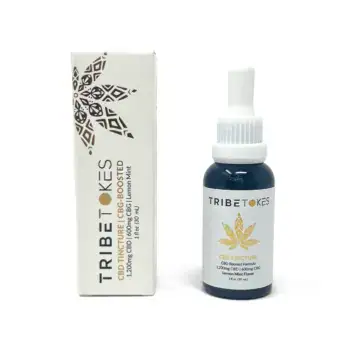 THC-Free CBD Oil Tincture 1,800mg | CBG-BoostedStarting from: $50.00 SHOP NOW This product has multiple variants. The options may be chosen on the product page
-
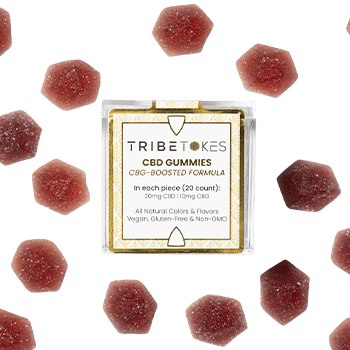
 CBD + CBN Sleep Gummies | With L-Tryptophan + Vitamin B6Starting from: $45.00 SHOP NOW This product has multiple variants. The options may be chosen on the product page
-
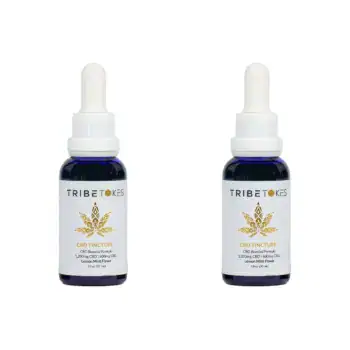 Save $10: You Pick 2 Tinctures | Build Your Own BundleOriginal price was: $100.00.$90.00Current price is: $90.00. SHOP NOW This product has multiple variants. The options may be chosen on the product page
How to Choose CBD Oil in Ohio
Start with the format, then the strength. A tincture is the most flexible, since you control the dose drop by drop, and our THC-free CBD Oil Tincture packs 1,800mg with a CBG boost for daytime focus. Gummies trade that flexibility for simplicity: every piece is pre-measured. Whatever you pick, check two things on the label, the total CBD per bottle or per piece and a batch number that matches a published Certificate of Analysis. If a brand can’t show you that report, keep shopping.
CBD Gummies in Ohio
Gummies are the easiest way into CBD for most people in Ohio, from Columbus to Cleveland: no dropper, no measuring, the same dose every time. For nights, our CBD + CBN Sleep Gummies pair CBD with CBN and L-Tryptophan, and they’re melatonin-free. Browse the full range of CBD gummies, and if you’re weighing CBD against THC, start with CBD vs THC. Give any gummy about a week at a steady serving before you judge it.
CBD, by Format
The mechanism does not change with the format; what changes is where the cannabidiol enters and how much of the receptor map it reaches. A gummy or a tincture puts CBD into circulation, so it reaches receptor populations throughout the body. A topical acts on receptors in the skin and the tissue immediately underneath, which is why a cream is a local proposition rather than a systemic one. The receptors do not rearrange themselves according to the packaging. The part of the map you can reach does change, and that is the whole of the format decision.
- Gummies: pre-measured, easy daily habit.
- Tinctures: adjustable amounts, faster under the tongue.
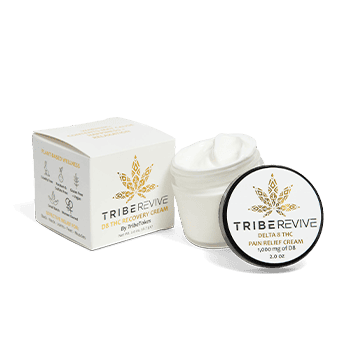
- Topicals: applied to one area rather than taken internally.
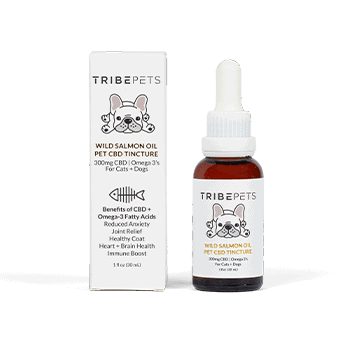
- Pets: oils made for dogs and cats.
How Much CBD to Take
Because the endocannabinoid system works by correction rather than in a straight line, more input is not automatically more effect. Hold the label’s serving for several days, note what you notice and what you do not, and change one variable at a time rather than three. Anyone taking prescription medication should raise cannabidiol with a pharmacist or physician first, since CBD is metabolised by liver enzymes that also handle a long list of common drugs. That is a conversation worth having before the first serving rather than after a month of them.
CB1 and CB2: Two Receptors, Different Neighbourhoods
The two cannabinoid receptors are best understood by where they live. CB1 is dense in the central nervous system, particularly in regions handling memory, coordination, appetite and pain signalling, which is precisely the list of things a THC high alters. CB2 is more common in immune tissue and peripheral organs. That distribution is not decoration. It is why a compound that activates CB1 changes how you think, and a compound that does not, does not.
Both receptors belong to the same family of cell-surface proteins that translate an outside signal into an inside response. When one is activated, the cell changes what it does next. When it is activated repeatedly, the cell adapts by becoming less responsive, which is the mechanism behind tolerance. Ohio readers who have read that CBD builds no tolerance are reading a claim about CB1 activation, and the reason it is usually presented that way is that cannabidiol is not activating CB1 in the first place.
Anandamide, 2-AG and the Enzymes That Clear Them
The body makes its own cannabinoids. The two studied most are anandamide and 2-arachidonoylglycerol, usually shortened to 2-AG. Unlike hormones, they are not stored and released on a schedule; they are synthesised on demand at the site where signalling is happening, act locally, and are then broken down by enzymes within a short window. Fatty acid amide hydrolase handles anandamide, and monoacylglycerol lipase handles 2-AG.
Those clearance enzymes matter to any discussion of cannabidiol, because a compound that slows a breakdown enzyme raises the level of whatever that enzyme was clearing. This is one of the routes by which a molecule that barely touches CB1 can still affect a CB1-dependent system. It is also why the mechanism is described as modulation rather than activation, a distinction that gets flattened in most consumer writing and is worth keeping straight.
Where Cannabidiol Actually Acts
Cannabidiol’s targets sit largely outside the two classical cannabinoid receptors, which is unusual for a plant cannabinoid and is what makes it interesting to researchers. The literature describes interactions with TRPV1 ion channels, with serotonin 5-HT1A receptors, and with the enzymes that clear endocannabinoids, among others. The picture is genuinely complicated, and anyone who summarises it in one sentence is simplifying past the point of usefulness.
What that means practically is that CBD is not a weaker THC. It is a different molecule acting at different targets, and the fact that both come from the same plant is closer to a coincidence of botany than a family resemblance in the body. Reading it as THC-lite leads directly to the two most common disappointments: expecting a subtle high and finding none, or expecting a fast unmistakable response and finding something quieter than that. Neither is a product failure.
Why the Whole-Plant Argument Keeps Coming Up
If cannabidiol acts at several targets at once, the natural next question is whether the other compounds in a hemp extract are doing anything alongside it. That question has a name, the entourage effect, and it is repeated in marketing copy with far more certainty than the research carries. The review Decoding the Postulated Entourage Effect of Medicinal Cannabis: What It Is and What It Isn’t exists specifically to separate the claim from the evidence, and its title is a fair summary of where the field currently stands.
For a mechanism page the honest position is that the question is open. Multiple compounds acting on an interconnected signalling system is a plausible starting point for an interaction, and plausible is not the same as demonstrated. Ohio readers deciding between products are better served by things they can verify from a Certificate of Analysis than by an argument the literature has not closed.
What the Mechanism Does Not Tell You
Knowing where a molecule binds does not tell you what it will do for a specific person, and that gap is the most misused part of cannabinoid writing. A receptor map explains why cannabidiol is not intoxicating. It does not establish an outcome, a dose, or a use, and no amount of mechanistic detail substitutes for evidence about results. That is a limitation of the argument, not a modesty gesture.
Readers who want the clinical framing rather than the receptor diagram should go to the medical literature directly; the review A Balanced Approach for Cannabidiol Use in Chronic Pain is one reasonable entry point into how clinicians write about the same compound. Anything on a product page, this one included, is background rather than advice. Questions about your own situation belong with a physician or pharmacist who knows what else you are taking.
Three Ways Mechanism Claims Go Wrong
The first mistake is treating a receptor interaction as an outcome. Knowing that cannabidiol interacts with a target tells you nothing about what happens to a person, and a page that slides from one to the other in a single sentence has skipped the part that actually needs evidence. The second is reading CBD as a mild THC. They are different molecules acting at different targets, which is why expectations built on one of them transfer badly to the other, and why CBD vs THC is the comparison worth settling before anything else.
The third is assuming that because a system exists, more input improves it. A balancing system responds to being pushed by pushing back, and the response is not linear in the dose. That is the honest reason to hold a serving steady rather than climbing. It also explains why individual reactions vary as much as they do, including the ones people find surprising: our answers on Can CBD Make You Hallucinate? and Can CBD Help With Cravings? deal with two questions that come straight out of this confusion. Ohio readers who want the mechanism should hold it as mechanism, and go elsewhere for outcomes. More from our Ohio pages: hemp products in Ohio, Delta 8 THC in Ohio, THCa flower in Ohio and THCa vapes in Ohio.
Frequently Asked Questions
No, and that difference is the whole reason CBD is non-intoxicating. THC is a direct CB1 activator. Cannabidiol has a low affinity for the same receptor and interacts with the system through other routes instead, which is why it does not produce the head change THC does at any ordinary amount.
A signalling network the body maintains on its own, made up of cannabinoid receptors, the endocannabinoid molecules that activate them, and the enzymes that break those molecules down. It was named after the plant because that is how researchers found it, not because the plant is required for it to work.
With a fixed oral serving held steady for several days, because a level baseline is the only way to notice anything against. A gummy removes measurement from the equation; a tincture adds control once you want it. Change one thing at a time after that.
Yes. Hemp-derived CBD has been legal in Ohio since 2019, and the state’s 2026 hemp law (SB 56) is aimed at intoxicating products, not CBD oil, gummies or creams. TribeTokes CBD ships to Ohio addresses with standard shipping in 2 to 5 business days, and every batch is third-party lab tested with a public Certificate of Analysis.
For sleep, our CBD + CBN Sleep Gummies are the pick: CBD and CBN with L-Tryptophan, no melatonin. For daytime calm, a plain CBD gummy with a fixed dose per piece is the easiest start. Whichever you choose, the best CBD gummy is one whose batch number matches a published lab report, so check that before you buy.
Because intoxication comes from direct CB1 activation and cannabidiol does not do that. It binds poorly at CB1 and interacts with the wider system by other means. The high people associate with cannabis belongs to THC specifically, not to cannabinoids as a category.
This is one of the genuinely unsettled questions. Some research describes cannabidiol modulating how THC behaves at CB1, and results differ by dose and by study design. Anyone presenting it as established fact is going beyond what the literature currently supports, in either direction.
Online, from a brand that posts its lab results. Ohio has CBD on shelves from Columbus to Cincinnati, but a shelf can’t show you the batch report. TribeTokes CBD oil tinctures, gummies and pain cream ship to Ohio in 2 to 5 business days, in plain, tracked packaging.
Cannabidiol is processed by liver enzymes that also metabolise a wide range of prescription drugs, so an interaction is possible and worth checking. Raise it with a pharmacist or physician before starting, particularly with anything carrying a grapefruit warning, which flags the same enzyme pathway.
It reaches receptors in the skin and the tissue just beneath it rather than the wider distribution an oral dose reaches. The receptor map is the same map; a topical simply reaches a small part of it. That is why a cream is a local tool and not a substitute for a systemic dose.
Individual responses vary, and not everyone gets on with it. Our answers on Can CBD Cause Anxiety? and Can CBD Cause Headaches? go through what people report. The mechanism section above explains why a balancing system can produce different results in different people at the same input.
Keep exploring: head back to all TribeTokes in Ohio, shop all CBD, browse the full cannabinoid collections, or view our lab results. Staying in Ohio? Try CBN in Ohio for nighttime or CBG in Ohio for daytime focus. Curious about THC? See THC gummies in Ohio. Curious about THC? See THC gummies in Ohio. Nearby, see TribeTokes in Michigan. Shopping for a neighboring state? See CBD in West Virginia and the Maryland CBD lineup.
These statements have not been evaluated by the FDA. TribeTokes products are not intended to diagnose, treat, cure, or prevent any disease. Not for use by anyone under 21, or by those who are pregnant or nursing. All products contain less than 0.3% hemp-derived Delta-9 THC by dry weight.