
THC Gummies in New York
A THC gummy behaves differently from every other format because of where it goes first. Swallowed cannabinoids move through the stomach and small intestine, cross into the hepatic portal vein, and pass straight through the liver before any of the dose reaches the rest of the body. That detour has a name, first-pass metabolism, and it is the single biggest reason edibles arrive slowly, run long, and carry a character of their own. This page is written for New York readers weighing THC gummies against formats they already know. It works through what the liver does to a chew, and why the wait is built into the chemistry rather than into the advice.
Once the chemistry clicks, picking from our full THC gummy lineup is the easy part. Good news for New York: TribeTokes ships hemp-derived THC gummies right to your door, with standard shipping in 2 to 5 business days.
The TribeTokes THC Gummy Lineup
-
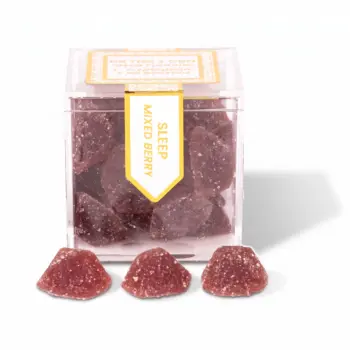 THC Gummies for Sleep: 10mg THC + 20mg CBN, Melatonin-FreeStarting from: $45.00 SHOP NOW This product has multiple variants. The options may be chosen on the product page
-
 THC Buzzed Gummies | Extra Strength – Delta 8-BoostedStarting from: $45.00 SHOP NOW This product has multiple variants. The options may be chosen on the product page
-
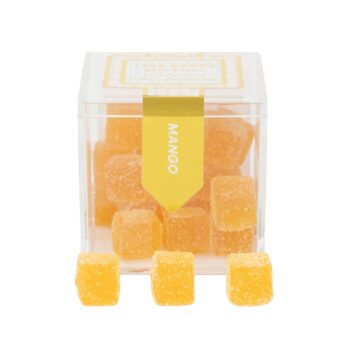 THC Live Resin Gummies | CBD-BoostedStarting from: $45.00 SHOP NOW This product has multiple variants. The options may be chosen on the product page
-
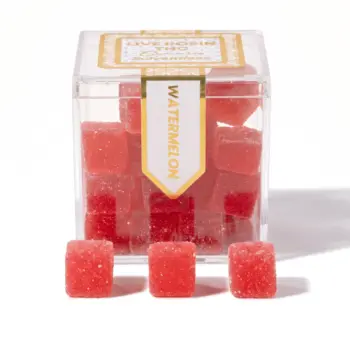
 Live Rosin Gummies | Solventless THCStarting from: $45.00 SHOP NOW This product has multiple variants. The options may be chosen on the product page
-
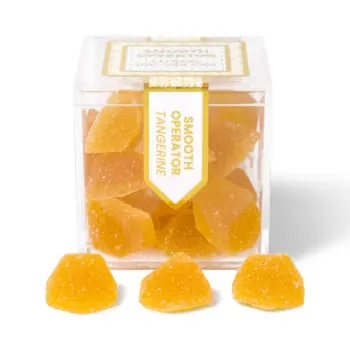
Smooth Operator 1:1:1 Ratio Gummies | THC + CBD + CBGStarting from: $45.00 SHOP NOW This product has multiple variants. The options may be chosen on the product page
-
Save $20: You Pick 3 Gummies | Build Your Own BundleOriginal price was: $135.00.$115.00Current price is: $115.00. SHOP NOW This product has multiple variants. The options may be chosen on the product page
THC Gummies in New York: What to Look For
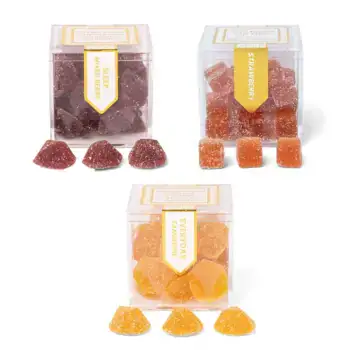
The TribeTokes gummy range covers a mild CBN sleep piece, the extra-strength Buzzed, a live resin chew that leads on flavor, and a 1:1:1 blend holding THC, CBD, and CBG on an even line. Whichever piece someone picks, the biology below is identical. The gummy has to be digested before anything happens at all, and nothing about the format lets it skip that step.
How Our THC Gummies Are Made
Small runs and third-party testing carry more weight for an edible than for a fast format, precisely because the body is slow to report back. Inhale something and the feedback lands in a couple of minutes, which leaves room to adjust. Swallow something and the number printed on the jar is the only signal a person has for the first hour or more. That number has to be right. Every TribeTokes run is dosed against an independent lab result, and the Certificate of Analysis posted for it belongs to that specific batch.
Pick the Right THC Gummy
Choosing between the chews is less a question of strength on paper than of how long the effect needs to run. The CBN piece is built for the end of the day. Buzzed sits at the top of the range. Live resin carries the fullest flavor. The 1:1:1 holds a level line through daytime hours. All four take the same trip through the liver, so all four share the same unhurried arrival, and none of them can be judged in the first twenty minutes.
- Evening formulas: THC paired with CBN.
- Stronger: Buzzed for a higher tolerance.
- Balanced: Smooth Operator 1:1:1 for daytime.
- Live extracts: live resin and live rosin.
How Many Should You Take
Half a piece, or one whole piece, then an hour or two of real patience: that is the standard opening for anyone new to the format. The reason is metabolic rather than cautious. Digestion runs at its own pace, the liver takes the time it takes, and an hour of nothing is a normal reading rather than proof the dose was too small. TribeTokes covers the smaller end of that question in more detail in Can You Microdose THC?
The Route a Gummy Takes Through the Body
Chew, swallow, and the gummy is food. Sugars and setting agents dissolve in the stomach, the mass moves into the small intestine, and the cannabinoids cross the intestinal wall into the hepatic portal vein. That vein does not lead to the heart. It leads to the liver. Everything absorbed from the gut is screened there before joining general circulation, which is why an eaten dose and an inhaled dose of identical size are not comparable events, even though the label prints the same number for both.
Inhaled THC takes the shortcut. It crosses the alveolar surface in the lungs into arterial blood and reaches the brain within a few minutes, largely untouched by the liver on that first lap. Nothing swallowed can do that. The review Tasty THC: Promises and Challenges of Cannabis Edibles treats this difference in route as the defining feature of the edible category and as the source of most of the surprises attached to it.
11-Hydroxy-THC and the Change in Character
During the first liver pass, enzymes convert a meaningful share of Delta-9 THC into 11-hydroxy-THC. This is not a spent byproduct on its way out of the body. It is an active metabolite that crosses into the brain readily, and a swallowed dose produces far more of it than an inhaled dose ever will. Two people can take in the same quantity of THC by different routes and end up with quite different mixtures of active compounds in circulation.
That conversion accounts for most of what regular edible users describe: an arrival that keeps building after it seems to have settled, a heavier body quality, and a run time that outlasts the evening it started in. The research topic page Cannabis (Marijuana) from the National Institute on Drug Abuse sets out how THC acts at cannabinoid receptors once it reaches the brain, whichever route delivered it there.
Why the Label Number Reads Differently by Mouth
A milligram is a fixed quantity in the candy. It stops being fixed the moment it enters a digestive tract. Some of the dose never crosses the gut wall. Some is converted during the liver pass. Some is cleared before it acts on anything. What reaches circulation intact is a fraction of the printed figure, and the size of that fraction moves with the person and with the day.
This is the mechanism behind two opposite complaints. One person finds a gummy underwhelming at a number that would have been plenty in another format. Another finds the same number considerably heavier than expected. Both reports are consistent with the same biology, which is why an edible is judged on its own terms rather than against a remembered dose from somewhere else. The comparison between the compounds themselves is covered in Delta-9 vs THC: Are They the Same?
Where the Unpredictability Comes From
Inhalation is a fairly stable route. Lungs are lungs. Digestion is not stable in the same way: gastric emptying speeds up and slows down, gut transit varies, and the enzyme activity that drives the first pass differs between people by a wide margin. Stack those three sources of variation and the same chew can behave differently on a Tuesday than it did on a Saturday.
None of that is fixable by formulation. A precisely dosed gummy still meets an imprecise digestive system. What good manufacturing does control is the input: the quantity in the piece, verified against a lab result, so that only the biology is variable and the candy is not. That is the argument for batch-level testing rather than product-level testing, and it is why the report should be tied to the run that produced the jar.
Onset Is a Window, Not a Number
Guidance for edibles usually names a range rather than a time, and the range exists because every step in the path is variable. A chew taken on a fast-moving stomach can begin working near the early edge of that window. The same chew on a slow one can sit for well over an hour before anything registers. Neither outcome says anything about the quality of the product or the accuracy of its label.
The practical consequence is that the first hour is not evidence. It is the part of the process where the dose is still in transit and the liver has not finished with it. Reading the first hour as a verdict is the most common mistake attached to the format, and it is a reading error rather than a dosing error. TribeTokes covers the residual side of the same question in Does Microdosing THC Show Up on a Drug Test?
What This Means for New York Readers Comparing Formats
Readers in NY looking into THC gummies are usually measuring them against something familiar. The useful comparison is route to route rather than milligram to milligram. An edible trades speed and fine control for length and depth. That trade is the format itself, not a shortcoming in it, and understanding the trade in advance removes most of the frustration people report the first time.
It also explains why every sensible piece of edible guidance is about patience rather than quantity. Digestion cannot be hurried, and a dose already in the small intestine cannot be recalled. Waiting is the only control the format hands over, so it is the one worth using. For where a gummy fits against evening use, TribeTokes covers Do THC Gummies Help You Sleep? and the opposite case in Can THC Gummies Cause Insomnia?, while CBN vs THC: How They Differ explains the other cannabinoid in the sleep piece. Keep exploring New York with hemp products in New York, CBD in New York, THCa flower in New York, THCa vapes in New York, CBN in New York and CBG in New York.
Frequently Asked Questions
Because a gummy is food first. It has to be broken down in the stomach, absorbed through the small intestine, and routed through the liver before the active compounds reach general circulation. That sequence takes time no matter how the chew is formulated, which is why the onset of an edible is measured in tens of minutes rather than in breaths.
It is an active metabolite the liver produces from Delta-9 THC. During the first pass through the liver, enzymes convert a share of the swallowed dose into 11-hydroxy-THC, which crosses into the brain readily. A swallowed dose generates far more of it than an inhaled dose does, and that difference accounts for much of what people describe as the edible character.
Every batch goes to an independent third-party lab, and the Certificate of Analysis for that run is published rather than summarized. The report covers potency and the contaminant panel, and it is tied to the batch it came from, not to the product line in general.
It does, and that is the whole point of the first-pass effect. Compounds absorbed from the gut travel to the liver before they join general circulation, so hepatic enzymes get to act on the dose before the brain ever sees it. Inhaled THC largely skips that step on its first lap, which is why the two routes produce different experiences from the same starting quantity.
A milligram on a Certificate of Analysis is a fixed quantity in the candy, not in the bloodstream. Part of a swallowed dose never crosses the gut wall, part is converted during the liver pass, and part is cleared before it does anything. The fraction that reaches circulation intact is smaller than the label figure and it is not identical from one occasion to the next.
Only slightly. A small share of a chew can be absorbed through the tissue of the mouth, and that share does bypass the liver on its first lap, but a gummy is usually chewed and swallowed inside a minute. Formats designed for that route, such as a tincture held under the tongue, are built for it deliberately. A gummy is best treated as food.
It describes what happens to a substance between the gut and general circulation. Blood leaving the intestines runs to the liver before it runs anywhere else, so the liver gets first access to everything absorbed from a meal. For THC that means a large portion of the dose is metabolized before it can act, and a portion of that metabolism produces a compound more active than the original.
The measurement is the same, the meaning is not. Both are stated in milligrams of THC, but the two routes deliver very different amounts of active compound to the brain from the same figure. Comparing a gummy against a familiar inhaled amount is the most common way people misjudge an edible, in both directions.
Route, mainly. Sublingual absorption sends part of the dose into circulation without a liver pass first, which shortens the onset and shifts the balance of compounds that reach the brain. A swallowed chew commits the whole dose to the digestive path. Two products can list the same milligram figure and still behave on different timelines.
It is one of the reasons edibles are hard to predict. Gastric emptying, gut transit and individual enzyme activity all vary between people and between days, and each of them shifts how quickly a dose arrives and how much of it survives the liver pass. That variability is a property of the route, not a defect in a particular chew.
Keep exploring: head back to all TribeTokes in New York, shop our THC gummies or Delta-9 gummies, browse best sellers, or view our lab results.
These statements have not been evaluated by the FDA. TribeTokes products are not intended to diagnose, treat, cure, or prevent any disease. Not for use by anyone under 21, or by those who are pregnant or nursing. All products contain less than 0.3% hemp-derived Delta-9 THC by dry weight.