
CBN in Washington
There is very little clinical research on CBN, and the reasons are structural rather than accidental. Controlled trials cost a great deal, sleep is difficult to measure objectively, and a compound nobody can patent has no obvious sponsor to fund the work. What results is a category with a confident story and a thin file behind it. This page explains, for Washington readers, what the gap consists of and how to read CBN claims while it stays open.
The CBN Lineup for Washington
-
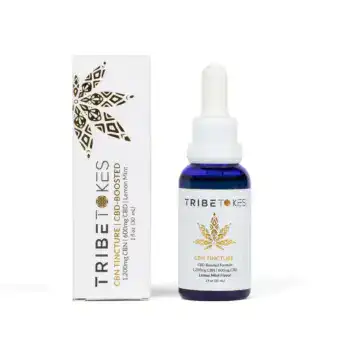
 CBN Tincture 1,800mg | CBD-Boosted | Nighttime FormulaStarting from: $50.00 SHOP NOW This product has multiple variants. The options may be chosen on the product page
-
CBD + CBN Sleep Gummies | With L-Tryptophan + Vitamin B6Starting from: $45.00 SHOP NOW This product has multiple variants. The options may be chosen on the product page

-
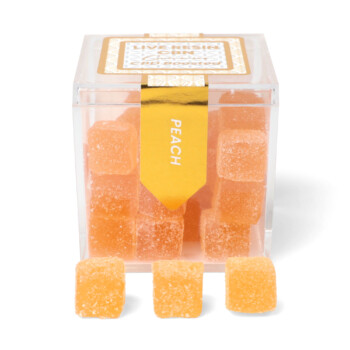
CBN Gummies with Live Resin | CBD-BoostedStarting from: $45.00 SHOP NOW This product has multiple variants. The options may be chosen on the product page
What CBN Is and Where It Comes From
Cannabinol is a non-intoxicating cannabinoid that appears as THC degrades. Hemp cannabinoid rules differ by state and get revised periodically, so WA readers should check current state guidance rather than a general claim. Research access is a separate constraint: compounds derived from cannabis have historically been harder for scientists to obtain and work with than ordinary supplement ingredients, and that history shaped which questions got asked first and which never got asked at all.
CBN for Sleep and Recovery
Cannabinol and Sleep: Separating Fact from Fiction is the clearest statement of the problem, and its title is most of the finding. The human trials people point back to are decades old, involved small numbers of participants, and did not produce consistent results. No modern controlled trial has established that CBN on its own causes sleep. That is not a claim that CBN does nothing. It is a claim that the question is open, and open questions get presented as settled ones constantly.
CBN vs CBD
The contrast with CBD is what makes the gap visible. CBD has been through registered trials, dose-ranging work and formal clinical development, and whatever anyone concludes from the results, the file exists. CBN has almost nothing equivalent. Comparing the two as though they sit at the same evidentiary stage is the most common error in this category. Is CBN good for sleep and what CBN does for sleep both have to be answered with that asymmetry in view.
- Gummies: pre-measured, the easy nightly habit.
- Oils: adjustable amounts, faster under the tongue.
- Paired with CBD: the two are commonly formulated together.
- Timing: take it about an hour before bed.
How Much CBN to Take
Dose is where the gap bites hardest. An established dose comes out of dose-ranging trials, and those have not been run for CBN. The milligram figures printed on panels reflect formulation convention and format constraints. Anyone deciding how much to take is working from product labels and personal trial rather than from evidence, which is a legitimate thing to do as long as it gets named accurately.
What Thin Evidence Means in Practice
Thin does not mean absent. There is chemistry on CBN, there is preclinical work, and there are a small number of human studies. What is missing is the layer that turns a plausible compound into an evidenced one: multiple modern trials, run at different amounts, in enough people, measuring an outcome objectively, with results that agree.
Every other claim rests on that missing layer. Without dose-ranging work there is no way to say how much anyone should take. Without objective measurement there is no way to distinguish an effect from an expectation. Without replication there is no way to know whether an early result was real. The category built its vocabulary before any of those existed, which is why the language on packaging sounds more certain than the science is.
Two kinds of uncertainty are worth separating here as well. One is statistical, where a study found something and the result might be noise. The other is structural, where the study needed to answer the question has not been run at all. CBN sits mostly in the second category, and the two get discussed as though they were one problem. They call for different responses, since the first waits on more data and the second waits on somebody deciding to collect any.
Why Sleep Is Hard to Measure
Sleep research runs into a measurement problem that most other endpoints avoid. The person experiencing the outcome is unconscious during it, so self-report describes a memory rather than an observation. Estimates of how long it took to fall asleep and how many times a person woke differ substantially from what monitoring shows, and the difference is not random.
Measuring it properly means polysomnography, which requires equipment, a facility or a home setup, and staff to interpret it. That expense caps how large a study can be and how long it can run. Cannabinoids and Sleep: Exploring Biological Mechanisms and Therapeutic Potentials covers how cannabinoids interact with sleep biology and treats therapeutic application as an area still under investigation, which is the position a field takes when the mechanisms are interesting and the outcome data has not caught up.
The Citation Chain Problem
Follow enough CBN sleep claims backwards and they converge. A product page cites a blog. The blog cites a longer article. The article cites a review. The review cites the same handful of decades-old human studies that everyone else eventually reaches. The volume of writing on the subject creates an impression of accumulated evidence that the underlying sources do not support.
This pattern is easy to test on any claim. Ask which study, how many participants, what design, what year, and what was measured. If a chain of five sources ends at one small trial from decades ago, the chain has not added evidence to it. It has added confidence, which is a different thing, and confidence is the part that gets printed on packaging.
Search results reinforce the loop. A topic with a large volume of published writing looks well established, and the systems deciding what a person sees respond partly to that volume. So a claim repeated widely becomes easier to find than the review pointing out that the claim is unsupported. Washington readers looking into CBN will meet the repetition long before they meet the correction, which is a property of how the subject gets covered rather than of what is known about it.
What Would Close the Gap
The required work is not exotic. Randomized, placebo-controlled trials of isolated CBN at several amounts, sized to detect a modest effect, with objective sleep measurement and preregistered endpoints. Independent replication afterwards. That programme would either establish a dose-response relationship or fail to find one, and either outcome would be useful.
The obstacle is funding rather than method. A compound that cannot be protected commercially gives no company a reason to spend heavily on trials whose results competitors could use immediately. Public funding for sleep research competes with every other priority. Neither problem is unsolvable, and neither is likely to resolve quickly, which means Washington readers should expect the gap to stay open for a while.
Reading CBN Claims While the Gap Stays Open
A workable standard is to separate claims that can be checked from claims that cannot. How many milligrams per serving, what else is in the formula, which lab tested the batch and what the report says are all verifiable. Statements about what the ingredient does are not, at least not yet, and no amount of confident phrasing changes that.
That standard leaves room to try something without pretending to know more than anyone does. Plenty of people use ingredients whose evidence base is incomplete, and doing so knowingly is a reasonable position. Doing so because packaging implied a certainty that does not exist is the outcome worth avoiding, and it is the one this category makes easiest.
How to Read a Study Before Citing It
Anyone can evaluate a cited study without specialist training by asking five questions in order. How many participants took part? Was there a control group, and was assignment randomized? What was actually measured, and by what method? At what amounts was the compound given, and was more than one amount tested? And has anyone else reproduced the result? A study answering all five well carries weight. One answering two is a starting point rather than a finding.
Applied to CBN, the exercise is short. Participant numbers in the frequently cited work are small. Objective measurement is often absent. Several of the studies gave CBN together with another cannabinoid, so the question about replication never gets reached, because the earlier questions have already established that the design cannot isolate the compound anyone wants to know about.
None of that means the researchers did poor work. Studies designed decades ago were answering the questions their era cared about, with the tools then available, and they were not built to support a consumer category that did not exist yet. The failure sits with the citation practice rather than with the research. A study can be entirely sound and still be the wrong evidence for the claim it is being used to support. More from our Washington pages: hemp products in Washington, CBD in Washington, THC gummies in Washington, THCa flower in Washington, THCa vapes in Washington and CBG in Washington.
Frequently Asked Questions
No. The published human work is small, old and inconsistent, and no modern controlled trial has demonstrated that isolated CBN produces sleep. Reviews of the topic exist specifically because the marketing claim outran the record. The honest position is that the question has not been answered rather than that it has been answered negatively.
Most of the work people cite dates back several decades, to research designed for different purposes with methods that would not meet current expectations. Participant numbers were small. In several cases CBN was given together with THC, which leaves any individual contribution unresolved and makes the results hard to interpret today.
Three constraints stack up. Cannabis-derived compounds were historically difficult for researchers to obtain and work with. A molecule that cannot be patented gives no company a commercial reason to fund expensive trials. And sleep research is costly, because measuring sleep properly requires equipment and overnight monitoring rather than a questionnaire.
No, and that inference is as unsupported as the opposite one. Absence of evidence is not evidence of absence. What the current record supports is uncertainty: there are plausible reasons the question is worth studying and no result yet that settles it in either direction.
A randomized, placebo-controlled trial giving isolated CBN at more than one amount, in enough participants to detect a modest effect, with sleep measured by polysomnography rather than by self-report alone. Running it at several doses is what would produce a dose-response relationship, which is the piece that is entirely missing right now.
People are poor judges of their own sleep. Estimates of how long it took to fall asleep and how often they woke diverge substantially from what monitoring equipment records. That gap makes self-report a weak endpoint for any sleep study, and it makes anecdotal reports about a supplement weaker still.
Not directly. They are different molecules with different receptor behavior, and findings do not transfer between them any more than findings about one medication transfer to another in the same broad class. A formula containing both does not inherit CBD’s evidence for its CBN content.
Published modern controlled work on isolated CBN is scarce, which is why reviews on the subject exist at all. Anyone citing a specific recent trial should be able to name it, state the design and the number of participants, and point to where it was published. A claim that cannot survive those three questions is not a citation.
That is a personal judgment rather than something the record decides. The gap means nobody can promise an outcome, not that the ingredient is unsafe. Anyone taking prescription medication or managing a diagnosed condition should talk to a clinician, which is sound advice whether or not the evidence is settled.
Several things. It is a real cannabinoid that forms when THC degrades. It is not intoxicating at consumer amounts. It can be measured accurately in a finished product by an accredited lab. What cannot be said with confidence is what it does in a person, and separating those two lists is the entire point.
Related reading: CBN in California, CBN in Minnesota, what CBN is and what the research now says, and whether CBN helps with insomnia.
These statements have not been evaluated by the FDA. TribeTokes products are not intended to diagnose, treat, cure, or prevent any disease. Not for use by anyone under 21, or by those who are pregnant or nursing. All products contain less than 0.3% hemp-derived Delta-9 THC by dry weight.