
Cannabis gummies are the most popular format in hemp for a reason: precise mg dosing, no smoke or vapor, longer-lasting effects, and a wide range of cannabinoid formulas to choose from. The tradeoff is a slow onset and a metabolic pathway that makes redosing before the first dose arrives the most common way edible experiences go sideways. This guide covers how gummies work, what the different cannabinoid formulas actually do, how to dose them correctly, and how to pick the right one.
🧪 Lab Tested | 👩💼 Woman-Owned | 🏆 Est. 2017
Cannabis Gummies at a Glance
| Onset time | 45-90 minutes (range: 30 minutes to 2+ hours depending on food, metabolism, tolerance) |
| Peak effects | 2-3 hours after consumption |
| Duration | 4-8 hours; longer than inhaled products |
| Why longer than inhaled | Passes through the digestive system and liver before entering the bloodstream |
| Common cannabinoid types | CBD, Delta 8 THC, Delta 9 THC, CBN, CBG, and combinations |
| Psychoactive? | Depends on formula: CBD-only gummies are not psychoactive; THC/Delta 8/Delta 9 gummies are |
| Drug test risk | Yes for all THC-containing formulas; CBD-only gummies carry minimal risk on standard screens |
| Federal legal status | Legal under federal hemp law when hemp-derived and compliant with Delta-9 THC limits |
| TribeTokes rating | 4.74/5 from 812 gummy reviews |
How Cannabis Gummies Work
The Digestive Pathway
When you eat a cannabis gummy, the cannabinoids don’t enter your bloodstream directly. First they travel through your digestive system and get processed by your liver. The liver converts certain cannabinoids into more potent forms before they reach the brain. Delta 9 THC, for example, becomes 11-hydroxy-THC during this process, a metabolite that many researchers consider more psychoactively potent than the original compound. This is part of why edibles can hit harder and last longer than the same milligram dose inhaled.
The practical consequence: onset takes 45-90 minutes on average, though food in your stomach, your individual metabolism, and your body composition all affect the timing. Some people feel effects in 30 minutes on an empty stomach. Others take two hours. The variance is real, and it’s the main reason overdosing on edibles is so common. The gummy doesn’t feel like it’s working, so you take more. Then both doses arrive at once.
The cardinal rule of edibles: Take your starting dose. Wait two full hours before deciding it hasn’t worked. Don’t take more until you know where the first dose landed. This one rule prevents the overwhelming majority of bad experiences with cannabis gummies.
Why Effects Last Longer
The same metabolic pathway that slows onset also extends duration. Cannabinoids absorbed through digestion enter the bloodstream gradually and are metabolized more slowly than inhaled cannabinoids. A vape session typically produces effects for 1-3 hours. A gummy (the same cannabinoid, the same milligrams) typically runs 4-8 hours. Plan accordingly. If you take a sleep gummy at 9pm, don’t be surprised if you’re still feeling it at 5am.
Bioavailability
Oral bioavailability for cannabinoids is lower than inhaled bioavailability. Only 6-20% of the cannabinoid content in an edible reaches systemic circulation, compared to 10-35% via inhalation, depending on technique. This is why gummy doses are typically expressed in higher milligrams than inhaled products. You need more to compensate for what gets lost in digestion. It’s also why eating a gummy with fatty food can increase absorption: cannabinoids are lipophilic and bind more readily to dietary fat, which improves uptake across the gut wall.
Source: Barrus, D.G. et al. (2016). “Tasty THC: Promises and Challenges of Cannabis Edibles.” Methods Report (RTI Press). PubMed: 28127591.
Types of Cannabis Gummies
TribeTokes carries gummies across several cannabinoid categories. Here’s how they’re organized, what’s in each, and who each one is for:
| Formula | Key cannabinoids | Psychoactive? | Best for | Shop |
| Buzzed THC Gummies | Delta 9 THC + Delta 8 THC | Yes, extra strength | Experienced users; evening use; social settings; “cocktail alternative” vibe | Shop Buzzed |
| Everyday Balance THC Gummies | Delta 9 THC + CBD + CBG | Mild; lower-dose | Daytime use; lower tolerance; those who want a gentle lift without intensity | Shop Everyday |
| Sleep THC Gummies | Delta 9 THC + CBN + L-Tryptophan + B6 | Yes | Evening wind-down; sleep support; users who want the full-formula approach to rest | Shop Sleep |
| Delta 8 THC Gummies | Delta 8 THC + CBD | Yes, milder than D9 | Those who want psychoactive effects at lower intensity; Delta 9-sensitive users | Shop D8 Gummies |
| Delta 8 Live Resin Gummies | Delta 8 THC + CBD (live resin extract) | Yes | Full-spectrum D8 experience; richer terpene profile than distillate gummies | Shop D8 Live Resin |
| THC Live Resin Gummies | Delta 9 THC (live resin) | Yes | Full-spectrum premium experience; terpene complexity matters to you | Shop THC Live Resin |
| Live Rosin Gummies | THC (live rosin extract, solventless) | Yes | Solventless extraction; top of the quality pyramid; purists | Shop Live Rosin |
| CBN Live Resin Gummies | CBN + CBD (live resin) | No | Sleep support without THC; those who prefer non-psychoactive nighttime options | Shop CBN Gummies |
| CBD Wellness Gummies | CBD + CBG (THC-free, vegan) | No | Non-psychoactive daily wellness; drug-test sensitive users; CBD-first approach | Shop CBD Gummies |
| CBD Sleep Gummies | CBD + CBN + L-Tryptophan + B6 (THC-free) | No | Non-psychoactive sleep support; drug-test sensitive users | Shop CBD Sleep |
| Libido Lift Gummies | THC/CBD + CBC + Maca + Muira Puama | Yes | Adults looking to combine cannabinoids with traditionally used botanical ingredients | Shop Libido Lift |
A note on distillate vs. live resin vs. live rosin: these are extraction method distinctions, not potency rankings. Distillate is refined cannabinoid oil: clean, consistent, highly concentrated. Live resin is extracted from fresh-frozen plant material, preserving the terpene profile of the living plant alongside the cannabinoids. Live rosin goes a step further, using only heat and pressure with no solvents at all, making it the most expensive but cleanest extraction method available. All three produce effective gummies. The difference is complexity of profile and production method, not which one “works.”
What to Expect from Each Formula
Psychoactive Formulas (THC-Containing)
The Buzzed gummies are the most intensely psychoactive formula in the TribeTokes lineup: a D9 + D8 combination designed for experienced users who want a full, social-level effect. “A nice and controllable buzz, no cottonmouth or Buzz Flashback… a fun option over cocktails,” wrote Todd S. The Buzzed formula is what it says. Not the starting point for newcomers.
The Everyday Balance gummies hit differently. The D9 THC content is lower, balanced with CBD and CBG, and most users describe the result as a mild lift rather than full intoxication. Kyle M. put it well: “I have very low tolerance, so these are perfect to get me my daily CBD and a little buzz at the same time.” It’s a daytime-compatible formula for people who want subtle effects rather than an evening-level high.
The Sleep THC gummies combine D9 THC with CBN and L-Tryptophan (an amino acid precursor to serotonin, found in foods like turkey and eggs) plus Vitamin B6. The CBN adds a sedating layer on top of the THC relaxation. Most users report these work best taken 1-1.5 hours before intended sleep. “These Sleep THC Gummies knocked me out faster than counting sheep ever could, and I actually stayed asleep all night,” wrote Tricia W. Plan for 6-8 hours of sleep after taking these.
Delta 8 gummies (both distillate and live resin) offer a milder psychoactive profile than D9 products. Lower CB1 receptor binding affinity translates to less intensity, less cognitive disruption, and a lower likelihood of anxiety at moderate doses. They’re a good entry point for people who’ve had uncomfortable experiences with stronger THC products.
Non-Psychoactive Formulas (CBD/CBN)
CBD gummies don’t produce intoxicating effects. CBD acts on the endocannabinoid system through different mechanisms than THC; it doesn’t bind strongly to CB1 receptors and doesn’t produce the “high” associated with cannabis. The CBG-boosted CBD wellness gummies are designed for daily use without psychoactive effects. Good pick for anyone who wants the cannabinoid routine without the high.
CBN-dominant gummies occupy a useful middle ground: more sedating than plain CBD, no meaningful psychoactive effect at standard doses. CBN is a cannabinoid that forms naturally in cannabis as THC oxidizes over time, and it’s associated with sedative properties in preclinical research. The CBN live resin gummies are the non-psychoactive sleep option for users who want to avoid THC entirely.
Source: Corroon, J. and Felice, J.F. (2019). “The Endocannabinoid System and Its Modulation by Cannabidiol (CBD).” Alternative Therapies in Health and Medicine, 25(S2). PubMed: 31202198.
Gummies vs. Vapes vs. Flower: Format Comparison
| Feature | Gummies | Vapes | Flower / Prerolls |
| Onset | 45-90 min | 5-10 min | 1-5 min |
| Duration | 4-8 hrs | 1-3 hrs | 1-3 hrs |
| Dose precision | High: labeled mg per piece | Low: estimated by inhalation | Low: estimated by session |
| Discretion | High: no smell, no smoke | Medium: vapor dissipates quickly | Low: smoke and aroma |
| Intensity of effects | Often stronger per mg due to liver metabolism | Moderate: fast and manageable | Moderate: fast and manageable |
| Lung involvement | None | Yes, vapor | Yes, smoke |
| Portability | Excellent | Excellent | Moderate |
| Risk of overdoing it | Higher: delayed onset traps new users | Lower: fast feedback loop | Lower: fast feedback loop |
Gummies are the right format for people who don’t want to inhale anything, who want the longest-lasting effects, or who need repeatable mg dosing. They’re the wrong format for anyone likely to redose before the first dose has fully expressed. If you’ve ever had an overwhelming edible experience, redosing too early was almost certainly the cause. Vapes and flower give you near-instant feedback. Gummies don’t. Know that going in.
Dosing Guide
Gummies are the one format where milligrams actually matter. Unlike flower or vapes where you estimate by inhalation, a gummy gives you a labeled starting point. The challenge is that mg tolerance varies enormously by individual: 10mg is nothing to a regular cannabis user and overwhelming to someone who’s never used it. Use the table below as a starting framework, not a prescription.
| Experience level | THC-containing gummies | CBD-only gummies | Notes |
| New to cannabis / edibles | 2.5-5mg THC. Half or quarter of a standard gummy. | 10-25mg CBD. One standard gummy. | Wait the full two hours before assessing. Do not redose the same evening. Your first session is information-gathering. |
| Occasional cannabis user | 5-10mg THC. Half a standard gummy. | 25-50mg CBD. One to two gummies. | If you’ve smoked or vaped before but haven’t used edibles, your tolerance doesn’t fully transfer. Edibles metabolize differently. Start below what you’d expect. |
| Regular cannabis user | 10-25mg THC. One standard gummy. | 50mg+ CBD. Two or more gummies. | Even regular users can be surprised by gummies if they’re accustomed to inhaling. Start at the lower end of your range the first time. |
| High tolerance / experienced | 25mg+ THC. | Varies widely. | High-tolerance users sometimes find gummies underpowered compared to flower. Live resin and live rosin formulas offer a richer profile that some users find more effective at lower mg counts. |
Marin L. described the right approach: “I only use 1/3 to 1/2 at a time. Tend to be a lightweight. Start small and gradually increase to find your best buzz.” That calibration process (starting deliberately low, building gradually over multiple sessions) is how every experienced edible user developed their dosing knowledge. Sara N. framed the goal nicely: “I don’t like feeling hijacked by my edible, just gently enhanced.” That’s the target.
Beyond the mg count, three things meaningfully affect how a gummy lands:
- Food intake. Taking a gummy on an empty stomach speeds onset and may intensify effects. Eating fatty food around the same time can increase cannabinoid absorption. Neither is bad; just useful to know before you’re surprised.
- Tolerance breaks. If you use THC gummies daily, CB1 receptor sensitivity decreases over time. A 1-2 week abstinence period substantially resets sensitivity for most users, meaning your usual dose will feel noticeably stronger afterward.
- Body composition and metabolism. THC metabolites are fat-soluble and accumulate in body tissue. People with higher body fat percentages and slower metabolisms typically have longer detection windows and may feel effects differently than averages suggest.
How to Choose the Right Gummy
Start with the effect you want
There’s no universal right answer; it comes down to what you’re trying to accomplish and how sensitive you are to THC. The biggest decision is psychoactive vs. non-psychoactive. If you want to avoid impairment entirely, CBD wellness gummies or CBD sleep gummies are the answer. If you’re comfortable with some level of psychoactive effect and want the full cannabinoid experience, the THC-containing formulas give you a spectrum from mild (Everyday Balance) to strong (Buzzed).
Consider timing and context
Gummies last 4-8 hours. Plan around that. An evening wind-down gummy taken at 9pm may still be active at 5am. Daytime gummies, particularly the Everyday Balance formula with its CBD and CBG boost, are formulated for a lower-intensity effect that suits activity better than sleep. The sleep formulas (both THC+CBN and CBD+CBN versions) are specifically designed for evening-only use.
Distillate vs. live resin vs. live rosin
For many users, distillate gummies are entirely sufficient: clean cannabinoid content, consistent dosing, reliable effects. Live resin gummies add the full terpene profile of the strain alongside the cannabinoids, which some users find produces a more complex or complete experience. Live rosin takes the process further with solventless extraction. The quality gradient is real; so is the price difference. Start with distillate if you’re new. Upgrade to live resin or rosin once you know what you’re looking for.
Not sure? Try before committing
TribeTokes carries sample-size gummies across multiple formulas: 4-piece trial packs that let you try a formula before buying a full box. The You Pick 2 and You Pick 3 bundles also let you mix formulas. Anna K. used them exactly this way: “I love the pick three option. The pineapple buzzed gummies are a great choice for the experienced user. The new live resin and rosin options are a tasty option for those looking for more of a classic terp taste.”
Legal Status
Hemp-derived cannabis gummies are within the federal hemp definition when made from hemp and containing 0.3% or less Delta-9 THC by dry weight. Most TribeTokes gummy formulas are hemp-derived and hemp-derived. Hemp-derived Delta-9 THC gummies at or below the 0.3% threshold are fully within this framework; the key is that they’re derived from hemp and meet the dry weight limit.
State law varies. Some states have enacted their own restrictions on psychoactive hemp products regardless of federal status. TribeTokes’ product pages reflect current shipping restrictions by state, and norml.org/laws maintains a regularly updated guide to state-level regulations.
Drug Testing
Any gummy containing THC (Delta 8, Delta 9, CBN live resin with detectable THC, or any THC-boosted formula) will produce the urinary metabolites (THC-COOH) that standard drug screens detect. The product’s label, its hemp origin, or its federal legal status have no bearing on what the test finds. Detection windows: 3-7 days for occasional users; 30 days or more for regular users, because THC metabolites accumulate in fat tissue with consistent use.
CBD-only gummies (the THC-free wellness and CBD sleep formulas) are unlikely to trigger a standard immunoassay THC screen at normal doses, because CBD itself does not metabolize into THC-COOH. That said, broad-spectrum CBD products may contain trace cannabinoids, and very high CBD doses have produced false positives in rare cases in the research literature. If you’re subject to regular drug testing, CBD-only products from brands with batch-specific COAs confirming non-detectable THC are the safest option.
If you are subject to any drug testing and unsure which formulas are safe: consult your testing authority before using any cannabinoid product.
What to Look for When Buying Cannabis Gummies
The gummy market has more variation in quality than most hemp categories. These are the signals that matter:
Third-party COA: the right panels. Potency, pesticides, heavy metals, microbials, and residual solvents (for live resin products). The COA must be batch-specific, from an ISO 17025-accredited lab, and current. A potency-only COA is not a full safety verification.
Ingredient transparency. You should know exactly what’s in each gummy: which cannabinoids, which carrier ingredients, which flavorings, and whether the product is vegan. TribeTokes lists every ingredient on every product page. “Products are clean and pure, have all the benefits of cannabis and the personal touch of the founders who care about every customer and every shipment,” wrote Michael E. If a brand won’t show you the full ingredient list, don’t buy from them.
Labeled mg per piece, not just per package. Gummies sold by package weight without per-piece mg counts make accurate dosing impossible. Every gummy should state mg per piece clearly.
Realistic ingredient claims. The sleep gummy market is full of products adding 1-3mg of melatonin and calling it a sleep formula. TribeTokes sleep gummies use CBN, L-Tryptophan, and Vitamin B6 alongside cannabinoids, chosen for what they actually do rather than what looks good on a label.
Why TribeTokes Gummies
“I’ve tried about 8 different brands of gummies. TribeTokes is the BEST. Not even close. And they have the most fun marketing of any company I know,” wrote David F. That loyalty comes from consistency. TribeTokes has been formulating hemp gummies since 2017, and every formula in the current lineup uses lab-tested, traceable cannabinoid inputs with COAs published by batch before products ship.
The gummy lineup is organized by effect, not just cannabinoid: Buzzed for recreational intensity, Everyday Balance for daytime, Sleep for nighttime, CBD Wellness and CBD Sleep for the drug-test-sensitive crowd. The live resin and live rosin options bring full-spectrum complexity for users who want more than a standard distillate formula. All gummies are vegan, free of artificial colors, and formulated without unnecessary fillers. The You Pick 2 and You Pick 3 bundles make sampling across formulas affordable without committing to multiple full boxes. Woman-owned since 2017. Standards the market doesn’t always hold itself to.
-
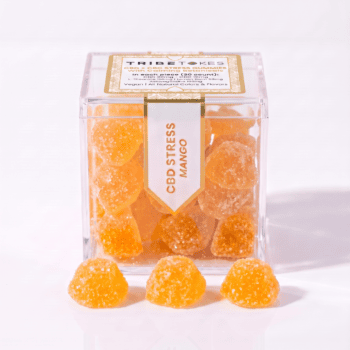 CBD Gummies for Stress: 30mg CBD + ...Starting from: $45.00 SHOP NOW This product has multiple variants. The options may be chosen on the product page
-
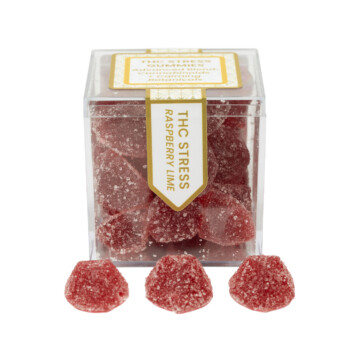 THC Stress Gummies | THC, CBD, CBC ...Starting from: $45.00 SHOP NOW This product has multiple variants. The options may be chosen on the product page
Frequently Asked Questions About Cannabis Gummies
The typical onset range is 45-90 minutes, though individual variation is significant. On an empty stomach, some users feel effects in 30 minutes. After a large meal, it may take 2 hours or more. The variables are your metabolism, body composition, the specific cannabinoid formula, and whether you’ve eaten recently. The delayed onset is the #1 reason edible overdoses happen: the gummy doesn’t seem to be working, so more gets taken. Then both doses arrive. Take your dose, set a timer for two full hours, and assess before taking more.
Most users report 4-8 hours of effects from a standard cannabis gummy dose, significantly longer than inhaled products. The extended duration comes from the digestive pathway: cannabinoids absorbed through the gut enter the bloodstream gradually and are cleared more slowly than inhaled cannabinoids. At higher doses, effects can last 8+ hours. Plan your timing accordingly. A sleep gummy taken at 10pm may still be active at 6am, which for most people is fine. A Buzzed gummy taken at 6pm before a work event at 8pm is a different calculation.
Both are psychoactive cannabinoids that produce the “high” associated with cannabis, but Delta 8 is approximately two-thirds the potency of Delta 9 at comparable doses due to lower binding affinity at CB1 receptors. Delta 9 gummies produce a stronger, more intense psychoactive experience. Delta 8 gummies produce a milder, clearer-headed effect that many users describe as less anxiety-prone. Delta 9 is the primary psychoactive compound in traditional cannabis; Delta 8 is hemp-derived through CBD isomerization. Both will produce a positive result on a standard drug test. Delta 8 is a good starting point for users who want psychoactive effects but have had uncomfortable experiences with stronger THC products.
Any gummy containing THC (including Delta 8, Delta 9, and live resin formulas with THC) will produce the urinary metabolites that standard drug screens detect. The product’s legal status or hemp origin doesn’t affect the test result. Detection windows are 3-7 days for occasional users and up to 30 days or longer for daily users due to fat-soluble accumulation. CBD-only gummies (THC-free wellness and sleep formulas) are unlikely to trigger a standard THC screen at normal doses, but trace cannabinoids in broad-spectrum products can occasionally cause issues in sensitive tests. If you’re subject to drug testing, confirm your formula is THC-free and review the COA before using.
For THC-containing gummies, 2.5-5mg is the appropriate starting dose if you’re new to edibles or returning after a long break. This is typically a quarter to half of a standard gummy. For CBD-only gummies, 10-25mg is a reasonable starting point with no psychoactive risk. The most important rule regardless of dose: wait two full hours before deciding the gummy hasn’t worked. Redosing before the first dose has peaked is the most common way edible experiences go wrong. Your first few sessions are calibration; treat them that way.
Distillate gummies use refined cannabinoid oil: highly concentrated, consistent, and clean. The cannabinoid content is predictable. Live resin gummies use extract from fresh-frozen plant material, preserving the full terpene profile alongside the cannabinoids. Many users find the full-spectrum profile produces a more complete, richer experience. Live rosin gummies go a step further: the extraction uses only heat and pressure (no solvents), making it the most expensive and cleanest extraction method. All three work. Distillate suits consistent dosing. Live resin and live rosin suit users who want the full plant profile and are willing to pay for it.
CBN (cannabinol) is a cannabinoid that forms naturally in cannabis as THC oxidizes over time. It’s present in very small amounts in fresh plants and accumulates in aged or oxidized cannabis. CBN is associated with sedative properties in preclinical research, and it’s commonly combined with CBD or THC in sleep-oriented formulas. In TribeTokes sleep gummies, CBN is paired with either Delta 9 THC or CBD along with L-Tryptophan and Vitamin B6 to create a fuller formula for evening use. The CBN adds a sedating character on top of the THC or CBD base. At standard doses, CBN alone is non-psychoactive. The THC+CBN sleep formula is psychoactive because of the THC content.
Yes, though food affects onset and intensity. On a full stomach, onset is slower because the cannabinoids wait in the digestive queue behind other food. The total effect may feel slightly less intense than the same dose on an empty stomach. High-fat meals can actually increase cannabinoid absorption because cannabinoids are lipophilic; they bind to dietary fat and get transported more effectively across the intestinal wall. If consistency matters to you, try to take gummies under similar food conditions each time. Taking them on a completely empty stomach speeds onset but can also intensify effects in some users.
Hemp-derived cannabis gummies from reputable, lab-tested brands are generally well-tolerated by healthy adults. The primary risks are taking too much (uncomfortable but not dangerous for most adults), and interactions with certain medications. Cannabinoids are metabolized by the CYP450 enzyme system, which processes many common drugs. If you take prescription medications, check with a healthcare provider before adding cannabinoids to your routine. CBD-only gummies have a lower risk profile than THC-containing formulas, as CBD doesn’t produce psychoactive effects or the impairment associated with THC. Always verify the COA before purchasing any gummy product.
Taking too much of a THC gummy typically produces intense anxiety, elevated heart rate, disorientation, and extreme sleepiness. It’s genuinely unpleasant but not medically dangerous for healthy adults. No fatal overdose from cannabis has been documented in the research literature. The most effective response: stay somewhere comfortable and safe, drink water, eat a snack if you can tolerate it, and wait it out. Effects will peak and gradually diminish. Lying down in a calm, familiar environment helps. If you have underlying cardiovascular conditions or severe anxiety, seek medical attention. Otherwise: this passes, and you’ll know your dose better next time.
Shop Cannabis Gummies
Buzzed, Everyday, Sleep, Live Resin, Live Rosin, CBD, and CBN formulas. 4.74/5 from 812 reviews. Try before you commit with sample sizes and You Pick bundles.
Sources
- Barrus, D.G. et al. (2016). “Tasty THC: Promises and Challenges of Cannabis Edibles.” Methods Report (RTI Press). PubMed: 28127591.
- Corroon, J. and Felice, J.F. (2019). “The Endocannabinoid System and Its Modulation by Cannabidiol (CBD).” Alternative Therapies in Health and Medicine, 25(S2). PubMed: 31202198.
- Pertwee, R.G. (2008). “The diverse CB1 and CB2 receptor pharmacology of three plant cannabinoids.” British Journal of Pharmacology, 153(2), 199-215. PubMed: 17828291.
- U.S. Food and Drug Administration. “Hemp Production and the 2018 Farm Bill.” Congressional Testimony, July 25, 2019. FDA.gov.