

THCa (tetrahydrocannabinolic acid) is the most abundant cannabinoid in raw hemp plants. Not CBD, not THC. The precursor. It has a distinct research profile, a different mechanism of action than most people expect, and its own legal status under the 2018 Farm Bill. This guide covers how it works, what the science currently says about its properties, and how to find a quality product.
🧪 Lab Tested 👩💼 Woman-Owned 🏆 Est. 2017
THCA AT A GLANCE
| Scientific name | Tetrahydrocannabinolic acid (THCA-A) |
| Where it’s found | Raw, unprocessed hemp; concentrated in trichomes (the crystal-like frost on the flower) |
| Psychoactive in raw form? | No |
| Psychoactive when vaped or smoked? | Yes |
| Primary mechanism studied | PPARγ activation; CB1 receptor interaction in some studies |
| Federal legal status | Legal when product contains 0.3% or less D9 THC (2018 Farm Bill) |
| Drug test risk | Yes — expect a positive result if smoked or vaped |
| TribeTokes potency range | 22-28% THCa (premium indoor) |
What Is THCa?
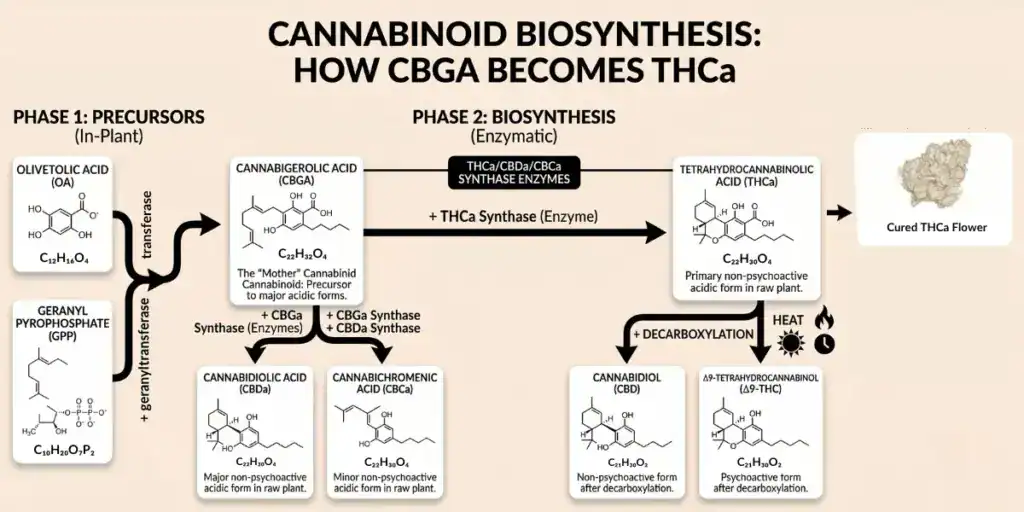
Pick up a freshly harvested hemp bud and what you’re mostly holding, chemically speaking, is tetrahydrocannabinolic acid. The plant biosynthesizes THCa from CBGA (cannabigerolic acid), often called the “mother cannabinoid.” THCa accumulates in the plant’s trichomes, the crystal-like structures coating the surface of the flower. That visible frost on premium buds? Mostly THCa.
The compound carries a carboxylic acid group that sets it apart structurally from its better-known relatives. In raw, unprocessed form, THCa does not produce psychoactive effects because its molecular configuration prevents efficient binding to CB1 receptors. That framing matters: THCa is non-psychoactive when unheated, but it is not pharmacologically inactive. That distinction is where the interesting science lives.
Most people come to this article because they’re curious about THCa flower, vapes, or pre-rolls. Fair starting point. But the deeper reason THCa is worth understanding is that it has a research profile that stands on its own, independent of what happens to it after it leaves the plant.
Worth knowing: When you see a potency number on a THCa flower label, that percentage reflects the unactivated acid form in the plant. TribeTokes THCa flower tests in the 22-28% range, which puts it firmly in the premium indoor category. Reaching that tier requires controlled grow environments, careful nutrient management, and a proper cure. It’s not an accident.
How THCa Works in the Body
The endocannabinoid system (ECS) is the body’s own signaling network, built around cannabinoid receptors found throughout the brain, immune system, and peripheral tissues. Most people know CB1 and CB2. THCa’s interaction with this system is more indirect than the standard receptor-binding story, and the more interesting for it.
PPARγ: THCa’s Primary Pathway
A 2017 study published in the British Journal of Pharmacology found that THCa is a potent agonist of PPARγ (peroxisome proliferator-activated receptor gamma), a nuclear receptor involved in regulating inflammation, metabolism, and neuroprotection. Crucially, the acidic cannabinoids like THCa bind and activate PPARγ with greater potency than their neutral counterparts. THCa’s carboxylic acid group is not structural noise. It’s the functional key that distinguishes acidic cannabinoids as a distinct research category.
In plain terms: PPARγ is a nuclear receptor that acts as a regulatory switch for inflammation and fat metabolism. When it’s activated, it turns on gene programs that reduce inflammatory response and support neuron health. THCa activates it at nanomolar concentrations. That potency is exactly what keeps this research area generating papers.
Source: Nadal, X. et al. (2017). “Tetrahydrocannabinolic acid is a potent PPARγ agonist with neuroprotective activity.” British Journal of Pharmacology, 174(23). PubMed: 28853159.
CB1 Interaction
A 2020 study in the same journal examined THCa in a mouse model of collagen-induced arthritis and found that it can act as an orthosteric CB1 agonist and a positive allosteric modulator. In more accessible terms: THCa interacts with CB1 receptors through a different binding approach than typical cannabinoids, rather than simply turning the receptor on or off. This helps explain several of THCa’s observed biological effects and points to a pharmacological profile that doesn’t fit neatly into the standard cannabinoid framework.
Source: Palomares, B. et al. (2020). “Δ9-Tetrahydrocannabinolic acid alleviates collagen-induced arthritis: Role of PPARγ and CB1 receptors.” British Journal of Pharmacology, 177(19). PubMed: 32510591.
THCa vs. CBD: Key Differences
THCa and CBD share some surface-level similarities: both are non-psychoactive in raw form, both are hemp-derived, and hemp-derived versions of both are federally legal under the right conditions. Once you look at how they actually work, the comparison gets more interesting.
| Feature | THCa | CBD |
|---|---|---|
| Psychoactive when vaped or smoked? | Yes | No |
| In raw / unheated form | Non-psychoactive | Non-psychoactive |
| Primary mechanism studied | PPARγ activation; CB1 interaction | Multiple receptor pathways; not CB1-primary |
| Federal legal status (hemp-derived) | Legal if D9 THC is 0.3% or less | Legal if D9 THC is 0.3% or less |
| Drug test risk if smoked or vaped | Yes — expect a positive result | Low, but not zero risk |
| Common product formats | Flower, vapes, pre-rolls | Tinctures, gummies, vapes, topicals |
| Human clinical data | Limited; primarily preclinical | Broader, including FDA-approved Epidiolex |
| Available at TribeTokes | Yes | Yes |
The practical choice between THCa and CBD usually comes down to one question: are you looking for psychoactive effects when you smoke or vape? If yes, THCa products are the path. If you want to explore cannabinoids without psychoactivity, CBD has the deeper clinical research base and a more consistent legal picture across all 50 states.
Research on THCa’s Potential Properties
Scientific interest in THCa has grown steadily since the early 2010s. Most published research is in vitro (cell-based) or in vivo (animal models). That caveat matters, and we’ll flag it for each finding rather than issuing one blanket disclaimer and proceeding as if the studies prove more than they do. Four areas have generated consistent attention:
- Anti-inflammatory properties: studied via PPARγ and CB1 pathways in cell models and an arthritis model
- Neuroprotective properties: studied via PPARγ activation in mouse neurodegeneration models
- Metabolic effects: studied in diet-induced obesity models; partial PPARγ modulator profile
- Antiemetic potential: studied in rat and shrew models; CB1 receptor involvement identified
Anti-Inflammatory Properties
Multiple studies have examined THCa’s effects on inflammation markers. The 2020 collagen-induced arthritis study (Palomares et al.) found that THCa reduced joint inflammation, prevented infiltration of inflammatory cells, and inhibited expression of inflammatory and catabolic genes in knee joints of treated mice. Cell-based research has also found that THCa inhibits tumor necrosis factor alpha (TNF-alpha) release from macrophages in a dose-dependent manner. TNF-alpha is a key driver of inflammatory response, which is why its inhibition is a frequently studied endpoint. These effects appear to operate through PPARγ and CB1 pathways, which distinguishes THCa’s anti-inflammatory mechanism from that of typical cannabinoids. Preclinical findings. Not yet validated in human trials.
Source: Palomares, B. et al. (2020). British Journal of Pharmacology, 177(19). Full citation in “How THCa Works” section above. PubMed: 32510591.
Neuroprotective Properties
The 2017 PPARγ study (Nadal et al.) found that THCa demonstrated neuroprotective activity in mouse models of neurodegeneration, reducing neuronal loss, microgliosis, and astrogliosis. The researchers connected this to PPARγ activation and noted that THCa’s potency as a PPARγ agonist positions it as worth investigating for neurodegenerative applications. This is research in animal models and does not constitute evidence that THCa treats or prevents neurodegenerative disease in humans. We’re not going to frame it that way, and you should be skeptical of any brand that does.
Source: Nadal, X. et al. (2017). British Journal of Pharmacology, 174(23). Full citation in “How THCa Works” section above. PubMed: 28853159.
Metabolic Research
A 2019 study in Biochemical Pharmacology (Moreno-Navarrete et al.) administered THCa to mice with diet-induced obesity and observed reductions in fat mass, body weight gain, glucose intolerance, and insulin resistance. The researchers identified THCa as a partial, selective PPARγ modulator. The significance: full PPARγ agonists used pharmaceutically carry side effects including bone loss and fluid retention. THCa’s partial modulator profile produced the metabolic improvements with fewer of those adverse signals in the animal model. Human data does not yet exist for this application.
Source: Moreno-Navarrete, J.M. et al. (2019). “Tetrahydrocannabinolic acid A (THCA-A) reduces adiposity and prevents metabolic disease caused by diet-induced obesity.” Biochemical Pharmacology, 171. PubMed: 31706843.
Antiemetic Properties
A 2013 study by Rock, Kopstick, Limebeer, and Parker at the University of Guelph found that THCa reduced nausea-induced behavior in rats and vomiting in Suncus murinus, a common preclinical emesis model. When the researchers blocked CB1 receptors pharmacologically, the antiemetic effect was reversed, indicating CB1 involvement. A notable finding from the study was that THCa appeared to act peripherally rather than centrally, based on the plasma and brain concentration data, which has implications for how the mechanism might work without requiring central nervous system penetration. Single animal study. Not validated in human trials.
Source: Rock, E.M. et al. (2013). “Tetrahydrocannabinolic acid reduces nausea-induced conditioned gaping in rats and vomiting in Suncus murinus.” British Journal of Pharmacology, 170(3):641-8. PubMed: 23889598.
Honest take: PPARγ is the most consistent thread running through the THCa research. Same mechanism, showing up across inflammation, metabolism, and neuroprotection research from separate labs and separate study designs. When that happens, it’s worth paying attention. The antiemetic findings are real and interesting, but more isolated. What’s missing from all of it is human clinical data, and until that catches up, any brand making definitive health claims about THCa is outrunning the evidence base.
What to Expect When Using THCa Products
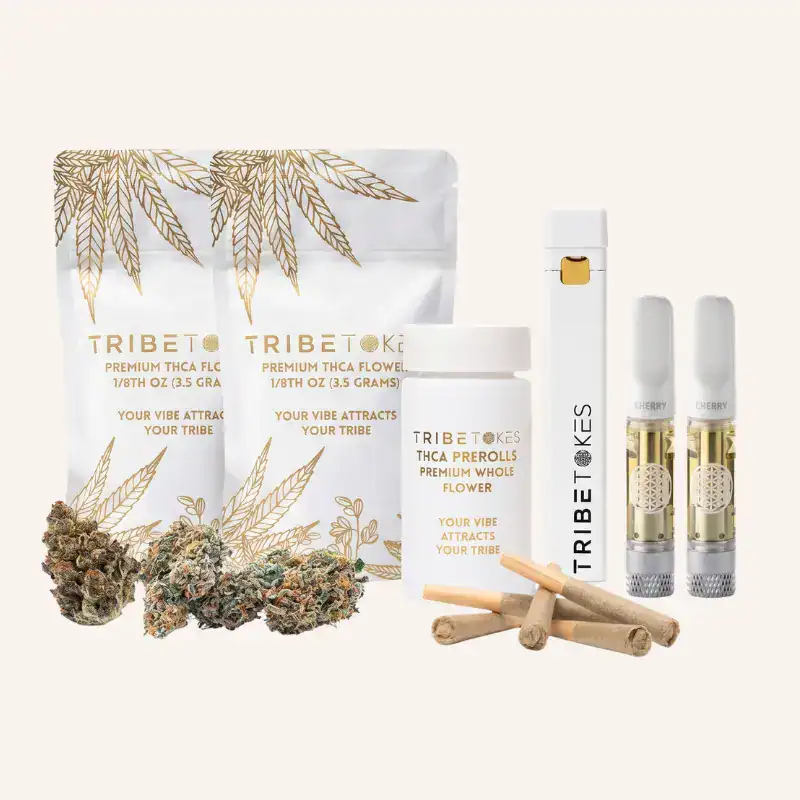
THCa flower, vape cartridges, disposable vapes, and pre-rolls produce psychoactive effects when smoked or vaped. The experience is what most people would describe as a traditional cannabis session: rapid onset within minutes, effects lasting 1-3 hours depending on format, tolerance, and amount consumed.
Strain selection shapes the character of the experience. Indica-leaning strains are commonly used in evenings and for relaxation. Sativa-dominant strains tend to work better for daytime use or when you want to stay active and functional. Hybrids land in between. TribeTokes carries Lemon Cherry Gelato, Gary Payton, Jealousy, Blue Dream, Blueberry Cookies, and other strains across the flower and vape lineup. Each has a distinct terpene profile that does more to differentiate the experience than the potency number alone.
A few practical notes:
- Start with a single inhalation and wait 5-10 minutes before assessing. Live resin products are full-spectrum and can hit differently than distillate-based products even at similar THCa percentages.
- Setting matters more than most first-time users expect. A comfortable environment with nothing pressing on the schedule makes for a consistently better experience.
- If your baseline is edibles (45-90 minute onset, 4-6 hours duration), smoked and vaped products will feel significantly different in both onset speed and duration window.
- If you are subject to drug testing of any kind, do not use THCa products. The legality section below covers this with no hedging.
THCa Potency and Flower Grades
THCa potency is measured as a percentage of total cannabinoid content by weight. The number matters, but it’s not the full picture. A well-grown, properly cured 24% flower will typically outperform a poorly managed 28% by any practical measure. The quality of the cure, the terpene content, and the consistency of the cannabinoid profile all matter as much as the headline percentage. Here’s how the tiers generally break down in the market:
| Potency Range | Common Descriptor | Notes |
|---|---|---|
| Under 15% THCa | Entry-level / hemp-forward | Common in mass-market products; milder, more variable experience |
| 15-21% THCa | Mid-tier | Solid everyday range; wider variety of strains available at this level |
| 22-28% THCa | Premium indoor | TribeTokes standard; requires controlled grow environment and careful cure to achieve consistently |
| 28%+ THCa | High-potency | Less common; approach claims above 35% with skepticism unless a credible COA backs it up |
Indoor cultivation produces denser trichome coverage and more consistent cannabinoid profiles because every variable is controlled: light cycles, temperature, humidity, and pest pressure. Outdoor and greenhouse grows can produce excellent flower, but the variability is higher. Every TribeTokes THCa batch is verified via third-party COA before it ships.
Terpene content is the other half of the quality conversation that potency numbers miss entirely. The terpenes in a well-grown, properly cured flower are what make Lemon Cherry Gelato smell and hit differently than Blue Dream at the same percentage. That is chemistry, not marketing.
THCa Legality: Federal and State
The 2018 Farm Bill federally legalized hemp and hemp-derived cannabinoids, defined as cannabis containing 0.3% or less Delta-9 THC by dry weight. THCa is not Delta-9 THC, and properly produced hemp-derived THCa products with compliant D9 levels are federally legal under this framework.
State law is a separate and evolving picture. Regulations vary significantly, and several states have enacted restrictions specifically targeting THCa or broader prohibitions on psychoactive hemp products. Before ordering, verify your state’s current regulations. NORML’s state law guide at norml.org/laws is a reasonable starting point, though this area updates frequently.
The Drug Test Reality: No Gray Area
If you use THCa flower, vapes, or pre-rolls, you will test positive on a standard urine drug screen. Standard tests detect THC metabolites. Consuming THCa products via inhalation produces those metabolites. This is the consistent, predictable outcome. Not a theoretical risk. Not an edge case.
There is no reliable method to use smoked or vaped THCa products and pass a standard drug test. Detox supplements, high water intake, and timing strategies do not reliably change this. If your situation involves employment screening, probation, professional licensing, athletic competition, custody matters, or any other testing requirement, do not use THCa products. The federal legal status of the product does not change what metabolites your body produces.
Before you buy: The drug test consequence should be front-of-mind before a purchase, not something a customer discovers afterward. If you’re not certain whether your situation involves drug testing, assume it does and hold off on THCa until you are.
Which THCa Format Is Right for You?
TribeTokes carries four THCa formats. The right choice is almost always a lifestyle question. Each format has a distinct convenience and experience profile.
| Format | Onset | Duration | If your goal is… | Available at TribeTokes |
|---|---|---|---|---|
| Flower (smoked) | 1-5 min | 1-3 hours | Full-spectrum terpene expression; precise control over session length; the closest to traditional cannabis | Yes — THCa Flower |
| Pre-roll | 1-5 min | 1-3 hours | The flower experience with no prep; convenient for social settings; available in regular (1g) and mini (0.5g) | Yes — THCa Pre-rolls |
| Vape cartridge | 5-10 min | 1-2 hours | Discreet and portable; consistent dose per pull; minimal aroma; requires a compatible 510-thread battery | Yes — THCa Vape Carts |
| Disposable vape | 5-10 min | 1-2 hours | Zero setup; self-contained with battery included; no charging required initially; ideal for travel or as a first format to try | Yes — THCa Disposable Vape |
| Dabs / concentrates | 1-3 min | 1-3 hours | High potency per use; experienced consumers; requires a dab rig or concentrate-compatible device | Not currently available |
If you’re new to THCa products, pre-rolls and disposable vapes have the lowest barrier to entry by a wide margin. Pre-rolls give you the full flower experience without needing to grind, pack, or roll anything. Disposables give you a complete, ready-to-go device with zero equipment decisions. The live resin carts are the format that tends to generate the most repeat customers once someone has tried them. “I have been searching a while for a solid vape cart… Not only is the taste great but they are very very smooth,” wrote Lindsay C. after ordering the live resin line. Full-spectrum live resin is genuinely hard to go back from once you know what you’re tasting.
What to Look for When Buying THCa Products
Potency is the first spec to evaluate for THCa flower. Anything testing below 15% is typically an outdoor or lower-tier greenhouse grow. Legitimate premium indoor flower starts around 20% and usually tops out in the 26-30% range. Anything claiming 35% or above is worth skepticism until an accredited, batch-specific COA backs it up.
For vape products, the live resin versus distillate distinction determines what you’re actually getting. Live resin is extracted from fresh-frozen plant material, preserving the terpene profile that standard drying and curing would degrade. The result is an oil that retains more full-plant complexity: richer flavors, more strain-distinct effects. Distillate is more refined and consistent but with significantly less of that complexity. TribeTokes live resin carts use full-spectrum live resin oil. “Probably one of the cleanest carts I have tried. Phenomenal flavor and experience,” wrote Lori H. That response comes from the extraction quality, not just the percentage.
Hemp sourcing deserves a direct answer, not a tagline. Where was it grown? How? Domestic hemp under USDA-compliant conditions carries testing requirements that imported hemp does not. “Premium hemp” with nothing further is a marketing phrase. Any brand that can’t give you a specific answer to the sourcing question is telling you something.
How to Read a Certificate of Analysis (COA)
A COA is the third-party lab report verifying what’s actually in a product. For THCa products, it should cover four panels: potency (cannabinoid content), pesticides, heavy metals, and residual solvents. Potency tells you the actual THCa percentage and the D9 THC level. Pesticide and heavy metal panels confirm the product is safe to inhale. Residual solvent panels apply to vape products and confirm the extraction process didn’t leave harmful residues.
Three specific things to verify: First, the lab should be ISO 17025-accredited, which is the standard that makes the results analytically reliable. Second, the batch number on the COA must match the batch number on your product packaging. A COA for a different batch is not a COA for your product. Third, the D9 THC level must be at or below 0.3% for federal compliance. If a brand can’t produce a current, batch-specific COA from a real accredited lab, stop there.
Lab results for all TribeTokes products are available at tribetokes.com/lab-results. Every batch is listed by product, accessible before you order.
What to Avoid When Buying THCa
The THCa market grew fast and quality control hasn’t always kept up. A few red flags worth calling out:
- No COA, or a COA that isn’t batch-specific. A single lab report from 18 months ago is not documentation for your current order. Current and batch-specific are both required.
- THCa potency claims that exceed reasonable limits. 35%, 40%, higher numbers appear regularly. Independent testing routinely finds these claims don’t hold up. Ask for the accredited lab report before buying.
- Vague sourcing language. “Premium hemp” is not a sourcing statement. Where was it grown? Indoor, outdoor, greenhouse? These have real answers if a brand has them.
- No information on extraction method for vapes. Live resin, distillate, and CDT (cannabis-derived terpenes) are meaningfully different products with different production costs. If a brand can’t tell you which one they use, that absence is informative.
- Unusually low prices. Premium indoor THCa flower has a real cost of production. Prices that don’t make sense for the quality being claimed usually reflect cuts in quality, testing, or both.
- D9 THC compliance not prominently stated. Federal legality depends on this number. It should be easy to find, not buried in fine print or absent from the COA entirely.
Why TribeTokes
TribeTokes has been sourcing and formulating hemp cannabinoid products since 2017. The THCa flower and vape line uses premium indoor-grown hemp testing at 22-28%. Live resin extraction is standard across the vape cart and disposable lineup. Every batch is tested by accredited third-party labs, with COAs available on each product page and on the lab results page. Woman-owned since the beginning. “This really takes the edge off. I’m a lifetime customer,” wrote Kelly S. after multiple flower orders. Consistent sourcing, a real testing standard, and no shortcuts when the market makes them tempting. That’s the job.
Frequently Asked Questions About THCa
THCa (tetrahydrocannabinolic acid) is the naturally occurring cannabinoid precursor found in raw hemp plants. The full scientific name is THCA-A, or 2-carboxy-THC. It shares a structural relationship with THC but carries an additional carboxylic acid group that changes how it interacts with the body. In its raw, unprocessed form, THCa does not produce psychoactive effects because it does not bind efficiently to CB1 receptors. Its primary studied mechanism is PPARγ activation, a nuclear receptor pathway distinct from how activated cannabinoids work. THCa forms in the plant from CBGA (cannabigerolic acid) through enzymatic biosynthesis and accumulates in trichomes. The visible crystal-like frost on premium hemp flower is largely THCa. It is the most abundant cannabinoid in most fresh hemp strains, which is why THCa percentage is the primary potency metric on flower labels.
In its raw, unheated form, THCa is not psychoactive. In fresh plant matter, unheated extracts, or unprocessed hemp, THCa does not produce intoxicating effects. When THCa flower, pre-rolls, or vapes are smoked or vaped, however, those products produce psychoactive effects. This is a clear and important distinction. THCa products consumed via inhalation affect cognition, perception, motor coordination, and reaction time. They are not appropriate for use before driving, operating machinery, or any activity requiring full cognitive function. First-time users should start with one inhalation and wait 10-15 minutes before taking more. Live resin products can hit significantly harder than the THCa percentage alone suggests, because the full terpene and cannabinoid profile is preserved through fresh-frozen extraction. Treat the experience seriously, especially early on.
Published research covers four areas: anti-inflammatory properties, neuroprotection, metabolic effects, and antiemetic potential. A 2020 study found THCa reduced arthritis progression in a mouse model through CB1 and PPARγ pathways (Palomares et al., PubMed 32510591). A 2017 study found neuroprotective activity in animal models via PPARγ activation (Nadal et al., PubMed 28853159). A 2019 study found reductions in fat mass and inflammation in a diet-induced obesity mouse model (Moreno-Navarrete et al., PubMed 31706843). A 2013 study found antiemetic activity in animal models with CB1 receptor involvement (Rock et al., PubMed 23889598). Most of this research is preclinical. Human clinical trial data is limited across all four areas. These findings suggest potential, not proven outcomes. Any brand claiming otherwise is outrunning the evidence base.
Hemp-derived THCa is federally legal under the 2018 Farm Bill, which removed hemp from the Controlled Substances Act and defined it as cannabis containing 0.3% or less Delta-9 THC by dry weight. THCa is not Delta-9 THC, and hemp-derived THCa products with compliant D9 levels fall within this framework. The FDA has preserved its regulatory authority over hemp products, so federal legality exists within an evolving regulatory context. State laws are a separate and more complicated picture. Some states have enacted specific restrictions on THCa or broader restrictions on psychoactive hemp products independent of the federal framework. Before purchasing, verify your state’s current regulations. This area changes more frequently than most people realize.
Yes. If you consume THCa flower, vapes, or pre-rolls via smoking or vaping, you will test positive on a standard urine drug screen. Standard tests detect THC metabolites. Consuming THCa products by inhalation produces those metabolites. This is not a theoretical or unlikely outcome. It is the consistent and predictable result. There is no reliable method to use smoked or vaped THCa products and pass a standard drug test. Detox products, high water intake, and timing strategies do not reliably change this. If you are subject to drug testing for employment, probation, professional licensing, athletic competition, custody matters, or any other reason, do not use THCa products. The legal status of the product does not change what metabolites your body produces or how a standard test reads them.
THCa products are available in several formats. Flower is the raw dried hemp bud, typically consumed using a pipe, bong, or rolling papers. Pre-rolls are pre-rolled joints delivering the same experience as loose flower with no preparation required. Vape cartridges attach to a 510-thread battery and deliver a measured dose per inhale. Disposable vape pens are self-contained with the battery built in and require no additional equipment. TribeTokes does not currently offer concentrates or dab products. All inhalation formats produce effects within minutes, with a duration of roughly 1-3 hours. This is meaningfully faster in onset and shorter in duration than edibles, which matters for calibrating how much to take on a first session.
The decision is almost always about lifestyle fit, not quality. Both THCa flower and live resin vape carts use full-spectrum product and deliver a genuine experience. The practical differences: flower requires a pipe or papers, has a more noticeable aroma, and offers the most complete terpene expression and session control. Pre-rolls remove the prep requirement while keeping the flower experience. Vape carts require a compatible 510 battery but are significantly more discreet, more portable, and easier to dose consistently per pull. Disposable vapes remove even the battery requirement. If you’re new to THCa, pre-rolls and disposables have the lowest barrier to entry. If you want to explore strain-specific terpene profiles in depth, loose flower is the format that rewards that most.
The principle is the same regardless of format: start with less than you think you need, wait longer than feels necessary, and add more only after you’ve assessed the initial dose. With smoked or vaped products, one inhalation is a reasonable starting point. Allow 10-15 minutes before deciding whether to continue. High-potency live resin products can hit harder than the THCa percentage alone suggests, and moving past the onset window too quickly is the most common mistake new users make. TribeTokes THCa flower tests at 22-28%, which is the premium indoor tier. A conservative first session is a few puffs of a pre-roll or one small pipe bowl. With vape carts and disposables, one pull and a 10-minute wait is the practical starting protocol. Tolerance varies considerably between individuals, and most people find their range within two or three sessions rather than any formula.
Three areas matter most: lab testing, sourcing transparency, and sensory indicators. On lab testing: every batch needs a current, batch-specific COA from an ISO 17025-accredited third-party lab. The four panels to verify are potency, pesticides, heavy metals, and (for vapes) residual solvents. The D9 THC level must be at or below 0.3% for federal compliance. On sourcing: domestic hemp with a specific grow method stated (indoor, outdoor, greenhouse) is preferable to vague “premium hemp” language. On sensory quality: high-quality flower has visible trichome coverage, a distinct strain-specific aroma, and a clean smoke. It should not smell like hay or freshly cut grass, which typically indicates poor curing. Quality vape oil is clear to light amber in color, with smooth pulls from the first hit. All TribeTokes COAs are at tribetokes.com/lab-results.
Live resin is extracted from fresh-frozen hemp plant material harvested immediately after cutting, before any drying or curing takes place. Freezing the plant at harvest preserves the terpene profile that would otherwise be lost through oxidation and heat exposure during standard processing. Terpenes are volatile aromatic compounds that degrade quickly under those conditions. The result of live resin extraction is an oil that retains a more complete, full-spectrum cannabinoid and terpene profile. In practice, live resin vapes have richer, more distinct flavors and a more strain-differentiated effects profile. Distillate is more uniform and consistent, but with significantly less of that full-plant complexity. TribeTokes vape carts and disposables use full-spectrum live resin oil across the lineup. The terpene complexity is the primary reason experienced users tend to stay with live resin once they’ve tried it and know the difference.
Explore TribeTokes THCa Products
Premium indoor THCa flower at 22-28%. Full-spectrum live resin vape carts. Pre-rolls in regular (1.0g) and mini (0.5g). Every batch third-party tested with COAs on each product page.
Sources
- Nadal, X. et al. (2017). “Tetrahydrocannabinolic acid is a potent PPARγ agonist with neuroprotective activity.” British Journal of Pharmacology, 174(23). PubMed: 28853159.
- Palomares, B. et al. (2020). “Δ9-Tetrahydrocannabinolic acid alleviates collagen-induced arthritis: Role of PPARγ and CB1 receptors.” British Journal of Pharmacology, 177(19). PubMed: 32510591.
- Moreno-Navarrete, J.M. et al. (2019). “Tetrahydrocannabinolic acid A (THCA-A) reduces adiposity and prevents metabolic disease caused by diet-induced obesity.” Biochemical Pharmacology, 171. PubMed: 31706843.
- Rock, E.M. et al. (2013). “Tetrahydrocannabinolic acid reduces nausea-induced conditioned gaping in rats and vomiting in Suncus murinus.” British Journal of Pharmacology, 170(3), 641-648. PubMed: 23889598.
- Morales, P. et al. (2017). “Can You Pass the Acid Test? Critical Review and Novel Therapeutic Perspectives of Δ9-Tetrahydrocannabinolic Acid A.” ACS Chemical Neuroscience, 8(9). PMC5549534.
- U.S. Food and Drug Administration. “Hemp Production and the 2018 Farm Bill.” Congressional Testimony, July 25, 2019. FDA.gov.