
THCa Flower in New York
Character in a jar of flower is decided long before the jar. Genetics set the ceiling, the grow decides how much of that ceiling gets expressed, harvest timing narrows it further, and the dry and the cure decide how much survives to the moment somebody lifts the lid. TribeTokes runs twelve strains of whole-flower THCa, hand-trimmed in small lots and cured slowly, each sold as a full eighth with an independent lab report published against its batch. This page is about the four stages standing behind that sentence.
The THCa Flower Lineup for New York
-
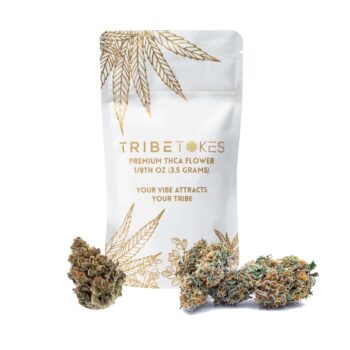
 THCa Flower: 12 Strains | Eighth (3.5g) | 22 to 28% THCaStarting from: $45.00 SHOP NOW This product has multiple variants. The options may be chosen on the product page
-
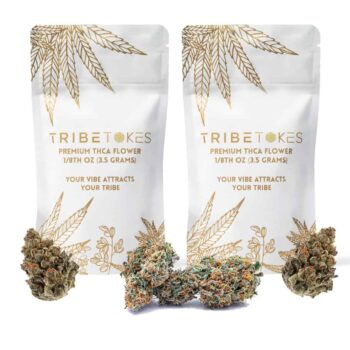
Save $10: THCa Flower You Pick 2 | Eighths (3.5g) | 22 to 28% THCaOriginal price was: $90.00.$80.00Current price is: $80.00. SHOP NOW This product has multiple variants. The options may be chosen on the product page
-
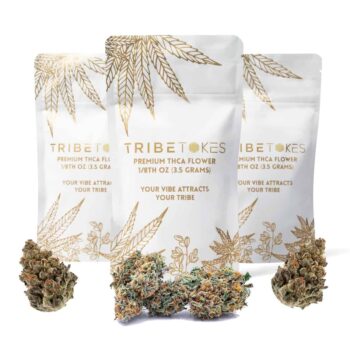
Save $20: THCa Flower You Pick 3 | Eighths (3.5g) | 22 to 28% THCaStarting from: $115.00 SHOP NOW This product has multiple variants. The options may be chosen on the product page
THCa Flower Strain Profiles
Hybrid
Sativa
Indica
Hybrid
Hybrid
Sativa
THCa Flower in New York: What to Look For
Hemp sits under a different set of state laws depending on where you are, and those get revised, so start with what applies in NY. The growing and curing side of the story does not shift with an address, and it is where most of the difference between one jar and another gets made. How Is THCa Flower Made? walks the same sequence step by step.
How We Cure and Pack THCa Flower
A cure is a slow settling rather than a storage step. After the dry, flower is closed up and given weeks instead of days, and across that stretch the harsh green notes fade while the aroma that survives becomes the one the strain is known for. Rushing it costs character that no later handling gets back. Every batch here is held until an independent laboratory has cleared it, then sealed against the report the label repeats.
Pick Your Strain
Indica leans evening, sativa leans daytime, hybrids fall between, and none of that survives a bad cure. The strain pages carry aroma, lean and terpene notes so a pick can follow character rather than a name, and Indica THCA Flower and Sativa Flower Strains split the range the coarse way. Two jars of one strain from different rooms and different harvest weeks can still read differently, which is the point of everything below.
Skip the Grinding: Shop Prerolls
-
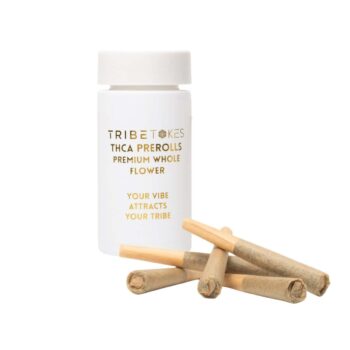
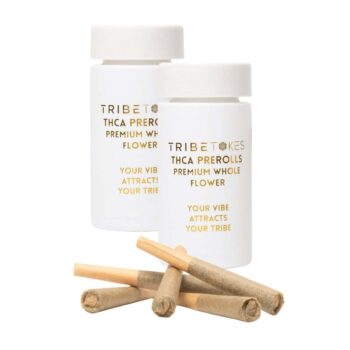
THCa Pre-Rolls : Whole Flower 5-Pack | Mini or Regular | 22 to 28% THCaStarting from: $35.00 SHOP NOW This product has multiple variants. The options may be chosen on the product page
-
Save $5-$10: THCa Pre-Rolls You Pick 2 | Whole Flower 5-Pack | 22 to 28% THCaStarting from: $65.00 SHOP NOW This product has multiple variants. The options may be chosen on the product page
-
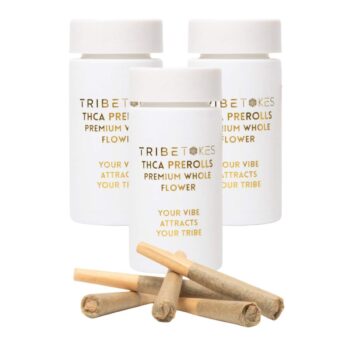
Save $10-$20: THCa Pre-Rolls You Pick 3 | Whole Flower 5-Pack | 22 to 28% THCaStarting from: $95.00 SHOP NOW This product has multiple variants. The options may be chosen on the product page
Flower or Prerolls?
Take the eighth and the breaking down is yours to do; the prerolls come as five cones already rolled from whole flower. Both draw on the same cured batches, so the cultivation and cure story behind them is identical. The choice is about effort at the moment of use and nothing else.
Character Starts With Genetics
A strain name is a genetic label, not a guarantee. The same seed line grown in two rooms produces plants that lean the same way and still differ in the fine detail of aroma, because expression depends on what the plant was given and when it was given it. Growers call those individual expressions phenotypes, and selecting between them is a large part of the craft.
Chemical profile also varies inside a single plant. Researchers comparing leaves and inflorescences of hybrid cannabis by headspace gas chromatography cataloged the two tissues separately, published as Identification of Terpene Compositions in the Leaves and Inflorescences of Hybrid Cannabis Species Using Headspace-Gas Chromatography/Mass Spectrometry. A name on a jar is doing a lot of work it was never built to do.
Harvest Timing Is a Judgment Call
There is no calendar date for a harvest, only a window, and where a grower cuts inside that window changes the finished jar. Pulled earlier, flower tends to read brighter and sharper. Left longer, it turns heavier and rounder. Neither is a mistake, and both are decisions somebody made on your behalf weeks before the bud reached anyone.
This is the stage buyers almost never hear about, and it explains more differences between two jars of one strain than the strain name does. It is also the least reversible stage of the lot, because everything after harvest is preservation rather than improvement.
The Dry Is Where Character Is Won or Lost
A slow dry in a cool dark room takes days rather than hours, and the plant gives up its water gradually enough that the volatile aromatics stay where they are. A fast dry pushes the same water out under heat or airflow and takes a great deal of the aroma with it. The bud can look similar either way, which is exactly why the nose is the honest test.
Speed is the standing temptation, since drying occupies space and time that a busy operation wants back. Small-lot work is what makes the slow version practical, because a small run does not have to be cleared out to make room for the next one waiting behind it.
There is a second cost to hurrying that shows up later. Flower dried too fast keeps moisture unevenly distributed inside the bud, so the cure that follows has to fix a problem instead of doing its own job, and some of that unevenness never fully resolves. The bud smokes differently as a result, and people usually blame the strain. How Do I Choose a THCa Flower Strain? is worth reading with that in mind, because the strain is often not the variable that let you down.
What the Cure Is Doing to the Aroma
Sealed and given weeks, flower goes on changing. Residual moisture redistributes through the bud, grassy notes recede, and what is left is the profile people recognize as the strain. That is chemistry running slowly at room temperature rather than a waiting period observed for its own sake. What Does THCa Flower Feel Like When You Smoke It? picks up where the jar opens.
How much of the experience those aroma compounds actually drive is a live argument rather than a settled one. Decoding the Postulated Entourage Effect of Medicinal Cannabis: What It Is and What It Isn’t is a fair account of where that argument currently stands, and it is considerably more careful than most of what gets written about terpenes. Other New York guides worth a look: hemp products in New York, CBD in New York, THC gummies in New York, THCa vapes in New York, CBN in New York and CBG in New York.
Frequently Asked Questions
It lets the bud keep changing under seal. Residual moisture evens out through the material, harsh green notes fade, and the aroma a strain is known for settles into place over weeks rather than days.
Drying removes most of the water and comes first, over days. Curing follows, under seal, and concerns what the remaining moisture and the aromatics do with time. Rushing either one shows up at the nose.
Because a strain name describes genetics and nothing else. Growing conditions, the harvest week and the dry all shift the finished profile, and those differences compound. Individual expressions of one seed line are called phenotypes.
Twelve strains make up the range, spread across the three leans, and each is offered as a full whole-flower eighth. Aroma, lean and terpene notes are laid out on each strain page.
An outside laboratory reads every run before it is sealed, and the report it produces is published rather than summarized. Potency sits with the safety panels on a single page.
It matters more than almost any other step. Aromatic compounds are volatile, and heat or hard airflow carries them off along with the water. A slow dry in a cool dark room keeps far more of them in the bud.
Weeks rather than days, and there is no single correct figure. The useful test is the nose: a properly cured jar reads bright and specific instead of green, and it breaks apart without crumbling to dust.
One plant’s expression of a seed line. Two plants from the same genetics can lean the same way and still differ in aroma and structure, so growers select between them rather than treating a strain as one fixed thing.
Not really. Everything after the dry is preservation rather than improvement, and aroma lost to heat or airflow does not come back. That is why the early stages carry so much of the weight.
It changes how much of the genetic potential gets expressed. Feeding, light and timing all move the finished profile, and chemical composition varies within a single plant as well, which is why laboratories sample the flower rather than the leaf.
Keep exploring: head back to all TribeTokes in New York, shop all THCa flower or THCa pre-rolls, learn what THCa is, browse best sellers, see every strain we carry, or view our lab results.
These statements have not been evaluated by the FDA. TribeTokes products are not intended to diagnose, treat, cure, or prevent any disease. Not for use by anyone under 21, or by those who are pregnant or nursing. All products contain less than 0.3% hemp-derived Delta-9 THC by dry weight.