
CBN in Wisconsin
CBN is normally grouped with CBG, CBC, CBDV and THCV as a minor cannabinoid, and it is the odd one out in that group. The others are made by the plant through its own enzymatic pathway. CBN is not made at all; it appears when THC breaks down. For Wisconsin readers working out how these compounds relate to each other, that distinction organizes everything else, including why they all appeared as named ingredients at roughly the same time.
The CBN Lineup for Wisconsin
-
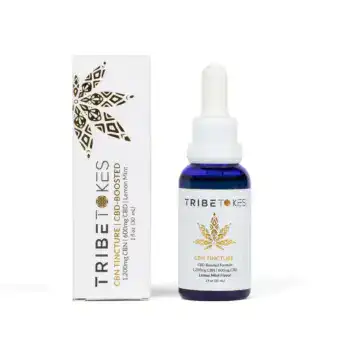
 CBN Tincture 1,800mg | CBD-Boosted | Nighttime FormulaStarting from: $50.00 SHOP NOW This product has multiple variants. The options may be chosen on the product page
-
CBD + CBN Sleep Gummies | With L-Tryptophan + Vitamin B6Starting from: $45.00 SHOP NOW This product has multiple variants. The options may be chosen on the product page

-
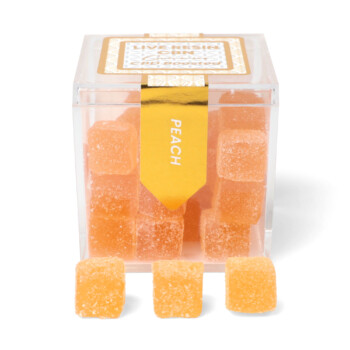
CBN Gummies with Live Resin | CBD-BoostedStarting from: $45.00 SHOP NOW This product has multiple variants. The options may be chosen on the product page
What CBN Is and Where It Comes From
Cannabinol is non-intoxicating and forms as THC degrades, which places it downstream of the plant’s own chemistry rather than inside it. Hemp cannabinoid rules vary by state and get revised, so WI readers should check current state guidance rather than assume a single answer applies. The family relationships are simpler than the paperwork: one precursor acid, several enzymatic branches, and a set of degradation products at the far end.
CBN for Sleep and Recovery
The evidence position is similar across the whole group, and it is early. Cannabinol and Sleep: Separating Fact from Fiction makes the point for CBN specifically, since the human work is old, sparse and inconclusive and the evening reputation is not something anyone has demonstrated. Comparable caution applies to the marketing around CBG and CBC. Minor cannabinoids arrived as ingredients before they arrived as a research literature, and the order they arrived in matters.
CBN vs CBD
CBD is the exception that makes the rest look thin. It is a major cannabinoid by concentration and by research volume, so a panel listing CBD next to a minor cannabinoid is combining one well-studied ingredient with one that is not. CBN vs CBD sets out that pairing, and CBG vs CBN handles the comparison people ask about most often inside the minor group itself.
- Gummies: pre-measured, the easy nightly habit.
- Oils: adjustable amounts, faster under the tongue.
- Paired with CBD: the two are commonly formulated together.
- Timing: take it about an hour before bed.
How Much CBN to Take
Serving conventions across the minor cannabinoids were copied more than derived. CBN, CBG and CBC amounts all sit in similar milligram bands, which reflects extraction economics and format constraints rather than dose-ranging research on any of them. Finding three products built around three different minor cannabinoids and noticing the numbers match tells you about manufacturing, not about pharmacology.
What Makes a Cannabinoid Minor
The word minor describes quantity, not significance. Hemp produces CBD in percentages and most other cannabinoids in fractions of a percent, so the classification is a statement about what an assay finds rather than about what a compound does. A minor cannabinoid could turn out to matter a great deal and would still be called minor.
That distinction gets blurred in marketing, where minor sometimes gets presented as rare and therefore valuable. Scarcity in the plant is a production challenge rather than a quality signal. It explains why these ingredients are harder to isolate and why they arrived on labels late, and it says nothing at all about whether they do anything useful.
Concentration also varies a great deal by cultivar and by growing conditions, so the major and minor split describes typical material rather than a fixed property of the molecules. A plant bred to express more of a particular compound shifts the ranking for that crop. The categories are useful shorthand and a poor rule, and treating them as permanent characteristics causes confusion as soon as a new cultivar arrives.
The Precursor Story, and Why CBN Sits Outside It
Cannabis builds its cannabinoids from a shared acid precursor. Enzymes route that precursor down separate branches, producing the acid forms of THC, CBD and CBC. Heat and time then convert those acids into the neutral compounds that appear on a label. THC, which the National Institute on Drug Abuse overview of cannabis identifies as the compound responsible for cannabis intoxication, sits at the end of one of those branches.
CBN has no branch of its own. It exists only because THC that the plant already made begins to oxidize afterwards. That makes it the one member of the usual minor cannabinoid list that is not a product of the plant’s biosynthesis, and it is why CBN content varies with storage history while the others are largely fixed by cultivar and harvest.
Why Minor Cannabinoids Arrived All At Once
For most of the industry’s history these compounds were laboratory curiosities. Isolating a fraction of a percent from biomass at any useful scale was not economically sensible, so formulas were built around the cannabinoids the plant produced in quantity. What changed was separation technology and the economics that followed it.
Once isolation became practical, an entire shelf of new ingredient names appeared simultaneously, and each needed a story explaining why a shopper should care. Those stories were assembled quickly, drawing on preclinical findings and existing folklore, because there was no human research to draw on instead. Wisconsin readers seeing similar claim structures across CBG, CBC and CBN products are looking at the consequence of that timing.
The Evidence Is Early Across the Whole Family
The research position is consistent across the group and consistently early. Cell and animal work exists for most of these compounds and is genuinely interesting in places. Human trials are scarce, small, or absent. That combination produces a familiar pattern where a preclinical finding gets described in consumer language that the study itself never supported.
For CBN in particular the pattern is well documented, which is why a review was written specifically to separate the sleep reputation from the supporting data. The same exercise has not been done for every minor cannabinoid, but the underlying situation is similar enough that treating claims about any of them with the same caution is the reasonable default.
A second asymmetry inside the group gets very little attention. Some minor cannabinoids have attracted preclinical interest for reasons unrelated to evening use, in areas where the proposed mechanisms look quite different. Reading across from one of those findings to a nighttime product repeats the same error as reading across from CBD to CBN, just less visibly, because the compound names sound related. Each claim needs the study that supports that claim specifically.
Where CBN Sits in the Group
Among the minors, CBN occupies an unusual position on three counts. Its origin is degradation rather than biosynthesis. Its concentration in a product depends on handling history unless it was added deliberately. And it carries the strongest consumer reputation of the group despite having one of the thinnest research records, which is an uncomfortable combination.
None of that argues against the compound. It argues for reading CBN claims the same way the rest of the family should be read: as an interesting molecule with a small evidence base, used in formulas where the amount can at least be verified by a lab. The verification part is real. The effect part is still an open question, and the two deserve to be kept separate.
Converted Cannabinoids and Where They Come From
Some minor cannabinoids reaching finished formulas were not extracted from plant material at all. Because these compounds share a chemical backbone, more abundant cannabinoids can be converted into scarcer ones in a laboratory, which costs far less than isolating a fraction of a percent from biomass. That route is common enough across the minor cannabinoid category to be worth knowing about, and it has consequences for what ends up in the finished product.
Conversion reactions can leave byproducts and unreacted starting material behind, so what matters is the purification step afterwards and the testing that confirms it worked. A batch certificate showing the target cannabinoid at high purity, with the expected impurities screened, is the answer to that question. This is one of the clearest cases where a lab report tells a Wisconsin reader something the ingredient list never will.
Why the Family Framing Gets Oversold
Grouping compounds into a family is useful for chemistry and misleading for claims. Shared ancestry in a biosynthetic pathway says nothing about shared effects, and the differences between family members are frequently larger than the similarities. THC and CBD sit on adjacent branches of the same pathway and behave nothing alike, which is the clearest illustration the plant provides.
The marketing version of the family idea tends to run the other way, presenting each new minor cannabinoid as a variation on a familiar theme. That framing borrows credibility from the better-studied members of the group without earning any of it. A Wisconsin reader meeting a cannabinoid name they have not seen before is better served by asking what has been published on that specific compound than by asking where it sits on the family tree. Keep exploring Wisconsin with hemp products in Wisconsin, CBD oil in Wisconsin, THC gummies in Wisconsin, Delta 8 THC in Wisconsin, THCa flower in Wisconsin, THCa vapes in Wisconsin and CBG in Wisconsin.
Frequently Asked Questions
The term describes concentration rather than importance. Cannabinoids that appear in small amounts in typical hemp, including CBG, CBC, CBDV, THCV and CBN, get grouped as minors, while CBD and THC are the majors by volume. The label says nothing about potency or effect. It says how much of the compound the plant material usually holds.
They sit at opposite ends of the same story. The acid form of CBG is the precursor the plant converts into the acids that become THC and CBD, so CBG is upstream of everything. CBN is downstream of THC and forms only after the plant’s chemistry has finished, through oxidation rather than through an enzyme.
No, which is what makes them minor. Most appear in fractions of a percent, so producing enough of any one to formulate with requires either processing large volumes of biomass or converting more abundant cannabinoids in a lab. That production reality is the reason these ingredients appeared commercially all at once rather than gradually.
Extraction and isolation technology improved to the point where separating small fractions became practical and affordable. Before that, a compound present at a fraction of a percent was interesting to chemists and useless to formulators. The technology change, not a research breakthrough, is what put this whole group of names onto labels.
Only through shared ancestry. CBC comes from its own enzymatic branch off the same precursor acid that leads to THC and CBD. CBN does not come from a branch at all; it forms when THC that already exists oxidizes. The two are relatives in the family tree sense and behave nothing alike.
They share the same problem rather than the same evidence. Each has preclinical work, mostly in cell and animal models, and very little human research. None of them has a file comparable to CBD’s. Claims made for one do not transfer to another, and claims made for the group as a whole are usually claims about nothing in particular.
By degradation. Hemp does not carry an enzyme that produces cannabinol, so any CBN in plant material came from THC that oxidized after the plant made it. That is why CBN levels rise with storage time while other cannabinoid levels are set at harvest, and why the compound behaves so differently in production terms.
Yes, in small amounts, which is much of what full-spectrum means. Alongside CBD and trace THC, the extract carries whatever minors the cultivar produced and the process preserved. The batch certificate lists them individually, so the actual profile is readable rather than a matter of taking the phrase on trust.
THCV is grouped with the minors on concentration grounds, since it appears in small amounts in most cannabis. It comes from its own precursor pathway and is structurally related to THC. Like the rest of the group it carries a fair amount of preclinical interest and a thin human research record.
None of them has a human research file comparable to CBD’s. Preclinical work exists across the group, most of it in cell and animal models, and the volume differs between compounds. Any claim that a specific minor cannabinoid is proven for a specific outcome is running ahead of the published record.
Related reading: CBN in Illinois, CBN in New Jersey, CBN or CBG for sleep, and the TribeTokes CBN gummy formulas.
These statements have not been evaluated by the FDA. TribeTokes products are not intended to diagnose, treat, cure, or prevent any disease. Not for use by anyone under 21, or by those who are pregnant or nursing. All products contain less than 0.3% hemp-derived Delta-9 THC by dry weight.