
THC Gummies in Virginia
A THC gummy is a piece of confectionery with an active ingredient in it, and both halves of that description age. The candy changes texture as moisture moves in or out, turning pieces sticky, grainy or stiff. The cannabinoid changes chemically, slowly, under heat, light and oxygen. Neither process is dramatic and neither happens on a schedule anyone can print. This page is written for readers in VA who want to know what actually happens to a THC gummy over months, what a best-by date covers, and where the worst place in the house is to keep a jar. None of it requires special equipment, and most of it comes down to one container and one shelf.
Every jar in the full THC gummy collection has a published Certificate of Analysis, so you can check the numbers before you order. Good news for Virginia: TribeTokes ships hemp-derived THC gummies right to your door, with standard shipping in 2 to 5 business days.
The TribeTokes THC Gummy Lineup
-
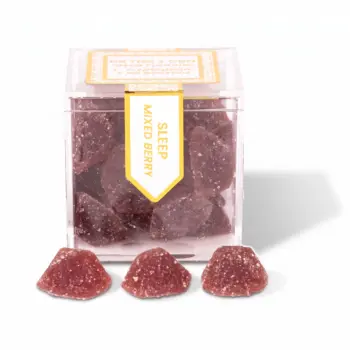
 THC Gummies for Sleep: 10mg THC + 20mg CBN, Melatonin-FreeStarting from: $45.00 SHOP NOW This product has multiple variants. The options may be chosen on the product page
-
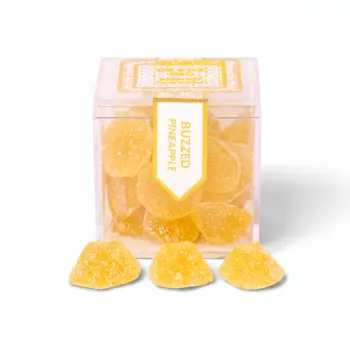
THC Buzzed Gummies | Extra Strength – Delta 8-BoostedStarting from: $45.00 SHOP NOW This product has multiple variants. The options may be chosen on the product page
-
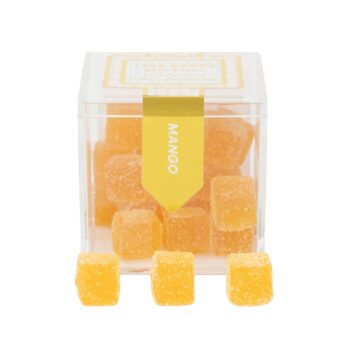
THC Live Resin Gummies | CBD-BoostedStarting from: $45.00 SHOP NOW This product has multiple variants. The options may be chosen on the product page
-
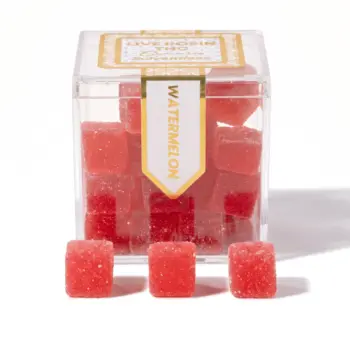
Live Rosin Gummies | Solventless THCStarting from: $45.00 SHOP NOW This product has multiple variants. The options may be chosen on the product page
-
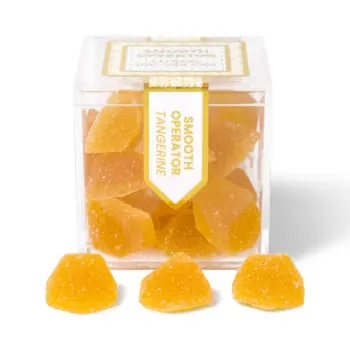
Smooth Operator 1:1:1 Ratio Gummies | THC + CBD + CBGStarting from: $45.00 SHOP NOW This product has multiple variants. The options may be chosen on the product page
-
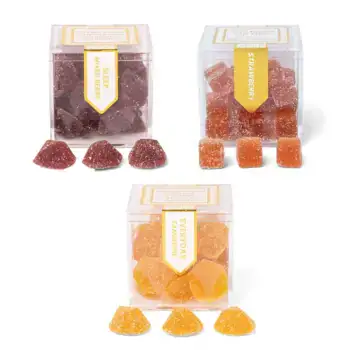
Save $20: You Pick 3 Gummies | Build Your Own BundleOriginal price was: $135.00.$115.00Current price is: $115.00. SHOP NOW This product has multiple variants. The options may be chosen on the product page
Are THC Gummies Legal in Virginia?
Hemp THC gummies are legal in Virginia only at very low strength. Since August 15, 2026, Virginia caps hemp products at 2mg of total THC per package, and the old exception for high-CBD products is gone. Marijuana gummies will be sold in licensed stores once retail opens on July 1, 2027. Until then, read the label and the COA before you buy anything.
The TribeTokes chews cover a low CBN sleep piece, live resin and live rosin for flavor, the extra-strength Buzzed, and a 1:1:1 blend of THC, CBD, and CBG. Storage advice is the same across all of them, because the things that degrade a gummy act on the sugar matrix and the cannabinoid rather than on the recipe. A live resin piece and a CBN piece age the same way in the same cupboard.
How Our THC Gummies Are Made
Batch dating is what makes any of this checkable. A jar labeled to a specific production run, with a Certificate of Analysis tied to that run, tells a reader when the figures were true. TribeTokes doses each small run against an independent lab result and publishes the report for it, which means a jar found at the back of a cupboard can at least be placed in time. Without a batch identifier there is no way to answer the only question that matters about an old jar, which is how old it is.
Pick the Right THC Gummy
Comparing chews on keeping quality is mostly a question of moisture. A sugar-coated piece behaves differently in a jar from a glazed one, because the coating absorbs surface moisture and keeps pieces from fusing together. That is a texture difference rather than a potency one, and it shows up long before anything else does. Texture is the early warning system for storage conditions, because it reacts to humidity and heat faster than the cannabinoid content does.
- Evening formulas: THC paired with CBN.
- Stronger: Buzzed for a higher tolerance.
- Balanced: Smooth Operator 1:1:1 for daytime.
- Live extracts: live resin and live rosin.
How Many Should You Take
Half a piece or one whole piece, then an hour or two before deciding anything, is the standard opening, and an old jar does not change that. If anything it argues for more patience rather than less, because a piece that has been sitting for a long time is the one a person has least information about. The label still says what it said. Whether it is still true is a separate question.
What Actually Degrades in a Chew
Two clocks run on a gummy and they run at different speeds. The confectionery clock is fast and visible: moisture moves, sugar recrystallises, texture drifts, and a piece that was pleasant at three months can be tacky or gritty at twelve. The chemical clock is slow and invisible: cannabinoids degrade gradually in the presence of heat, light and oxygen, with no outward sign that it is happening.
Most people only ever notice the first clock, because it is the one they can see and feel. The second is the one that quietly changes what a jar contains. Neither is a safety question in ordinary storage. Both are quality questions, and both are largely controlled by the same three variables: temperature, light and exposure to air.
Heat, Light and Air
Warmth speeds up chemical reactions, which is true of cannabinoid degradation as much as anything else. Light supplies energy that drives it further. Oxygen supplies the reactant. Store a jar somewhere warm, bright and loosely sealed and all three are working at once, which is why a windowsill is a considerably worse location than a cupboard even at the same room temperature. The three variables compound rather than substitute for one another, so fixing two of them and ignoring the third gets a person most of the way and no further.
The compound this matters for is THC, which is what produces the intoxicating effect an edible is taken for. The research topic page Cannabis (Marijuana) from the National Institute on Drug Abuse describes how THC acts once it reaches the brain. What storage governs is how much of it is still present to act at all, which is a quieter problem than spoilage and a more consequential one, because nothing about a well-preserved appearance guarantees a well-preserved figure.
Texture Over Time
A gummy is a sugar system held in a state it would rather not be in. Sugar is dissolved past the point where it would normally stay dissolved, and water is held in balance with the air around it. Both arrangements drift. In humid conditions the surface pulls in moisture and pieces turn tacky and fuse together. In dry conditions moisture leaves and pieces stiffen toward the texture of a hard sweet. Neither direction is reversible once it has happened, which is why prevention is the only real remedy on offer.
Graining is the other common change. Over months, or after repeated temperature swings, some of that supersaturated sugar comes back out of solution and forms crystals, giving the piece a gritty mouthfeel and a dull finish. None of these changes indicate spoilage in the ordinary sense. They indicate that the confection has aged, and they are the visible half of a process whose other half cannot be seen. A piece can look and feel perfect and still be older than its report.
Does the Cannabinoid Content Fade?
Gradually, and not in a way that lends itself to a printed number. THC oxidises to CBN over time, a conversion accelerated by warmth, light and air, which means an older product can read as different in character rather than simply weaker. There is no formula that converts months in a cupboard into a revised potency figure, and any source offering one is inventing it. Degradation depends on how a specific jar was kept, and no two cupboards are the same.
What can be said with confidence is that a lab report describes the batch on the day it was tested. The review Tasty THC: Promises and Challenges of Cannabis Edibles treats dose consistency and labeling as ongoing difficulties for the edible category, and time in storage is one of the reasons the figure on a jar is a snapshot rather than a permanent property. A batch identifier is what lets a reader tell how old that snapshot is.
A Practical Storage Setup
The short version is a sealed container in a cool, dark, dry cupboard, away from an oven, a radiator or a window. The seal handles air and humidity. The cupboard handles light and temperature. That covers every mechanism described above without requiring anything more elaborate, and it costs nothing beyond remembering to close the lid.
The refrigerator is the common suggestion and it is a mixed one. It is cool and dark, but every trip out into a warm kitchen invites condensation on the pieces, and repeated moisture cycling is precisely what makes a chew sticky. A freezer makes pieces hard and brittle and does nothing useful for a product that was never going to spoil microbially in the first place. A cupboard is usually the right answer, and it is the least trouble.
What This Means for Readers in VA
For readers in Virginia comparing THC gummies, storage is the part of the experience entirely within their own control, and it is also the part almost nobody thinks about until a jar has already gone tacky. A chew kept sealed and cool holds its texture and its figures for a long time. The same chew left in a bag on a sunny counter does neither, and the difference between those two outcomes is a cupboard door and a lid.
The habit worth forming is small: seal it, keep it dark, keep it cool, and note the batch. That is the whole of it, and it removes the only variable in the chain that a person can influence after the jar is in their hands. Related reading covers Do CBD Gummies Expire?, Does CBD or THC Oil Expire?, and Are THC Gummies Gluten-Free? for the ingredient side of the panel. More from our Virginia pages: hemp products in Virginia, CBD oil in Virginia, THCa flower in Virginia, THCa vapes in Virginia, CBN in Virginia and CBG in Virginia.
Frequently Asked Questions
A gummy has a best-by date rather than a hard expiry, and that date describes eating quality: texture, flavor and appearance. Cannabinoids follow their own separate timeline, degrading gradually under heat, light and oxygen rather than falling off a cliff on a particular day. TribeTokes covers the general case in Do Gummies Expire or Go Bad?
Cool, dark, dry and sealed covers almost all of it. An airtight container in a cupboard away from a window or a heat source addresses the three things that actually degrade a chew: warmth, light and air exchange. The container matters as much as the location, because an opened bag left in a drawer is still exchanging moisture with the room.
Each run is dosed against an independent third-party lab result, and the Certificate of Analysis published for it is tied to that specific batch. A batch identifier is what lets a reader connect a jar in hand to a report, which is also what makes it possible to know how old a jar actually is.
Heat accelerates the chemical degradation of cannabinoids, so a chew stored somewhere warm will lose potency faster than one stored somewhere cool. It also softens the candy itself, which is why pieces stored in a hot place tend to slump, fuse and lose their shape. A parked car in summer is the single worst common storage location on both counts.
THC oxidises to CBN over an extended period, and exposure to air, light and warmth speeds that conversion up. It is a slow process rather than a sudden one, and it explains why an old product can feel different rather than simply weaker. The two compounds are compared in CBN vs THC: How They Differ.
Stickiness is moisture. Sugar is hygroscopic, so a chew left open to humid air pulls water in at the surface, softening it and causing pieces to fuse. The reverse happens in dry air, where surface moisture escapes and pieces harden. Both are texture problems rather than safety ones, and a sealed container prevents either.
Right now, hemp gummies sold in Virginia have to stay under the 2mg per package cap, and licensed marijuana stores open on July 1, 2027. Some products have state restrictions, so check the product page before you order. If you want something without THC, our CBN and CBD gummies are the simple pick.
Only at very low strength. Since August 15, 2026, Virginia caps hemp gummies at 2mg of total THC per package, counting delta 9, delta 8 and THCa together. Full-strength marijuana gummies arrive with licensed stores on July 1, 2027.
It refers to eating quality rather than to potency or safety. The date is the maker’s estimate of how long the piece will taste and feel the way it was designed to. It is not a statement that the cannabinoid content is guaranteed until then, and it is not a statement that anything becomes unsafe afterwards.
A closed car in warm weather reaches temperatures well beyond anything a confection is designed for, and pieces will soften, fuse and deform. That heat also drives cannabinoid degradation faster than storage at room temperature would. The damage is usually obvious on sight, and once a jar has fused into a single mass, portioning it accurately is no longer possible.
Keep exploring: head back to all TribeTokes in Virginia, shop our THC gummies or Delta-9 gummies, browse best sellers, see every strain we carry, or view our lab results. Close by, see THC gummies in Washington, D.C.
These statements have not been evaluated by the FDA. TribeTokes products are not intended to diagnose, treat, cure, or prevent any disease. Not for use by anyone under 21, or by those who are pregnant or nursing. All products contain less than 0.3% hemp-derived Delta-9 THC by dry weight.