
CBN in Texas
CBN is a degradation product. THC oxidizes, loses hydrogen, and what remains is cannabinol, which is why old cannabis assays higher in CBN than fresh material from the same harvest. Heat, light, air and time all push that reaction forward. For Texas readers, where a package can sit in a hot car through an August afternoon, the storage question stops being academic. This page covers what actually drives the conversion and what it means for a product already sitting in a cupboard.
The CBN Lineup for Texas
-
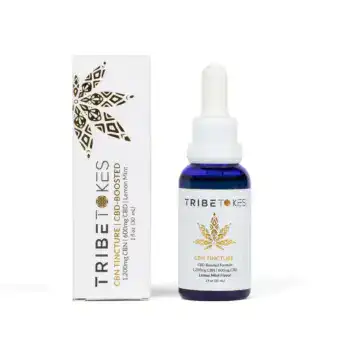
 CBN Tincture 1,800mg | CBD-Boosted | Nighttime FormulaStarting from: $50.00 SHOP NOW This product has multiple variants. The options may be chosen on the product page
-
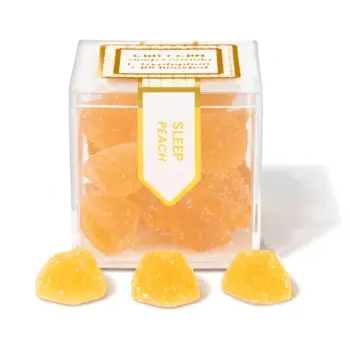
CBD + CBN Sleep Gummies | With L-Tryptophan + Vitamin B6Starting from: $45.00 SHOP NOW This product has multiple variants. The options may be chosen on the product page
-
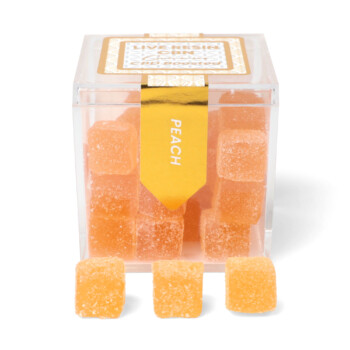
CBN Gummies with Live Resin | CBD-BoostedStarting from: $45.00 SHOP NOW This product has multiple variants. The options may be chosen on the product page
What CBN Is and Where It Comes From
Cannabinol forms without anyone intending it, which makes it unusual among the cannabinoids used as ingredients. It is non-intoxicating. Hemp cannabinoid rules are handled partly at state level and change over time, so TX readers should check current state guidance rather than a general claim. The chemistry runs identically regardless of any of that: THC is the starting material, oxygen drives the reaction, and time sets the pace.
CBN for Sleep and Recovery
Age explains where CBN comes from. Age does not explain what CBN does, and the two get folded together constantly. Cannabinol and Sleep: Separating Fact from Fiction exists to separate the supported part of that story from the rest, and the supported part is small, since the human studies are old, few and inconclusive. A product built on solid oxidation chemistry can be well made and still not deliver what the category implies about it.
CBN vs CBD
CBD is far more stable in this respect, because it is not a degradation product of anything in the plant and does not accumulate as an extract ages. A CBD figure on a panel reflects a formulation decision. A CBN figure can reflect either a formulation decision or the residue of time, depending on how the product was made. CBN vs THC covers the relationship between the parent compound and the one it turns into.
- Gummies: pre-measured, the easy nightly habit.
- Oils: adjustable amounts, faster under the tongue.
- Paired with CBD: the two are commonly formulated together.
- Timing: take it about an hour before bed.
How Much CBN to Take
Incidental CBN, the kind that accumulates in stored material, is unreliable as a serving because it depends on conditions nobody recorded. Manufactured CBN, isolated and added at a measured amount, is the reason a panel can print a figure at all. If a product lists CBN per serving and backs it with a batch certificate, that number came from a measurement. If a product implies CBN because the material is old, there is no number to check. How long CBN lasts is a separate question from how long it takes to form.
CBN Is What Time Does to THC
Every cannabinoid product is undergoing slow chemistry from the moment it is made. In hemp, one of the reactions that matters is the oxidation of THC into cannabinol. The molecule loses hydrogen, its structure changes, and its behavior at the CB1 receptor weakens considerably. Nothing has to be done to make this happen. It proceeds on its own wherever THC and oxygen are in contact.
That gives CBN a strange position among cannabinoids used as ingredients. CBD, CBG and the rest come from enzymatic pathways the plant runs deliberately. CBN comes from decay. A grower cannot increase CBN by selecting a cultivar in the way they can increase CBD, because the compound is not something the plant sets out to make. It is what is left after time works on something else.
Heat, Light and Air, the Three Accelerants
Oxidation needs oxygen, so air exposure is the base requirement. Heat supplies energy that makes the reaction proceed faster, which is why warm storage produces higher CBN levels than cold storage over the same period. Ultraviolet light adds energy of its own and drives the same conversion, which is why packaging for cannabinoid products so often uses opaque or amber containers.
The three compound each other rather than acting in isolation. A container left partly full, warm and in daylight sits in the worst combination of all three. The same container sealed, cool and dark sits in the best. Neither scenario makes a product dangerous. They produce different chemistry over the same number of months, and only one of them still matches the certificate.
Temperature cycling deserves separate mention, because it is harder on a product than steady warmth. A package that heats through an afternoon and cools overnight, over and over, is being driven through the same reaction repeatedly rather than held at one state. That pattern is normal for anything kept in a vehicle, a garage or a bag that travels. Steady room temperature in a cabinet beats an average temperature that swings, even where the two averages match on paper.
Why Aged Flower Is an Unreliable CBN Source
The idea that old material is a way to get CBN runs into a measurement problem. Conversion depends on temperature history, light exposure, humidity and container headspace, none of which are recorded for a bag that has been sitting somewhere for a year. Two samples from the same harvest can end up far apart, and neither carries a number anyone can read.
There is a second problem alongside the first. As THC converts, the material loses THC. Anything else volatile in the sample, including terpenes, has also been dissipating for the same period. What remains is not fresh material plus CBN. It is a different composition entirely, and describing it by the one compound that increased understates how much else changed.
There is also a ceiling on how far the conversion can go. CBN accumulates from the THC that was present at harvest, so the limit is set by the starting material rather than by patience. Hemp is grown to keep THC low, which means the pool available to convert is small from the outset. Waiting longer cannot produce more CBN than the original THC could supply, and by the time a meaningful fraction has converted the material has changed in every other respect too.
Storing a Finished CBN Product
Practical storage comes down to reducing the three accelerants. Keep the container sealed between uses so the headspace does not refresh with air each time. Keep it out of direct light, which usually means a cabinet rather than a countertop. Keep it away from heat sources, which in Texas includes vehicles, garages and any exterior wall that takes afternoon sun.
None of this preserves a product indefinitely, and it is not meant to. The point is that a certificate of analysis describes a batch as it was on the test date, and storage conditions determine how closely the item in your cupboard still resembles that description months later. Good storage keeps the label honest for longer.
Shelf Life, Potency Drift and What a Date Tells You
Best-by dates on cannabinoid products are estimates built on assumed storage conditions. They are not the result of stability testing across every scenario a product might encounter, and they say nothing about a bottle that spent a summer in a hot room. A date is a reasonable default rather than a guarantee.
Cannabinoids and Sleep: Exploring Biological Mechanisms and Therapeutic Potentials looks at how cannabinoids interact with sleep biology and treats the therapeutic side as still being explored, which is a useful reminder for a category where storage advice sometimes gets framed as protecting an effect. The chemistry of degradation is well understood. What the resulting compound does in a person is the part still open, and careful storage does not change that.
What Changes in a Stored Product Besides the Cannabinoids
Oxidation is not the only reaction running in a stored product. Carrier oils go rancid over long periods, particularly those high in polyunsaturated fats. Terpenes are volatile by nature and escape steadily, changing the smell and taste of a tincture well before anything else becomes noticeable. Gummy bases lose or take on moisture depending on the humidity around them, which is why texture is usually the first sign a package has been through conditions it should not have.
Those changes tend to announce themselves before any cannabinoid shift would. A tincture that smells sharp or flat, a gummy that has gone hard or sticky, a bottle with separated layers that will not recombine: each is a sensory signal about storage history. None of them measures cannabinoid content directly, and all of them indicate the product has spent time somewhere warm, bright or humid.
For a Texas reader the practical upshot is that the package tells you about handling while the certificate tells you about the batch on its test date. Neither describes the item in your hand today if it has spent months in an uninsulated space. Reading the sensory signals costs nothing and catches the cases where storage went badly wrong. For more on what ships here, see TribeTokes in Texas or the THC gummies we ship to Texas, including a THC and CBN blend. More from our Texas pages: hemp products in Texas, CBD oil in Texas, Delta 8 THC in Texas, THCa flower in Texas, THCa vapes in Texas and CBG in Texas.
Frequently Asked Questions
Oxidation. Exposure to oxygen, accelerated by heat and light, converts THC into cannabinol over time. The reaction needs no processing step and no additive; it happens on its own wherever plant material or extract is stored. That is why CBN is described as a degradation product rather than something the plant produces.
Generally yes, though the amount depends entirely on storage. Two samples from the same harvest can end up with very different CBN levels if one sat in a sealed container in the dark and the other spent months in warm light. Age sets the opportunity for conversion. Conditions decide how much of that opportunity gets used.
Cool, dark and sealed, which is the same advice that applies to most cannabinoid products. Heat and light are the two accelerants that matter most, and repeated opening introduces fresh air to the headspace of a bottle. None of that makes a product unsafe, but it does move the cannabinoid profile away from what the certificate measured.
CBN is more stable than THC because it sits further along the degradation path, so it does not convert away as readily. That does not make it permanent. Any cannabinoid product changes with prolonged heat and light exposure, and the practical answer is that a certificate describes a batch on its test date rather than forever.
Added, in almost any product that prints a specific CBN figure. Relying on incidental conversion would make the amount unpredictable batch to batch, so manufacturers isolate CBN and dose it deliberately. A formula naming only a hemp extract, with no CBN line on the panel, is a different situation.
Heat affects cannabinoid products, and a closed vehicle in Texas summer reaches temperatures far above normal storage conditions. The more immediate effect on a gummy is physical, since gelatin and pectin bases soften and can pool. Repeated heat cycles are worse than a single exposure for both the format and the cannabinoid profile.
Yes, which is why most tinctures come in amber or opaque glass rather than clear. Ultraviolet light accelerates oxidation, so a bottle stored on a sunny windowsill is in worse conditions than one in a cabinet. The bottle color is doing real work rather than serving as a design choice.
There is no single figure, because it depends on the carrier oil, the storage conditions and how often the bottle is opened. Manufacturers usually print a best-by date that assumes reasonable storage. Treating that date as conditional on cool and dark handling is more accurate than treating it as a fixed shelf life.
Cooler storage slows oxidation, so refrigeration is not harmful for most formats. It can make oil-based tinctures thicker and harder to dose accurately, and it can affect the texture of edibles. For most products a cool cupboard achieves the useful part of the benefit without the practical drawbacks.
CBD degrades under heat and light like any organic compound, but it does not convert into CBN, because CBN comes specifically from THC. That is why a CBD-only product does not accumulate CBN with age no matter how long it sits. The two cannabinoids age differently because they sit on different branches of the pathway.
Related reading: CBN in Florida, CBN in California, what CBN is and what the research now says, and the TribeTokes CBN gummy formulas.
These statements have not been evaluated by the FDA. TribeTokes products are not intended to diagnose, treat, cure, or prevent any disease. Not for use by anyone under 21, or by those who are pregnant or nursing. All products contain less than 0.3% hemp-derived Delta-9 THC by dry weight.