
CBD Oil in Texas
A drug screen is not looking for CBD. Standard panels are tuned to a THC metabolite, the compound the body produces after processing delta-9 THC, and CBD is not on that list. That one fact settles most of what people in TX ask before they start: the question was never whether CBD itself registers, but whether the product carries enough trace THC for a screen to notice. TribeTokes answers it the same way every time, with a batch report from an outside lab covering the gummies, tinctures, oils and the topical. Woman-owned, and at this since 2017. We ship our full CBD lineup to Texas addresses, from tinctures to gummies to pain cream, and standard shipping takes 2 to 5 business days.
The CBD Lineup for Texas
-
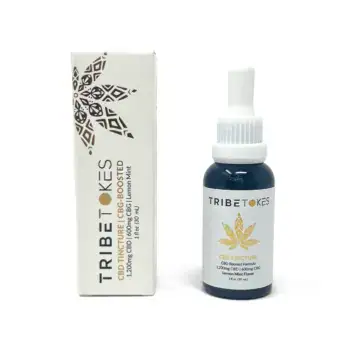
 THC-Free CBD Oil Tincture 1,800mg | CBG-BoostedStarting from: $50.00 SHOP NOW This product has multiple variants. The options may be chosen on the product page
-
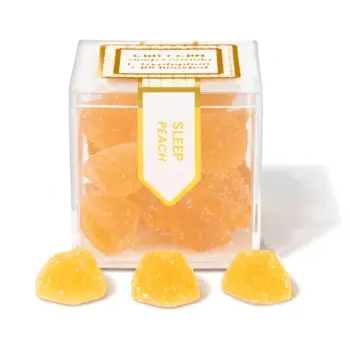
CBD + CBN Sleep Gummies | With L-Tryptophan + Vitamin B6Starting from: $45.00 SHOP NOW This product has multiple variants. The options may be chosen on the product page
-
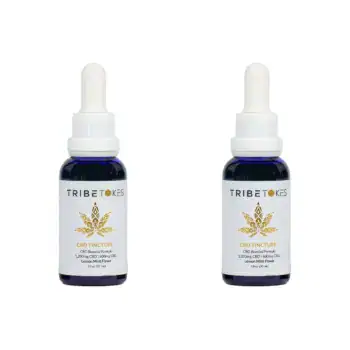
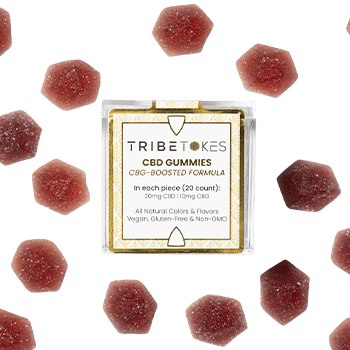
Save $10: You Pick 2 Tinctures | Build Your Own BundleOriginal price was: $100.00.$90.00Current price is: $90.00. SHOP NOW This product has multiple variants. The options may be chosen on the product page
CBD Oil in Texas: What to Look For
Texas runs a consumable hemp program through the Department of State Health Services, and non-intoxicating CBD sits inside it. The more useful question for anyone screened at work is what the batch report says on the THC row, because that figure, not the CBD figure, is the one a panel reacts to. On a broad spectrum or isolate product that row usually reads ND, and on a full spectrum product it reads a small number instead of nothing at all. Reading it takes about four seconds and removes most of the guesswork.
CBD Across Texas
Texas heat is the quiet variable. A tincture left in a truck cab through a Houston August, or a jar riding on the dash from Dallas to the Panhandle, sits at temperatures no cannabinoid enjoys. Heat and light both break these compounds down over time, which is why a cupboard beats a car and a dark shelf beats a window sill. None of that alters what a screen is tuned to. It does change how closely the bottle in your hand still matches the number printed on its report, and the report is what you would point to if anyone ever asked.
CBD, by Format
Format changes the route, not the target of the test. A gummy goes through the gut, a tincture held under the tongue takes a shorter path, a cream stays roughly where you put it, and an oil folds into whatever you already do at the same hour each day. What a panel registers is trace THC that reached your system, so the honest comparison between formats is how much of the bottle’s contents actually gets there. Work on Pharmacokinetics of Non-Psychotropic Phytocannabinoids covers that ground directly: how compounds of this class are absorbed, distributed and cleared.
- Gummies: pre-measured, easy daily habit.
- Tinctures: adjustable amounts, faster under the tongue.
- Topicals: applied to one area rather than taken internally.
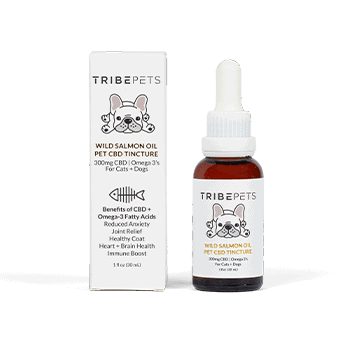
- Pets: oils made for dogs and cats.
How Much CBD to Take
Hold the label serving for several days before changing anything. That is ordinary practice with CBD, and it matters more if you are screened, because repeated servings of a full spectrum product are the one scenario where trace THC has any room to accumulate. A modest amount of a broad spectrum or isolate product, taken on a schedule you could describe out loud, is far easier to account for than a large amount of something you cannot. If testing is part of your job, decide the amount with the batch report open rather than by feel.
What a Drug Screen Is Tuned To
The panel most Texas employers use starts as an immunoassay. It is fast, cheap and narrow on purpose: an antibody that binds one target, the carboxy metabolite the liver produces after delta-9 THC. CBD does not bind it. Neither does CBG, CBN or CBC. The test was designed to answer one question about one compound family, and it answers nothing else.
Every screen carries a cutoff, a concentration below which the sample reports negative and above which it reports positive. There is no partial credit and no shading in between. This is why the phrase about CBD causing a failed test almost always unpacks into something more specific: a full spectrum product, taken often enough that the trace delta-9 inside it crossed a line drawn for a different purpose entirely. The CBD in the bottle was never the variable.
A first-pass flag is also not a result. It is an instruction to look closer, and the sample moves on to a confirmation step run on different equipment with a lower threshold and a much higher standard of proof.
How a Lab Identifies What It Found
Confirmation work does not rely on antibodies. The sample is separated by chromatography so individual compounds come off at different times, then identified by mass spectrometry, which fragments each one and reads the pattern of pieces it leaves behind. Two molecules that fool an antibody rarely produce the same fragment pattern, so this step assigns an identity rather than a suspicion.
The same family of technique does the analytical work behind a cannabinoid or terpene panel. Published plant chemistry uses it routinely, as in Identification of Terpene Compositions in the Leaves and Inflorescences of Hybrid Cannabis Species Using Headspace-Gas Chromatography/Mass Spectrometry, where the instrument does the identifying rather than the label.
That is worth knowing for a practical reason. The potency table on a TribeTokes batch report and the confirmation stage of a screen are looking at chemistry with related tools. The report is the closest thing you have to a preview of what an instrument would say about what you took.
One consequence catches people out. An instrument reports what it can resolve, and every method has a floor beneath which it stops putting numbers on things. That floor is why a report reads ND rather than zero: the lab is telling you it looked and found nothing above its own threshold, which is a narrower and more honest statement than an absolute absence. A screen works the same way from the other direction, with a cutoff standing in for the line between a result worth reporting and one that is not.
Where the Trace THC Actually Comes From
Hemp makes THC. Not much of it, and not in a form that intoxicates at the levels a CBD product carries, but the plant does not draw the line people assume it does. When an extract keeps everything the plant produced, the delta-9 comes along with the CBD. That extract is what full spectrum means.
Broad spectrum takes the same starting material and strips the THC out during processing while keeping the minor cannabinoids. Isolate goes further and keeps CBD alone, arriving as a white crystalline powder before it is blended into anything. Those three words on the front of a package describe three genuinely different chemical situations, and only one of them puts trace delta-9 in your hand.
The label word tells you the intent. The THC row on the report tells you the outcome. When the two disagree, the report wins, and a brand that will not post one has answered a question it did not mean to answer.
Topicals, Skin and the Screen Question
A cream is the format people worry about least and ask about most. Applied to skin, a topical largely stays in the tissue it was rubbed into rather than travelling the way a swallowed serving does, which changes the shape of the question considerably.
It does not remove it. A full spectrum balm is still a full spectrum product, and the trace delta-9 in it is real whether or not much of anything moves past the skin. Anyone screened for work should read the THC row on a topical exactly as carefully as on a tincture, then keep the report.
We wrote a longer answer on this at does CBD cream show up on a drug test, and a related look at what a cream actually does at whether CBD cream absorbs through skin.
If You Are Screened for Work in Texas
Start with the panel, not the product. Ask what your employer actually runs, because a five-panel urine screen and an oral fluid test are different instruments with different windows and different cutoffs, and the answer changes what caution is worth.
Then match the product to the answer. If any trace is unacceptable, an isolate or broad spectrum item whose report reads ND on delta-9 is the version that fits. If the exposure is acceptable, a full spectrum product is a decision you are now making with the number in front of you rather than around it.
Keep the batch report. Save the PDF or the link with the lot number, because a report retrieved months later is worth more than a memory of having checked. And keep the routine boring: same product, same amount, same time, so nothing about your own account of it has to be reconstructed. Travel adds one more wrinkle worth reading up on at taking CBD on a plane, and the general safety questions are covered at are CBD gummies safe. Other Texas guides worth a look: hemp products in Texas, Delta 8 THC in Texas, THCa flower in Texas, THCa vapes in Texas, CBN in Texas and CBG in Texas.
Frequently Asked Questions
No. CBD is non-intoxicating, and the head change people associate with cannabis comes from THC acting on receptors CBD does not engage the same way. That is also why the two are treated differently by a screen: one is the target, the other is not. See how CBD and THC differ for the longer comparison.
Go to the THC row first. A Certificate of Analysis lists each cannabinoid it measured, and delta-9 THC will either carry a small figure or read ND, meaning the lab did not detect it above its limit of quantitation. The CBD line tells you about potency; the THC line is the one that matters for a screen. Every TribeTokes batch posts its full report.
An isolate or broad spectrum product carries the lowest trace THC exposure, because the THC has been removed during processing rather than left in the mixture. Nothing that comes from hemp can promise a screen result, since panels, cutoffs and personal chemistry all vary. What you can do is choose the version whose report reads ND on the THC row and keep that report.
CBD itself does not. Workplace panels look for a THC metabolite, so CBD, CBG and CBN pass through unnoticed by the antibody the test uses. The risk, where there is one, comes from trace delta-9 THC in a full spectrum product rather than from the CBD in it, which is why the spectrum type and the batch report matter more than the milligram count.
It measures a carboxy metabolite the body creates after delta-9 THC, not the THC molecule you started with and not any other cannabinoid. The first pass is an immunoassay, a fast antibody-based test with a fixed cutoff. Anything above the cutoff is sent for confirmation, where the compound is separated and identified properly before a result is reported.
A topical is applied to skin and stays largely where it is put, which is a different situation from swallowing something. It is still worth reading the product’s THC row, since a full spectrum balm carries the same trace as any other full spectrum item. We cover it in more detail in does CBD cream show up on a drug test.
It does, by definition. Full spectrum means the extract kept the plant’s other cannabinoids rather than stripping them, and delta-9 THC is one of them. Broad spectrum keeps the minor cannabinoids and removes the THC. Isolate keeps only CBD. Whether CBD has THC in it depends entirely on which of those three you are holding.
It sits in the cannabinoid potency table, usually as a row labelled delta-9 THC and sometimes alongside THCA and a total THC calculation. Two abbreviations do most of the work: ND means not detected above the method’s threshold, and LOQ is the limit of quantitation, the smallest amount that instrument can put a number on. The acid and activated forms are listed separately because a lab measures them separately.
There is no single answer, and anyone offering one is guessing. Detection depends on how much was taken, how often, over how long, the person’s body composition, and the cutoff the panel uses. Occasional use of a low-trace product and daily use of a full spectrum one are not the same situation, and the honest position is that a screen result cannot be predicted from a label.
No, and the report makes it obvious. Hemp seed oil is pressed from seed and carries little to no cannabinoid content, so its potency panel comes back essentially empty. A CBD oil is an extract with measurable cannabinoids listed row by row. The difference is set out in CBD oil versus hemp oil.
Keep exploring: head back to all TribeTokes in Texas, see THC gummies in Texas, shop all CBD, browse the full cannabinoid collections, or view our lab results. Shopping for a neighboring state? See CBD in Mississippi, CBD in New Mexico, CBD in Oklahoma and our Colorado CBD page.
These statements have not been evaluated by the FDA. TribeTokes products are not intended to diagnose, treat, cure, or prevent any disease. Not for use by anyone under 21, or by those who are pregnant or nursing. All products contain less than 0.3% hemp-derived Delta-9 THC by dry weight.