Here’s a conversation I had last week that happens more often than you’d think.
A customer came in looking slightly baffled. “I tried that Durban Poison strain you mentioned,” she said, “and something weird happened. I thought cannabis was supposed to make you hungry? I haven’t had any cravings at all. And I feel… really focused. Like, unusually sharp. Did I get the wrong product?”
Nope. She’d just discovered THCV.
Most people assume all “THC” cannabinoids work the same way. You consume cannabis, you get relaxed, maybe giggly, definitely hungry. But here’s what’s fascinating: not all cannabinoids that start with “THC” behave remotely the same.
THC (Delta-9 THC) is the cannabinoid everyone knows—the classic cannabis experience most people expect.
THCV (tetrahydrocannabivarin) is its molecular cousin. And it does something completely different.
One stimulates appetite. One suppresses it. One relaxes you. One energizes you. One creates mental fog. One sharpens focus.
Once you understand the difference, you can actually use cannabis intentionally instead of just hoping for the right effects. Let’s break down what’s actually happening.
What THC Actually Does (The Baseline)
THC—specifically Delta-9 tetrahydrocannabinol—is the most abundant psychoactive cannabinoid in cannabis. It’s what people mean when they say “getting high.”
THC binds to CB1 receptors in your brain and nervous system, which creates the effects most cannabis users recognize:
- Deep relaxation and stress relief
- Euphoria and mood elevation
- Pain relief and muscle relaxation
- Appetite stimulation (the infamous munchies)
- Sleep support
- Sensory enhancement
- General calming of body and mind
THC is the warm-hug cannabinoid. It softens edges, turns down the volume on stress, and invites you to sink into whatever you’re doing with a mellower mindset.
For most people, THC is cannabis—it’s the effect they’re seeking and what delivers that classic experience.
Shop THCV Gummies
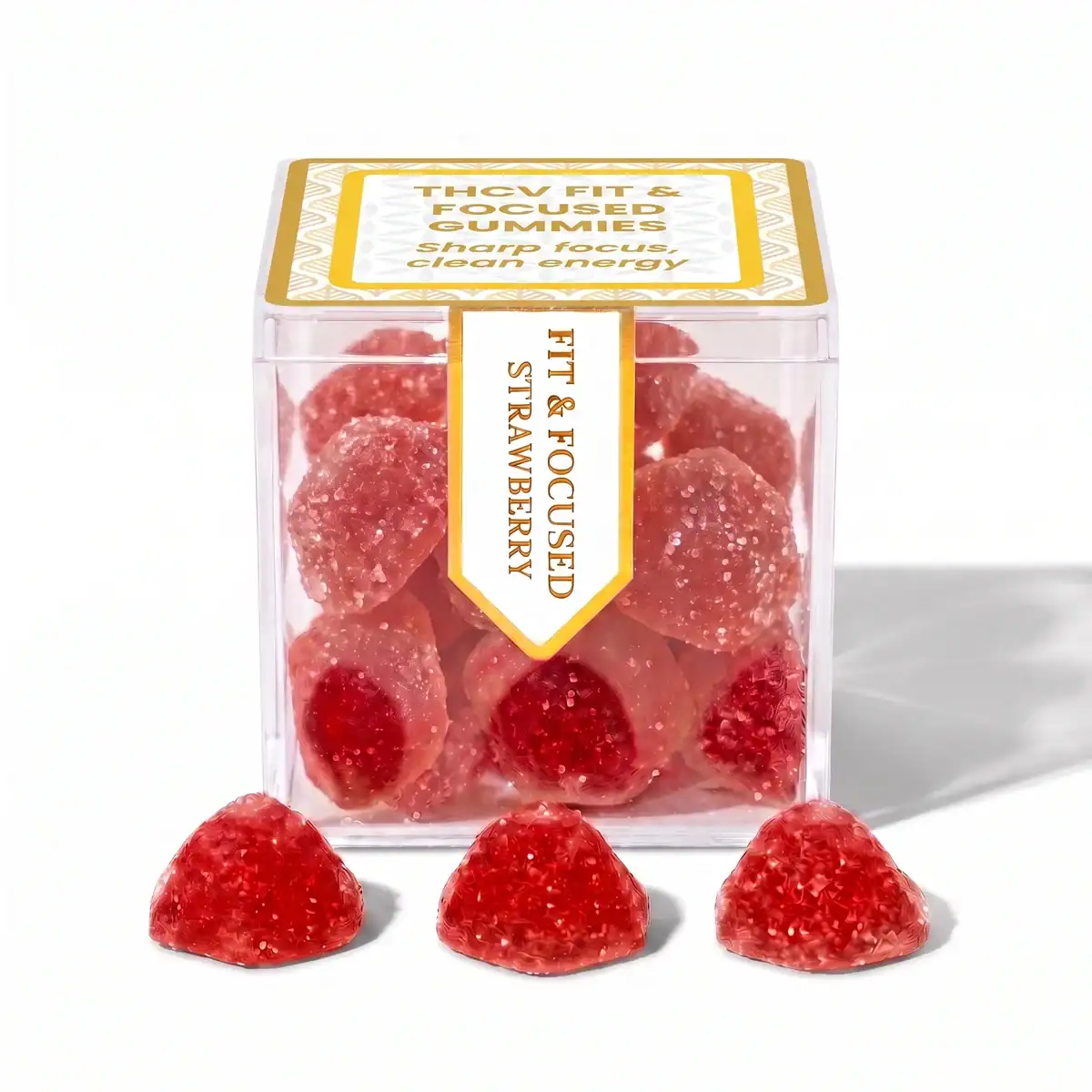
Hemp barely makes any THCV, so a real dose is rare and most labels overstate it. We put 15mg into Fit & Focused with zero THC, and 5mg into Everything But The Kitchen Sink alongside 10mg of Delta 9. One gives you the clear head without the high. The other gives you both. See every product we put THCV in.
We believe you shouldn’t have to choose between your wellness and your tastebuds — We never use artificial colors, flavors or other toxic ingredients, resulting in a delicious and “better for you” cannabis gummy.
What THCV Actually Does (The Plot Twist)
Now meet THCV: the cannabinoid that flips the THC script.
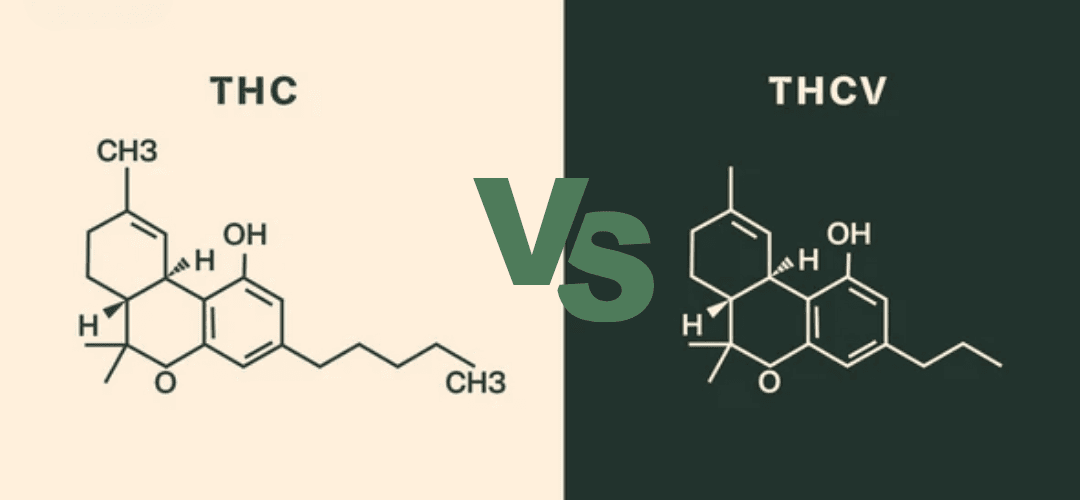
THCV is structurally similar to THC—just two carbon atoms different. But it behaves completely differently inside your body.
At low to moderate doses, THCV actually blocks CB1 receptors instead of activating them. This antagonistic action is why THCV produces effects that seem like the opposite of THC.
Here’s what research and user reports consistently show:
- Mental clarity and focus THCV doesn’t create the mental fog some people experience with THC. Instead, users report feeling sharper, more focused, and mentally “on.” It’s stimulating without being jittery.
- Appetite suppression This is the big differentiator. While THC triggers hunger, THCV has been shown in preliminary research to suppress appetite. This is why THCV-rich strains sometimes get called “diet weed” (though that’s oversimplifying it).
- Energy and motivation THCV tends to feel uplifting and energizing rather than sedating. It’s a daytime cannabinoid—the kind you’d use before getting things done, not before bed.
- Blood sugar regulation support Emerging research suggests THCV may help regulate blood sugar levels and improve insulin sensitivity. The science is early but promising, particularly for metabolic health.
- Reduced anxiety without sedation THCV can reduce anxious feelings at certain doses without the heavy relaxation that comes with THC or CBD. It’s calming without being sleepy.
- Neuroprotective properties Early animal studies show potential for THCV in protecting brain cells and supporting cognitive function, though human research is still needed.
If THC is your friend who says “let’s order pizza and watch movies,” THCV is your friend who says “let’s go for a hike and brainstorm that project.”
Try it: Durban Poison strain (naturally high in THCV)
Durban Poison Strain
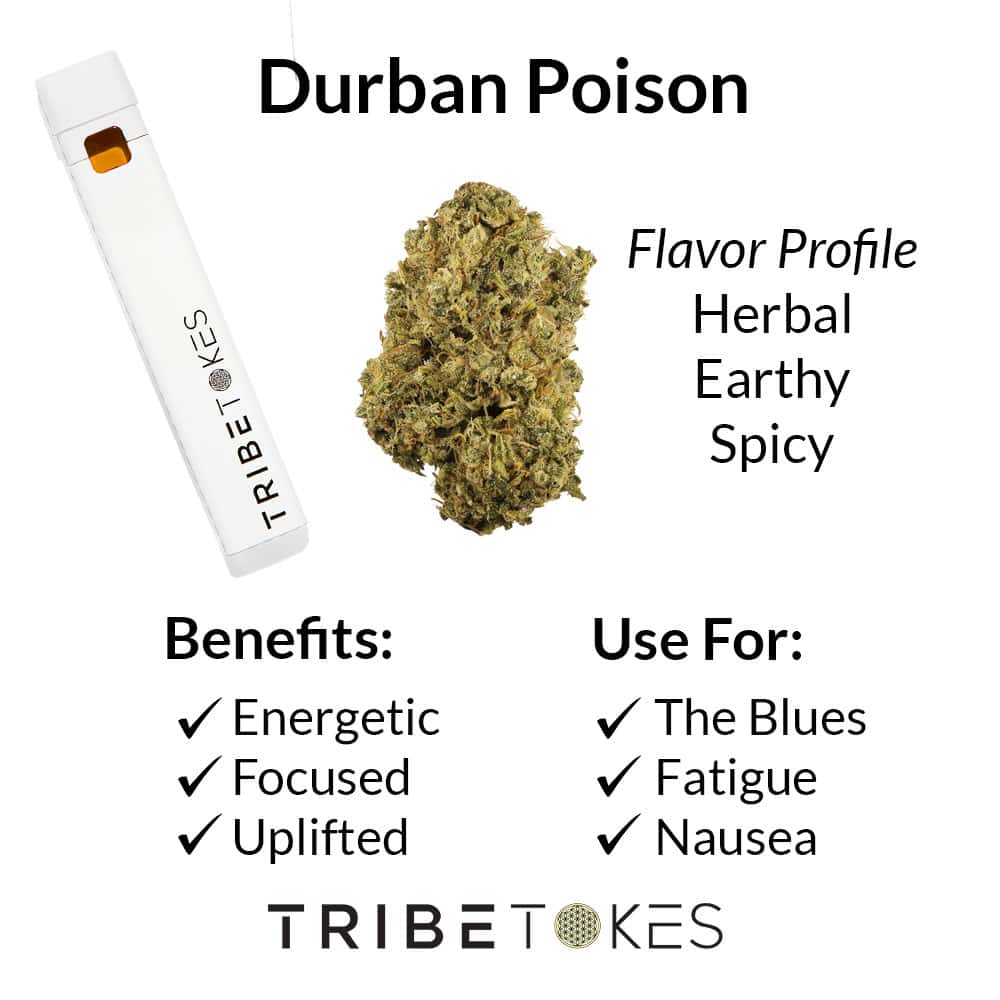
The Scoop: Durban Poison is a pure sativa that originates from the South African port city of Durban. Ed Rosenthal, an American cannabis activist and strain hunter, discovered the original strain and brought in back to the United States in the 1970s. It quickly became a favorite to stoners and medical patients alike. It has gained popularity worldwide for its sweet smell and energetic, uplifting effects. Durban Poison is the perfect strain to help you stay productive at work or doing chores, when exploring the outdoors, or to inspire a spark of creativity.
Top Reported Benefits: Energetic, Focused, Uplifted
Use For: The Blues, Fatigue, Nausea
Top 3 Dominant Terpenes (in TribeTokes Durban Poison Vapes):
Why THCV Feels So Different (The Science That Matters)
Here’s the technical explanation: THC and THCV interact with your endocannabinoid system in opposite ways.
THC works as a CB1 receptor agonist—it binds to and activates those receptors, producing the psychoactive effects we associate with cannabis.
THCV, at lower doses, acts as a CB1 receptor antagonist—it blocks those receptors. This is why it counteracts some of THC’s effects, including appetite stimulation and mental cloudiness.
At higher doses, THCV can actually become mildly psychoactive and start acting more like THC, but with a faster onset and shorter duration. This dose-dependent behavior makes THCV one of the most interesting cannabinoids in the plant—it’s essentially a molecular chameleon.
The practical result? Users consistently report:
- Clear-headed energy without caffeine jitters
- Controlled appetite instead of uncontrollable cravings
- Motivation without overstimulation
- A “functional” experience that doesn’t interfere with daily responsibilities
The Structural Difference: Two Carbons That Change Everything
THC’s full name is delta-9-tetrahydrocannabinol. Its defining structural feature for receptor binding is an alkyl side chain (a chain of carbon atoms attached to the core cannabinoid ring structure). THC’s side chain is five carbons long (pentyl). THCV’s side chain is three carbons long (propyl).
Those two missing carbons determine how the molecule fits into the CB1 receptor binding pocket. CB1 is a G protein-coupled receptor with a binding site shaped specifically to accommodate the pentyl side chain of THC. THCV’s shorter propyl chain doesn’t fill the same space in the binding pocket in the same way. At low concentrations, this shorter fit produces antagonist behavior: THCV occupies the binding site without fully activating the receptor, preventing THC or anandamide from binding in its place. The receptor is occupied but not activated. No signal goes through.
The principle generalizes beyond THCV. Researchers studying structure-activity relationships in cannabinoids have known for decades that side chain length is one of the primary determinants of whether a cannabinoid agonizes or antagonizes CB1. Cannabinoids with chain lengths shorter than three carbons show no meaningful CB1 activity. Three carbons produces partial agonism or antagonism depending on dose. Five carbons (THC, CBD) produces the most potent receptor interactions. Seven carbons (certain synthetic cannabinoids) produces extraordinarily potent agonism. Two carbons on a side chain have more pharmacological consequence than most people would guess.
The inversion in one sentence: THCV’s shorter molecular side chain makes it occupy the CB1 binding pocket without activating it at low doses, turning an appetite-stimulating receptor agonist site into a blockade that suppresses the effects of both THC and the body’s own anandamide.
Why THCV Blocks CB1 at Low Doses
CB1 antagonism produces effects that are the pharmacological inverse of CB1 agonism. THC activates CB1 and produces appetite stimulation, reduced anxiety (at moderate doses), psychoactivity, altered time perception, and reduced working memory. A CB1 antagonist blocks the receptor and suppresses its baseline endocannabinoid tone, producing the opposite: appetite suppression, increased alertness, faster cognitive processing, and reduced sedation.
THCV at low doses (generally below 5mg in most human pharmacology estimates, though individual response varies) is a CB1 inverse agonist or neutral antagonist depending on receptor conformation. The practical outcomes of CB1 blockade at these doses include:
- Appetite suppression. CB1 activation in the hypothalamus drives appetite. THCV blocks this signal. Users consistently report THCV-dominant strains as appetite-neutral or mildly suppressing rather than munchie-inducing. This property has drawn interest from obesity and metabolic syndrome research.
- Reduced psychoactivity. The CB1 block at low doses produces no high. Users describe mental clarity and sharpness rather than the diffuse euphoria of CB1 agonism. THCV-dominant strains are often described as “clear-headed” or “daytime” specifically because the low-dose CB1 antagonism suppresses the cognitive blurring that THC produces.
- Potential anxiety reduction at low doses. Removing the baseline CB1 tone (which includes some anxiety-buffering endocannabinoid activity) doesn’t necessarily produce anxiety. At low doses, THCV’s CB2 agonism and possible 5-HT1A activity may produce independent calming effects that partly offset the CB1 blockade.
- Faster onset of effect. THCV clears the blood faster than THC. Its effects at low doses come on quickly and resolve more cleanly, without the extended plateau and fade that characterize THC experiences.
The comparison that circulates in cannabis education circles is that THCV at low doses resembles a weak version of rimonabant, the pharmaceutical CB1 antagonist that was briefly approved in Europe before being withdrawn due to psychiatric side effects at high doses. THCV is not rimonabant, and its antagonism is partial and dose-dependent rather than complete and sustained. But the pharmacological category is the same: CB1 blockade producing metabolic and cognitive effects opposite to THC.
The Dose-Dependent Flip: When THCV Becomes an Agonist
THCV’s antagonist behavior is dose-dependent. At higher doses (estimated above 10 to 15mg in most adults, though this varies significantly with individual tolerance and delivery method), THCV transitions from CB1 antagonism to partial CB1 agonism. At these concentrations, THCV produces mild psychoactivity: a shorter, sharper version of a THC high with faster onset and faster clearance than equivalent THC doses.
Low Dose (<5mg)
CB1 neutral antagonist or inverse agonist. Blocks endocannabinoid and THC activity at the receptor. No psychoactivity. Appetite suppression. Increased alertness and cognitive clarity. Faster information processing in some users. No significant sedation. CB2 agonism active at these doses contributing to anti-inflammatory activity.
Mid Dose (5–10mg)
Transition zone. CB1 antagonism begins to shift toward partial agonism. Effects become less predictable: some users experience mild psychoactivity onset, others remain in the antagonist-dominant range. Individual variation in receptor sensitivity, body weight, and THCV metabolism produce wide individual differences. The appetite-suppressing effect often persists through this range.
High Dose (>15mg)
CB1 partial agonist. Mild to moderate psychoactivity with faster onset and shorter duration than equivalent THC doses. Effects described as more alert and energetic than THC’s high, consistent with partial rather than full CB1 agonism. Appetite suppression may reverse at very high doses as agonism becomes dominant. Psychoactivity at this range is meaningfully lower than equivalent THC doses due to THCV’s partial agonist ceiling.
The dose-dependent flip means “THCV won’t get you high” is only true below the agonist threshold. Most THCV-dominant strains and products are formulated with low THCV concentrations specifically to stay in the antagonist range. But concentrated THCV isolates or very high-THCV flower consumed in quantity can cross into partial agonism.
THCV’s CB2 Activity and Other Receptor Interactions
THCV is not purely a CB1 story. At CB2 receptors, THCV acts as a partial agonist across its dose range, producing anti-inflammatory activity similar to CBD and CBG at the same receptor target. Unlike its CB1 behavior, CB2 agonism doesn’t flip with dose: THCV is a partial CB2 agonist at low doses and a partial CB2 agonist at high doses, without the antagonist-to-agonist transition seen at CB1.
Preclinical research has examined THCV’s activity at several additional targets:
- 5-HT1A serotonin receptors: Some evidence suggests THCV activates 5-HT1A, which would add an anxiolytic and mood-brightening dimension at low doses independent of CB1 blockade.
- TRPV1 (vanilloid receptors): THCV shows activity at TRPV1 in preclinical models, contributing to anti-inflammatory and pain-modulating activity in peripheral tissue.
- GPR55: THCV has been examined as a GPR55 ligand, the same “orphan receptor” that THC and CBD interact with, though the functional significance of this interaction remains unclear.
- Metabolic receptor pathways: THCV has been studied in models of type 2 diabetes management, with rodent models showing effects on glucose tolerance and insulin sensitivity through mechanisms that appear to involve both CB1 blockade and CB2 agonism in metabolic tissue. Human trial data is limited as of 2026.
The CB2 partial agonism means THCV-dominant products may support anti-inflammatory activity even at the low doses where CB1 is blocked rather than activated. A user consuming a low-dose THCV product gets CB1 blockade (alertness, appetite suppression) and CB2 activation (anti-inflammatory physical ease) simultaneously, without the psychoactivity of CB1 agonism.
Where THCV Is Found
THCV occurs naturally in cannabis but at concentrations too low to be pharmacologically relevant in most commercially available strains (typically below 0.3%). The strains and regions with documented higher THCV production include:
- African sativas (particularly Durban Poison from South Africa): Durban Poison is the most studied high-THCV cultivar outside research settings. Concentrations of 4% to 8% THCV have been reported in authentic cultivar testing. The narrow-leaf sativa structure and environmental adaptations of African landrace cannabis appear to favor propyl cannabinoid production.
- Pineapple Purps: A selectively bred cultivar specifically developed to maximize THCV content, with some tests showing THCV concentrations approaching or exceeding 10%.
- Doug’s Varin: Another intentionally bred high-THCV cultivar, developed with pharmaceutical research utility in mind. One of the highest documented THCV concentrations in a commercially available strain.
- Asian landraces (Nepal, Afghanistan): Certain landrace varieties from South and Central Asia have documented elevated varin cannabinoid content compared to North American commercial strains.
THCV is also available in concentrated isolate form and as a minor cannabinoid additive in formulated products. Isolate and distillate THCV allows precise dosing below the agonist threshold, which is difficult to achieve with whole-flower consumption where THCV concentration per dose is harder to control. If you want that precision in a finished product, our best THCV gummies list the exact milligrams per piece.
Drug Test Implications
The drug test picture for THCV is more complicated than for THC, Delta-8, or THCa.
At low sub-psychoactive doses, THCV may not produce THC-COOH (the metabolite standard drug tests screen for) at concentrations that exceed the standard 50 ng/mL threshold. THCV metabolizes through its own pathways and produces varin metabolites rather than identical THCV-COOH, and the cross-reactivity of these metabolites with standard immunoassay antibodies is not fully established in published research as of 2026. Some evidence suggests low-dose THCV alone may not trigger a positive on standard urine immunoassay screens, but this is not confirmed across all test formulations.
At higher doses that produce psychoactivity, THCV’s metabolites will produce a positive result on standard drug tests. The detection window is shorter than THC (THCV clears faster), but the risk is real. If you are subject to drug testing, treat any psychoactive-dose THCV product the same as THC. Expect a positive result and plan accordingly.
The practical guidance: if you are using THCV-dominant products at carefully controlled low doses (below 5mg) from a verified source with known THCV concentration, the drug test risk may be lower than for equivalent THC doses. If you are consuming THCV in whole flower or at doses that produce any psychoactivity, assume a positive result is possible and treat it with the same caution you’d apply to Delta-9 THC.
The Appetite Connection Everyone’s Curious About
Let’s address the elephant in the room: appetite control.
One of our customers had been using cannabis for years to manage stress, but the munchies were becoming a problem. “I feel great mentally,” she told us, “but I can’t stop eating. It’s affecting my health goals.”
We suggested she try a THCV-rich strain. Two weeks later, she came back genuinely surprised.
“I still get the stress relief,” she said, “but I’m not constantly snacking. This actually works for me.”
Researchers have found that THCV may help regulate appetite by blocking CB1 receptors in brain regions that control hunger signals. Early studies suggest THCV may support:
- Reduced food cravings
- Better appetite control
- Improved adherence to mindful eating
- Energy levels that support physical activity
Important caveat: THCV is not a weight loss drug, and we’re not making medical claims. But the science is intriguing, and anecdotal reports are consistent enough to warrant attention.
Common Mistakes People Make With THCV
Most people set themselves up for disappointment by approaching THCV with THC expectations. Here’s what to avoid:
Mistake #1: Using THCV when you want to relax THCV is not a wind-down cannabinoid. If you’re looking for deep relaxation or sleep support, THCV is the wrong choice. It’s stimulating. Save it for mornings and afternoons.
Mistake #2: Taking THCV at night This is like drinking espresso before bed. THCV’s energizing effects make it terrible for evening use. Stick with THC, CBD, or CBN if you’re trying to wind down.
Mistake #3: Assuming regular cannabis contains THCV Most cannabis contains virtually zero THCV. If you want THCV’s unique effects, you need to specifically seek out THCV-rich strains (like Durban Poison, Jack the Ripper, or certain African sativas) or products intentionally boosted with THCV. Your average hybrid or indica won’t deliver.
How to Actually Choose Between THC and THCV
No guesswork. Here’s the practical decision framework:
Choose THC when you need:
- Deep relaxation and stress relief
- Euphoria and mood elevation
- Appetite stimulation (for medical reasons or appetite loss)
- Pain relief and muscle relaxation
- Sleep support and sedation
- Classic cannabis experience
- Evening wind-down
Choose THCV when you need:
- Mental clarity and sharp focus
- Energy and motivation without caffeine
- Appetite control and reduced cravings
- Daytime productivity without impairment
- Exercise energy and athletic performance support
- Creative flow and problem-solving
- Blood sugar regulation support (emerging research)
Choose Both (THCV + THC blends) when you want:
- Balanced effects: energy with relaxation
- Mood lift without excessive sedation
- Controlled euphoria without brain fog
- THC benefits with less intense munchies
- A moderated, functional cannabis experience
Why Cannabinoid Blends Often Work Better
THCV and THC aren’t opposites competing for dominance. They’re complementary compounds that can work together beautifully.
This is the entourage effect—the phenomenon where cannabinoids amplify and modulate each other’s benefits. THCV can smooth out THC’s intensity, reduce anxiety from high-THC strains, and provide a more functional experience overall.
This is why many experienced users prefer strains or products that naturally contain both cannabinoids, or products intentionally formulated with multiple cannabinoids for balance.
You don’t have to choose one or the other. You can use them strategically depending on what you need in that moment.
What You Should Know About Safety and Effects
Both THC and THCV are generally well-tolerated, but they are psychoactive compounds. Here’s what matters:
Possible effects of THC:
- Dry mouth and red eyes
- Increased appetite
- Drowsiness or sedation
- Anxiety or paranoia (at high doses or in sensitive individuals)
- Impaired coordination and reaction time
Possible effects of THCV:
- Mild stimulation
- Reduced appetite
- Faster onset, shorter duration (compared to THC)
- At high doses, mild psychoactive effects similar to THC
Important precautions:
- Do not drive or operate machinery while using either compound
- Start with low doses and increase gradually
- Avoid during pregnancy and breastfeeding
- May interact with certain medications
- Always choose products with third-party lab testing
- Check your local laws—legality varies by state
Everyone’s endocannabinoid system is different. What works for someone else might not work for you. Give yourself time to experiment and find your optimal dose and cannabinoid ratio.
Legal Status
Hemp-derived cannabinoids (including THC and THCV from hemp) are within the federal hemp definition, though state laws vary significantly.
THCA flower and certain THC products may have different legal status depending on your location. Always check your local regulations before purchasing.
All TribeTokes products are compliant, hemp-derived, and third-party tested.
The Bottom Line
THC and THCV aren’t competitors. They’re different tools for different moments.
THC for evenings, relaxation, pain relief, sleep. THCV for mornings, focus, energy, appetite control. Both together for balanced, functional effects throughout the day.
The key is understanding what you actually need and choosing the cannabinoid that delivers it.
That customer who discovered Durban Poison? She came back three weeks later with friends. “You have to try this,” she told them. “It’s cannabis that actually helps you get things done.”
Now you know why.
Frequently Asked Questions
THCV (tetrahydrocannabivarin) is a cannabinoid that’s structurally similar to THC but produces different effects. While THC activates CB1 receptors causing relaxation, increased appetite, and sedation, THCV blocks CB1 receptors at low doses, leading to appetite suppression, mental clarity, and energy. Think of THC as the “chill and snack” cannabinoid, while THCV is the “focus and move” cannabinoid.
Preliminary research and extensive anecdotal evidence suggest yes. THCV acts as a CB1 receptor antagonist, blocking the hunger signals that THC typically amplifies. Many users report reduced food cravings and better appetite control when using THCV-rich products. However, THCV is not a weight loss medication and shouldn’t be used solely for that purpose.
It depends on the dose. At low to moderate doses, THCV is not significantly psychoactive and won’t produce a traditional “high.” At higher doses, THCV can become mildly psychoactive with effects similar to THC but with a faster onset and shorter duration. The experience is often described as more clear-headed and functional than a traditional THC high.
Durban Poison is the most well-known THCV-rich strain, often containing 1-2% THCV. Other strains include Jack the Ripper, Pineapple Purps, Doug’s Varin, and certain African sativa landraces. However, most cannabis strains contain very little THCV, so you need to specifically seek out THCV-rich genetics or products that are boosted with THCV.
Absolutely. Many users find that combining THCV and THC creates a balanced, functional experience. THCV can modulate some of THC’s effects, reducing anxiety and appetite stimulation while maintaining mood elevation and pain relief. Products that blend multiple cannabinoids leverage the entourage effect for enhanced benefits.
Yes, THCV is widely reported to provide energy, mental clarity, and focus without the jitters associated with caffeine. Unlike THC, which can cause brain fog or sedation, THCV tends to feel stimulating and motivating. This makes it ideal for daytime use, creative work, exercise, and tasks requiring concentration.
About TribeTokes
TribeTokes is a woman-owned and operated hemp cannabinoid brand based in NYC. We create craft vapes, gummies and topicals for the next generation cannabis consumer – who respects plant science, consumes mindfully and expects top quality products from trusted brands. TribeTokes is dedicated to elevating the acceptance & aesthetics of the industry and celebrating its thriving community. Cannabis is a wellness category at its core, so unhealthy ingredients don’t belong here!