

If your brain won’t shut off, your chest feels tight, or you’re spiraling before a big presentation, you’re probably wondering: can a CBD vape pen actually help with anxiety, or is it just expensive placebo mist?
Here’s what the science says: clinical research suggests CBD vape pens can help with anxiety for many people, offering relief within minutes without the high. But not all vapes are created equal, and knowing what to look for makes the difference between “this is life-changing” and “I just wasted $60.”
Quick Answer: CBD vape pens show promise for anxiety relief based on clinical research. A 2024 meta-analysis of eight trials found CBD had a significant effect on anxiety, and in one clinic case series, 79% of patients saw anxiety scores drop in the first month. Vaping delivers CBD to your bloodstream within 2-10 minutes (versus 30-90 minutes for edibles), making it ideal for acute anxiety, panic attacks, or situational stress. However, CBD is not a cure or treatment for anxiety disorders, and quality matters enormously, lab-tested, full-spectrum vapes without harmful additives are essential for both safety and effectiveness. We cover what to check in how safe CBD vapes are.
What Is an Anxiety Pen?
An anxiety pen is a vape sold for stress relief. The name is marketing, not a product type. Most anxiety pens fall into two groups:
- Herbal and supplement pens: nicotine-free vapes with ingredients like chamomile, lavender, L-theanine or melatonin, usually in a propylene glycol and vegetable glycerin base.
- CBD pens: vapes that deliver CBD, the hemp compound with the most anxiety research behind it.
The research gap is on the herbal side. L-theanine and chamomile have been studied as pills: 200 mg of L-theanine a day for four weeks eased stress-related symptoms in healthy adults (Hidese et al., 2019), and chamomile extract capsules reduced symptoms of generalized anxiety (Mao et al., 2016). We couldn’t find published studies testing either one as vapor.
Anxiety Pen vs Vape: Are They the Same Thing?
Yes. An anxiety pen heats a liquid into an aerosol you inhale, like any vape pen. What changes is what’s in the liquid and what the label promises.
Do Anxiety Pens Have Nicotine?
Most herbal anxiety pens are sold nicotine-free, and CBD pens have no nicotine. Read the ingredient list before you buy.
Are Anxiety Pens Safe?
Inhaling anything puts your lungs to work, and the base liquid matters. Propylene glycol and other thinners give off formaldehyde at vaping temperatures (Troutt and DiDonato, 2017), and inhaled oils like MCT have been linked to lipoid pneumonia (Dicpinigaitis et al., 2020). Nobody has long-term data on vaping herbs or vitamins yet. If you have asthma or another lung condition, skip vaping. We go deeper in are CBD vapes safe.
Ready to shop? Here are our CBD anxiety pens.
What the Clinical Research Actually Shows
Let’s cut through the hype and look at what peer-reviewed science tells us about CBD for anxiety.
The Evidence Is Promising, But Not Definitive
A 2024 systematic review and meta-analysis pooled eight studies with 316 participants and found that CBD had a substantial, significant impact on anxiety with a large effect size. The authors caution that the sample was small. That’s science-speak for “this actually seems to work for a lot of people.”
Source: Han et al., Therapeutic potential of cannabidiol (CBD) in anxiety disorders: A systematic review and meta-analysis, Psychiatry Research, 2024 (PMID 38924898)
Another 2024 systematic review of randomized controlled trials (RCTs) published between 2013-2023 examined CBD’s effects on various anxiety disorders including Generalized Anxiety Disorder (GAD), Social Anxiety Disorder (SAD), and others. Despite some contradictory results due to varied study designs and dosages, the data suggest CBD may reduce anxiety with minimal adverse effects compared to placebo (Coelho et al., Life, 2024).
Real-world data backs this up: a 2019 case series (Shannon et al.) found anxiety scores dropped in the first month for 57 of 72 patients (79%) at a psychiatric clinic, most of them taking CBD capsules, and stayed lower over the study.
How CBD Works on Anxiety (The Nerdy Science Part)
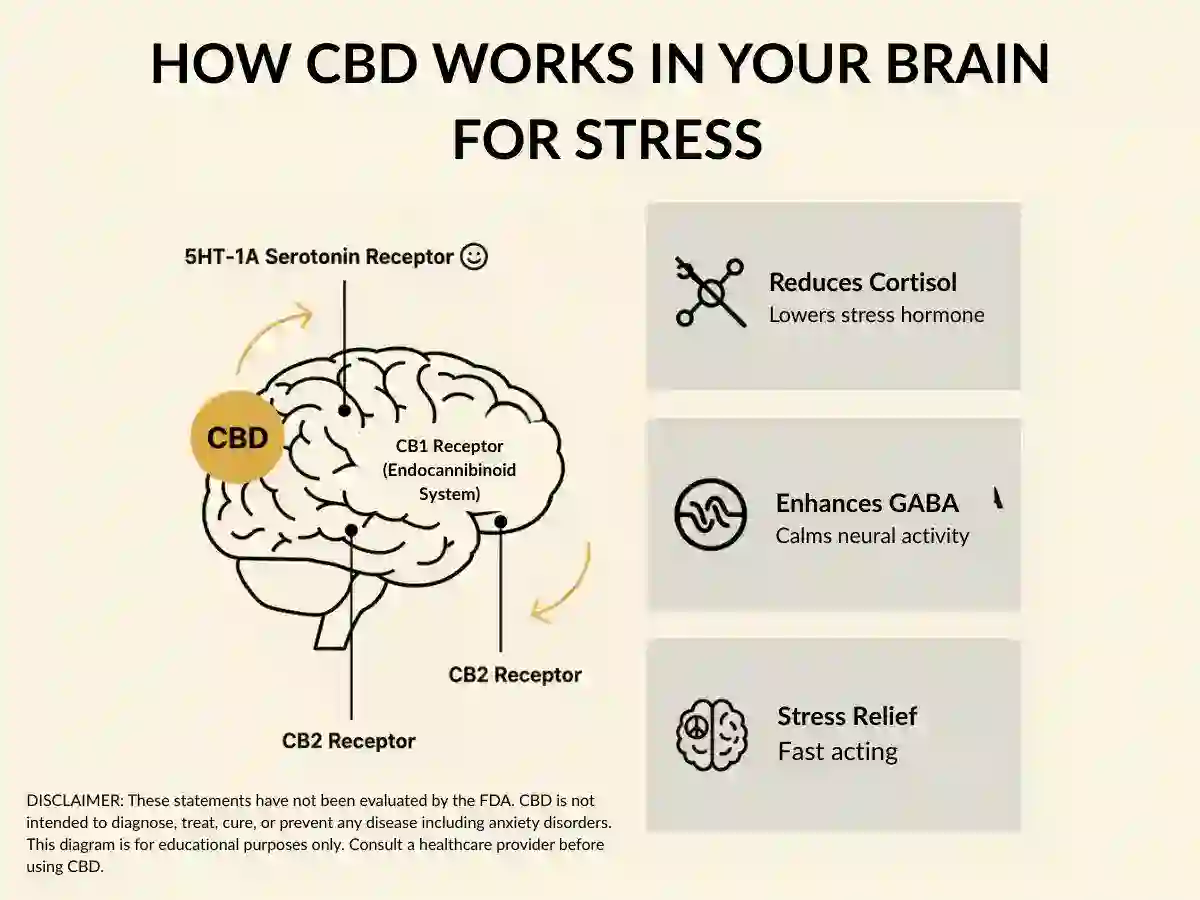
Your brain has an endocannabinoid system (ECS) that regulates mood, stress response, and emotional balance. Think of it as your body’s built-in anxiety management system, except sometimes it needs a little help.
CBD interacts with this system through several mechanisms:
- Serotonin Receptor Activation: CBD acts as a partial agonist at the 5HT-1A serotonin receptor, which plays a crucial role in anxiety regulation. It is the same receptor the anti-anxiety drug buspirone works on.
- CB1 Receptor Modulation: Unlike THC, which directly activates CB1 receptors (potentially causing anxiety in high doses), CBD acts as a negative allosteric modulator. It can actually reduce THC’s anxiety-inducing effects.
- GABA Enhancement: Lab research suggests CBD can boost the activity of GABA-A receptors (Bakas et al., 2017), which respond to GABA, the brain’s main calming messenger.
What CBD Won’t Do
Important reality check: CBD is not a cure or treatment for clinical anxiety disorders. According to a 2024 review of ongoing clinical trials, while CBD shows potential, there’s still a lack of sufficiently strong clinical evidence for using CBD in the clinical management of anxiety disorders.
CBD works best for:
- Situational anxiety (before presentations, social events, stressful meetings)
- Acute anxiety spikes and panic attacks
- General daily stress management
- Anxiety that interferes with sleep
CBD is not a replacement for:
- Therapy or professional mental health treatment
- Prescription medications (never stop meds without consulting your doctor)
- Treating severe or chronic anxiety disorders without medical supervision
Medical Disclaimer: While CBD shows promise for anxiety support, it is not FDA-approved as a treatment for anxiety disorders. Always consult with a healthcare provider before using CBD, especially if you have diagnosed mental health conditions or take medications. CBD can interact with certain drugs, including blood thinners, mood medications, and blood pressure medications.
Why Vaping Works Faster Than Other CBD Products
Here’s where vaping has a massive advantage over other consumption methods: speed and bioavailability.
The Science of Absorption
When you vape CBD, it enters your bloodstream through tiny air sacs in your lungs (alveoli), bypassing your digestive system entirely. This means:
| CBD Product | Onset Time | Peak Effects | Duration |
| Vape Pens | 2-10 minutes | 10-15 minutes | 2-3 hours |
| Tinctures (sublingual) | 15-30 minutes | 30-60 minutes | 4-6 hours |
| Gummies/Edibles | 30-90 minutes | 60-120 minutes | 4-8 hours |
| Topicals | 15-30 minutes (localized) | 30-60 minutes | 2-4 hours |
Only one route has been measured in people: smoked CBD reached about 31% bioavailability. Human data on oral CBD is too thin for a number, though animal studies suggest it’s low (Millar et al., 2018).
What this means in real life: If you’re spiraling before a job interview in 15 minutes, a CBD gummy isn’t going to help. A vape pen will. That rapid relief is why vaping has become the go-to choice for situational anxiety.
The Breathing Connection
Here’s something most people miss: the act of vaping itself can help calm anxiety. Deep, controlled breathing activates your parasympathetic nervous system (your body’s “rest and digest” mode), which counteracts the fight-or-flight response driving your anxiety.
When you take slow, deliberate inhales from a vape pen, you’re essentially doing breathwork therapy while delivering CBD. It’s a double whammy of anxiety relief.
Our Picks: CBD Anxiety Pens to Try
Everything below is available now: browse the full range of CBD vape pens for anxiety, all third-party lab tested.
Not all CBD vape pens are created equal. Quality, terpene profiles, and formulation make a huge difference in effectiveness. Here’s what actually works:
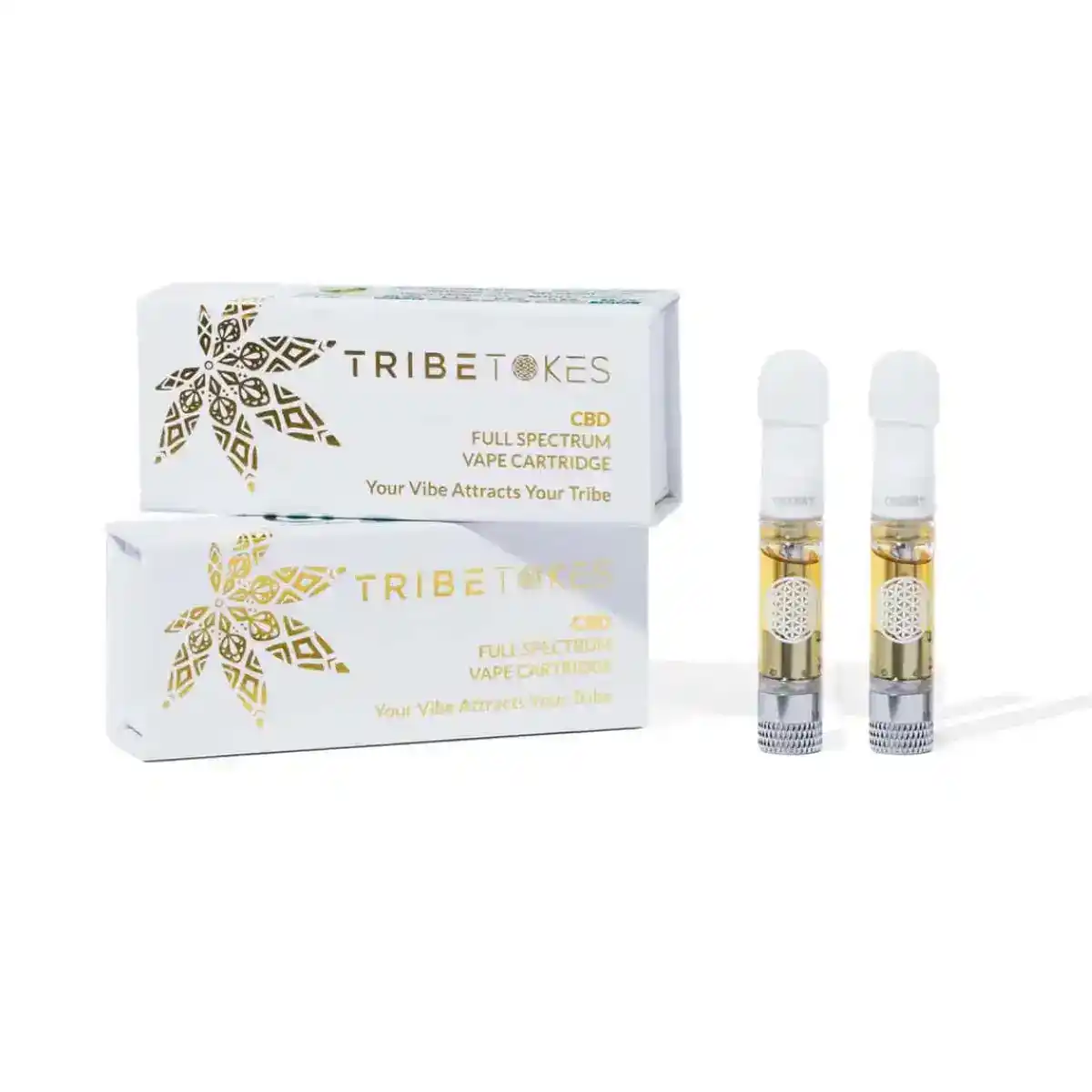
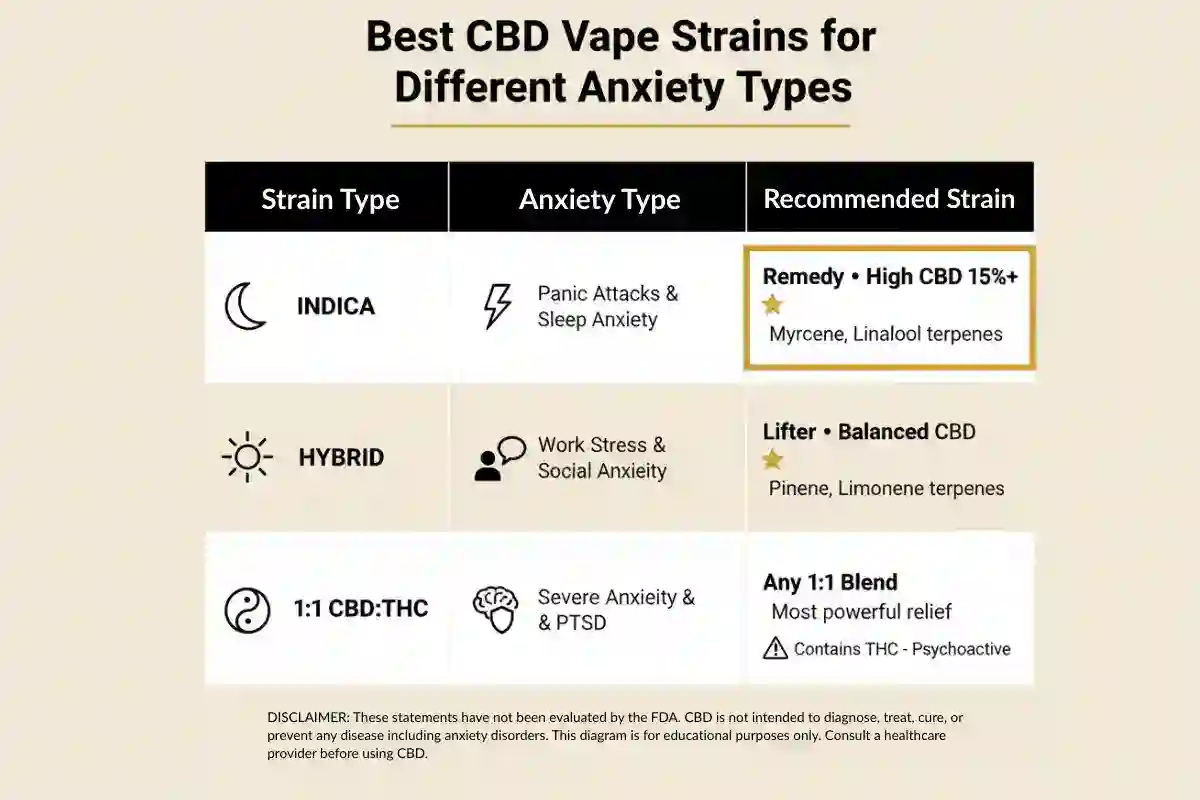
1. TribeTokes Remedy CBD Vape Pen (Indica): Best Overall for Anxiety
Why it works: Remedy is a cross between Cannatonic and Afghan Skunk, a high-CBD strain. The terpene profile includes myrcene, linalool, and beta-caryophyllene, the holy trinity of anxiety-crushing terpenes.
Best for: Deep relaxation, sleep-related anxiety, physical tension, panic attacks
Customer experience: “I experience anxiety and have difficulty sleeping, so I decided to try a CBD vape to help me relax. I needed a discreet, quick method while I was on the go. The results were phenomenal, I found myself sleeping longer at night, which helped me stay more focused and calm during the day.” – Verified TribeTokes Customer
What makes it clean: Only 2 ingredients, full-spectrum CBD extract and plant-based terpenes. No PG, VG, MCT, vitamin E acetate, or artificial additives. Every batch is third-party tested for potency, and our raw materials are full-panel tested for purity.
2. TribeTokes Birthday Cake CBD Vape Pen (Hybrid): Best Hybrid for Balance
Why it works: Birthday Cake is our hybrid CBD disposable, made with full spectrum CBD and hybrid strain terpenes. It has only two ingredients, hemp extract and plant terpenes. The 1g disposable is draw-activated, so there are no buttons to press, and it is non-intoxicating. You’ll feel relaxed but not sleepy.
Best for: Unwinding at the end of the day, social situations, general stress
3. TribeTokes 1:1 CBD:Delta 8 Vape Pen: Best If You Want a Mild Buzz
Why it works: This one pairs CBD with Delta 8, for people who want a mild buzz along with the calm. People often describe a 1:1 ratio as gentler than THC on its own.
Best for: Experienced users who want more than CBD alone
Important note: Contains psychoactive Delta 8 THC. Start with ONE puff and wait 15 minutes. Do not drive or operate machinery.
How to Use CBD Vape Pens for Anxiety (Dosing Guide)
Getting the dose right is crucial. Too little won’t help; too much might make you groggy (though you can’t overdose on CBD). We break the numbers down in how much CBD to vape for anxiety.
The “Start Low, Go Slow” Protocol
For first-time users:
- Start with 1-2 gentle puffs (3-second inhales each).
- Wait 10-15 minutes. Seriously, don’t take more immediately. CBD vapes work fast, but not instantly.
- Assess how you feel. Notice your breath pace, jaw tension, racing thoughts, and physical sensations.
- Add 1 more puff if needed and reassess at 15 minutes.
- Log your experience. Track puffs taken, anxiety trigger, time of day, and effects. By day 5-7, you’ll have your personal dosing pattern down.
For experienced users:
- For ongoing anxiety management: 2-3 sessions per day (morning, midday, evening)
- The studies above mostly used oral doses, so they don’t translate into puffs. Go by how you feel
Timing matters:
- Before anxiety-inducing events: 10-15 minutes prior
- During acute anxiety: Immediate use, effects within 2-10 minutes
- For sleep anxiety: 30 minutes before bed (choose indica strains)
Avoid These Common Mistakes:
- Taking too much too fast: If you feel groggy or sedated, you overdid it. Shorten your puffs or switch to a strain with a more uplifting terpene profile.
- Wrong strain for your anxiety type: Sativa strains might worsen anxiety for some people. Stick with indica or hybrid for anxiety relief.
- Inconsistent use: Give it a week of consistent trials before deciding it doesn’t work. CBD can have cumulative benefits.
- Using on an empty stomach: Some people experience lightheadedness. Try with food if this happens.
Safety First: What to Avoid in CBD Vapes
Here’s the brutal truth: the 2019 EVALI (E-cigarette or Vaping product use-Associated Lung Injury) outbreak had caused 2,558 nonfatal hospitalizations and 60 deaths by January 2020 (Werner et al., NEJM, 2020), and the CDC’s final count reached 2,807 hospitalized cases and 68 deaths. The culprit? Illicit THC/CBD vapes containing vitamin E acetate and other toxic additives.
Your lungs deserve better. Here’s what to avoid and what to look for:
Red Flags, Never Buy Vapes With These:
- Vitamin E Acetate: Found in the lung fluid of 48 of 51 EVALI patients tested and in none of 99 healthy comparison subjects (Blount et al., NEJM, 2020). Used as a cutting agent in sketchy vapes.
- PG/VG (Propylene Glycol/Vegetable Glycerin): Common in nicotine vapes but potentially harmful when heated to high temperatures for cannabis vaping. They can break down into formaldehyde and acetaldehyde (Troutt and DiDonato, 2017).
- MCT Oil (Medium-Chain Triglycerides): Inhaled oils have been linked to lipoid pneumonia (Dicpinigaitis et al., 2020).
- Artificial Thinning Agents: Polyethylene glycol (PEG) and others break down into toxic compounds when vaporized.
- Synthetic Terpenes or Flavorings: Unknown long-term safety profile. Stick with natural, plant-derived terpenes.
- No Lab Testing: If a brand doesn’t provide third-party COAs (Certificates of Analysis), walk away.
Green Flags, What Quality Vapes Should Have:
| Safety Feature | Why It Matters | How to Verify |
| Third-Party Lab Testing | Confirms potency, purity, and absence of contaminants | Check for COAs testing: cannabinoid potency, heavy metals, pesticides, residual solvents, mycotoxins, microbials |
| Only 2 Ingredients | CBD extract + plant terpenes = no room for sketchy additives | Read the ingredient list. If it’s longer than 2 items, question each additional ingredient |
| Full-Spectrum CBD | Provides entourage effect with other beneficial cannabinoids (CBG, CBC, CBN) | Look for “full-spectrum” labeling and COA showing cannabinoid profile |
| Hemp-Derived, USA-Grown | Better quality control and legal compliance | Check product descriptions for hemp source |
| Transparent Brand | Reputable companies share testing, manufacturing processes, and ingredient sourcing | Check website for educational content, lab results, and customer service accessibility |
What Makes TribeTokes CBD Vapes Different
TribeTokes pioneered the “clean vaping movement” back in 2017 when we noticed most CBD vapes on the market were cut with additives that are terrible for your lungs. Our formula is radically simple:
- Ingredient 1: Full-spectrum CBD extract (hemp grown and processed in the USA)
- Ingredient 2: Plant-based terpenes
That’s it. No PG, VG, MCT, vitamin E acetate, or stabilizing chemicals.
Every batch is third-party tested for potency, our raw materials are full-panel tested for purity (solvents, pesticides, heavy metals, mycotoxins, microbials), and the COAs are on our lab results page.
CBD Vape Pens vs Other Anxiety Products
Should you vape CBD, take gummies, use tinctures, or try something else entirely? Here’s how they stack up:
| Product Type | Onset Time | Best For | Pros | Cons |
| CBD Vape Pens | 2-10 min | Acute anxiety, panic attacks, on-demand relief | Fastest onset, precise dosing, discreet, portable | Shorter duration (2-3 hrs), requires device, not suitable for everyone |
| CBD Gummies | 30-90 min | All-day anxiety, consistent baseline relief | Long-lasting (4-6 hrs), no vaping required, tasty, precise dosing | Slow onset, not ideal for acute episodes |
| CBD Tinctures | 15-30 min | Flexible dosing, consistent daily use | Adjustable doses, faster than edibles, longer-lasting than vapes | Hemp taste (some don’t like it), requires holding under tongue |
| 1:1 CBD:THC | 2-90 min (depends on format) | Experienced users who want a mild buzz | Stronger effects, entourage effect | Psychoactive (impairs driving), not for everyone |
The smart strategy: Many people use a combination approach, CBD gummies for daily baseline anxiety management and a vape pen for acute situational anxiety. This gives you consistent all-day support plus on-demand relief when you need it.
Learn more: CBD Stress Gummies, our THC-free gummy for daytime.
Real User Experiences: What Customers Are Saying
Numbers and studies are great, but what about real people using CBD vapes for anxiety? Here’s what TribeTokes customers report:
“I love taking 1-2 puffs in the evening to help me relax, or during the day if I am feeling stressed at work. They definitely help take the edge off my anxiety or relax before bed (plus they’re super tasty!) Highly recommend!”
– Sarah M., Verified Customer
Common themes from 7,000+ customer reviews:
- Fast relief: “Within 5 minutes I felt my shoulders drop and my breathing slow down”
- Improved sleep: “I found myself sleeping longer at night, which helped me stay more focused and calm during the day”
- No high/clear-headed: “I can use it during work and still be fully functional”
- Helps with social anxiety: “I take a few puffs before social events and feel way less awkward”
- Replaces other medications: “I was able to reduce my Xanax usage significantly” (Note: Always consult your doctor before changing medications)
Frequently Asked Questions
Yes, many users report CBD vape pens help significantly with social anxiety. In a small randomized trial, a single 600mg dose of CBD reduced anxiety during a public-speaking test in people with social anxiety disorder (Bergamaschi et al., 2011). The fast onset (2-10 minutes) makes vaping ideal for pre-event anxiety, take 2-3 puffs 10-15 minutes before the social situation. A hybrid like Birthday Cake can provide calm clarity without sedation, so you’re relaxed but still socially engaged.
CBD vape effects typically last 2-3 hours. Effects peak around 10-15 minutes after vaping, then gradually taper off over the next 2-3 hours. This is shorter than edibles (4-6 hours) but provides faster relief. For ongoing anxiety management, many users vape 2-3 times throughout the day rather than relying on a single session.
Full spectrum CBD carries trace THC, so skip cannabinoid products if you face a zero-tolerance drug test. Standard drug tests screen for THC metabolites, and full-spectrum CBD products contain trace amounts of THC (within hemp limits). If you’re subject to drug testing, broad-spectrum CBD (no THC) or CBD isolate products are the safer pick, but no cannabinoid product is guaranteed to pass.
CBD is not considered addictive and doesn’t create physical dependence. The World Health Organization (WHO) has stated that CBD exhibits no effects indicative of abuse or dependence potential. However, psychological habituation is possible with any anxiety-relief tool. You might become reliant on it as a coping mechanism. It’s best to use CBD as part of a full anxiety management approach including therapy, exercise, and healthy lifestyle habits.
Full-spectrum CBD contains all naturally occurring cannabinoids including trace THC (within hemp limits), CBD, CBG, CBC, CBN, plus terpenes and flavonoids. This provides the “entourage effect” where compounds work synergistically for enhanced benefits, many users report better anxiety relief with full-spectrum. Broad-spectrum contains multiple cannabinoids and terpenes but zero THC, good for those who want to avoid any THC or are subject to drug testing. CBD isolate is pure CBD only with no other compounds, less effective for anxiety according to research on the entourage effect.
Potentially, but you MUST consult your healthcare provider first. CBD can interact with certain medications by affecting how your liver metabolizes drugs (via the cytochrome P450 enzyme system). This is especially important for SSRIs, benzodiazepines, blood thinners, and blood pressure medications. Your doctor may need to adjust medication dosages if you add CBD to your regimen. Never stop or change prescription medications without medical supervision.
CBD is generally well-tolerated with minimal side effects. Possible side effects include drowsiness (especially at higher doses or with indica strains), dry mouth, slight drops in blood pressure, diarrhea (more common with oral CBD), and changes in appetite. These are typically mild. To minimize side effects, start with low doses, stay hydrated, and avoid vaping on a completely empty stomach if you experience lightheadedness.
Both deliver CBD quickly via inhalation, but vaping is generally considered healthier. Vaping heats oil to produce vapor (lower temperature, no combustion), while smoking burns plant material creating tar and carcinogens. Vaping offers more precise dosing, is more discreet, produces less smell, and provides consistent potency. However, vaping requires quality oil without additives, smoking flower is just the plant, nothing added. Some prefer flower for the most natural option; others prefer vaping for convenience and lung health.
An anxiety pen is a vape sold for stress relief. Herbal versions deliver flavors and supplements like chamomile or L-theanine, which haven’t been studied as vapor. CBD versions deliver CBD, which has the most anxiety research behind it, and inhaled CBD reaches your bloodstream within minutes.
Most herbal anxiety pens are sold nicotine-free, and CBD pens contain no nicotine. Check the ingredient list before you buy.
The Bottom Line: Do CBD Vape Pens Actually Work for Anxiety?
Based on current clinical research and thousands of user reports, yes, CBD vape pens can work for anxiety, especially situational and acute anxiety symptoms. But they’re not magic, and results vary by individual.
CBD vape pens work best when:
- You choose quality, lab-tested products without harmful additives
- You select the right strain and terpene profile for your anxiety type
- You dose appropriately (start low, go slow)
- You use them as part of a full anxiety management approach
- You’re patient, give it a week of consistent use to assess effectiveness
They might not work if:
- You have severe clinical anxiety disorders requiring professional treatment
- You expect instant cure-all miracle results
- You choose low-quality products with sketchy ingredients
- You take too much or use the wrong strain for your needs
Your Action Plan:
- Start with quality: Choose lab-tested, full-spectrum CBD vapes with only natural ingredients (CBD extract + plant terpenes). Shop TribeTokes CBD Vape Pens
- Pick your strain: Indica (Remedy) for deep relaxation and sleep anxiety; Hybrid (Birthday Cake) for balance during the day; 1:1 CBD:Delta 8 if you want a mild buzz (contains THC).
- Dose smart: Start with 1-2 puffs, wait 10-15 minutes, assess, and adjust. Log your experience for the first week.
- Be consistent: Give it 5-7 days of use to find your optimal dose and assess effectiveness.
- Combine approaches: Use vapes for acute relief + gummies for all-day baseline support. Add therapy, exercise, and sleep hygiene for full anxiety management.
- Consult your doctor: Especially if you take medications or have diagnosed anxiety disorders.