
Terpinolene is a common terpene found in cannabis that is known for both a woody and citrusy aroma and, in animal research, for a mild sedative effect. Throughout nature, you’ll find it in sage, lilac, rosemary, conifer trees, apple trees, and tea trees. Lab research suggests it has antifungal and antibacterial properties (tea tree oil is known for those), and one mouse study found inhaled terpinolene had a sedative effect.
Essential oil products, such as lilac lotions, may contain terpinolene. Terpinolene is in the same “terpene family” as another popular terp, pinene, which is similar in weight and molecular structure. Some people pair terpinolene-forward strains with CBD or Cannabidiol products, though no human study has tested whether the two work better together.
Terpenes are fragrant oils found in many plants throughout nature, and in cannabis they are secreted by the frosty-looking trichomes alongside cannabinoids like THC and CBD. Terpenes not only determine the smell of a cannabis strain, they may also modify its effects either through aromatherapy, directly interacting with our endocannabinoid system, or both. Terpinolene in particular is used as a fragrance found in soap, lotion, and insect repellant. Lab studies also point to antibacterial and antimicrobial activity.
While terpinolene found in cannabis can have a sedative effect in mice, it likely won’t “knock you out,” because it usually shows up in smaller amounts than the more dominant terps.
Strains With Terpinolene
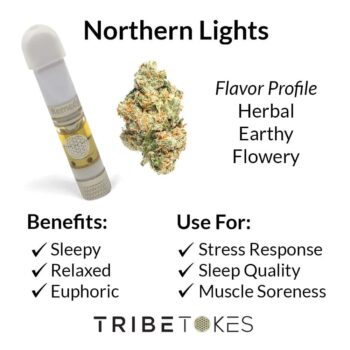
Northern Lights is the strain on our shelf where terpinolene leads the profile, per its strain page. Terpene levels vary from batch to batch, so treat it as a starting point.
What the Research Says

It is likely that the cannabis plant produces terpinolene for its antifungal and antibacterial activity: it can ward off bacteria that can hurt the plant. Tea tree oil, one of the most popular plant-based antifungals, is very high in terpinolene.
People ask whether terpinolene helps with anxiety, migraines or stress, but there are no human studies on that yet. In a 2013 Turkish lab study, terpinolene showed antioxidant effects in rat brain cells (Aydin et al., Archives of Industrial Hygiene and Toxicology, 2013; in vitro study).
Terpinolene may also relax you, at least in mice. A 2013 study found that mice who inhaled terpinolene showed a sedative effect (Ito et al., Journal of Natural Medicines, 2013; animal study). Cannabis also has anti-inflammatory effects in early research, and the idea that terpenes like terpinolene work alongside CBD is called the entourage effect, which is still being tested in people.
BASED ON THIS ARTICLE, YOU MAY LIKE…
-
 Northern Lights (Indica) | CBD Vape...Starting from: $60.00 SHOP NOW This product has multiple variants. The options may be chosen on the product page