
CBC vs CBD: How They Compare
Neither CBC nor CBD is intoxicating, but they differ in prominence: CBD is one of hemp’s most abundant compounds used broadly for calm and recovery, while CBC is a lesser-known minor cannabinoid studied for mood, pain, and inflammation. CBC works mainly through the body’s TRP pain and temperature receptors rather than the CB1 receptor, and it is valued for the entourage effect it adds to full-spectrum products.
CBD and CBC come from the same plant and neither gets you high, but they differ in prominence and mechanism. CBD, cannabidiol, is one of hemp’s most plentiful cannabinoids and is used for many goals, from anxiety to recovery to general calm. CBC, cannabichromene, is a minor cannabinoid present in much smaller amounts, and rather than acting on the CB1 receptor it engages the body’s TRP channels, which are involved in pain and temperature sensing, a mechanism mapped in the Journal of Pharmacology and Experimental Therapeutics. That gives it a different research profile focused on discomfort, mood, and inflammation.
In practice, you will find CBD sold on its own in gummies, oils, and tinctures, while CBC most often shows up as one of several cannabinoids in a full-spectrum product, where it contributes to the entourage effect rather than being taken alone. If you want a proven, versatile daily cannabinoid, CBD is the pick; CBC is more of a supporting compound whose benefits are still being studied. For how CBC compares to another minor cannabinoid, see CBC vs CBG.
Two of our CBD gummy formulas pair CBD with CBC: Stress and Libido Lift.-
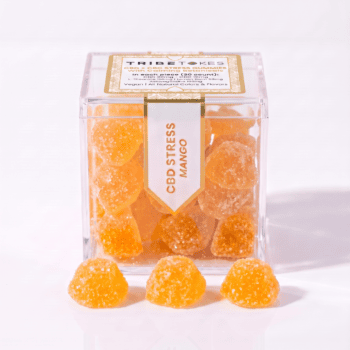 CBD Gummies for Stress: 30mg CBD + CBC, THC-FreeStarting from: $45.00 SHOP NOW This product has multiple variants. The options may be chosen on the product page
-
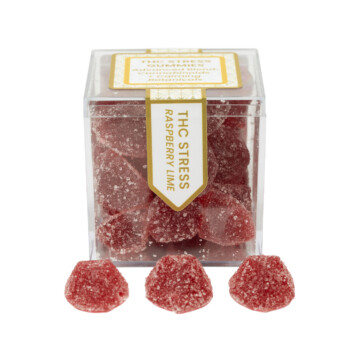 THC Stress Gummies | THC, CBD, CBC + Ashwagandha & L-TheanineStarting from: $45.00 SHOP NOW This product has multiple variants. The options may be chosen on the product page

Frequently asked questions
CBC vs CBD: How They Compare
Neither CBC nor CBD is intoxicating, but they differ in prominence: CBD is one of hemp's most abundant compounds used broadly for calm and recovery, while CBC is a lesser-known minor cannabinoid studied for mood, pain, and inflammation. CBC works mainly through the body's TRP pain and temperature receptors rather than the CB1 receptor, and it is valued for the entourage effect it adds to full-spectrum products.
Is CBC or CBD better?
They serve different roles. CBD is abundant, versatile, and well studied for calm and recovery; CBC is a minor cannabinoid researched for mood and pain that mostly supports the entourage effect. CBD is the more practical standalone choice.
Does CBC get you high?
No. CBC is non-intoxicating, so it causes no high. It acts on the body's TRP receptors rather than the CB1 receptor that THC switches on.
What is CBC good for?
Early research points to mood, pain, and anti-inflammatory potential, and it may support the effects of other cannabinoids. Evidence is still limited, so consider these promising early findings rather than settled facts.
Can you take CBC and CBD together?
Yes, and they usually come together. CBC appears in full-spectrum CBD products, where the combination of cannabinoids is thought to work better as a group than any one alone.
For more detailed information, read What Is the Entourage Effect.
This content is for informational purposes only and is not medical or legal advice. Cannabis and hemp laws vary by state and change often. TribeTokes products are hemp-derived and contain less than 0.3% Delta-9 THC in compliance with the 2018 Farm Bill. These statements have not been evaluated by the FDA.