

We asked r/trees what cannabis had honestly helped with, and the neurodivergent replies were the ones people kept coming back to. Almost none of them were about getting high. They were about masking, evenings, and one person quietly admitting they wish they needed it less.
🧪 Lab Tested | 👩💼 Woman-Owned | 🏆 Est. 2017
Every quote below is a real comment from a public Reddit thread, shown with username and upvote count and linked to the live discussion. These are personal experiences, not medical advice. Cannabis is not a treatment for ADHD, autism, or any neurodevelopmental condition, and nothing here should be used to make decisions about diagnosis, medication, or support. If you are ever in crisis, the 988 Suicide and Crisis Lifeline is free, confidential, and available 24/7 by call or text.
The Question, and Who Answered It
We asked r/trees one open question: what is the one thing cannabis has honestly helped you with? It pulled 274 upvotes and several hundred replies, covering everything from workouts to chores to grief.
Some of the longest reply chains came from autistic and ADHD adults. They were not talking about being high. They were talking about masking, about social effort, about the specific exhaustion of a brain that will not stop, and about what a normal evening costs them.
One thing to be clear about before any of it: the question asked what cannabis had helped with, so the answers are self-selecting by design. Nobody who tried it and hated it had much reason to reply. Read what follows as one side of a conversation, reported accurately, rather than as a verdict.
Masking, and the Relief of Putting It Down

Masking is the work of performing a version of yourself that other people find easier to read. It is a term autistic and ADHD adults use for something that costs real energy, and in this thread it produced the shortest answer of the neurodivergent replies.
“Taking off my masks and filters and just being ✨me✨”
u/skullsnunicorns, 12 upvotes
The longer version came from an autistic commenter describing what changed socially once the effort dropped.
“My friend group has absolutely improved thanks to it because i’m not all up in my head during parties and acting weird in a neurotypical sense, I always said it makes me feel normal.”
u/KingAltair2255, 74 upvotes
What is worth noticing is that none of these people described becoming someone else. They described spending less energy on the performance. That is a much narrower claim than the one cannabis marketing usually makes, and it is the one that kept getting upvoted.
The Phrase That Kept Coming Back
Across the neurodivergent replies, one phrase surfaced again and again: feeling normal. It is a loaded phrase, and the people using it were not treating it lightly.
“Felt absolutely insane the first time I smoked though. Had a real ‘this is what everyone else feels like all the time?’ moment”
u/religion_wya, 10 upvotes
Another autistic commenter had been at it considerably longer.
“Also autistic. Loved it from the first time I tried it 43 years ago. Still consuming. Don’t plan to stop.”
u/anonlaw, 25 upvotes
A separate reply put the same idea in two words, with no elaboration at all, and picked up upvotes anyway.
“Emotional regulation”
u/hollowholes, 5 upvotes
These are individual descriptions of individual experiences. Plenty of autistic and ADHD people find cannabis unhelpful, unpleasant, or actively counterproductive, and they had little reason to post in a thread asking what had helped. The phrase resonated in this thread. It is not a finding.
The Evening Reset

One of the most detailed neurodivergent accounts came from someone describing themselves as AuDHD, community shorthand for being both autistic and ADHD. The comment is worth reading in full because of what comes attached to it.
“AuDHD here. I need weed to turn my brain off for the evening. To reset for the next day and function again when I wake up.
I wish I didn’t need it as much as I do, but wow has it helped me cope with life in a way I never did before”
u/MollyViper, 39 upvotes
The reply underneath was two words.
“This 100%”
u/theholyconundrum, 11 upvotes
The line people kept responding to was not the first paragraph. It was the second one, where they say they wish they needed it less and leave the tension unresolved. Very little cannabis writing sits in that gap. The thread did, comfortably, without anyone treating it as a confession.
The Doubts, and Who Raised Them
Here is the part where an honest article has to be careful with its own framing. There is a critical side to this conversation, but it is small, and pretending otherwise would misrepresent the thread.
The positive accounts carried 74, 44, 39 and 25 upvotes. The doubts carried one or two. That gap is real, and it is partly a function of the question we asked. What is more interesting is where the doubts came from: not from critics of cannabis, but from people already using it.
“Does it make it hard to travel ? That’s the one thing I hate about it I’m irritable without”
u/Massive-Handz, 2 upvotes
That question went to the AuDHD commenter above, who answered without getting defensive.
“For me, what stresses me out the most is the work-life balance. So I personally don’t need weed as much when I’m on vacation.”
u/MollyViper, 2 upvotes
“Yeah I get that”
u/Massive-Handz, 2 upvotes
Read that exchange again, because it contains something genuinely useful. Their use tracked their stress rather than their neurotype. On holiday, the need dropped. That is a distinction worth anyone making, and it came from a two-upvote reply buried in a comment chain rather than from the top of the thread.
Irritability without a substance is a dependence signal, and the community treated it as a fair question rather than an attack. Anyone noticing that a habit has become load-bearing deserves a better sounding board than a comment section.
What It Does Not Replace
One detail in that same chain matters more than its single upvote suggests. The AuDHD commenter, describing what actually resolved their irritability, did not credit cannabis.
“I used to be more irritable, due to stress, but my antidepressants kind of completely solved that!”
u/MollyViper, 1 upvotes
One of the most enthusiastic cannabis voices in the thread was also the person crediting a prescription. Nobody in the conversation framed the two as competing, and nobody suggested swapping one for the other.
That is the line this article will not cross either. Prescribed medication for ADHD, for autism-related support needs, or for anything co-occurring is managed by a clinician who knows your history. Adjusting or stopping it is a decision for that room. Diagnosis, assessment and support are the domain of professionals who work with neurodivergent adults, and a hemp brand is not one of them. What we can do is tell you exactly what is in the bottle.
Where TribeTokes Fits
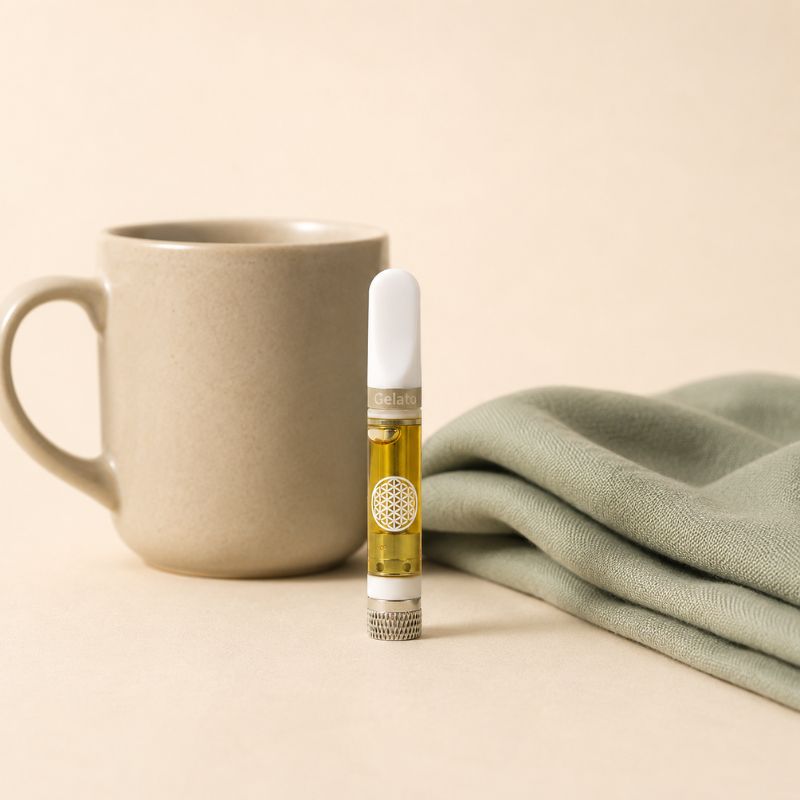
If this conversation has you curious, here is where we fit, and the logic follows the thread rather than our margins: everything below is non-intoxicating, so none of it carries the THC-driven anxiety risk that trips people up. Each has a public certificate of analysis, and subscribe and save takes 15% off your first order. None of these is a treatment for ADHD or autism.
FOR THE RITUAL
CBD Vape Cartridge (1g)
★★★★★ 4.95 (43 reviews)
CBD + CBG | 1g | 12 strains | Fast onset
Several people in the thread described the process itself as part of what settled them, not just the effect. This is the non-intoxicating version of that: CBG-boosted CBD, twelve strains, and onset in minutes rather than hours. Our highest-reviewed product by volume.
Full-spectrum hemp, so trace THC is present. If you are facing a drug test, we recommend abstinence.
NO DRUG TEST RISK
CBD Wellness Gummies
★★★★★ 4.78 (23 reviews)
CBD + CBG | THC-free | No inhalation
CBG-boosted CBD with no THC in the formula at all, which makes this the option when a clean drug test matters or when inhaling is not for you. Discreet, pre-measured, and non-intoxicating.
THC-free, so no drug test risk. Confirm on the batch certificate of analysis before you rely on it.
FINEST CONTROL
CBD Tincture 1,800mg
★★★★★ 4.94 (16 reviews)
CBD + CBG | 1,800mg | Sublingual
A tincture lets you adjust by the drop, which suits anyone who wants to find their own amount slowly instead of committing to a fixed dose. Sublingual, so onset sits between a gummy and a cart.
Full-spectrum hemp, so trace THC is present. If you are facing a drug test, we recommend abstinence.
Frequently Asked Questions
Sometimes, and the r/trees replies were more specific than a yes or no. Neurodivergent commenters rarely described cannabis as fixing attention directly. They described it changing the conditions around attention: fewer competing thoughts, a quieter internal narrator, an easier time settling into one task instead of circling five. Several framed it as an evening tool that let them stop the day rather than a daytime performance aid. These are personal accounts from a public forum, not clinical evidence, and research on cannabis and ADHD remains limited and mixed. Cannabis is not a treatment for ADHD or any neurodevelopmental condition. What the thread does offer is unusually candid language about how people actually use it, including the parts that are less flattering. If ADHD is affecting your daily life, an assessment and a clinician are the place to begin, not a subreddit.
Masking came up as one of the most resonant themes in the whole thread. Several autistic commenters described cannabis as making it easier to stop performing a neurotypical version of themselves, whether at parties, at work, or at home. One described taking off their masks and filters and simply being themselves. Another said their friendships improved because they were less trapped in their own head during social situations. The framing was consistently about reduced effort rather than changed personality. Masking is exhausting, and the relief they described was the exhaustion lifting. These accounts belong to the people who wrote them and are not claims about what cannabis does for autistic people generally, since responses vary enormously and some autistic people find cannabis unhelpful or unpleasant. Nothing here is a substitute for autistic-led support or professional advice.
Yes, and the honest version of this conversation has to include that. Cannabis raises anxiety for some people rather than lowering it, and higher THC doses make that more likely. Executive function can get worse, not better, particularly with heavier or more frequent use. One commenter in this thread raised irritability when not using, which is a dependence signal worth taking seriously rather than brushing past. Regular use also builds tolerance, so the effect people describe early on tends to change over time. Anyone with a family history of certain mental health conditions has more reason to be cautious and to talk to a doctor first. The r/trees replies skew positive for a structural reason: anyone who tried cannabis and disliked it had little cause to answer a question about what had worked. Treat it as one side of a conversation.
No, and the thread itself did not treat it as one. One AuDHD commenter credited their prescribed antidepressants with resolving the irritability they had struggled with, separately from anything cannabis did for them. That distinction matters. Prescribed medication for ADHD, autism-related support needs, or co-occurring conditions is managed by a clinician who knows your history, and stopping or adjusting it is a decision that belongs in that room. Cannabis is not a proven substitute for prescribed treatment, and framing it as one would be both inaccurate and unsafe. What a hemp company can honestly offer is transparency about what is in each batch through published lab results. Several people in the thread described using cannabis alongside professional support rather than in place of it, which is the pattern that came up most among those describing steady results.
AuDHD is community shorthand for being both autistic and ADHD, a combination many people describe as pulling in opposite directions: a need for routine alongside a need for novelty, sensory overwhelm alongside understimulation. In this thread, the fullest AuDHD account described cannabis as an evening reset, a way to stop the day and be able to start the next one. They were also candid about wishing they needed it less. That combination of gratitude and ambivalence appeared more than once and is one of the more useful things in the thread, because it resists the tidy story. Individual experiences differ widely, and none of this constitutes advice about managing autism, ADHD, or both. Anyone weighing this up is better served by a clinician familiar with neurodivergent adults than by a forum, however relatable the forum feels.
Some do, and in this thread the concern came from inside the group rather than from critics. One commenter asked directly whether daily use made travel difficult, noting that irritability without it was the thing they disliked most. The reply was thoughtful rather than defensive: the other person had noticed they needed it less on holiday, which suggested that work stress rather than neurotype drove the pattern. Elsewhere, one of the most enthusiastic accounts in the thread also contained the line about wishing they did not need it as much. Those voices carried far fewer upvotes than the positive ones, which tells you something about the thread rather than about the truth. Anyone noticing that a habit has become load-bearing is worth taking seriously, and a doctor is a better sounding board than a comment section.
It depends entirely on the formula. Products containing Delta 9 THC, Delta 8 THC, THCa, or HHC will produce a positive result on a standard drug test. Tests do not look for THC directly; they look for THC metabolites, which the body produces after any form of THC and which can remain detectable for days or weeks. Full-spectrum CBD and CBG products contain trace THC, so anyone facing a test should abstain from those too. The exception is a THC-free CBD product, which carries no drug test risk, though the certificate of analysis is the only way to confirm that for a given batch before relying on it. For anyone whose job or licence depends on a clean result, a THC-free option with a published COA is the only safe choice.
The lineup that fits this conversation is entirely non-intoxicating, which reflects what the thread itself kept returning to: less, not more. Our CBD Vape Cartridge suits people who want the ritual and the fast onset without THC, since several commenters described the process of preparing and inhaling as part of what settled them. The CBD Wellness Gummies remove THC from the equation completely, making them the option where a drug test is a factor. Our CBD Tincture gives the finest control over the amount, measured drop by drop. Every batch carries a published lab report, and the subscribe and save discount runs at 15% on a first order. To be plain about it: these are wellness products rather than therapies, and we will not dress them up as anything more. Some customers fold one into an evening routine, and that is the whole of the claim.
Non-Intoxicating, Fully Tested
Every batch has a public lab report. Subscribe and save 15% on your first order.
The Reddit comments quoted in this article are the opinions and personal experiences of their individual authors and do not constitute medical advice or claims about TribeTokes products. Cannabis is not a treatment for ADHD, autism, or any neurodevelopmental or mental health condition, and TribeTokes products are not intended to diagnose, treat, cure, or prevent any disease. Products containing Delta 9 THC, Delta 8 THC, THCa, or HHC will produce a positive result on standard drug tests. Talk to a qualified healthcare provider about diagnosis, support, or any prescribed medication before making changes. Must be 21 or older to purchase. If you are ever in crisis, the 988 Suicide and Crisis Lifeline offers free, confidential support 24/7 by call or text.